I was halfway through welding a simple bracket when my arc suddenly went dead—no sputter, no warning. I pulled the trigger again and felt that awful “scratchy” tension in the gun. Sure enough, the wire had snapped inside the liner and jammed everything up.
If you’ve ever stood there staring at a MIG gun like it personally betrayed you, trust me, I’ve been there more times than I’d like to admit.
A broken wire inside a MIG welder is one of those problems that seems small but can shut down your whole project fast. After wrestling with bird-nesting, kinked liners, and stubborn wire fragments, I finally learned the quickest and cleanest way to get broken wire out without making the mess worse.
If your wire is stuck, jammed, or hiding deep in the liner, don’t worry—you’re not the first. Let me show you the exact steps I take to clear it out safely and get the welder feeding smooth again.
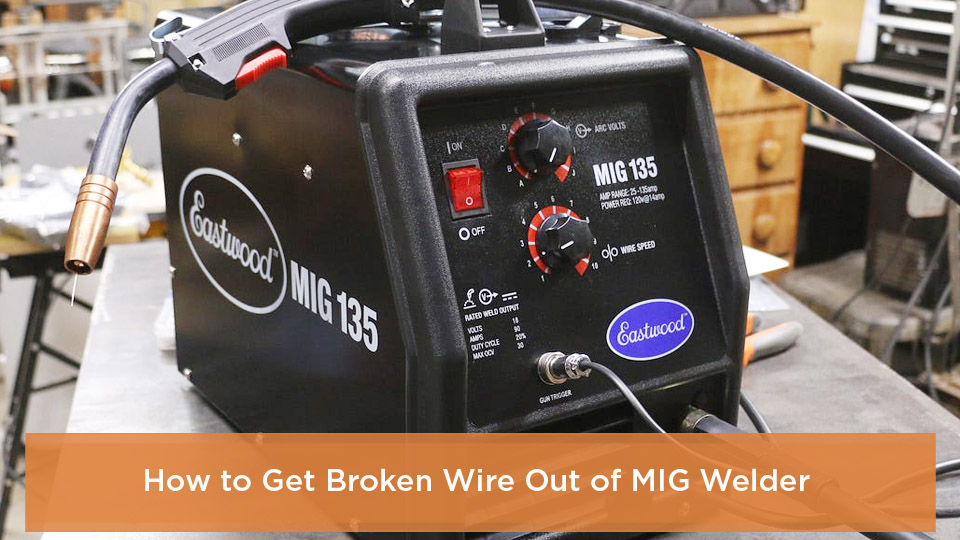
Image by medium/Andrew Reuter
Why a Broken Wire in the Liner is a Bigger Deal Than You Think
A stub of wire stuck in the liner doesn’t just stop you from welding — it can bird-nest the spool, chew up your drive rolls, burn back into the contact tip, and in the worst cases actually melt and fuse inside the copper tip. That turns a five-minute fix into a two-hour nightmare replacing tips, diffusers, and sometimes the whole gun.
On job sites running 0.035 or 0.045 wire all day, I’ve seen guys lose half a shift because they tried to muscle it out the wrong way. Getting it right keeps your arc stable, saves expensive consumables, and honestly keeps you from looking like the new guy in front of the crew.
First Move: Stop Everything and Assess Where It Actually Broke
Before you touch a single knob, figure out where the break happened. Pull the trigger for half a second and watch:
- If wire feeds out the gun and stops — the break is in the liner or tip.
- If nothing moves at all and you hear the motor straining — it’s jammed at the drive rolls or the inlet guide.
- If you get a bird’s nest explosion at the drive rolls — congratulations, the wire snapped right there and wrapped itself like Christmas lights.
Knowing the exact spot saves you from tearing the whole gun apart when you only need to open the drive-roll housing.
Tools You’ll Actually Use in the Shop (No Fancy Stuff)
Grab these before you start — they live in my toolbox lid for exactly this reason:
- Needle-nose pliers (the skinny ones)
- 4-inch vise grips (mini ones)
- A cheap dental pick set from the auto-parts store
- Flashlight or headlamp
- Small wire cutters or side cutters
- A 6-inch piece of old 0.030 or 0.035 wire bent into a hook (my go-to)
Step-by-Step: Broken Wire at the Contact Tip (Most Common)
Nine times out of ten the wire breaks flush with the tip or just inside it.
- Turn the machine OFF at the panel — never trust the trigger switch.
- Unscrew the nozzle and pull it off.
- Take the contact tip off with pliers (it’s usually hot — use gloves).
- Look inside the tip. If the broken end is right there, grab it with needle-nose and twist while pulling straight out.
- If it’s recessed half an inch, take that spare piece of wire, bend a tiny 1/8-inch hook on the end, feed it in alongside the broken stub, hook it, and pull. Works 99% of the time.
Pro move I learned from an old pipeline welder: heat the tip with a lighter for five seconds first. The aluminum oxide coating softens and the stub slides out like butter.
Clearing a Break Inside the Liner (The One Everyone Hates)
Sometimes the wire snaps inside the PTFE or steel liner and you can’t see it.
Here’s the method that’s saved me on hundreds of rigs:
- Open the drive-roll pressure arms and swing them up.
- Back the tension off all the way.
- Cut the wire at the spool side of the drive rolls.
- Grab the wire coming out of the gun end with vise grips and pull straight and steady. Most of the time the whole piece slides out the front.
- If it won’t budge, go to the machine end, remove the inlet guide, and pull from the back toward the spool. One direction or the other will always work.
Never yank sideways or wiggle — that kinks the liner and you’re buying a new one tomorrow.
Dealing with a Bird’s Nest at the Drive Rolls
Bird’s nests happen when the wire snaps under tension and the spool keeps spinning.
Fix it fast:
- Cut the wire at the spool.
- Unload the spool completely.
- Pull the whole mess out of the drive-roll area by hand.
- Clean any little curly pieces out of the rolls with a tip reamer or screwdriver.
- Reload and set tension again (I always run just tight enough that the rolls barely slip when I grab the wire with a glove and pull).
When the Wire is Burned Back and Fused to the Tip
Running too hot or too much stick-out causes the wire to burn all the way back into the tip and weld itself solid.
Your only friend here is patience:
- Let everything cool five minutes.
- Clamp vise grips on the very end of the wire sticking out of the gun.
- Hold the goose-neck steady with your other hand and twist the pliers while pulling straight.
- If it still won’t move, sacrifice the tip — cut the wire flush at the diffuser, unscrew the tip, and drive the stub out from the back with a punch.
Replace the tip and diffuser if it got ugly. They’re cheap insurance.
Prevent This Mess From Happening Again
After twenty-five years running MIG every day, here’s what actually stops broken wire:
- Keep inlet and outlet guides aligned perfectly — even 1/16 inch off causes drag.
- Change liners every 6–12 months on heavy-use guns (write the date on the gun with Sharpie).
- Trim the liner 1/8 inch past the drive rolls on Miller guns, flush on Lincoln — check your manual.
- Run the correct drive-roll type (V-groove for solid wire, knurled for flux-core).
- Keep tension light — I set mine so a gloved hand can just slip the wire when I yank sideways.
- Blow out the liner with shop air every Friday afternoon.
Steel vs PTFE vs Nylon Liners for Different Wires
| Liner Type | Best Wire | Life Expectancy | Cost | When I Use It |
|---|---|---|---|---|
| Steel | Flux-core, big 1/16 | 3–6 months | $25 | Beaters and outdoor rigs |
| PTFE (Teflon) | 0.030–0.045 solid | 8–18 months | $45 | Everyday shop gun |
| Nylon/Polymer | Aluminum | 6–12 months | $60 | Dedicated aluminum spool gun only |
| Aluminum-specific | 0.035–3/64 aluminum | 12+ months | $80 | Push-pull guns and spoolmates |
Machine-Specific Tricks I Use Every Day
Miller Multimatic or Millermatic owners: the quick-release drive roll lever makes life stupid easy — pop it open, pull the broken piece, done.
Lincoln Power MIG or Square Wave: their brass inlet bushing loves to grab wire. A tiny dab of anti-seize on the wire end once a month stops it cold.
ESAB Rebel and older Hobart IronMan: the plastic intermediate guide right after the drive rolls cracks and causes jams. Keep a spare in the truck — ten bucks and five minutes to swap.
Safety Reminders Because I Want You Going Home With All Ten Fingers
- Always unplug or flip the breaker before your hands go inside the wire-feed cabinet.
- Wear gloves when pulling stubborn wire — it can whip and slice you.
- If you smell burning plastic, stop immediately — that’s the liner melting and off-gassing nasty fumes.
Conclusion
Next time you hear that empty click and see that broken MIG wire staring back at you, you’re not stuck anymore. You now have the exact shop-tested sequence to clear it in under five minutes, no matter where it snapped. Keep your liner clean, tension light, and guides aligned and you’ll almost never have to do this at all.
Pro tip I still use every single day: keep a 12-inch piece of old wire taped to the side of every MIG machine with a tiny hook bent on the end. When the inevitable happens, you’re back welding before the foreman even notices you stopped.
FAQs
What causes MIG wire to break inside the gun most often?
Ninety percent of the time it’s either too much drive-roll pressure crushing the wire, a worn or misaligned contact tip, or trash buildup in the liner creating drag.
Can I just poke the broken wire out with welding pliers from the tip end?
Sometimes, but you risk pushing it farther back or scoring the inside of the liner. Always try pulling from the gun end first.
How often should I replace my MIG liner in a shop environment?
If you’re running 30–50 lbs of wire a month, swap it every 9–12 months. Flux-core guys usually go 6–8 months because it’s abrasive.
Is it safe to blow compressed air backward through the liner to clear jams?
Yes, but only with the gun disconnected and pointed away from your face. It blasts out aluminum flakes and steel dust that’ll blind you in a second.
Will a broken wire in the liner damage my MIG welder permanently?
Not usually if you catch it fast. Worst case you burn up a $12 contact tip or chew a set of drive rolls. Ignore it long enough and you can melt the diffuser or goose-neck, but that’s rare.