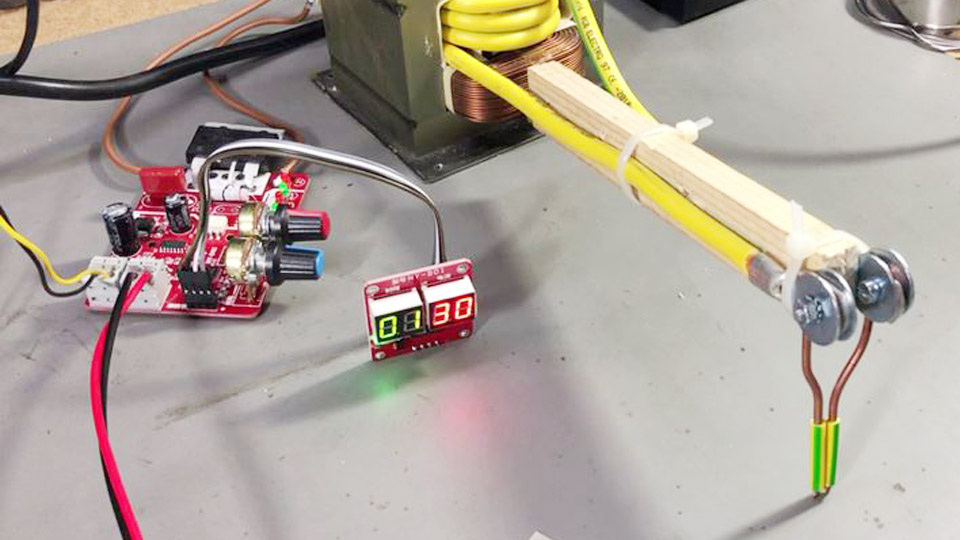
Spot welding is one of the most common welding methods used in manufacturing, and it’s particularly popular in industries like automotive, electronics, and appliance production. It’s fast, efficient, and doesn’t require filler materials, which has made it a go-to technique for joining thin metal sheets.

Image by thetech
Like any method, spot welding comes with its own set of advantages and drawbacks. Having spent time exploring the ins and outs of this technique, I’d like to share what I’ve learned about where spot welding excels and where it might fall short.
What is Spot Welding?
Spot welding is a type of resistance welding that uses electric current and pressure to join metal sheets together. Unlike other welding methods that may use filler materials, spot welding relies solely on heat generated by the resistance of the metal to the electric current. This heat melts the metal at specific points, creating a strong bond when it cools and solidifies.
It’s straightforward, efficient, and highly effective for certain applications. Because it’s often used on thin sheets of metal, spot welding may not be suitable for every project. Let’s take a closer look at what makes spot welding advantageous and where it may not be the best choice.
Advantages of Spot Welding
There’s a reason why spot welding is a popular choice across industries—it brings a lot of benefits, especially in high-volume production. Here are some of the top advantages of spot welding:
Speed and Efficiency
One of the first things that stood out to me is just how fast spot welding can be. The entire process takes only seconds, making it ideal for high-speed production environments.
This speed enables manufacturers to join hundreds or even thousands of pieces within a short period, which is perfect for large-scale operations like automotive manufacturing.
Cost-Effective
Spot welding equipment is relatively simple, and because it doesn’t require any additional materials like filler wires or gases, it can be a very cost-effective choice.
Once set up, the equipment can perform countless welds with minimal maintenance. This simplicity in equipment and process helps keep costs low, which can be a big advantage for budget-conscious operations.
Strong, Reliable Welds for Thin Sheets
Spot welding is particularly effective when working with thin metal sheets, such as those between 0.5 to 3 mm thick.
The welds created are strong and durable, capable of withstanding considerable stress without breaking. This strength is a huge advantage in applications where the welded parts need to withstand regular use and stress.
Minimal Deformation and Warping
Since spot welding is highly localized, the heat-affected zone is very small. This is beneficial for maintaining the integrity of the material, as there’s less risk of warping or deformation in the surrounding areas.
For applications that require a clean finish and minimal impact on the surrounding material, spot welding can be a fantastic option.
Environmentally Friendly
Another surprising benefit of spot welding is its eco-friendliness. Because it doesn’t require extra materials or gases, there’s minimal waste. Additionally, spot welding doesn’t produce fumes or pollutants, making it a cleaner and safer choice for both workers and the environment.
Disadvantages of Spot Welding
While spot welding has several advantages, it’s not without its downsides. Here are some of the challenges and limitations I’ve discovered about spot welding.
Limited to Thin Materials
One of the biggest drawbacks of spot welding is its limitation when it comes to material thickness. Spot welding is most effective for thin metal sheets, and it struggles with thicker materials.
When attempting to weld thick metals, the heat may not penetrate deeply enough, resulting in weak or incomplete welds. For thicker materials, other welding methods like MIG or TIG welding might be more suitable.
Limited to Similar Metals
Spot welding works best with metals that have similar electrical and thermal conductivity, like steel or stainless steel.
Dissimilar metals, or metals with vastly different melting points, are harder to join using spot welding. This limitation can be a disadvantage in projects that require joining different types of metals.
Visible Weld Marks
Spot welding often leaves visible marks on the metal where the electrodes were placed. These marks might not be an issue in some applications, but if the welds are on a visible surface, it could detract from the final appearance. While there are ways to minimize or cover these marks, they add an extra step, which can be inconvenient.
Requires Precise Control of Parameters
To achieve consistent, high-quality welds, spot welding requires precise control of parameters such as pressure, current, and weld time. Small variations in these settings can result in weak welds or damage to the material.
This level of precision can make spot welding more challenging for less-experienced welders or in environments where strict quality control is difficult.
Potential for Electrode Wear
Since the electrodes are in direct contact with the metal, they can wear out over time. This wear can affect the quality of the welds and may require regular maintenance or replacement of the electrodes.
While this isn’t a major issue, it’s worth considering for high-production environments where downtime for maintenance can affect productivity.
Comparison of Advantages and Disadvantages of Spot Welding
To give you a clear picture, here’s a side-by-side comparison of the advantages and disadvantages of spot welding:
| Advantages | Disadvantages |
|---|---|
| Fast and efficient | Limited to thin materials |
| Cost-effective | Best for similar metals only |
| Strong welds for thin sheets | Leaves visible weld marks |
| Minimal deformation | Requires precise parameter control |
| Environmentally friendly | Potential for electrode wear |
Common Applications of Spot Welding
Spot welding’s unique combination of speed, strength, and efficiency has made it a staple in various industries. Here’s a quick look at some of its common applications:
Automotive Manufacturing
Spot welding is used extensively in the automotive industry to join metal sheets in car bodies, frames, and doors. The process’s speed and strength are invaluable for high-volume production lines.
Electronics Industry
In electronics, spot welding is used to join battery cells, connectors, and small metal parts. The precision and control make it ideal for delicate electronic components.
Appliance Assembly
Household appliances like washing machines, refrigerators, and microwaves often rely on spot welding to create strong, durable joints in metal parts.
Tips for Overcoming Spot Welding Limitations
Spot welding’s limitations don’t mean it’s unusable for every project. In fact, there are ways to make the most of it, even with some of its challenges.
Optimize Parameters
Fine-tuning the current, pressure, and weld time can significantly improve weld quality. Running a few test welds beforehand can help identify the best settings.
Use Compatible Metals
When possible, use metals with similar conductivity and melting points to ensure a reliable weld. This will minimize issues with joint strength and consistency.
Regular Electrode Maintenance
Since electrode wear can affect weld quality, regular inspection and maintenance are essential. Replacing electrodes as needed helps keep the welds consistent and reliable.
Surface Preparation
Cleaning the metal surfaces before welding can improve weld quality and strength. Dirt, oil, and oxidation can interfere with the weld, so a quick cleaning step can go a long way.
Consider Alternative Welding for Thick Materials
For materials thicker than 3 mm, consider other welding methods like MIG or TIG welding. These alternatives may be more suitable for thick metals or applications where strength is critical.
Final Thoughts
Spot welding is an impressive technique with a lot to offer, especially in applications where speed, efficiency, and low cost are priorities. Its strength in joining thin metal sheets, combined with its eco-friendliness and minimal distortion, makes it highly valuable in fields like automotive and electronics manufacturing.
Its limitations with thicker materials, dissimilar metals, and visible weld marks mean it may not be the best choice for every project.
By understanding both the advantages and disadvantages of spot welding, you can make an informed decision about when and where to use it.
If your project involves thin sheets of similar metals and requires high-speed production, spot welding is likely an excellent choice. But for thicker or more varied materials, exploring other welding methods might yield better results.
Spot welding is a versatile and valuable tool in the world of manufacturing. With a few adjustments and a solid understanding of its strengths and limitations, you can make the most of this efficient and reliable welding method.