
Many people think of welding as a process just for metal. But in daily life, plastic welding is just as important—especially when you need to fix broken plastic parts. From car bumpers to household items, plastic welds can save you money and prevent waste.
One of the most popular ways to bond plastics is using JB Weld, a brand known for strong adhesives. But how do you weld plastic together with JB Weld? Let’s explore the tools, techniques, and secrets to making strong, lasting plastic repairs—even if you have never done it before.
Understanding Plastic Welding
Welding plastic is not the same as melting and fusing metals. It means joining two plastic pieces so they act as one solid part. Usually, this involves using heat, adhesives, or chemicals. The goal is to create a bond that is as strong as the original plastic. For many home repairs and DIY projects, epoxy adhesives like JB Weld are the easiest and most reliable method.
Why Use Jb Weld For Plastic?
JB Weld is known for its high strength and easy use. Unlike some glues that only stick to the surface, JB Weld forms a chemical bond. This means the two pieces are fused together at a molecular level, not just held by a sticky layer.
JB Weld offers several formulas made for different materials, including ones made for plastic.
Many beginners make the mistake of using any glue found in their toolbox. But not all glues work on plastic. For example, super glue (cyanoacrylate) often becomes brittle and can crack. JB Weld’s plastic formulas are designed to be flexible and waterproof, which is essential for parts that move or are exposed to stress.
Types Of Plastics And Jb Weld Compatibility
Not all plastics are the same. Some are easy to bond, while others are very difficult. Knowing the type of plastic you are repairing will help you choose the right JB Weld product and technique.
Common Plastic Types
- ABS (Acrylonitrile Butadiene Styrene): Used in pipes, Lego bricks, car parts. Bonds well with JB Weld.
- PVC (Polyvinyl Chloride): Used in plumbing pipes, credit cards. JB Weld works, but surface prep is important.
- Polyethylene (PE): Used in bottles, toys, gas tanks. Hard to bond—JB Weld may not be effective without special primers.
- Polypropylene (PP): Used in car bumpers, storage boxes. Also difficult to bond—standard JB Weld struggles here.
- Polystyrene: Used in disposable cutlery, model kits. Bonds well with JB Weld.
How Jb Weld Products Compare For Different Plastics
Here is a quick comparison of JB Weld products for popular plastics:
| JB Weld Product | Best For | Not Recommended For | Strength |
|---|---|---|---|
| Plastic Bonder | ABS, PVC, Polystyrene | Polyethylene, Polypropylene | 3770 PSI |
| PlasticWeld Epoxy Putty | ABS, PVC, Polystyrene | Polyethylene, Polypropylene | 600 PSI |
| Original JB Weld | Hard plastics (not flexible) | Flexible plastics, Polyethylene, Polypropylene | 3960 PSI |
Key Insight: Polyethylene and polypropylene are very common but very hard to glue. Most JB Weld products won’t stick well unless you use a special plastic primer first.
Choosing The Right Jb Weld Product
Picking the right product is critical for a strong bond. JB Weld offers several adhesives, but only some are made for plastics.
Main Jb Weld Products For Plastic
- JB Weld Plastic Bonder: A two-part urethane adhesive. Sets in 15 minutes. Works well for automotive and household plastics.
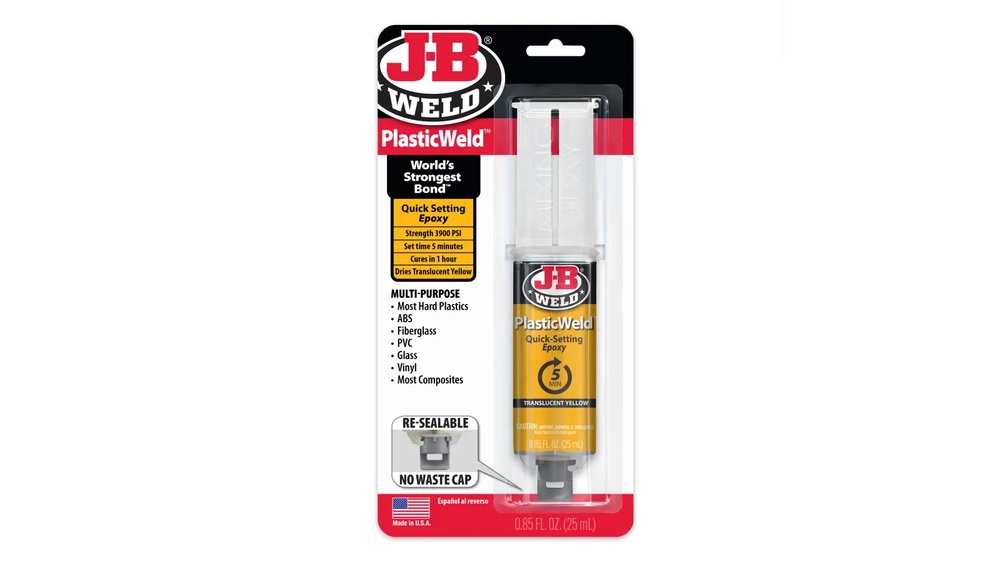
- JB Weld PlasticWeld: Comes as a putty or syringe. Bonds fast, easy to mold, but not as strong as Plastic Bonder.
- JB Weld Original: This is the classic metal repair epoxy. It can work on some hard plastics but is not flexible.
- JB Weld ClearWeld: A clear-drying version for visible repairs. Works best on small parts.
Practical Tip: If you are not sure what plastic you have, do a small test with the adhesive on a hidden area. If it peels off easily after drying, you probably have polyethylene or polypropylene.
Tools And Materials You Need
Before starting your plastic weld, gather all the tools and materials. Preparation is half the battle for a successful repair.
- JB Weld Plastic Bonder or PlasticWeld
- Sandpaper (80 to 220 grit)
- Isopropyl alcohol (or acetone)
- Clean cloth or paper towels
- Mixing tray or disposable plate
- Mixing stick (popsicle stick or toothpick)
- Clamps, rubber bands, or tape
- Gloves (nitrile or latex)
- Plastic primer (for polyethylene or polypropylene)
- Small brush (optional for primer or cleaning)
Non-Obvious Insight: Cleanliness is the #1 reason why plastic welds fail. Even tiny amounts of oil or dust can stop the adhesive from working.
Step-by-step: How To Weld Plastic Together With Jb Weld
Let’s go through the process step by step. This method applies to most plastics, but always check the instructions on your JB Weld package.
1. Identify The Type Of Plastic
Look for recycling symbols (usually found on the bottom of the part). Numbers 2 and 5 mean it’s polyethylene or polypropylene, which are hard to bond. For these, use a plastic primer before JB Weld.
2. Clean The Surfaces
Wash both plastic pieces with soap and water to remove dirt and grease. Dry with a clean towel. Then, wipe the areas to be glued with isopropyl alcohol or acetone. This removes oils and helps the JB Weld stick.
3. Sand The Surfaces
Lightly sand both surfaces with 80–120 grit sandpaper. This roughens the plastic, giving the adhesive more to grip. Wipe away dust with a clean cloth.
Pro Tip: Sand in different directions. This helps create a “tooth” for the glue to hold onto.
4. Apply Plastic Primer (if Needed)
If you’re working with polyethylene or polypropylene, apply a plastic primer and let it dry. This is a must—without primer, JB Weld will not bond to these plastics.
5. Mix The Jb Weld
Squeeze out equal parts of the two JB Weld components (resin and hardener) onto your mixing tray. Mix them thoroughly with the stick until the color is uniform. For the putty type, knead until the color is even.
6. Apply The Adhesive
Spread a thin, even layer of mixed JB Weld to both surfaces. Press the pieces together firmly. Make sure there are no gaps or air bubbles.
7. Clamp And Hold
Hold the parts together with clamps, rubber bands, or tape. Keep them steady for at least 15–30 minutes, depending on the product. Do not move the parts during this time.
8. Let It Cure
Leave the part undisturbed for several hours. Full strength is usually reached in 24 hours. Avoid stress or movement until the adhesive is fully cured.
9. Finish And Test
Once cured, remove clamps and test the bond. If needed, sand off any extra adhesive for a smoother look. For visible repairs, you can paint over the area.
Common Mistakes And How To Avoid Them
Even experienced DIYers sometimes make errors when welding plastic. Here are the most common mistakes and how to prevent them.
- Not cleaning the surface: Oil, grease, or dust can ruin the bond. Always clean thoroughly.
- Skipping sanding: Smooth plastic is hard to glue. Sanding creates a better surface for the adhesive.
- Using the wrong JB Weld product: Not all formulas are for plastic. Check the package and use the right one.
- Not using primer on PE/PP: Polyethylene and polypropylene need primer. Skipping this step leads to weak bonds.
- Moving parts before curing: Even if the bond feels hard, it needs time to reach full strength.
- Applying too much adhesive: More glue is not always better. A thin, even layer works best.
Non-Obvious Insight: Temperature matters. JB Weld cures best at room temperature (70°F/21°C). If it’s too cold, the adhesive takes much longer to cure.
How Strong Is A Jb Weld Plastic Bond?
Many people wonder if a glued plastic part can hold up under stress. Here are some real-world numbers and examples.
- Plastic Bonder: Up to 3770 PSI (pounds per square inch). Strong enough for car bumpers, tool handles, and many household repairs.
- PlasticWeld Putty: Up to 600 PSI. Good for filling cracks and small repairs, not for high-stress areas.
- Original JB Weld: Up to 3960 PSI, but only on hard plastics and not flexible ones.
Example: A properly glued car bumper tab using JB Weld Plastic Bonder can hold more than 50 pounds of pulling force—much more than most daily use needs.
Repairing Different Plastic Items
Each repair is a bit different. Here’s how JB Weld works for common plastic repairs:
Automotive Parts
Car bumpers, grilles, and headlights are often made of ABS or polypropylene. For ABS, JB Weld works well. For polypropylene, always use primer first.
Household Items
Broken toys, remote controls, and kitchen tools are usually polystyrene or ABS. JB Weld Plastic Bonder or PlasticWeld putty can make long-lasting fixes.
Outdoor Gear
Coolers, garden tools, and patio furniture can be repaired if not made of polyethylene. For PE, try using primer and test first.
Water Containers
JB Weld makes waterproof bonds, but not all plastics are safe for drinking water. Always check the label if you plan to repair food or water containers.
Comparing Jb Weld To Other Plastic Repair Methods
It helps to see how JB Weld stacks up against other options:
| Method | Strength | Ease of Use | Waterproof | Flexible |
|---|---|---|---|---|
| JB Weld Plastic Bonder | High | Easy | Yes | No |
| Super Glue (cyanoacrylate) | Medium | Very Easy | Sometimes | No |
| Plastic Welding (Heat Gun) | Very High | Hard | Yes | Yes |
| Hot Glue Gun | Low | Easy | No | Yes |
Key Takeaway: JB Weld is much easier and less risky for beginners than using a heat gun for plastic welding.
Safety Tips When Using Jb Weld
Working with adhesives is usually safe, but you should still take care.
- Wear gloves to prevent skin contact.
- Use good ventilation to avoid breathing fumes.
- Do not eat, drink, or smoke while using epoxies.
- Keep products away from children and pets.
- Store unused JB Weld in a cool, dry place.
If adhesive gets on your skin, wash with soap and water. If it gets in your eyes, rinse with water and seek medical help.
Advanced Techniques For Stronger Repairs
Sometimes you need a repair that is even stronger than a standard bond. Here are a few advanced methods to try:
V-Groove Joint: Use a file or knife to make a small “V” along the crack. Fill this groove with JB Weld for a stronger bond.
Reinforcement: Place a piece of mesh or fiberglass tape over the joint before applying adhesive. This spreads out the load.
Layered Application: For big repairs, apply the adhesive in thin layers, letting each one cure before adding the next.
Insider Tip: If you are repairing a load-bearing part, test the fix before putting it back into full use.
How To Make Your Plastic Welds Last
A strong weld is more than just glue. Here’s how to ensure your repair stays solid for years:
- Avoid UV light: Sunlight can weaken some plastics and adhesives. Paint over repairs if they will be outdoors.
- Don’t over-tighten bolts: JB Weld bonds are strong but not flexible. Too much force can crack the glue.
- Store repaired items indoors: Cold or very hot weather can make plastics brittle or soft.
- Check for leaks: For water containers, test the repair by filling with water and checking for drips after 24 hours.
When Not To Use Jb Weld For Plastic
There are times when JB Weld is not the right choice:
- Flexible parts: JB Weld is not flexible. For items that bend, look for flexible adhesives.
- High-heat areas: Most JB Weld products soften above 250°F (121°C). Don’t use for engine parts or near stoves.
- Medical or food use: Unless the package says “food safe,” do not use JB Weld where it will touch food or drink.
Alternative: For difficult plastics (like PE or PP), consider using a two-step plastic welding kit or mechanical fasteners.
How To Store Jb Weld And Leftover Adhesive
To keep your JB Weld fresh and usable:
- Clean the nozzle before putting the cap back on.
- Store in a cool, dry place away from sunlight.
- Keep tubes tightly closed to avoid hardening.
- If the product is old or thick, test it on scrap before your main repair.
Real-world Example: Fixing A Car Bumper Tab
Let’s say you break a small tab on your car’s bumper. Here’s a step-by-step summary:
- Remove any loose plastic and clean the area.
- Sand both surfaces.
- If the bumper is polypropylene, use plastic primer.
- Mix JB Weld Plastic Bonder and apply to both surfaces.
- Press the tab into place and clamp for 30 minutes.
- Wait 24 hours before reinstalling the bumper.
After curing, the bond is usually stronger than the original plastic.
Environmental Impact And Recycling
Repairing plastic instead of throwing it away is good for the environment. Each year, millions of tons of plastic end up in landfills. By fixing items with JB Weld, you reduce waste and save resources.
Interesting Fact: Recycling rates for plastic in the US are less than 10%. Every repair helps make a difference.
Where To Buy Jb Weld Products
JB Weld is widely available at hardware stores, auto parts shops, and online. Always check the expiration date before buying. For the best selection, visit the official JB Weld website or trusted retailers.
Wrapping Up
Welding plastic with JB Weld is a skill anyone can learn. With the right product, good preparation, and a bit of patience, you can make strong, lasting repairs that save money and help the environment. Always follow the instructions, and don’t be afraid to test and learn on small projects first.
Frequently Asked Questions
What Is The Strongest Jb Weld Product For Plastic?
JB Weld Plastic Bonder is the strongest for most plastics, with a bond strength up to 3770 PSI. It works best on ABS, PVC, and polystyrene, but not on polyethylene or polypropylene without a primer.
Can I Use Jb Weld On All Types Of Plastic?
No. Most JB Weld products do not stick well to polyethylene or polypropylene. For these, you need a special plastic primer before using JB Weld. Other plastics like ABS, PVC, and polystyrene bond well.
How Long Does Jb Weld Take To Fully Cure On Plastic?
JB Weld usually sets in 15–30 minutes, but full strength is reached after 24 hours. For best results, wait a full day before using or putting stress on the repaired part.
Is Jb Weld Waterproof After Curing?
Yes, most JB Weld products for plastic are waterproof after curing. This makes them suitable for outdoor items, plumbing, and water containers (check the label for food safety).
Can I Paint Over A Plastic Weld Made With Jb Weld?
Yes. Once fully cured, you can sand and paint over the JB Weld adhesive. This helps protect the bond from sunlight and improves appearance.


