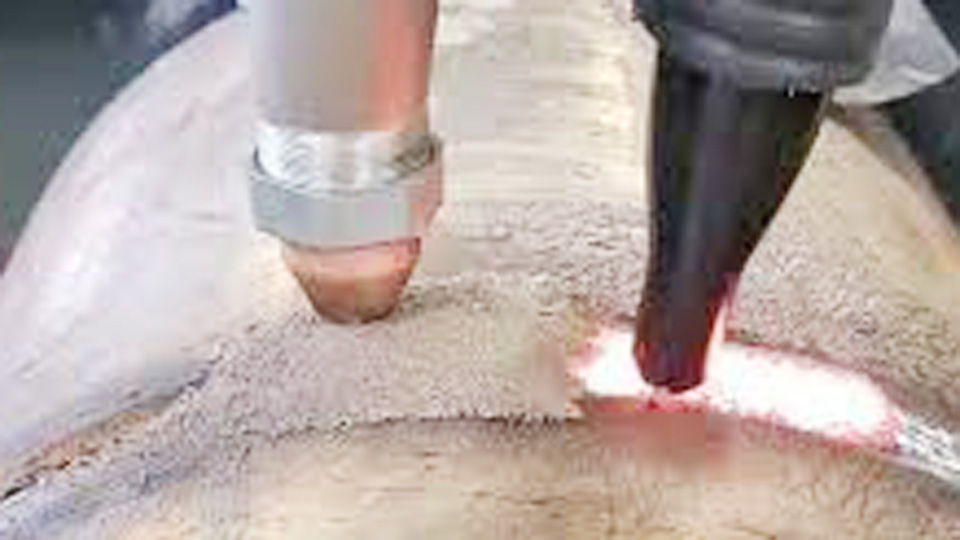
Walking into a heavy fabrication bay for the first time can be a bit of a shock. You’re used to the bright ultraviolet flash of TIG or the crackle of a MIG gun, but then you see a machine moving silently along a massive girder, burying the arc under a pile of gray dust.
There’s no flash, no smoke, and almost no sound. That is the “Sub Arc” in action. If you’ve ever wondered what is Submerged Arc Welding used for, the short answer is: anything that requires massive penetration, relentless speed, and a weld so clean it looks like it was machined.
I’ve seen SAW (Submerged Arc Welding) save thousands of dollars in rework costs and cut production times in half. For a welding student or a professional looking to move into heavy industry, understanding this process isn’t just a technical requirement—it’s a career-changer.
It’s the process that builds our bridges, pressure vessels, and massive offshore rigs. If you’re looking for deep penetration and high deposition rates without the fatigue of holding a torch for ten hours, you’re in the right place.
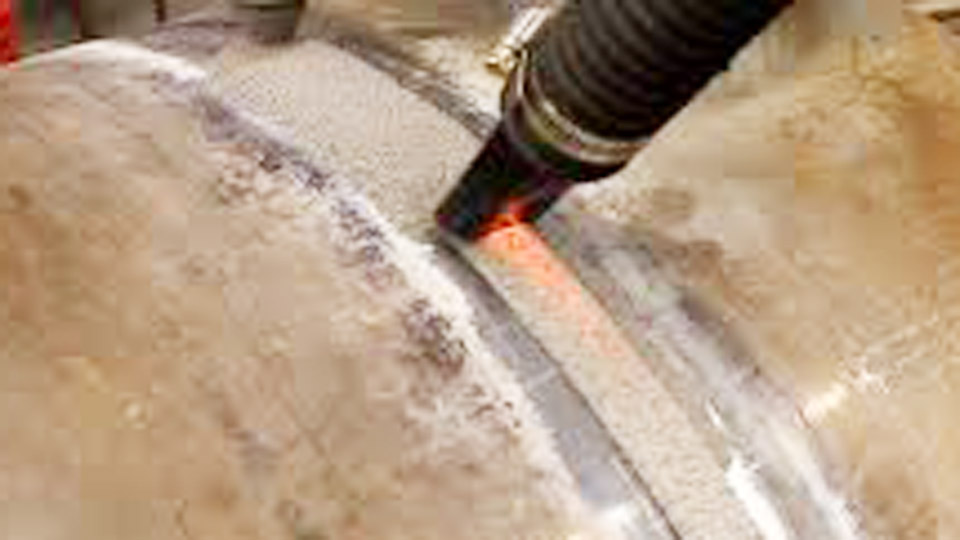
Image by westermans
What Exactly Is Submerged Arc Welding (SAW)?
At its core, Submerged Arc Welding is an automated or semi-automated process where the arc is struck between a continuously fed wire electrode and the workpiece. The “magic” happens because the entire weld zone is buried—literally submerged—under a blanket of granular, fusible flux.
How It Works in the Real World
When you pull the trigger, the machine feeds both the wire and a stream of flux. The flux shield does three things: it protects the puddle from the atmosphere, it acts as a thermal blanket to keep the heat concentrated in the joint, and it suppresses the UV radiation and fumes.
Think of it as the ultimate heavy-duty version of MIG welding, but instead of using a shielding gas that can blow away in a draft, you’re using a solid mineral barrier. This allows for incredibly high amperages—sometimes up to 1,000 amps or more—that would simply melt a hand-held torch.
When and Why Should It Be Used?
You use SAW when you are dealing with thick materials (typically 1/4 inch and up) and long, continuous seams. Because the arc is hidden, there’s no spatter. This means your post-weld cleanup is basically just vacuuming up the unused flux and tapping off the slag.
Where the Money Is: Typical Applications for SAW
If you’re wondering why a shop would invest $20k to $100k in a SAW tractor or manipulator, you have to look at the scale of the jobs.
1. Pressure Vessels and Boilers
In the US, many ASME-coded shops rely on SAW for the long longitudinal and circumferential seams of pressure vessels. When you’re welding 2-inch thick wall plate, you need a process that doesn’t fail an X-ray. SAW provides incredible consistency.
2. Structural Steel and Bridge Girders
Have you ever looked at those massive I-beams on a highway overpass? Those long fillet welds are almost always done with SAW. The machine can run at 20–30 inches per minute with a deposition rate that makes SMAW (stick welding) look like a hobby.
3. Pipe Fabrication
Large-diameter pipes (24 inches and up) are perfect candidates. The pipe is placed on rollers (turning rolls), and the SAW head stays stationary while the pipe rotates. It produces a perfect, deep-penetrating bead every single time.
Machine Settings: Dialing in the Power
You can’t just “wing it” with Sub Arc. The settings are precise, and if you’re off by 50 amps, you might find yourself grinding out 20 feet of defective weld. Most US shops use machines like the Lincoln Electric Power Wave or Miller SubArc systems.
Amperage and Wire Diameter
The wire (electrode) is much thicker than your standard .035 MIG wire. We’re usually talking 3/32″, 1/8″, or even 5/32″ diameters.
| Wire Diameter | Amperage Range (DCEP) | Voltage Range |
| 3/32″ (2.4mm) | 300 – 500 Amps | 26 – 32V |
| 1/8″ (3.2mm) | 400 – 700 Amps | 28 – 35V |
| 5/32″ (4.0mm) | 500 – 1000+ Amps | 30 – 40V |
Voltage and Flux Depth
In SAW, voltage controls the arc length and the width of the bead. If your bead is too narrow and “ropey,” you need to kick up the volts.
The flux depth is also critical. If the pile is too shallow, you’ll get “flashing” (the arc peeking through), which causes porosity. If it’s too deep, the gases can’t escape, and you’ll get “pockmarks” on the surface of the weld. Aim for a flux pile just deep enough to hide the light of the arc.
Joint Preparation: The “Secret Sauce” of Success
I’ve seen more SAW failures due to bad prep than bad settings. Because SAW is so high-heat, it will find any moisture or oil and turn it into a giant hole in your weld.
1. The “White Metal” Rule
You must grind the joint to clean metal. This isn’t like 6010 stick welding where you can burn through rust. Use a flap disc or a stone to clear at least 1 inch on either side of the bevel.
2. Bevel Angles
Because SAW penetrates so deeply, you don’t need the wide 75-degree bevels you’d use for stick welding. A 45-to-60-degree included angle is usually plenty. This saves a massive amount of filler metal and time.
3. Tacking and Backing
SAW will blow right through a thin tack weld. Use substantial tacks or, better yet, a backing bar (usually made of copper or a ceramic tape) to hold the puddle until it solidifies.
Step-by-Step: Running Your First SAW Seam
If you’re stepping up to the machine for the first time, follow this checklist. It’ll keep you from making the “rookie” mistakes that lead to a day of grinding.
Check Your Ground: At 600 amps, a loose ground clamp will weld itself to the table or arc-out your bearings. Ensure a solid, bolted connection.
Align the Tractor: If you’re using a track-mounted carriage, run it “dry” (no arc) the full length of the seam to make sure it doesn’t wander off-track.
Load the Flux: Ensure your flux is dry. If it’s been sitting in a humid shop, it needs to be baked in a flux oven. Wet flux = Hydrogen cracking.
Set the Stick-out: Usually, an electrical stick-out of 1 to 1.5 inches is standard. Too much stick-out increases resistance and decreases penetration.
Start the Arc: Most modern SAW systems use a “touch start” or a “scratch start.” Once it’s buried, watch your meters, not the arc. Listen for a steady hum—like a distant beehive.
Comparing SAW to Other Processes
Why choose this over MIG (GMAW) or Flux-Core (FCAW)? Let’s look at the breakdown.
SAW vs. FCAW (Flux-Cored Arc Welding)
- Deposition: SAW can put down 20-50 lbs of metal per hour. Flux-core usually tops out around 12-15 lbs.
- Operator Comfort: SAW is much easier on the body. You aren’t holding a vibrating torch or staring at a blinding flash.
- Portability: FCAW wins here. You can’t easily take a SAW setup up a ladder or into a tight corner.
Pros and Cons of Submerged Arc Welding
Pros:
- Quality: Highest X-ray pass rate in the industry.
- Safety: No UV light, very low fume levels (with proper ventilation).
- Deep Penetration: Can weld 1/2″ plate in a single pass from both sides.
Cons:
- Position: Strictly limited to flat and horizontal positions. You cannot weld vertically or overhead with SAW because the flux would just fall off.
- Complexity: Requires specialized training and heavy equipment.
Common Mistakes and How to Fix Them
Even pros get bitten by SAW issues. Here are the “big three” I see in shops across the US.
1. Porosity and “Pocking”
- The Cause: Often moisture in the flux or oil on the base metal.
- The Fix: Store flux in a heated hopper. Use a torch to “pre-heat” the joint to drive off surface moisture before you start the tractor.
2. Slag Entrapment
- The Cause: Running your voltage too low, which creates a deep, narrow “V” shaped bead that pinches the slag at the toes.
- The Fix: Bump up your voltage by 2-3 volts to flatten the bead profile, allowing the slag to float to the top.
3. Centerline Cracking
- The Cause: Usually caused by a weld bead that is deeper than it is wide (high depth-to-width ratio).
- The Fix: Reduce amperage or increase voltage to widen the puddle.
Safety Considerations: What They Don’t Tell You
Just because there’s no flash doesn’t mean it’s safe.
Thermal Burns: The slag and the metal stay incredibly hot for a long time. Because there’s no “glow,” people often touch the weldment too soon.
Dust Inhalation: The flux is a mineral product. When you’re vacuuming it up or pouring it, wear a dust mask. You don’t want that stuff in your lungs.
Mechanical Hazards: These tractors are powerful. They don’t have “finger sensors.” Keep your hands and clothing away from the drive gears and the track.
The Shop Boss’s Final Word
If you can master the Sub Arc, you become a high-value asset to any heavy fab shop. It’s a process that rewards the “thinker”—the person who can look at a set of blueprints, calculate the heat input, and dial in a machine to run a perfect 40-foot seam.
Remember, SAW is all about the preparation. If your plates are clean, your flux is dry, and your ground is solid, the machine will do 90% of the work for you. Don’t be intimidated by the high amperages. Respect the power, watch your meters, and always keep an eye on your travel speed.
The biggest mistake I see guys make is getting complacent because they can’t see the arc. They walk away to grab a coffee while the tractor is running. Don’t do that.
A small piece of debris on the track can derail the whole machine, leaving you with a $5,000 repair bill and a week of gouging out bad metal. Stay with the machine, listen to the “hum,” and watch that slag peel up on its own. That’s the sign of a pro-level weld.
Frequently Asked Questions
Can Submerged Arc Welding be used on aluminum?
Technically, it is possible with very specialized fluxes and AC power sources, but it is extremely rare. SAW is almost exclusively used for carbon steels, low-alloy steels, and stainless steels. For aluminum, TIG or high-speed MIG is almost always the better choice.
Why is my SAW slag sticking to the weld?
This is usually a “bead shape” issue. If the weld is too cold or the voltage is too low, the edges (toes) of the weld won’t blend smoothly into the base metal, “locking” the slag in place. Increase your voltage to flatten the bead, and the slag should pop off easily with a light tap.
How much flux should I be using?
You only need about 1 to 1.5 inches of flux covering the wire. If you use too much, you’re just wasting material and potentially causing “gas flats” on the surface of the weld. Most shops use a recovery vacuum system to recycle the unused flux.
Can I use SAW for thin sheet metal?
Not really. Because of the high heat and deep penetration, SAW will likely warp or blow through anything thinner than 3/16″ (approx. 5mm). Stick to MIG or TIG for the thin stuff.