A pipe weld might look flawless on the outside, but in certain industries, appearance alone means very little. When a weld is carrying high-pressure steam, corrosive chemicals, medical-grade gases, or critical process fluids, even a small defect can lead to costly downtime or serious safety risks.
That’s why understanding what types of industries require GTAW-quality pipe welds is so important for welders, inspectors, and fabrication professionals alike.
I’ve seen projects where the welding standard was far higher than the average fabrication job. In these environments, clean root penetration, precise heat control, and defect-free welds aren’t just preferred—they’re mandatory.
GTAW (TIG) welding is often the process of choice because it produces the level of quality and consistency that many critical applications demand.
Knowing where these high standards apply can help you understand industry expectations, certification requirements, and why some pipe welds undergo extensive inspection before they’re ever put into service.
I’ll break down the industries that depend on GTAW-quality pipe welds and explain why weld quality is so critical in each one.
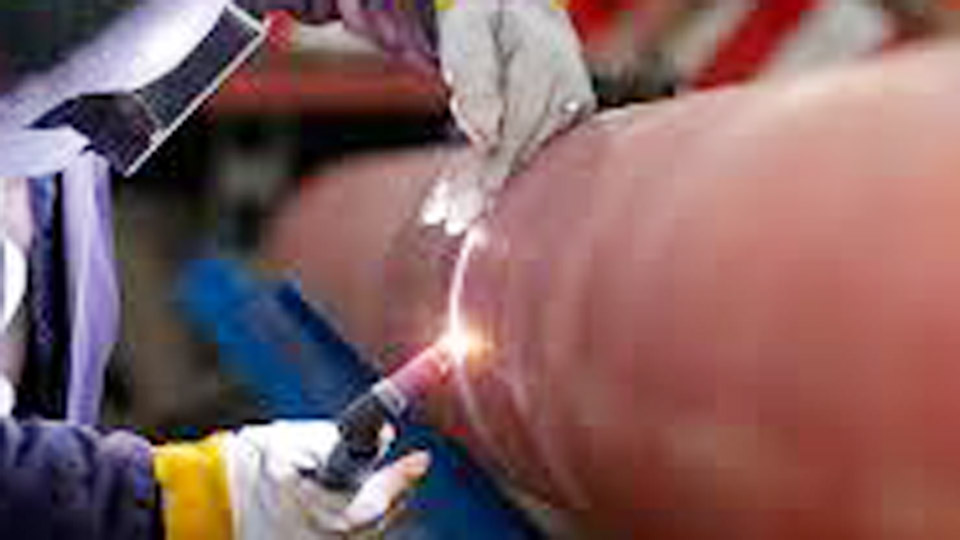
Image by aws
Why GTAW-Quality Matters for Pipe Welds
GTAW gives you unmatched control over the weld pool. You can see exactly what’s happening, adjust heat on the fly with a foot pedal, and produce welds with minimal contamination.
For pipe welding, that means superior root passes that ensure full penetration without excessive buildup inside the pipe, which could restrict flow or create turbulence.
Safety is a big reason this process gets specified. A failed weld in a high-pressure steam line or a chemical processing pipe can lead to leaks, explosions, or environmental disasters.
Distortion control is another huge factor—especially on thin-wall stainless or exotic alloys where too much heat warps the material and throws dimensions out of spec.
Cost plays a role too. Rework on critical piping systems is expensive. When you’re dealing with certified welders, post-weld heat treatment, and X-ray or ultrasonic testing, doing it right the first time saves serious money. I’ve seen jobs where switching to GTAW for the root pass cut rejection rates dramatically.
Key Industries That Demand GTAW-Quality Pipe Welds
Oil and Gas Pipeline and Refinery Work
The oil and gas sector is one of the biggest users of high-quality GTAW pipe welds. Whether it’s upstream gathering lines, midstream transmission pipelines, or downstream refinery piping, the welds have to handle corrosive fluids, high pressures, and temperature swings.
In refineries, you’ll see a lot of stainless and chrome-moly piping. GTAW is preferred for root passes because it produces a clean, consistent inside bead that resists cracking and corrosion.
I’ve worked on 6-inch schedule 80 stainless lines where the procedure called for GTAW root and hot pass followed by SMAW or FCAW fill and cap. The root had to be perfect—no lack of fusion, no undercut.
Practical tip: For carbon steel pipe in sour service, pay close attention to filler metal. ER70S-2 or ER80S-D2 works well for many applications. Keep your argon flow around 15-20 CFH and use a gas lens for better coverage on larger diameters.
Power Generation Plants
Nuclear, coal, gas, and renewable power facilities all rely heavily on GTAW for critical piping. Boiler tubes, superheater headers, steam lines, and feedwater systems demand welds that can handle extreme temperatures and pressures without failing.
In nuclear work, the standards are incredibly strict. Welds often need to pass radiography, liquid penetrant, and sometimes mechanical testing. GTAW’s low heat input helps minimize the heat-affected zone, reducing the risk of stress corrosion cracking.
I’ve done a fair bit of work on combined-cycle plants. On P91 chrome-moly piping, proper preheat, interpass temperature control, and post-weld heat treatment are non-negotiable. Typical settings for 1/8″ wall P91 might run 110-140 amps with 1/16″ or 3/32″ ER90S-B9 filler.
Aerospace and Defense Applications
Aerospace pipe systems—fuel lines, hydraulic lines, oxygen systems—require the cleanest, strongest welds possible. Weight savings matter, so you’re often welding thin-wall titanium or stainless tubing where distortion control is everything.
Orbital GTAW is common here for repeatability. Manual TIG is still king for complex fittings and repairs. I’ve seen 0.035″ wall titanium tubing welded with 20-35 amps using a #5 cup and tight fit-up.
Common mistake I see from newer welders: rushing the purge. For titanium, you need excellent back purging—often 99.999% purity argon and flow rates that ensure oxygen levels stay below 10 ppm.
Pharmaceutical, Food, and Beverage Processing
These industries need sanitary piping systems where welds can’t harbor bacteria. GTAW produces smooth, crevice-free beads that meet 3-A and FDA standards.
304L and 316L stainless are the workhorses. Electropolished tubing with automatic orbital welding is common for high-purity applications, but manual GTAW handles a lot of the field installs and custom skids.
Key advice: Thorough cleaning is everything. Use dedicated stainless brushes, acetone or alcohol wipes, and avoid carbon steel contamination. For 316L pipe, I typically run 70-110 amps depending on wall thickness, with ER316L filler.
Semiconductor and High-Purity Gas Systems
This is ultra-critical work. The gas delivery systems in chip fabs must be contamination-free. GTAW, especially orbital, dominates because it produces the cleanest welds with minimal spatter or oxidation.
Materials are often 316L stainless with electropolished interiors. Procedures emphasize purge quality, tungsten preparation, and welder qualification.
Chemical Processing and Petrochemical Plants
Similar to oil and gas but often with more exotic alloys like Hastelloy, Inconel, or duplex stainless. GTAW handles dissimilar metal welds and thin materials better than most processes.
Understanding GTAW Process Fundamentals for Pipe Work
GTAW uses a non-consumable tungsten electrode to create the arc. You add filler manually (or not at all for autogenous welds). Shielding gas, usually pure argon or argon-helium mixes, protects the weld.
For pipe, the process is often done in position—2G, 5G, 6G. Root pass technique varies. Some prefer the “keyhole” method for open-root joints, others use a J-prep or landing with filler.
Tungsten Selection and Preparation
I’ve tried just about every type. For steel and stainless, 2% thoriated (red) or lanthanated (gold) are my go-tos. Ceriated works well too. For aluminum, use pure or zirconiated.
Sharpen the tungsten to a point with a dedicated grinder. For DC welding on steel, a 20-30 degree taper with a small flat at the tip prevents the arc from wandering. Common mistake: using the same tungsten for aluminum and steel—contamination will ruin your arc stability.
Amperage and Machine Settings
Amperage depends on material, thickness, and joint type. Here’s a rough guide I’ve developed over years of pipe work:
- 1/16″ wall stainless: 40-70 amps
- 1/8″ wall carbon steel: 80-120 amps
- 1/4″ wall stainless: 110-160 amps
Use a foot pedal or fingertip control for puddle management. Start with higher amperage to establish the puddle, then back off to control heat. On pipe, travel speed and torch angle are critical for maintaining consistent penetration.
For AC on aluminum pipe, balance control around 70-80% EN helps with cleaning without excessive heat.
Joint Preparation and Fit-Up Best Practices
Bad fit-up kills more GTAW pipe welds than anything else. For open-root joints, aim for 1/16″ to 3/32″ gap with a 1/16″ land. Bevels are usually 37.5 degrees for standard pipe.
Clean the joint thoroughly—grind back at least 1/2″ on each side, then wipe with solvent. Tacks should be small, cleaned, and placed every 90 degrees or so. On critical work, I fuse the tacks completely during the root pass.
For thicker pipe, U-grooves or narrow-gap preparations reduce weld volume and distortion.
Filler Metal Selection and Compatibility
Match the filler to the base metal chemistry. For 304L, use ER308L. For 316L, ER316L. On carbon to stainless transitions, ER309L is common.
Diameter matters: 1/16″ filler for thin material, 3/32″ for most pipe work, 1/8″ for heavy wall. Feed the rod at a shallow angle, dipping it into the leading edge of the puddle. Keep the end protected by the gas shield.
Safety Considerations in GTAW Pipe Welding
This process produces intense UV light, so proper PPE is essential—shade 9-13 helmet depending on amperage, long sleeves, gloves, and good ventilation. Argon is heavier than air, so watch for accumulation in low areas.
On stainless and high-alloy work, hexavalent chromium is a real concern. Use local exhaust ventilation and consider PAPR systems for long shifts.
Step-by-Step Guide to a Typical GTAW Pipe Root Pass
- Prepare and align the pipe. Check fit-up with a gap gauge.
- Purge the backside—especially important on stainless.
- Set machine: DCEN, appropriate amperage, gas flow 15-20 CFH.
- Establish arc on the bevel, walk the cup or freehand as preferred.
- Create a keyhole, add filler as needed, and travel steadily.
- Watch the puddle—bright, fluid, with good tie-in to the sides.
- Terminate by slowly reducing amperage to fill the crater.
Common Beginner and Pro Mistakes I’ve Seen
- Insufficient purge leading to sugaring on stainless.
- Tungsten contamination from touching the puddle.
- Too much filler, causing inside protrusion.
- Rushing—GTAW rewards patience.
- Wrong gas mix or flow rate causing porosity.
Pros sometimes get sloppy with cleaning between passes on multi-pass welds. Don’t do it. A quick wire brush and wipe makes a huge difference.
Comparison of GTAW vs Other Processes for Pipe
GTAW Pros:
- Superior quality and appearance
- Excellent for thin materials and root passes
- Low distortion
- All-position capability
Cons:
- Slower
- Requires more skill
- Higher labor cost
SMAW: Good for fill passes but dirtier and harder to control on roots.
GMAW: Faster but spatter and fusion issues on critical work.
FCAW: High deposition but not ideal for roots.
Many procedures combine processes: GTAW root, then SMAW or GMAW for fill and cap.
Material-Specific Tips for GTAW Pipe Welding
Stainless Steels
Low carbon grades (304L, 316L) to prevent sensitization. Keep interpass temps below 350°F. Use argon or argon-hydrogen mixes for better penetration.
Carbon and Low-Alloy Steels
ER70S-6 or ER80S series fillers. Preheat on thicker materials or high-carbon steels.
Nickel Alloys and Duplex
Very sensitive to heat input and contamination. Follow qualified procedures exactly.
Titanium
Purge like your life depends on it. Use trailing shields for larger jobs.
Equipment Recommendations for Shop and Field
For USA shops, machines like Miller Dynasty series or Lincoln Precision TIG offer great performance and durability. Inverter technology gives you portability without sacrificing power.
For field work, engine-driven units with TIG capability are worth the investment. Don’t skimp on torches—water-cooled for longer sessions, gas lenses for better shielding.
Building Your GTAW Pipe Skills
Start with flat plate, move to coupons in 2G, then 5G and 6G positions. Practice open-root joints until you can consistently achieve full penetration with a nice keyhole.
Record your settings and techniques. What works on 4-inch pipe might need tweaking on 12-inch. Experience is your best teacher.
Taking Your Pipe Welding to the Next Level
After years of doing this, the biggest lesson is that GTAW-quality isn’t just about the machine or the rod—it’s about the entire system: preparation, technique, mindset, and inspection.
Final Thoughts
Next time you’re facing a critical pipe job, you’ll understand why certain industries won’t accept anything less than GTAW-quality. That knowledge separates the hobby welder from the professional who gets called back for the tough jobs.
Master your puddle control with the foot pedal before you ever pick up filler rod. Once you can move that puddle exactly where you want it, adding rod becomes second nature.
The best welders I know make it look effortless because they’ve put in the hours controlling heat and watching how the metal behaves. That’s what turns good welds into code-quality, X-ray-perfect joints every single time.