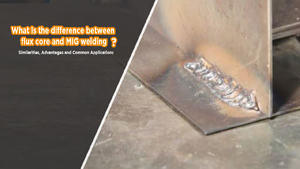
Working with flux core welding on a heavy steel project often raises the same question for welders: “How strong is flux core compared to MIG or TIG?” The reality is, flux core excels on thick metals and outdoor jobs, but achieving solid, lasting welds depends on factors like metal thickness, joint prep, arc control, and selecting the right filler rods. From stainless to mild steel—even slightly rusty surfaces—understanding flux core’s strengths and limitations makes a huge difference for weld quality, structural integrity, and cost efficiency.
For anyone tackling fabrication projects or heavy-duty repairs, knowing how to maximize flux core’s performance can prevent weak joints and rework. Keep reading to uncover practical, battle-tested tips that make every weld stronger and more reliable.

Image by homedepot
What Is Flux Core Welding?
Before we dive into the strength of flux core welding, let’s start with a quick overview of what flux core welding is. Flux core welding is an arc welding process that uses a consumable electrode that is filled with flux. The flux inside the electrode creates a shielding gas when heated, protecting the weld from contaminants in the air, which helps produce cleaner and stronger welds.
There are two main types of flux core welding: self-shielded flux core and gas-shielded flux core. Self-shielded flux core doesn’t require any external gas source, making it a versatile and portable option, especially for outdoor work. On the other hand, gas-shielded flux core uses an external shielding gas (usually CO2 or a mix of CO2 and argon) for cleaner results.
How Strong is Flux Core Welding?
Flux core welding is often regarded as a powerful and reliable welding method. The strength of a weld depends on several factors, including the material being welded, the welding technique used, and the type of flux core wire you choose. So, how strong is flux core welding in real-world applications?
Weld Penetration
One of the key aspects that contribute to the strength of flux core welding is its ability to penetrate the base material. Flux core welding, especially with gas-shielded flux core, can provide deep penetration into thicker materials, which results in a stronger and more durable weld. The deeper the penetration, the stronger the bond between the materials being welded.
For thick metals, flux core welding is often a better choice than other welding methods. It allows for greater heat input, which helps the weld melt deeper into the workpiece. This is particularly important for industrial applications where you need to weld thick metal plates or perform structural work.
Tensile Strength
The tensile strength of a weld is a critical factor in determining how well the weld can handle stress and tension. Flux core welding generally offers excellent tensile strength, especially when using high-quality wire and proper settings. Gas-shielded flux core welding typically provides higher tensile strength than self-shielded flux core due to the cleaner welds and fewer contaminants.
The tensile strength of flux core welding can vary depending on the type of wire used. For example, wires with higher alloy content tend to have greater tensile strength. In general, flux core welds can achieve tensile strength levels comparable to those of MIG and stick welds, often in the range of 70,000 to 100,000 PSI (pounds per square inch).
Impact Resistance
In addition to tensile strength, the ability of a weld to resist impact and shock loading is essential for many applications. Flux core welding, particularly when gas-shielded, provides excellent impact resistance. This makes it an ideal choice for heavy-duty and industrial applications where the welded materials will be subjected to constant stress or vibration.
Impact resistance is often a key consideration in industries like construction, manufacturing, and pipeline welding. With proper technique, flux core welds can withstand harsh conditions without cracking or breaking under pressure.
Fatigue Resistance
Welds are also subjected to cyclic loading and repeated stress in many real-world applications. Fatigue resistance refers to a weld’s ability to withstand repeated loading without failing. Flux core welding can provide good fatigue resistance, especially when proper procedures are followed, and the right filler wire is chosen.
Gas-shielded flux core generally offers superior fatigue resistance due to cleaner welds with fewer impurities. Self-shielded flux core welding can also perform well, but there may be slightly more risk of weakness in the weld due to slag inclusions or contamination.
Factors That Affect the Strength of Flux Core Welding
While flux core welding can produce strong, durable welds, the overall strength of your weld is influenced by several factors. Let’s take a closer look at the key elements that affect flux core welding strength:
Material Type
The type of material you are welding plays a significant role in determining the strength of the weld. Flux core welding works well on a variety of metals, including steel, stainless steel, and even some alloys. For thicker materials, flux core is often the preferred method due to its superior penetration. However, for lightweight or thin materials, MIG welding may be more appropriate.
Welding Settings
The settings on your welding machine, such as voltage, amperage, and wire feed speed, have a direct impact on the strength of the weld. Too much heat or too little can weaken the weld. It’s essential to adjust your machine according to the material thickness and the type of flux core wire you’re using. Be sure to follow manufacturer recommendations for the best results.
Technique and Skill
The technique you use is just as important as the equipment and settings. A well-executed flux core weld with proper technique will provide a stronger and cleaner weld. Ensure that you maintain a steady hand, move at the right speed, and avoid overheating the metal. If you’re new to flux core welding, it’s always a good idea to practice on scrap material first.
Electrode Type
The type of flux core wire you use can have a significant impact on the strength of the weld. Different wires are designed for different applications, so choosing the right wire is essential. Some wires are formulated for high tensile strength, while others are better suited for specific materials. Be sure to select a wire that matches your project’s requirements.
Weld Preparation and Cleanliness
Proper surface preparation is crucial for achieving strong, high-quality welds. The material should be clean and free from contaminants such as rust, oil, or paint. Flux core welding can handle some level of surface contamination, but the cleaner the metal, the stronger the final weld will be.
Advantages of Flux Core Welding for Strength
There are several benefits to using flux core welding when strength is a priority. Here are a few advantages of flux core welding:
Better Penetration: As mentioned earlier, flux core welding provides deeper penetration, which results in stronger welds, especially on thicker materials.
Less Sensitivity to Contaminants: Flux core welding can handle some level of contaminants, which means you can weld in outdoor conditions or on dirty materials without compromising weld strength.
Versatility: Flux core welding can be used on a variety of metals and materials, making it a versatile choice for many applications.
Is Flux Core Welding the Strongest Option?
While flux core welding is strong and reliable, If it is the strongest option depends on the specific needs of your project. For thicker materials and heavy-duty applications, flux core welding is an excellent choice. Other welding methods, such as MIG or TIG welding, may offer superior strength for specific materials or applications.
If you need a fast, portable, and strong welding solution for outdoor or industrial work, flux core is likely the best choice. However, for projects requiring the highest precision or welding on thin materials, other welding methods may be more suitable.
Conclusion
Flux core welding is a powerful and effective welding method that provides strong, durable welds for a variety of applications. If it’s structural work, heavy-duty repairs, or outdoor welding, flux core can deliver the strength you need. By understanding the factors that influence weld strength, such as material type, welding technique, and wire choice, you can ensure that your flux core welds are strong and reliable.
If you’re considering flux core welding for your next project, know that it’s a robust method that can handle tough jobs. Whether or not it’s the strongest option for you depends on your specific requirements, but it’s certainly a contender for any job that demands strength and durability.
FAQs
How strong are flux core welds compared to MIG welds?
Flux core welds generally provide similar or even stronger strength than MIG welds, especially when gas-shielded flux core is used. The depth of penetration and the tensile strength are comparable, but flux core is better suited for thicker materials.
Can flux core welding be used for thin materials?
Flux core welding is typically used for thicker materials. However, it can be used on thin materials with the right settings and techniques. For thin materials, MIG welding is generally a better option.
Does flux core welding work outdoors?
Yes, flux core welding is excellent for outdoor work. Self-shielded flux core wire doesn’t require external shielding gas, making it ideal for windy or challenging conditions.
How do I know if my flux core weld is strong enough?
A strong flux core weld should have good penetration, minimal spatter, and no cracks. Always ensure your welding settings are correct for the material you’re working with, and inspect your weld visually to check for strength.
What is the best type of flux core wire for strength?
The best type of flux core wire for strength depends on your project. For high-strength welds, choose a wire with high alloy content, such as an E71T-1 or E71T-11 for mild steel.