
When I first faced the challenge of joining bronze to stainless steel, I’ll be honest with you — I scratched my head for a good while. These two metals are so different, it almost feels like trying to sew leather to glass.
After spending years working on custom metal projects, talking to old-timers, and experimenting myself, I can confidently say: Yes, you can weld bronze to stainless steel — but it’s a little more complicated than your average welding job.
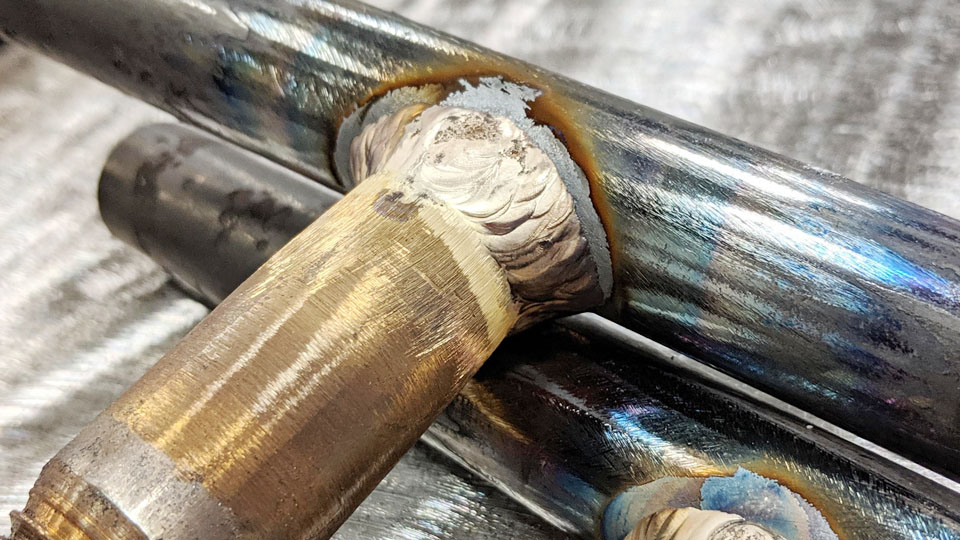
Photo by reddit
If you’re sitting here wondering how it’s done, what you’ll need, and what to look out for, I’m excited to guide you through it. I’ll explain it in a simple, practical way, just like if you and I were sitting at a welding bench, gear in hand, figuring this out together.
Why Welding Bronze to Stainless Steel Is Challenging
First, let’s talk about the core of the problem. Welding bronze to stainless steel isn’t impossible, but it’s tricky because:
- They have different melting points. Bronze melts much earlier than stainless.
- Different thermal expansion rates. They expand and contract differently when heated, which can cause cracks or weak joints.
- They have different chemical properties. Stainless has chromium for corrosion resistance, while bronze is mostly copper-based.
These differences mean a regular MIG or stick welding technique won’t just magically do the job. You need special approaches and materials.
Methods for Joining Bronze to Stainless Steel
After trying different ways myself and talking with professional fabricators, there are a few proven methods that work.
TIG Welding with Silicon Bronze Filler
This is one of the cleanest ways to join these two metals.
- Good for: Thin material, decorative joints, low-stress connections.
- Not good for: High-load, structural welds.
You basically TIG weld using a silicon bronze filler rod. The heat is kept low to prevent melting the stainless steel too much.
Key Points for TIG Welding:
- Use DCEN (Direct Current Electrode Negative) polarity.
- Keep amperage low. You want to fuse the bronze and “wet” it onto the stainless without overheating.
- Control your heat. Pulse welding helps.
- Use Argon shielding gas to protect the weld.
It’s more like a brazing action with TIG than a deep fusion weld.
MIG Brazing
If TIG isn’t available or if you prefer MIG, you can still do a decent job using MIG brazing.
- Use a silicon bronze MIG wire (like ERCuSi-A).
- Lower your voltage settings compared to steel.
- Keep a short arc length.
- Argon or Argon/Helium shielding gas can be used.
MIG brazing is faster but a little messier than TIG, and you’ll need very clean surfaces.
Traditional Brazing with a Torch
If you’re working on thick pieces or don’t have high-end welding gear, a regular oxy-acetylene torch and brazing rod can do the trick.
- Clean the metals very well.
- Use a good quality flux.
- Heat slowly and evenly.
- Let the filler flow, don’t force it.
This method has been around forever and is still extremely effective for non-structural repairs.
| Method | Best For | Equipment Needed | Skill Level |
|---|---|---|---|
| TIG Welding | Thin metal, clean joints | TIG machine, Argon gas, SiB filler | Medium-High |
| MIG Brazing | Faster jobs, less precision work | MIG welder, SiB wire, Argon mix | Medium |
| Torch Brazing | Simple setups, thicker parts | Torch, brazing rod, flux | Easy-Medium |
Choosing the Right Filler Material
The filler material is one of the most important decisions.
For welding bronze to stainless steel, the filler must:
- Bond well with both metals.
- Handle stress from expansion and contraction.
- Resist corrosion.
Here are the best options I recommend:
| Filler Type | Notes |
|---|---|
| Silicon Bronze Rod (ERCuSi-A) | Best overall, good ductility and corrosion resistance. |
| Nickel Bronze Alloy | Great for industrial applications, strong bond. |
| Specialty Stainless-Bronze Mix | Rare, used in high-end custom jobs. |
Stick with silicon bronze rods for most jobs unless you have a very specialized need.
Preparing the Metals for Welding
Preparation is everything when it comes to welding bronze to stainless. If you skip this, even the best filler and technique won’t save you.
Here’s how I prepare:
Cleaning
Both metals need to be super clean.
- Bronze: Remove oxidation, grease, and surface dirt. I usually use a wire brush followed by acetone.
- Stainless steel: Grind off any oxide layer (especially if it’s been heated before). Again, wipe down with acetone.
Fit-Up
Try to get the pieces to fit snugly but not tightly. A little bit of space allows the filler to flow properly.
Preheating
Preheating is optional but highly recommended for thicker pieces. I usually preheat to around 300°F to reduce stress during cooling.
Preheat both metals evenly to avoid warping.
Step-by-Step TIG Welding Bronze to Stainless Steel
Let’s break down a simple step-by-step guide you can follow:
- Setup your TIG welder with DCEN polarity.
- Use a pure Argon gas shield.
- Preheat thicker parts if necessary.
- Start with low amps (maybe 30-50A depending on thickness).
- Begin at the edge of the stainless, letting it melt slightly.
- Feed silicon bronze filler rod into the puddle, allowing it to wet onto the bronze side.
- Move steadily and avoid overheating.
- Let cool slowly.
It’s almost like a delicate dance — too much heat, and the bronze melts into a puddle; too little heat, and you get a cold, weak joint.
Common Problems and How to Avoid Them
Believe me, I’ve made every mistake you can think of. Here are the most common problems and how to dodge them:
Cracking
Usually caused by too much heat or cooling too fast. Preheat if necessary and let cool slowly.
Poor Fusion
Happens when the stainless isn’t properly cleaned. Always grind and clean before welding.
Porosity (Holes in the Weld)
Caused by contaminated filler or dirty metal. Use fresh, dry filler rods and keep your gas shielding tight.
Applications Where Bronze-Stainless Welding Is Used
You might wonder why anyone even tries to join these two metals.
Here are some real-world applications:
- Marine hardware: Stainless steel shafts with bronze propellers or fittings.
- Art sculptures: Combining textures and colors of both metals.
- Architectural features: Handrails, doors, and window frames.
- Industrial machinery: Where different corrosion properties are needed.
In every case, the goal is to take advantage of each metal’s strengths — bronze’s corrosion resistance and color, and stainless steel’s strength and hardness.
How Strong Is the Weld?
This is a question a lot of people ask me: “Is the joint strong enough?”
The answer is: It depends.
- For low-stress applications (decorative work, marine hardware), the weld is usually strong enough if properly done.
- For high-load structural parts, it’s better to use mechanical fastening (bolts, rivets) or specially engineered joints.
Remember, welding bronze to stainless is more like brazing — you’re bonding them together, not fusing them into one homogeneous metal.
Safety Tips When Welding Bronze to Stainless
Working with these metals means you need to keep safety in mind:
- Ventilation is critical. Bronze contains copper, and heated stainless can release hexavalent chromium. Always work in a well-ventilated area or use fume extraction.
- Wear full PPE. Gloves, welding helmet, long sleeves, and proper boots.
- Mind the heat. Bronze melts quickly, and it can spatter unexpectedly if overheated.
Conclusion
So, can you weld bronze to stainless steel? Absolutely, yes — but it’s a different ballgame than welding the same metals together.
You’ll need the right filler, careful preparation, and lots of control over your heat. TIG welding with silicon bronze is my personal favorite method because it gives you beautiful, clean joints that are perfect for most uses.
Take your time, prep properly, and don’t be afraid to practice on scrap pieces before diving into your actual project. Once you get the feel for it, you’ll realize it’s not as intimidating as it sounds.
If you’re patient and methodical, welding bronze to stainless steel can open up a whole new world of possibilities for your fabrication work.
FAQs About Welding Bronze to Stainless Steel
Can I MIG weld bronze directly to stainless steel?
Not exactly. You can MIG braze them together using a silicon bronze wire, but it’s technically brazing, not fusion welding.
What type of gas is used to TIG weld bronze to stainless steel?
Use 100% pure Argon gas for shielding when TIG welding these metals.
Is silicon bronze a strong weld for structural parts?
Silicon bronze is strong enough for low-stress applications but not recommended for critical structural parts.
Do I need to preheat stainless steel before welding to bronze?
For thinner parts, preheating isn’t necessary. For thicker sections, preheat to around 300°F to reduce thermal stress.
Why does my weld crack after cooling?
Cracking is usually due to uneven cooling or using too much heat. Preheating and slow cooling help avoid this problem.


