Sparks were flying, and the metal sheets in front of me just wouldn’t cooperate. I was trying to join them quickly, but the edges kept warping, and the welds looked uneven.
That’s when the debate between Spot Welding vs Seam Welding hit me—I realized choosing the right method wasn’t just about speed; it could make or break the strength and durability of the joint. Getting it wrong isn’t just frustrating—it can cost time, materials, and even compromise safety.
I’ll walk you through the key differences, show you when to pick each technique, and share practical tips I’ve learned the hard way to make your welds cleaner, stronger, and more reliable.

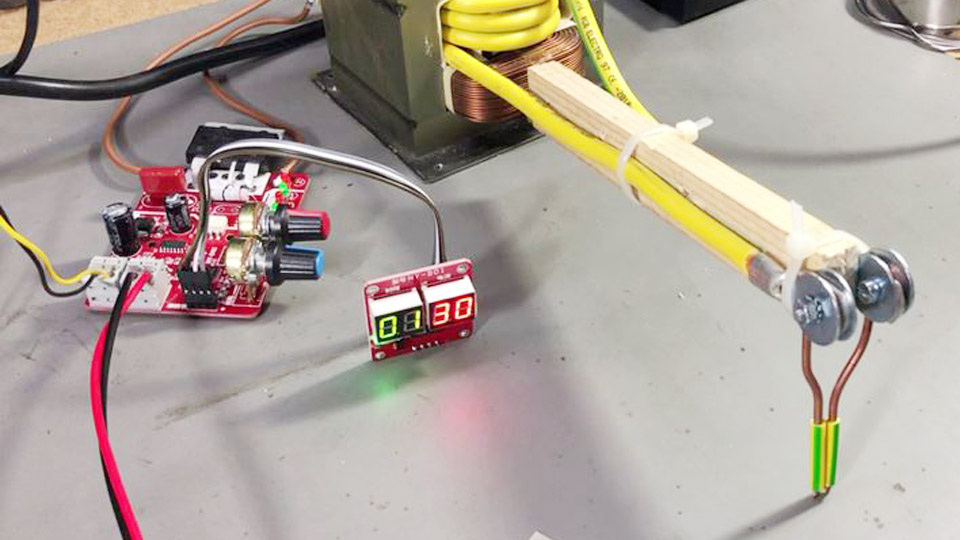
Image by tuffaloy, interestingengineering
What Is Spot Welding?
Spot welding is a simple yet effective way of joining two or more metal sheets together. In this process, two copper alloy electrodes press the metal pieces at one or more small spots, then pass a high electric current through the spot.
The resistance of the metal to the current creates intense heat, which melts the metal at that point. When the current stops, the metal cools and solidifies, forming a weld.
This technique is often seen in automobile manufacturing—think of the car doors and frames, where you can sometimes see small round marks along the edge. Spot welding is also used for making batteries, metal furniture, and many consumer appliances.
How Spot Welding Works
The process involves several key steps:
- Clean the metal surfaces to remove rust, oil, or other contaminants.
- Place the sheets between the electrodes.
- Apply pressure using the electrodes.
- Pass a controlled current for a short time (often less than a second).
- Allow the metal to cool under pressure.
The result is a small, round weld, typically 3-6 mm in diameter, depending on the application.
Key Features Of Spot Welding
- Speed: Very fast, suitable for mass production.
- Automation: Easily automated with robotic arms.
- Material Thickness: Best for sheets between 0.5 mm to 3 mm.
- Weld Size: Small, discrete welds.
- Heat Affected Zone: Localized, reducing distortion.
What Is Seam Welding?
Seam welding is a specialized resistance welding process designed to produce a continuous, leak-proof joint. Instead of pointed electrodes, seam welding uses two rotating copper alloy wheels that roll along the joint. As the wheels turn, they apply pressure and pass current, creating a series of overlapping weld nuggets—almost like a continuous chain of spot welds.
You’ll find seam welding in fuel tanks, radiators, and containers that must be airtight or watertight. It’s also used in making steel drums, tin cans, and some types of HVAC ductwork.
How Seam Welding Works
The operation follows these steps:
- Position the metal sheets or components between the wheel electrodes.
- Apply pressure with the rotating wheels.
- Pass an electric current as the wheels move, creating a continuous weld.
- Control the timing to ensure overlapping nuggets for a strong, unbroken seam.
The weld produced is a long, continuous line, not just a single point.
Key Features Of Seam Welding
- Continuous Weld: Produces airtight and watertight joints.
- Automation: Well-suited for production lines.
- Material Thickness: Most effective for sheets up to 3 mm.
- Applications: Used when leak-proof joints are essential.
- Speed: Can be fast, depending on machine settings.
Core Differences Between Spot Welding And Seam Welding
Although both processes use resistance heating, their operation and result are quite different. To see the distinctions more clearly, compare the following aspects:
| Aspect | Spot Welding | Seam Welding |
|---|---|---|
| Weld Type | Discrete spots | Continuous seam |
| Electrodes | Pointed rods | Rotating wheels |
| Application | Automotive panels, batteries | Fuel tanks, containers |
| Leak Proof | No | Yes |
| Weld Strength | Strong at spots | Uniform along seam |
| Speed | Very high | High, but depends on seam length |
| Material Thickness | 0.5–3 mm | Up to 3 mm |
| Automation | Easy | Easy |
| Distortion | Minimal | May be higher due to long welds |
Advantages Of Spot Welding
Spot welding offers several unique benefits, making it a favorite in many manufacturing settings:
- Speed and Productivity: A single weld can be completed in milliseconds, allowing thousands of welds per hour on assembly lines.
- Cost Efficiency: Equipment is relatively simple and inexpensive compared to other welding processes.
- Minimal Distortion: The heat is localized, which reduces the risk of warping or damaging the surrounding metal.
- Automation Friendly: The process can be easily integrated with robots and automated systems.
- Low Skill Requirement: Basic operation is simple, so less training is needed for operators.
- Clean Process: No filler metals, flux, or shielding gases are required, resulting in minimal smoke or fumes.
Disadvantages Of Spot Welding
Despite its advantages, spot welding does have some limitations:
- Limited to Thin Sheets: Not suitable for thick or non-overlapping materials.
- Joint Accessibility: Only works where both sides of the workpiece are accessible.
- Spot Size Restriction: Weld strength and coverage depend on spot size and spacing.
- Not Leak-Proof: Joints are not airtight or watertight, so not suitable for containers holding fluids or gases.
- Electrode Wear: Electrodes erode over time, affecting weld quality and requiring maintenance.
Advantages Of Seam Welding
Seam welding’s main strengths make it essential for specific tasks:
- Continuous, Leak-Proof Joints: Perfect for containers, tanks, and pipes where sealing is critical.
- Consistent Weld Quality: The overlapping nuggets form a uniform, strong seam.
- Automation Ready: Seam welding machines are designed for high-volume, repetitive production.
- Clean and Fast: Like spot welding, seam welding is relatively clean and quick for the right applications.
- No Filler Needed: The process uses only the base metal, reducing material costs.

Credit: wsiweld.com
Disadvantages Of Seam Welding
Seam welding isn’t perfect for every job. Here are some weaknesses:
- Complex Equipment: The machines are more complicated and expensive than spot welders.
- Material Thickness Limits: Not ideal for very thick materials; usually limited to 3 mm or less.
- Distortion Risk: Continuous heat input can cause warping, especially on long seams.
- Electrode Maintenance: Wheel electrodes must be kept in good shape, and wheel dressing is needed regularly.
- Accessibility: Like spot welding, both sides of the joint must be accessible.
Typical Applications Of Spot Welding
Spot welding’s unique properties make it the first choice for several industries and products:
- Automobile Manufacturing: Doors, roofs, frames, and body panels.
- Batteries: Spot welding is used to join cells and tabs in battery packs.
- Household Appliances: Metal cabinets, washing machines, and refrigerators.
- Metal Furniture: Desks, chairs, shelves, and lockers.
- Electronics: Cases and enclosures.
A practical example: In car manufacturing, a single car body may have over 5,000 spot welds. The process is so fast and reliable that robots can assemble entire car frames in minutes.
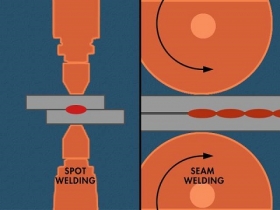
Credit: www.howtoresistanceweld.info
Typical Applications Of Seam Welding
Seam welding is essential for products that require a long, continuous joint:
- Fuel Tanks: Gasoline and diesel tanks in vehicles.
- Radiators: Both automotive and industrial cooling systems.
- Steel Drums and Barrels: For transporting liquids.
- Tin Cans: Food and beverage containers.
- HVAC Ducts: Air-tight joints in heating and cooling systems.
- Pipes and Tubes: For carrying fluids under pressure.
A practical insight: Most beverage cans are seam welded, ensuring they are leak-proof and safe for food contact.
Detailed Comparison: Process, Quality, And Cost
Let’s break down how spot welding and seam welding compare on process, quality, and cost:
Process Complexity
- Spot Welding: Simple setup, quick cycle times, easy to program in automation.
- Seam Welding: More complex, requires precise control of wheel speed, current, and pressure for consistent results.
Weld Quality
- Spot Welding: Strong at each spot, but overall joint strength depends on spot spacing and overlap.
- Seam Welding: Uniform and strong along the whole seam; better for pressure-containing or fluid-tight applications.
Cost Factors
- Spot Welding: Lower initial machine cost, less maintenance, lower running costs.
- Seam Welding: Higher machine and maintenance costs, but essential when leak-proof joints are required.
Example Scenarios
- Joining Car Door Panels: Spot welding is preferred due to speed and cost.
- Making a Water Tank: Seam welding is necessary for a continuous, leak-proof seam.
Materials Used In Spot And Seam Welding
Both methods are best for low-carbon steel, but can also be used on stainless steel, aluminum, and some alloys. The material’s resistance and thickness affect the weld quality.
- Low Carbon Steel: Most popular, easy to weld with both methods.
- Stainless Steel: Requires higher current; electrode sticking can be an issue.
- Aluminum: More difficult due to high conductivity; needs higher currents and careful control.
- Coated Metals: (e.g., galvanized steel) can be welded, but electrode wear is higher.
A non-obvious tip: For aluminum, seam welding is often less successful than spot welding, due to aluminum’s high thermal conductivity.
Factors To Consider When Choosing Between Spot And Seam Welding
Selecting the right process is not just about preference; it depends on several critical factors:
- Type of Joint Needed: If you need a continuous, leak-proof joint, seam welding is the answer. For multiple strong points, spot welding works better.
- Production Volume: High-volume, repetitive tasks favor both, but seam welding is more efficient for long seams.
- Material Thickness: Both are limited to relatively thin materials (up to 3 mm).
- Accessibility: Both sides must be accessible for the electrodes to function.
- Budget and Equipment: Spot welding machines are less expensive and easier to maintain.
- Quality Requirements: For containers or pipes, seam welding offers the integrity needed.
Common Mistakes And How To Avoid Them
Even seasoned professionals can make mistakes with resistance welding. Here are some common errors:
Incorrect Electrode Pressure: Too little pressure causes weak welds; too much pressure reduces heat generation and weld strength.
Poor Surface Preparation: Dirty or coated surfaces resist current, leading to weak or inconsistent welds. Always clean the area.
Improper Current or Timing: Too much current burns through; too little gives incomplete fusion. Regular machine calibration is vital.
Ignoring Electrode Wear: Worn electrodes (or wheels) cause poor welds and increased scrap. Inspect and maintain them regularly.
Wrong Material Combination: Some metals can’t be resistance welded together. Always check compatibility.
Quality Control And Testing
Ensuring weld quality is non-negotiable in industries like automotive and aerospace. Methods include:
- Visual Inspection: Checking for size, uniformity, and appearance.
- Peel Test: Physically pulling apart the weld to test strength.
- Ultrasonic Testing: Non-destructive testing for internal flaws.
- Leak Testing: Especially for seam-welded joints in containers.
- Destructive Testing: Cutting or tearing samples to examine weld nugget size and consistency.
A practical insight: For critical tanks and pipes, seam welds are often tested with pressurized air or fluids to check for leaks.

Credit: mechanicalinventions.blogspot.com
Environmental And Safety Considerations
Both spot and seam welding are relatively clean processes compared to arc welding or gas welding. However, safety is still important:
- Electric Shock: Machines use high currents; proper insulation and grounding are required.
- Heat and Burns: The weld area gets extremely hot.
- Fumes: Minimal, but can be present if coatings or contaminants are on the metal.
- Noise: Some machines can be loud during operation.
Always use protective equipment, such as gloves, safety glasses, and hearing protection.
The Role Of Automation In Spot And Seam Welding
Modern manufacturing lines rely heavily on robots and automated systems. Both spot and seam welding can be automated, but there are differences:
- Spot Welding Robots: Widely used, especially in car factories. Robots can apply thousands of welds quickly and accurately.
- Seam Welding Automation: More complex due to the need for precise control of wheel speed, pressure, and alignment, but critical for continuous production of cans, tanks, and pipes.
A key insight: Automation not only increases speed but also improves consistency and reduces human error.
Innovations And Trends In Resistance Welding
The technology behind spot and seam welding is continually improving:
- Servo-controlled Machines: Offer better precision in pressure and timing.
- Real-time Monitoring: Sensors track current, pressure, and weld quality during production.
- Advanced Electrode Materials: New alloys reduce wear and improve weld consistency.
- Energy Efficiency: Modern machines consume less power.
For more details on the latest research and developments, you can explore resources at the Wikipedia: Resistance Welding page.
Spot Welding Vs Seam Welding: At A Glance
For a quick summary, see how the two methods compare:
| Criteria | Spot Welding | Seam Welding |
|---|---|---|
| Speed | Very High | High (for long seams) |
| Joint Type | Point Welds | Continuous Seam |
| Applications | Car Panels, Batteries | Tanks, Cans, Radiators |
| Leak Proof | No | Yes |
| Cost | Lower | Higher |
| Automation | Easy | Moderate |
| Material Thickness | 0.5–3 mm | Up to 3 mm |
Which Method Should You Choose?
If you need to join thin sheets quickly and cost-effectively, and airtight or watertight joints are not essential, spot welding is usually the right choice. It delivers strong, efficient welds for mass-produced products like car bodies, appliances, and battery packs.
If your project requires a continuous, leak-proof joint—such as for tanks, pipes, or sealed containers—seam welding is the superior method, despite higher equipment costs and the need for more precise control.
Two non-obvious insights:
- For assemblies that require later disassembly, spot welds are easier to drill out or remove compared to seam welds.
- In some advanced manufacturing, hybrid techniques combine spot and seam welding for optimal strength and sealing.
Final Thoughts
Choosing between spot welding and seam welding is not just a technical decision—it’s about matching the right process to your product’s needs. With a clear understanding of their differences, strengths, and limitations, you can make smarter, more confident choices in your welding projects.
Frequently Asked Questions
What Is The Main Difference Between Spot Welding And Seam Welding?
The main difference is that spot welding creates individual, round welds at specific points, while seam welding forms a continuous, unbroken weld along a joint using rotating wheel electrodes. This makes seam welding ideal for leak-proof joints.
Can Spot Welding And Seam Welding Be Used On The Same Materials?
Yes, both processes work best on low-carbon steel and can also be used on stainless steel and aluminum. However, each method requires adjustments in current and pressure for different materials.
Which Process Is Better For Making Airtight Containers?
Seam welding is better for airtight or watertight containers because it creates a continuous weld. Spot welding leaves gaps between welds, which can leak.
Is It Possible To Automate Both Spot Welding And Seam Welding?
Yes, both are well-suited for automation. Spot welding is more commonly automated due to its simplicity, especially in the automotive industry. Seam welding automation is also common but requires more precise control.
What Are Common Problems With Seam Welding?
Problems include electrode wheel wear, overheating, distortion of the metal, and inconsistent welds if machine settings are not correct. Regular maintenance and careful setup can reduce these issues.