A bright arc flashing inches from your face, sparks bouncing off the workbench, and tiny pieces of hot slag flying through the air — that’s a normal day in the welding shop.
In moments like that, the question What are the Three Types of Face and Eye Protection becomes more than a theory topic. It’s the difference between finishing a job safely and walking away with painful eye strain or burns.
In real workshop conditions, your eyes and face take the most direct exposure to arc light, heat, and flying debris. I’ve watched many beginners focus heavily on amperage, travel speed, and getting a smooth bead while forgetting the one thing protecting their vision — proper face and eye protection.
Good protection isn’t just about following safety rules. When you can see the weld puddle clearly and block harmful UV and IR radiation, your weld quality improves and fatigue drops significantly. It also saves you from problems like arc flash, grinding sparks, or unexpected metal fragments.
I’ll break down the three main types of welding face and eye protection, when each one should be used, and a few practical tips that make working around arcs, sparks, and grinders much safer in the shop.

Image by workshop360
The Dangers Of Welding To Face And Eyes
Welding exposes you to several hazards:
- Intense light (UV and IR radiation)
- Flying sparks and hot metal
- Toxic fumes and gases
- High temperatures
Your eyes are especially vulnerable. For example, just a split second of looking at the welding arc without the right protection can cause “arc eye” (a painful burn to the cornea). Flying metal can pierce your skin or even blind you.
Long-term exposure, even at low levels, can lead to cataracts or permanent vision loss.
A study by the U.S. Bureau of Labor Statistics found that about 15% of all welding injuries affect the eyes, making them the body’s most frequently injured part in welding accidents. That’s why safety experts say: never start welding without the right gear.
Three Types Of Face And Eye Protection In Welding
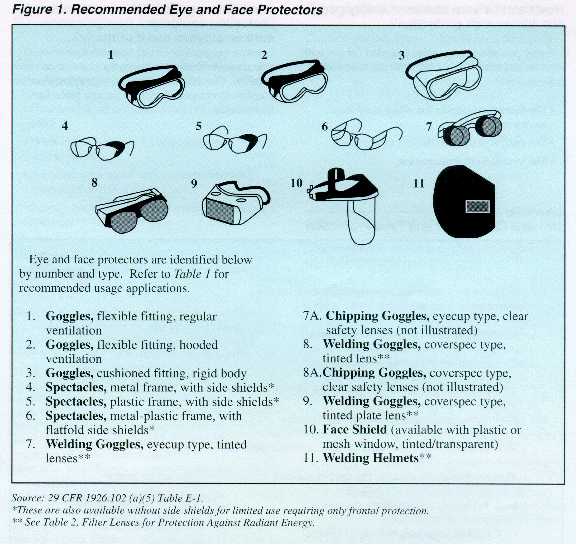
Welding protection comes in many forms. But for face and eye safety, three main types stand out:
- Safety goggles and glasses
- Face shields
- Welding helmets
Each serves a unique purpose, and sometimes you’ll need to use them together for full protection. Let’s look at each type, how they work, and when to use them.
Safety Goggles And Glasses
Safety goggles and glasses are the simplest form of eye protection. They look like regular glasses but are designed for tough environments.
How They Work
Safety glasses have impact-resistant lenses and wrap around your eyes. They protect against flying particles, dust, and minor splashes.
Goggles seal tightly around your eyes, giving more protection from dust, sparks, and chemical splashes. Some have indirect vents to reduce fogging while still blocking particles.
Both types can have special coatings or darkened lenses to filter ultraviolet (UV) and infrared (IR) light from welding arcs or flames.
When To Use Them
- Light-duty welding: For tasks like soldering, brazing, or cutting where there’s less intense light and fewer sparks.
- Grinding or chipping: When cleaning welded parts with a grinder or hammer.
- As extra protection: Worn under a welding helmet for double safety.
Important: Standard safety glasses are not enough for high-intensity arc welding. They’re best for low-level processes or as a backup layer.
Features To Look For
- Shatter-resistant lenses (usually polycarbonate)
- Side shields for extra coverage
- UV/IR protection if used near arcs or flames
- Comfortable fit: Adjustable nose bridge and temples
Example
Suppose you’re cutting metal rods with a torch. Safety goggles with a shade 3–5 lens protect your eyes from sparks and moderate light. But if you try shielded metal arc welding (SMAW) with only safety glasses, you risk arc eye and burns.
Common Mistakes With Safety Goggles/glasses
- Wrong shade lenses: Using clear glasses for arc welding leads to eye injury.
- Poor fit: Gaps let sparks in.
- Scratched lenses: Old, damaged lenses reduce vision and protection.
Advantages And Disadvantages
Here’s a quick comparison of safety goggles and glasses:
| Feature | Safety Glasses | Safety Goggles |
|---|---|---|
| Protection Level | Basic (impacts, dust) | Higher (impacts, dust, splashes) |
| Comfort | High | Medium |
| Fog Resistance | Good | Varies (depends on vents) |
| Use with Other Gear | Easy | Sometimes difficult |
| Cost | Low | Low to Medium |
Non-obvious Insights
- Some prescription glasses are not safety-rated. Always check for the ANSI Z87.1 marking.
- Tinted sunglasses are not welding protection. They do not block welding UV/IR.
Face Shields
Face shields cover your entire face with a clear or tinted visor, held in place by a headband. They are often used together with safety glasses or goggles for extra protection.
How They Work
A face shield creates a barrier against flying objects, sparks, and chemical splashes. The visor is usually made from strong plastic (like polycarbonate) and can be easily replaced if scratched.
Some face shields come with flip-up visors or attachable lenses for welding. These can be swapped out to match the welding process.
When To Use Them
- Grinding or finishing: After welding, when cleaning or smoothing metal.
- Plasma cutting or light welding: Where there are sparks but less intense light.
- Chemical handling: In processes that involve acids or cleaning solutions.
Critical: A face shield alone is not enough for high-arc welding. Always combine it with goggles or glasses rated for welding.
Features To Look For
- Adjustable headgear for a snug fit
- Replaceable visors (clear and tinted options)
- Heat resistance for hot environments
- Flip-up windows for quick lens changes
Example
If you’re grinding a weld seam to smooth it out, a face shield blocks sparks and metal chips. However, you still need safety glasses underneath in case debris gets around the sides.
Common Mistakes With Face Shields
- No safety glasses underneath: Leaves eyes open to side impacts.
- Using scratched visors: Reduces visibility and can distort vision.
- Wrong lens shade: Not enough protection against welding light.
Advantages And Disadvantages
Here’s a side-by-side look at face shields versus goggles:
| Feature | Face Shield | Goggles |
|---|---|---|
| Coverage | Full face | Eyes only |
| Protection from Chemicals | Good | Excellent (with sealed fit) |
| Impact Protection | High (large debris) | High (small debris) |
| Comfort for Long Use | Varies | Medium |
| Price Range | Medium | Low to Medium |
Non-obvious Insights
- Face shields fog less than goggles, but sweat can drip on the inside, so regular cleaning is needed.
- Not all face shields block UV/IR—if using for welding, make sure it’s rated for that use.
Welding Helmets
Welding helmets are the top level of face and eye protection for welders. They cover your entire head, face, and neck with a strong shell and a darkened viewing window.
How They Work
The helmet shell blocks flying debris, sparks, and heat. The key feature is the filter lens (or “window”), which darkens to protect your eyes from harmful light. There are two main types:
- Passive helmets: The window stays at a fixed dark shade (usually 10–14).
- Auto-darkening helmets: The window is clear until you start welding; then it darkens instantly.
Most helmets also have side coverage for your neck and ears.
When To Use Them
- All arc welding processes: Shielded metal arc welding (SMAW), gas metal arc welding (MIG/MAG), and tungsten inert gas welding (TIG).
- Plasma cutting: For intense light and flying metal.
- Any process with high UV/IR: Whenever there’s a risk of flash burns.
Features To Look For
- Auto-darkening filter for easy transitions
- Adjustable shade levels (usually shade 9–13)
- Large viewing area for better visibility
- Lightweight shell to reduce neck strain
- Comfortable headgear with padding
Example
A professional welder doing heavy-duty MIG welding needs a helmet with an auto-darkening lens. This allows easy switching between welding and inspecting the work. Using just goggles or a face shield would not block enough light and could quickly cause serious injury.
Common Mistakes With Welding Helmets
- Wrong shade number: Too light, and you risk eye injury; too dark, and you can’t see your work.
- Not checking helmet batteries: For auto-darkening models, dead batteries mean no protection.
- Cracked or scratched lenses: Reduces effectiveness and could let UV light through.
Comparison: Passive Vs. Auto-darkening Helmets
Which helmet type is better? Here’s a direct comparison:
| Feature | Passive Helmet | Auto-Darkening Helmet |
|---|---|---|
| Lens Shade | Fixed (usually 10–14) | Variable (adjustable 9–13) |
| Reaction Time | Instant (always dark) | Very fast (within milliseconds) |
| Convenience | Must lift helmet to see | Can see without lifting |
| Price | Lower | Higher |
| Maintenance | Minimal | Battery/solar panel needed |
Non-obvious Insights
- Auto-darkening lenses may not trigger with low-amperage welding (like TIG at very low settings). Always test before starting.
- Some helmet shells are not heat resistant enough for heavy-duty work. Check ratings before buying.
How To Choose The Right Protection
Choosing the right face and eye protection is not just about picking the most expensive gear. It’s about matching the type of welding to the right level of protection. Here’s how to decide:
- Identify Your Welding Process
- Arc welding (SMAW, GMAW/MIG, GTAW/TIG): Always use a helmet with the correct shade.
- Oxy-fuel cutting or brazing: Safety goggles or glasses with shade 3–5.
- Grinding or finishing: Face shield plus safety glasses.
- Check the Protection Ratings
- Look for ANSI Z87.1 or EN166 markings. These mean the gear is tested for industrial safety.
- For helmets, check the shade number matches your welding current (higher current needs darker shades).
- Comfort and Fit
- Uncomfortable gear leads to mistakes. Adjustable headbands and lightweight materials help you work longer.
- Layer for Extra Protection
- The best welders wear safety glasses under their helmet or face shield. If something fails, you still have a second barrier.
- Maintain Your Gear
- Replace scratched lenses and old seals. Clean sweat, dust, and spatter regularly.
Practical Example
Imagine you’re welding outdoors with a stick welder (SMAW) at 140 amps. You need:
- A helmet with a shade 11–12 lens (for strong UV/IR protection)
- Safety glasses underneath (for when you flip the helmet up)
- A face shield for grinding after welding
This combination covers all risks—light, flying metal, and sparks.
—
Credit: training.itcilo.org
Common Mistakes And How To Avoid Them
Many welding injuries happen because of simple mistakes. Here are some to watch out for:
- Skipping protection for “just a quick job”: Even one second of exposure can cause injury.
- Using scratched or old gear: Damaged lenses let in UV rays and reduce vision.
- Choosing the wrong lens shade: Too light = injury; too dark = you can’t see your work.
- Not wearing backup protection: Never rely on just one layer.
- Forgetting to check batteries in auto-darkening helmets: Always test before starting.
A non-obvious risk is not checking for proper helmet fit. A loose helmet can slip during a weld, leaving you unprotected when you need it most.
Regulations And Standards For Welding Protection
Official safety standards help guide your gear choices. In the United States, the Occupational Safety and Health Administration (OSHA) requires employers to provide and enforce the use of appropriate face and eye protection for all welders.
Key points from standards:
- ANSI Z87.1: Sets requirements for impact resistance, coverage, and optical clarity.
- ANSI Z49.1: Covers all welding safety practices, including PPE.
- EN166/EN175: European standards for industrial eye and face protection.
Tip: Always check for these markings on your equipment. Cheap, non-certified gear may look safe but often fails under real welding conditions.
Best Practices For Safe Welding
Protecting your face and eyes is about more than just owning the right gear. Here are some best practices every welder should follow:
- Inspect your PPE before every use. Look for cracks, fogging, or loose parts.
- Keep your lenses clean. Dirty lenses reduce visibility and can cause accidents.
- Wear protective layers. Safety glasses under helmets or shields are a must.
- Check helmet batteries and auto-darkening function before every job.
- Store gear properly. Keep helmets and shields out of direct sunlight and away from chemicals.
- Replace damaged parts immediately. Never “make do” with broken gear.
Insight: Many eye injuries happen during setup and cleanup, not just welding. Always wear basic protection (like safety glasses) even when not actively welding.
Final Thoughts
Welding is a rewarding skill, but it’s not worth risking your eyesight or face. By understanding the three main types of face and eye protection—safety goggles/glasses, face shields, and welding helmets—you can choose the right gear for every job.
Remember, investing in quality protection and using it every time is the single best way to stay safe and productive in your welding career. Stay alert, follow best practices, and never cut corners when it comes to safety. Your future self will thank you.
Frequently Asked Questions
What Shade Lens Do I Need For Arc Welding?
For most arc welding (SMAW, MIG, TIG), a shade 10–13 lens is recommended. The higher the current, the darker the shade you need. Always check the welding machine’s manual or OSHA guidelines for the correct shade.
Can I Use Sunglasses As Welding Protection?
No. Sunglasses do not block UV or IR radiation from welding arcs. Even very dark sunglasses won’t protect your eyes from “arc eye” or burns. Always use gear rated for welding.
How Often Should I Replace My Welding Helmet Lens?
Replace the outer cover lens whenever it’s scratched, cracked, or hard to see through. The auto-darkening filter or main lens usually lasts years but should be replaced if it no longer works or reacts slowly. Regular checks are important.
Do I Need To Wear Safety Glasses Under My Helmet?
Yes. Wearing safety glasses under your helmet gives you a backup layer. If you lift your helmet or the lens breaks, your eyes are still protected from flying debris and sparks.
Is A Face Shield Enough For Welding?
A face shield alone is not enough for welding. It does not provide the necessary protection from UV and IR radiation. Always wear the correct welding helmet or goggles with the right shade for your process.