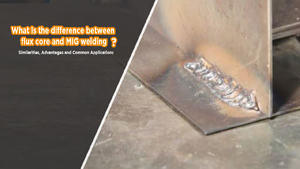
Flux core wire is a type of welding wire used in flux-cored arc welding (FCAW), a popular welding process in various industries. Unlike solid wire used in traditional MIG welding, flux core wire contains a core of flux materials within a metal sheath. This unique design offers several advantages, making it a preferred choice for many welding applications, especially in challenging environments or when working with certain types of metals.

We’ll explore the various aspects of flux core wire, including its composition, uses, types, and the advantages and disadvantages it offers in different welding scenarios. If you’re a seasoned welder or new to the field, understanding flux core wire can help you make informed decisions about your welding processes and improve the quality of your welds.
Composition of Flux Core Wire
Flux core wire consists of two main components: the outer metal sheath and the inner flux core. The composition of both these elements can vary depending on the specific type of flux core wire and its intended application.
Metal Sheath
The outer sheath of flux core wire is typically made of mild steel or low-alloy steel. This metal casing serves several purposes:
- It conducts electrical current from the welding gun to the arc.
- It provides filler metal for the weld.
- It protects the inner flux core during handling and feeding through the welding gun.
The Flux Core
The inner core of the wire contains various flux materials, which can include:
- Deoxidizers: These remove oxygen from the weld pool, preventing oxidation.
- Arc stabilizers: These help maintain a stable arc during welding.
- Alloying elements: These can add specific properties to the weld metal.
- Slag formers: These create a protective slag layer over the weld as it cools.
- Gas-generating compounds: In self-shielded flux core wire, these produce a shielding gas to protect the weld pool.
The specific composition of the flux core is carefully formulated to suit different welding applications and base metals.
Types of Flux Core Wire
Flux core wire can be broadly categorized into two main types: self-shielded and gas-shielded. Each type has its own characteristics and is suited for different welding scenarios.
Self-Shielded Flux Core Wire
Self-shielded flux core wire, also known as innershield wire, does not require an external shielding gas. Instead, the flux core contains compounds that generate their own shielding gas when heated by the welding arc. This type of wire offers several advantages:
- Portability: No need for external gas cylinders, making it ideal for outdoor or field welding.
- Wind resistance: The generated gas provides better protection in windy conditions compared to external shielding gas.
- Versatility: Can be used on dirty or rusty metals, making it suitable for repair work.
Self-shielded flux core wire is commonly used in construction, shipbuilding, and heavy equipment repair.
Gas-Shielded Flux Core Wire
Gas-shielded flux core wire, also called dual-shield wire, requires an external shielding gas, typically CO2 or a mixture of CO2 and Argon. This type of wire combines the benefits of flux core wire with those of external gas shielding:
- Higher deposition rates: Can deposit more weld metal in less time compared to solid wire.
- Better weld appearance: Often produces smoother, more aesthetically pleasing welds.
- Reduced spatter: The external gas helps minimize spatter during welding.
- Improved mechanical properties: Can achieve better weld strength and ductility in certain applications.
Gas-shielded flux core wire is often used in manufacturing, particularly for welding thicker materials or in high-production environments.
Uses of Flux Core Wire
Flux core wire finds applications across various industries due to its versatility and performance characteristics. Here are some of the primary uses of flux core wire:
Construction and Structural Steel
In the construction industry, flux core wire is widely used for welding structural steel components. Its ability to produce deep penetration welds and its suitability for out-of-position welding make it ideal for:
- Steel frame construction
- Bridge building
- High-rise building construction
- Infrastructure projects
Shipbuilding and Marine Applications
The shipbuilding industry often relies on flux core wire, particularly self-shielded types, due to its:
- Ability to weld in windy conditions on outdoor shipyards
- Suitability for welding thick steel plates commonly used in ship hulls
- Capacity to produce high-strength welds resistant to marine environments
Heavy Equipment Manufacturing and Repair
Flux core wire is a popular choice in the heavy equipment sector for both manufacturing and repair work:
- Welding thick steel components in earth-moving equipment
- Repairing worn or damaged parts in construction machinery
- Fabricating large metal structures for industrial equipment
Automotive Industry
While not as common in automotive manufacturing, flux core wire finds use in:
- Aftermarket modifications and customizations
- Repair of truck frames and heavy-duty vehicle components
- Fabrication of trailers and specialty vehicles
Pipeline Welding
In pipeline construction and repair, flux core wire is used for:
- Root passes in large-diameter pipes
- Fill and cap passes in pipeline welding
- Repair of existing pipelines, especially in field conditions
Advantages of Flux Core Wire
Flux core wire offers several advantages that make it a preferred choice in many welding applications:
High Deposition Rate
Flux core wire typically allows for higher deposition rates compared to solid wire MIG welding. This means more weld metal can be deposited in less time, increasing productivity.
Deep Penetration
The flux in the wire helps to concentrate the arc, resulting in deeper penetration. This is particularly beneficial when welding thicker materials.
Versatility in Outdoor Conditions
Self-shielded flux core wire is less affected by wind, making it ideal for outdoor welding where external shielding gases might be blown away.
Improved Performance on Dirty or Rusty Metals
The flux helps to clean the metal surface during welding, allowing for better performance on materials that are not perfectly clean.
Good for Out-of-Position Welding
The slag formed by flux core wire helps to support the weld pool in vertical and overhead positions, making out-of-position welding easier.
Reduced Pre-Cleaning Requirements
While clean surfaces are always preferable, flux core wire can often produce acceptable welds on surfaces with light rust or mill scale.
Disadvantages of Flux Core Wire
Despite its many advantages, flux core wire also has some limitations:
Slag Removal
The slag produced by flux core wire needs to be removed after welding, which can be time-consuming, especially in multi-pass welds.
Increased Fume Generation
Flux core welding typically produces more fumes compared to solid wire MIG welding, requiring better ventilation and respiratory protection.
Limited Use on Thin Materials
Due to its higher heat input, flux core wire is not ideal for welding very thin materials, as it can cause burn-through.
Higher Cost
Flux core wire is generally more expensive than solid wire, which can impact material costs in high-volume production.
Potential for Porosity
If not used correctly, flux core welding can be prone to porosity, especially in self-shielded applications.
Selecting the Right Flux Core Wire
Choosing the appropriate flux core wire for a specific application involves considering several factors:
Base Metal Composition
The flux core wire should be compatible with the base metal being welded. Different alloys may require specific wire compositions.
Welding Position
Some flux core wires are designed for all-position welding, while others are optimized for flat and horizontal positions only.
Required Mechanical Properties
Consider the strength, ductility, and impact resistance required for the final weld when selecting a wire.
Environmental Conditions
For outdoor welding or in windy conditions, self-shielded wire may be preferable. For indoor, controlled environments, gas-shielded wire might be more suitable.
Welding Equipment Compatibility
Ensure that your welding power source and wire feeder are capable of handling the selected flux core wire diameter and type.
Best Practices for Using Flux Core Wire
To get the best results when using flux core wire, consider the following best practices:
Proper Wire Stick-Out
Maintain the correct electrode stick-out (the length of wire extending beyond the contact tip) as specified by the wire manufacturer.
Correct Polarity
Most flux core wires require DC electrode negative (straight polarity), but always check the manufacturer’s recommendations.
Travel Speed and Angle
Maintain a consistent travel speed and gun angle to ensure uniform weld penetration and appearance.
Proper Shielding Gas (for gas-shielded wire)
Use the recommended shielding gas composition and flow rate for gas-shielded flux core wire.
Slag Removal
Thoroughly remove slag between passes in multi-pass welds to prevent slag inclusions.
Conclusion
Flux core wire is a versatile and powerful tool in the welding industry, offering unique advantages in many applications. Its ability to produce high-quality welds in challenging conditions, coupled with its high deposition rates, makes it an invaluable option for welders across various sectors.
Understanding the different types of flux core wire, their compositions, and their specific uses allows welders to make informed decisions about when and how to use this welding consumable.
While it may not be the ideal choice for every welding scenario, flux core wire’s strengths in outdoor welding, thick material applications, and high-production environments ensure its continued relevance in modern welding practices.
As with any welding process, success with flux core wire comes from a combination of proper technique, appropriate equipment selection, and adherence to best practices.
By mastering the use of flux core wire, welders can expand their capabilities and tackle a wider range of welding challenges with confidence and efficiency.