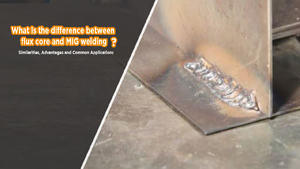
When I first came across dual shield flux core welding, I was working on a high-strength steel project that needed strong welds fast. I had no idea how this process would change my entire outlook on structural welding.
If you’ve been curious about how to get deeper weld penetration, faster deposition rates, and reliable results in tough environments, then you’re about to discover a game-changer.

Photos by reddit
Dual shield flux core welding is a hybrid welding process that uses a flux core wire along with an external shielding gas.
It’s technically a subtype of Flux-Cored Arc Welding (FCAW), but with an added layer of protection and efficiency. In simple terms, it combines the best of both MIG and stick welding to create powerful welds, especially on thicker materials.
Let’s break everything down step by step so you’ll know exactly how it works, when to use it, and why so many professionals swear by it.
Basics of Flux Core Welding
Before diving into dual shield, it’s helpful to understand what flux core welding is.
Flux core welding uses a wire that’s filled with flux material. As the wire burns, the flux melts and produces gases and slag to protect the weld from contamination. There are two main types:
- Self-shielded flux core (FCAW-S): No need for external gas.
- Gas-shielded flux core (FCAW-G): Uses shielding gas alongside the flux.
Dual shield flux core welding falls into the FCAW-G category.
What Makes It “Dual Shield”?
The name “dual shield” comes from the two layers of shielding the weld receives:
- Inner shield – the flux inside the wire.
- Outer shield – a gas (usually CO₂ or a CO₂/argon mix) fed through the welding gun.
This double protection ensures the weld pool is guarded against air contaminants like oxygen and nitrogen. The result is a cleaner, stronger weld.
How Does Dual Shield Flux Core Welding Work?
When you start welding with dual shield flux core, the wire feeds through your gun just like in MIG welding. But as it burns, the inner flux melts and helps stabilize the arc, forming slag to cover the weld. The shielding gas flows from your tank, protecting the weld zone from external gases.
The combination creates a powerful arc, deep penetration, and minimal porosity. It also works great for all-position welding depending on the wire you use.
Key Components You’ll Need
If you want to get started with dual shield flux core welding, here’s what your setup should include:
| Component | Description |
|---|---|
| Welding Machine | Typically a MIG welder capable of handling FCAW-G. |
| Flux Core Wire | Dual shield wire (e.g., E71T-1) with an open arc type. |
| Shielding Gas | Usually 75% Argon and 25% CO₂ or pure CO₂. |
| Proper Torch | MIG-style gun that supports flux core wire. |
| Drive Rollers | Knurled rollers for better wire grip. |
| Ground Clamp | Strong ground connection to ensure arc stability. |
Advantages of Dual Shield Flux Core Welding
From my own experience, I can tell you that dual shield flux core welding offers a ton of benefits, especially in industrial environments. Here are some of the biggest advantages:
High Deposition Rate
The filler wire melts quickly, allowing you to lay down a lot of weld metal fast. This makes it ideal for thick joints or large-scale projects.
Deep Penetration
One of the reasons it’s so popular in structural steel and heavy equipment repair is because it penetrates deep into the base metal, ensuring a strong bond.
Less Pre-Cleaning
Compared to TIG or MIG welding, dual shield can handle a bit of dirt, rust, or mill scale. It still works best on clean metal, but it’s more forgiving.
Strong Welds
The combination of flux and gas helps form solid, crack-resistant welds. These are often high-strength and meet industry-grade standards.
Works Well Outdoors
While not as wind-resistant as self-shielded flux core, dual shield still performs better than MIG welding outdoors if you use windbreaks or welding tents.
Disadvantages You Should Know
Of course, no process is perfect. Here are some of the downsides I’ve encountered:
Requires Shielding Gas
That means you need a gas cylinder, regulator, and hose system—making the setup less portable than self-shielded processes.
Slag Removal
Because of the flux core, you’ll need to chip or brush off slag after each pass, similar to stick welding.
More Fume Production
Dual shield welding generates a fair amount of smoke and fumes. Proper ventilation or fume extraction is important.
Not Ideal for Thin Metal
Due to the high heat and deep penetration, it’s not suited for light-gauge metal. You risk burn-through.
Best Applications for Dual Shield Flux Core Welding
This welding process shines when you’re dealing with high-strength tasks. It’s commonly used in:
- Construction and structural steel
- Heavy equipment fabrication and repair
- Shipbuilding
- Pipeline welding
- Bridge work
- Industrial equipment assembly
Basically, anywhere strength and durability matter, dual shield flux core is a solid choice.
Common Wire Types and Classifications
If you’re buying dual shield wire, you’ll notice codes like E71T-1 or E71T-9. These codes tell you a lot about the wire’s capabilities.
Here’s a simplified breakdown:
| Wire Type | Weld Position | Polarity | Notes |
|---|---|---|---|
| E71T-1 | All-position | DCEP | General-purpose wire. Great for structural work. |
| E71T-9 | Flat/Horizontal | DCEP | High deposition. More common in shop welding. |
| E70T-1 | All-position | DCEP | Lower tensile strength but smooth arc. |
Polarity Settings
Dual shield flux core welding uses Direct Current Electrode Positive (DCEP). This means the current flows from the workpiece to the electrode, which helps maintain a stable arc and deeper penetration.
Make sure your welder is set to the correct polarity. Using the wrong setting will lead to poor arc performance and weak welds.
Welding Positions and Techniques
One of the best things about this process is that it works in multiple positions—flat, horizontal, vertical, and even overhead.
That said, technique matters. Keep a short stick-out (about ¾ inch), use a drag angle, and maintain a steady travel speed. In vertical up welding, you may need to weave slightly to ensure full fusion.
Safety Tips for Dual Shield Flux Core Welding
As someone who’s been burned (literally and figuratively) by poor prep, I can’t stress this enough—safety first.
Here are key tips:
- Wear a full welding hood with proper shade lens.
- Use leather gloves and long sleeves to protect from sparks and UV radiation.
- Ensure proper ventilation—fumes from flux and gas can be harmful.
- Check gas lines for leaks before starting.
- Keep a fire extinguisher nearby—especially when welding indoors.
Comparison with Other Welding Methods
If you’re wondering how dual shield compares to other common welding processes, here’s a quick table to help:
| Process | Shielding Type | Ideal For | Pros | Cons |
|---|---|---|---|---|
| Dual Shield FCAW | Flux + Gas | Heavy steel, structural | High deposition, strong welds | Needs gas, produces slag |
| MIG Welding | External Gas | Thin to medium steel | Clean, no slag, easy to use | Poor wind resistance |
| Stick Welding | Flux-coated rod | Field work, repair | Portable, no gas needed | Slower, more slag |
| TIG Welding | Argon gas | Thin metals, precision | Very clean and precise | Slow, requires skill |
Tips for Better Results
Let me share a few personal tips that always help me get cleaner welds:
- Preheat thick metal if you’re welding something really heavy. It reduces cracking.
- Clean the surface before welding—even if dual shield is forgiving, clean metal always welds better.
- Dial in your voltage and wire feed speed. Too much voltage? You’ll get spatter. Too little? Your arc will be unstable.
- Use anti-spatter spray on your nozzle to keep it clean.
- Practice your technique—especially in vertical and overhead positions.
Conclusion
If you’ve been searching for a welding process that offers strength, speed, and reliability, dual shield flux core welding is definitely worth exploring. It may take a bit of setup and learning, but once you get the hang of it, the results speak for themselves.
I personally love this method for any structural or heavy-duty application. It offers the power of stick welding with the efficiency of MIG. Whether you’re working on bridges, ships, or even large industrial frames, dual shield flux core will get the job done—and done right.
Take your time to learn the technique, experiment with different wires and settings, and always put safety first. Once you do, you’ll be amazed at how versatile and effective this welding process really is.
Frequently Asked Questions (FAQs)
What gas do I use for dual shield flux core welding?
Most welders use a mix of 75% Argon and 25% CO₂. Some applications use straight CO₂, but it may produce more spatter.
Can I use dual shield welding outdoors?
Yes, but wind can blow away the shielding gas. Use windbreaks or tents for better results.
Is dual shield flux core stronger than MIG?
Yes. Dual shield provides deeper penetration and stronger welds, especially on thick materials.
Can beginners use dual shield flux core welding?
It’s best for intermediate to advanced welders due to slag management and machine setup. Beginners may want to start with MIG first.
Do I need to clean the metal before welding?
While dual shield can handle some dirt, cleaning the surface always leads to better results.
Is dual shield good for aluminum?
No. This process is mostly used for carbon steel and low-alloy steels. Use MIG or TIG for aluminum.