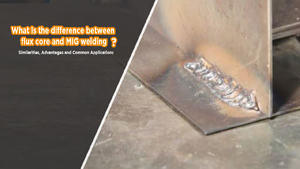
Welding car sheet metal with a flux core can be trickier than it looks. Sparks fly, thin panels warp, and it’s easy to burn through the metal if you’re not careful. I learned by trial and error that getting clean, strong welds takes more than just feeding the wire—it’s about angle, speed, and technique.
Mastering flux core on sheet metal isn’t just a skill—it’s about making durable welds, avoiding costly mistakes, and saving time in your projects.
If you’ve ever asked yourself, “Can I weld a car sheet metal with a flux core?” here’s the technique that actually works, step by step.

Image by yeswelder
Flux Core Welding Limitations
Before diving into flux core welder settings, it’s crucial to understand the inherent limitations of this welding process, especially when working with automotive sheet metal. While flux core welding has its place in the automotive world, knowing its boundaries will help you make informed decisions about when to use it.
Common misconceptions about flux core welding
Many welders carry misconceptions about flux core welding that can lead to poor results. Here are the most common myths:
- Spatter is unavoidable: While flux core does produce some spatter, proper settings can minimize this issue
- Lack of penetration: Modern flux core wires can actually provide excellent penetration
- Poor weld quality: With correct technique, flux core can produce strong, reliable welds
Advantages and disadvantages for sheet metal
When it comes to sheet metal work, flux core welding presents some significant challenges. The process runs notably hotter than other welding methods, making it particularly tricky for thin automotive panels. This higher heat generation can quickly lead to burn-through, especially for inexperienced welders.
One major disadvantage is the DC Negative current requirement for gasless flux core, which concentrates about two-thirds of the welding heat in the workpiece. This characteristic makes it particularly challenging for thin metal operations, similar to the difficulties encountered with stick welding.
The slag production, while beneficial for weld protection, requires additional cleanup time and can potentially interfere with automotive finishing work. Additionally, flux core residue can cause issues with paint adhesion if not properly cleaned.
When flux core can be appropriate
Despite these limitations, flux core welding can be suitable for certain automotive applications. It excels when working with:
- Thicker gage metals (20-gage or thicker)
- Galvanized steel components
- Outdoor repair situations where gas shielding would be impractical
- Rusty or contaminated surfaces that might challenge other welding methods
For successful sheet metal work, consider using .030″ wire with proper machine settings. Some experienced welders have successfully used flux core for vehicle repairs over decades, though it requires significant skill and practice to master the technique.
While flux core can technically weld thin materials, alternative methods like MIG welding with solid wire and gas shielding often provide better results for automotive body panels. The key is matching the right tool to the specific job requirements.
Essential Equipment Setup Requirements
Proper equipment setup forms the foundation for successful flux core welding on automotive sheet metal. Let’s dive into the essential requirements that will set you up for success.
Choosing the right flux core wire gage
For automotive sheet metal work, wire selection is crucial. The optimal choice is 0.030″ flux core wire, which provides the best balance of control and heat input for thin metal applications. While some suppliers might offer 0.035″ wire, this larger diameter can make it more challenging to prevent burn-through on automotive panels.
The wire brand matters too. Quality options like Blue Demon, Hobart Fabshield 21b, and Lincoln NR211 each have their characteristics. For thin sheet metal work, look for wires specifically designed for out-of-position welding, as these typically run cooler and offer better control.
Power settings for different metal thicknesses
Power settings require precise calibration when working with automotive sheet metal. As a general rule, aim for 1 amp per .001″ of metal thickness. For typical 18-gage automotive sheet metal:
- Start with lower voltage settings
- Adjust wire feed speed based on material thickness
- Use the minimum amperage needed for proper fusion
- Test settings on scrap metal before welding actual panels
Ventilation and safety equipment needs
Working with flux core wire demands proper ventilation and safety considerations. Essential safety equipment includes:
- Welding helmet with appropriate shade rating
- Heat-resistant welding gloves
- Flame-resistant clothing
- Steel-toed boots
- Proper respiratory protection
Ventilation requirements can be met through either centralized systems or portable fume extractors. When working in confined spaces, consider using a personal air-purifying respirator (PAPR) system. Proper ventilation isn’t just about comfort – it’s crucial for your health and safety.
Store your flux core wire properly to maintain its quality. Keep unused spools in a sealed container with desiccant packets to prevent moisture absorption, which can affect weld quality. For those in humid climates, this becomes even more critical for maintaining optimal welding performance.
While 120V welders can handle automotive sheet metal, they often perform better with 0.030″ wire rather than larger diameters. If you’re planning to work regularly with varying thicknesses, consider a 220V machine that offers more flexibility in power settings and wire options.
Optimizing Machine Settings
Success with flux core welding on automotive sheet metal hinges on precise machine settings. Let’s master the critical adjustments that will help you achieve professional results.
Wire feed speed adjustments
Wire feed speed is the cornerstone of successful flux core welding. For automotive sheet metal, start with 100-120 inches per minute (IPM) when using .030″ wire. This setting provides optimal control while preventing burn-through on thin panels.
To dial in the perfect wire feed speed:
- Begin with a test piece of similar thickness
- Start at the lower end of the range (100 IPM)
- Adjust while welding until you hear a steady bacon-sizzling sound
- Watch for smooth wire feeding without stuttering
- Fine-tune based on penetration depth
Voltage control techniques
Voltage directly affects your bead profile and penetration. For automotive sheet metal, start with 13-15 volts for .024″ wire or 15-17 volts for .030″ wire. The right voltage setting produces a flat, well-formed bead without excessive spatter.
Watch for these indicators of proper voltage:
- Smooth, consistent arc without popping
- Minimal spatter during welding
- Even bead formation
- Good tie-in at the weld edges
Polarity and amperage considerations
Flux core welding requires DC electrode negative (DCEN) polarity for optimal performance. This setup concentrates heat in the base metal, which requires careful amperage control. For automotive sheet metal, maintain 30-40 amps for most applications.
Travel speed plays a crucial role in heat management. Moving too slowly can create holes in thin metal, while proper speed helps maintain consistent penetration. Keep your movements steady and slightly faster than you might expect – this helps prevent excessive heat buildup in any one spot.
When fine-tuning your settings, make small adjustments to one parameter at a time. This methodical approach helps identify the perfect combination for your specific application. Practice on scrap metal until you can consistently produce clean, strong welds without burn-through.
Mastering Temperature Control
Temperature control makes or breaks your success when flux core welding automotive sheet metal. While proper machine settings lay the groundwork, mastering heat management determines whether you’ll create a professional weld or burn through your workpiece.
Heat input management strategies
The key to successful sheet metal welding lies in strategic heat distribution. Lap joints prove superior to butt joints because they allow heat to spread across a larger surface area. This natural heat distribution provides more forgiveness when working with thin automotive panels.
Consider these proven heat management techniques:
- Use stitch welding to alternate weld locations
- Start from the center and work outward
- Maintain consistent rhythm and travel speed
- Keep wire placement within one wire diameter of the gap
- Apply uniform material amounts for each weld
Preventing burn-through
Burn-through prevention starts with proper preparation and extends through your welding technique. Surface preparation is critical – avoid aggressive grinding that might thin the metal unevenly. Instead, use a wire wheel or scotch pad for cleaning, followed by proper degreasing.
When welding, think like a robot: maintain precise, consistent movements. If you miss a spot, move to the next tack rather than dwelling and potentially overheating the area. Working in a “hopscotch” pattern – alternating between left and right sides from the center – helps maintain even heat distribution and prevents localized overheating.
Cooling techniques between welds
Contrary to common practice, rapid cooling isn’t always beneficial. In fact, allowing natural cooling helps prevent warpage, as sudden temperature changes can cause molecular movement and distortion. Instead, focus on heat management during the welding process.
A copper backing bar serves as an excellent heat sink, conducting heat away from the weld area more efficiently than atmospheric cooling alone. Position the bar directly behind your weld area for optimal heat dissipation. For patch panels, consider using the “tack and check” method – make several tacks, verify fitment, then complete the welds in small segments.
The metal expands when heated and contracts during cooling. Non-uniform thickness leads to wavy distortion, while uniform thickness typically results in cup-shaped warping. Minimize working the steel as much as possible, since each manipulation stretches and thins the material, making it more susceptible to heat-related issues.
For complex repairs, consider drilling small holes through the top sheet when making lap joints. This technique allows you to create spot weld-like tacks, providing strong initial positioning while minimizing heat input. Once tacked, complete the remaining welds using the alternating pattern technique to maintain even heat distribution.
Troubleshooting Common Issues
Even experienced welders encounter challenges when working with flux core on automotive sheet metal. Let’s tackle the most common issues and their proven solutions to help you achieve professional-quality welds.
Addressing penetration problems
The “volcano effect” – where weld material builds up without proper penetration – often frustrates welders working with sheet metal. This typically occurs when your settings aren’t properly balanced. To achieve proper penetration:
- Increase voltage gradually in small increments
- Maintain consistent wire stick-out (¼ to ⅜ inch)
- Adjust travel speed based on puddle formation
- Position the torch at 10-15 degrees push angle
- Keep consistent distance from workpiece
When dealing with uneven penetration, watch for the telltale blue heat signature on the backside of your weld. This visual indicator helps confirm proper penetration depth. For thin materials, start with 60 amps and wire feed speed at 3, adjusting gradually based on results.
Managing spatter and residue
Excessive spatter isn’t just unsightly – it creates additional cleanup work and can affect paint adhesion. The primary causes of spatter include incorrect polarity, improper wire speed, and contaminated surfaces. Here’s your spatter reduction checklist:
- Verify DCEN (DC Negative) polarity settings
- Clean all surfaces thoroughly, removing rust and scale
- Adjust wire feed speed until you hear a steady “bacon sizzle” sound
- Use anti-spatter spray on surrounding areas
- Consider stitch welding technique for better control
For stubborn spatter removal, use a combination of wire brushing and careful grinding. Avoid aggressive grinding that might damage the underlying metal. A putty knife can often remove most spatter without surface damage.
Fixing warping issues
Sheet metal warping occurs when heat distribution isn’t properly managed. The key lies in understanding how metal moves during the heating and cooling cycle. To minimize warping:
Use the “Clock” Method:
- Start at 12 o’clock position
- Move to 6 o’clock for next weld
- Continue at 3 o’clock
- Finish at 9 o’clock
This alternating pattern helps distribute heat evenly across the workpiece. For patch panels, consider using copper backing bars to help dissipate heat more effectively. Never rush cooling with water or compressed air, as this can create additional stress in the metal.
When working with overlapping panels, maintain proper fitment before welding. A gap no larger than the wire diameter ensures optimal heat distribution and reduces the chance of burn-through or warping. If distortion occurs, address it immediately before continuing with additional welds.
The successful troubleshooting often requires a systematic approach. Start with the smallest possible adjustment to your settings before making larger changes. Document successful settings for future reference, as they’ll likely work well on similar projects.
Conclusion
Flux core welding car sheet metal demands precision, patience, and proper technique. While this welding method presents unique challenges, mastering the right settings and approaches makes professional-quality repairs achievable.
Success relies on three key elements: proper equipment setup with the right wire selection, precise temperature control through strategic heat management, and systematic troubleshooting when issues arise. Each weld builds your expertise, making future projects easier to handle.
Remember that practice remains essential – start with scrap metal matching your project’s thickness until consistent results emerge. Sheet metal welding skills develop through hands-on experience, careful attention to machine settings, and methodical problem-solving when challenges occur.
Armed with these optimization techniques and troubleshooting strategies, you’ll tackle automotive sheet metal projects with greater confidence. The results speak for themselves: clean welds, minimal distortion, and professional-looking repairs that stand the test of time.