
I meet lots of folks who love cast‑iron machines but fear the moment a leg snaps or a housing splits. Everyone has heard about “cold welding” rod that supposedly mends cast iron without preheat. Does it really work? Yes—if you treat it like a disciplined craft, not a miracle stick.
Pull up a stool beside the bench and let me share every trick I’ve learned straddling lathes, vises, and antique engine blocks.
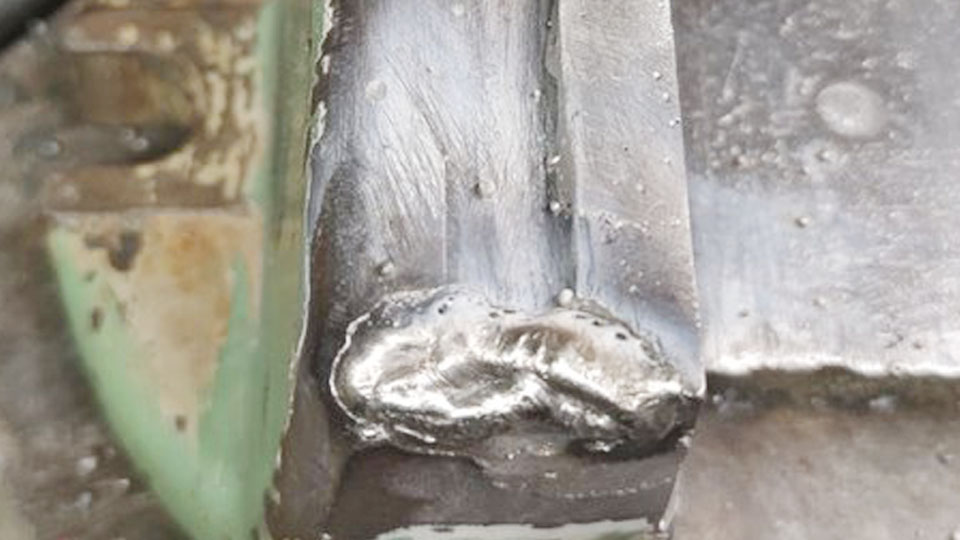
Photo by mig-welding.
What Cold Welding Really Means in Cast‑Iron Repair
When welders say “cold welding” they rarely mean the laboratory process where ultra‑clean metals bond at room temperature under pressure.
In everyday shops, the phrase points to nickel‑based or nickel‑iron electrodes that let you deposit metal on cast iron with minimal heat input and no sustained preheat.
The goal is simple: keep the brittle cast iron below the temperature where it forms shrink‑cracks yet fuse enough alloy to restore strength.
Why Cast Iron Cracks When Heated Like Steel
Cast iron carries 2–4 percent carbon locked as graphite flakes. Those flakes stop cracks in compression but act like razor blades in tension. If you heat a casting past 450 °F then force it to cool unevenly, internal stress rips along the graphite.
Traditional “hot welding” demands a full, even preheat to 900 °F followed by a slow oven cool. Cold welding flips the script—tiny welds, long pauses, and lots of peening so the iron never climbs above 350 °F anywhere.
Choosing the Right Cold‑Weld Electrode or Wire
| Electrode/Wire | Alloy Makeup | Polarity | Best For | Shop Notes |
|---|---|---|---|---|
| ENi‑Cast (pure nickel) | ~99 % Ni | DCEP | Gray cast iron with thin sections | Soft, machinable bead |
| ENiFe‑CI (55 % Ni, 45 % Fe) | Ni‑Fe | DCEP | Thick engine blocks, ductile castings | Stronger but harder to machine |
| ENi‑Cu (Ni‑Cu) | Ni‑Cu | AC or DCEP | Cast iron with oil or sulfur | Copper wets dirty pores |
| ERNi‑1 TIG wire | 95 % Ni | DC‑EN | Small cracks, pinhole fill | Precise, low spatter |
| Specialized “cold weld” flux‑core rods | Ni‑Fe‑Cr | Stick | Field repairs, multi‑pass | Self‑shielded, more slag |
Keep two sizes on hand: 1/8‑inch for beefy cross‑members and 3/32‑inch for thin covers. Store them dry—moisture ruins easy starts.
Joint Prep: Success Is 70 Percent Grinder Work
- V‑groove wisely. I bevel both sides to a 60‑degree included angle and leave a 1/16‑inch root face. Deeper groove means cooler puddle per inch.
- Drill stop‑holes. At each crack end, I pop a 1/8‑inch hole. That prevents “zipper” runs.
- Clean with heat, not solvents. I flame‑sweat the crack just enough to ooze oil to the surface, wire‑brush it off, then let the casting drop back below 150 °F.
- Fit clamps loose. Over‑tightening locks stress. I use C‑clamps with copper shims, barely snug.
Cold‑Welding Sequence I Swear By
- Set machine to short arc. Around 80–90 amps on 1/8‑inch ENi‑Cast.
- Lay a 1‑inch stitch. Strike, travel, break arc. No weave, just a stringer.
- Immediate peen. Use a rounded chipping hammer to tap the bead while red. This relieves tensile pull as it freezes.
- Wait 60 seconds. Let the local heat fade to warm touch.
- Alternate sides of the joint. If the crack is long, bounce end to end so heat never piles up.
- Thermal check. An infra‑red thermometer must not show over 350 °F anywhere. If it does, pause and hit with compressed air or alcohol spray.
Repeat until the groove fills. For big cavities, grind each layer flush so the next tie‑in sees solid metal, not slag islands.
Peening—The Unsung Hero
Peening compresses the bead, offsetting solidification shrink. I angle the hammer 10 degrees and deliver brisk taps, one every 1/4‑inch.
Too hard and you’ll crack the bead; too soft and stress stays locked. When finished, the surface looks like an orange peel—ugly but powerful.
Post‑Weld Treatments to Stretch Service Life
- Grind flush only if needed. A proud bead adds strength. On machined ways, I grind flush then file to blue fit.
- Heat‑spike stress relief. Some pros set a propane torch on low and circle the zone for ten minutes to plateau at 250 °F, then wrap in a welding blanket. Slow cool reduces micro‑cracking.
- Seal micropores. Brush on wicking Loctite 290 or thin epoxy into the bead. Good insurance against coolant leaks in engine blocks.
When Cold Welding Beats Hot Welding
| Scenario | Cold Weld Wins | Hot Weld Wins |
|---|---|---|
| Field repair, no oven | ✔ | ✖ |
| Thin, oily stove plate | ✔ | ✖ |
| One‑off antique casting | ✔ | ✖ |
| Broken lathe bed needing re‑machining | ✔ | ✖ |
| Gearbox housing with massive mass | ✖ | ✔ |
If you can’t heat the whole casting evenly past 900 °F, choose cold welding.
Real‑Shop Story—Fixing a Tractor Lift‑Arm Lug
A farmer brought in a 1940s cast‑iron lift‑arm housing, ear snapped clean off. Replacement? None. My steps:
- V‑groove both the ear and body.
- Pre‑assemble with nickel tack welds, checking alignment.
- Cold‑weld 1‑inch stitches, peening after each.
- Added a scarf reinforcement strap using ENiFe‑CI rod.
- Let rest under blanket four hours.
That tractor still stacks hay, and the farmer still brings me pie at Christmas.
Common Pitfalls and Quick Fixes
| Problem | Cause | Fix |
|---|---|---|
| Bead pops off after cool | Poor base cleaning | Re‑grind deeper, pre‑heat to sweat oil |
| Porosity tunnels | Jumped amperage, too long arc | Short arc length, lower amps |
| Hairline cracks beside bead | Too much continuous weld | Shorter stitches, more peening |
| Hard‑to‑start arc | Moist rods | Oven‑dry rods at 250 °F for two hours |
Tooling Up on a Budget
- AC buzz‑box with high‑nickel rods will work. DC machine feels smoother.
- Auto‑dark helmet increases strike accuracy.
- Infra‑red gun under $50 saves castings by showing hotspots.
- A 2‑lb ball‑peen with polished faces is worth every penny.
Environmental and Safety Considerations
Nickel fumes cause metal‑fume fever. I weld near a fume hood or outdoors with a cross‑breeze. Cast iron dust contains silica—wear a P100 when grinding. Fresh fractures can spit carbon flakes; safety glasses are mandatory.
Future of Cold Welding Cast Iron—Additive and Laser Hybrids
Researchers now test laser‑cladded nickel layers followed by low‑heat TIG stitches. The laser pre‑melts a microsurface, absorbing stress.
Expect portable induction pre‑heaters married to AI temperature sensors—no more guessing if you’re safe. Learning manual cold welding today positions you for those upgrades tomorrow.
Quick‑Reference Checklist Before Striking Arc
- Crack drilled and V‑grooved?
- Rods dry and sized right?
- Amp dial set to 80–90 A?
- Peening hammer within reach?
- IR gun reading <150 °F start‑temp?
If you tick every box, you’re ready.
Conclusion
Cold welding cast iron isn’t magic—it’s patient craftsmanship. With nickel rods, tight temperature discipline, and relentless peening, you can revive broken castings that once headed for the scrapyard. I’ve rebuilt vintage vises, engine blocks, and mill tables using nothing more than a stick welder and the rules above.
Follow them, and your first repair will feel like old‑school blacksmithing blended with modern metallurgy. Grab a cracked casting and give it a second life—you’ll feel like you just saved a piece of history.
Frequently Asked Questions
Do I need any preheat at all?
A small 150–200 °F warm‑up drives off moisture and oil. It’s optional but boosts success.
Can I cold‑weld with MIG nickel wire?
Yes, in short‑circuit mode at low volts. Still stitch‑peen‑pause the same way.
Will the repair machine as easily as the parent cast iron?
Pure‑nickel deposits cut like butter. Nickel‑iron mixes feel harder but still machinable with carbide.
Is cold welding strong enough for pressure vessels?
No. Cast iron pressure vessels need full‑penetration hot welds and heat treatment. Use cold welding for static or low‑pressure parts.
Can I paint the repair right away?
Wait until the casting cools to ambient to avoid solvent bubbles. Then prime with a high‑build filler; nickel color likes to telegraph through thin coats.


