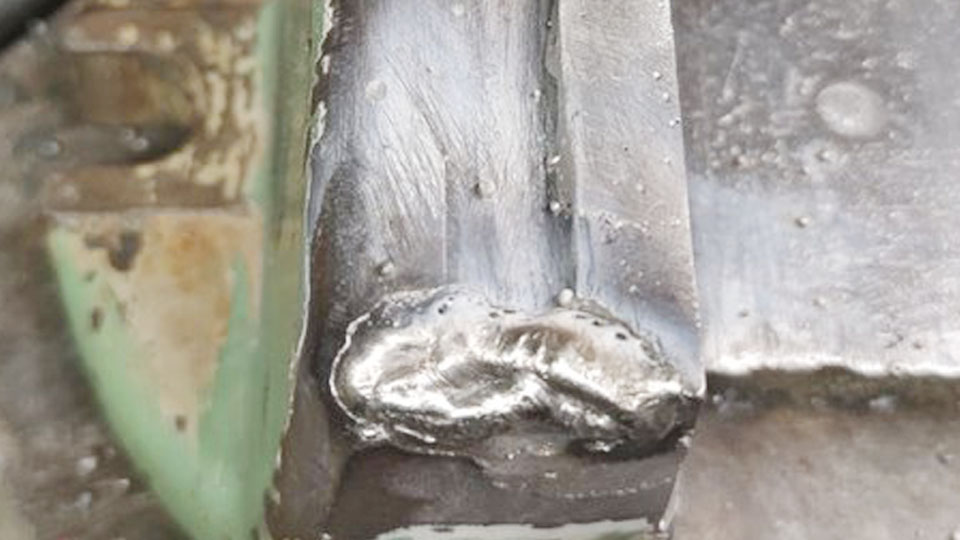
Cold welding is a fascinating and unique process of joining metals together without the application of heat. Unlike conventional welding techniques, which rely on high temperatures to melt and fuse materials, cold welding occurs at or near room temperature.

This intriguing method plays a significant role in various industries, especially where precise and clean joins are required without thermal distortion. Let’s explore in detail what cold welding is, how it works, its benefits, limitations, and applications.
Cold Welding
Cold welding, also known as contact welding, is a solid-state welding process in which two materials are bonded together without melting.
This process leverages high pressure to cause the atoms on the surface of the two metals to intermingle and form a strong, permanent bond. As the name implies, cold welding occurs without the use of external heat, making it an entirely different approach from traditional welding methods.
The key to cold welding lies in the atomic structure of metals. When two clean metal surfaces come into direct contact with each other under pressure, their atoms are attracted to one another, and the surfaces bond. This type of welding works best when the surfaces are clean, oxide-free, and highly ductile.
How Does Cold Welding Work?
Cold welding occurs through the application of mechanical pressure that forces the atoms of the materials into contact. The primary mechanism that enables cold welding to work is the elimination of surface contaminants, such as oxides, dirt, or grease.
Metals often have oxide layers that prevent bonding, but when these are removed, and the surfaces are brought together under pressure, atomic bonding occurs.

Image by atomweldingequipments2486, YT
Step-by-Step Process of Cold Welding:
Surface Preparation
The most critical step in cold welding is the preparation of the surfaces. For successful cold welding, the surfaces must be thoroughly cleaned to remove any oxide layers or contaminants. This cleaning can be done through mechanical means like wire brushing or polishing, or through chemical treatments.
Application of Pressure
Once the surfaces are cleaned, pressure is applied to the metals. The force used in cold welding can be applied through various means, such as pressing the materials together in a vacuum or utilizing specially designed equipment like rolling mills.
The amount of pressure required varies depending on the materials and the thickness of the metals being welded.
Atomic Bonding
Under sufficient pressure, the atoms of the two metal surfaces interlock, and a solid bond forms. Since there is no melting or heat involved, the bond is formed purely through atomic interactions at the interface.
Metals Suitable for Cold Welding
Not all metals are suitable for cold welding. Cold welding works best with ductile, non-ferrous metals, such as:
- Aluminum
- Copper
- Gold
- Silver
- Nickel
- Platinum
These metals tend to have relatively clean surfaces and are more malleable, making them easier to bond through cold welding. Harder metals, or those with surface oxides that are difficult to remove, are generally less suitable for this process.
Advantages of Cold Welding
Cold welding offers several advantages, particularly in situations where traditional welding methods might cause problems. Below are some of the key benefits of cold welding:
No Heat-Affected Zones
One of the most significant advantages of cold welding is the absence of heat-affected zones. In traditional welding methods, the application of heat can change the properties of the metal, leading to thermal distortion, residual stress, and potential weakening of the joint. Since cold welding involves no heat, these issues are avoided.
Clean and Precise Joints
Cold welding produces clean, smooth joints with no oxidation, burning, or thermal degradation. This makes it ideal for applications where cleanliness and precision are critical, such as in electronics and aerospace.
Energy-Efficient
Cold welding is highly energy-efficient since it doesn’t require external heat sources like electricity or fuel. This reduces the overall energy consumption and operating costs, making it an environmentally friendly welding technique.
Strong Bonds
Cold welding can create very strong and durable joints, particularly with certain metals like aluminum and copper. When done correctly, the bond can be as strong as the base materials.
No Filler Materials Required
Unlike some traditional welding methods, cold welding doesn’t require the use of filler materials, fluxes, or shielding gases. This simplifies the process and reduces material costs.
Disadvantages of Cold Welding
While cold welding has many advantages, it also has some limitations. Understanding these limitations is important for determining whether cold welding is the right solution for a particular application.
Requires Clean Surfaces
The success of cold welding is heavily dependent on the cleanliness of the surfaces to be joined. Any contamination, such as oxides, dirt, or grease, can prevent a strong bond from forming. This means that cold welding requires meticulous surface preparation.
Limited to Certain Metals
Cold welding is most effective with ductile metals like aluminum and copper. Harder metals or metals with heavy oxide layers, such as steel, are not suitable for cold welding without additional preparation or modifications.
High Pressure Required
The amount of pressure required for cold welding can be quite high, which may necessitate specialized equipment. This can increase the cost and complexity of the process, especially for larger-scale operations.
Thickness Limitations
Cold welding is generally more effective for thin metal sheets or wires. Welding thick materials through this process can be challenging due to the difficulty in applying uniform pressure across the entire surface.
Cold Welding vs Traditional Welding Methods
| Feature | Cold Welding | Traditional Welding |
|---|---|---|
| Heat Application | No heat involved | Heat required (melting of metals) |
| Material Suitability | Ductile metals (e.g., aluminum) | Wide range of metals |
| Surface Preparation | Requires extremely clean surfaces | Surface prep varies based on method |
| Energy Consumption | Low, energy-efficient | High due to heat and equipment use |
| Strength of Bond | Can be as strong as base materials | Depends on method and material |
| Equipment Cost | Lower overall costs (no heat source) | May require expensive heat sources |
Applications of Cold Welding
Cold welding has a variety of applications across different industries, where the benefits of clean, strong, and precise joins are critical. Some of the most common applications of cold welding include:
Aerospace Industry
In aerospace applications, cold welding is used to join thin sheets of aluminum or other metals without the risk of thermal distortion. It is also used for joining wires and cables in spacecraft, where high levels of precision and cleanliness are required.
Electrical and Electronics Industry
Cold welding is widely used in the electronics industry to join copper or aluminum conductors. It is a preferred method for making electrical connections because it avoids the risk of overheating sensitive components.
Food and Pharmaceutical Packaging
Cold welding is used in packaging materials for food and pharmaceuticals, particularly for aluminum foil and thin metallic packaging materials. The cold welding process creates airtight seals without the use of heat, preserving the integrity of the packaged products.
Automotive Industry
In the automotive sector, cold welding is used to join aluminum and copper components in electric vehicles and battery systems. The clean joints and strong bonds are essential for ensuring the performance and reliability of these systems.
Laboratory and Research Applications
Cold welding is also employed in scientific laboratories for creating clean, contamination-free joints between metals. This is particularly important in vacuum systems and other environments where cleanliness is critical.
Conclusion
Cold welding is a unique and highly effective welding process that offers significant advantages in terms of precision, cleanliness, and energy efficiency. By utilizing mechanical pressure instead of heat, cold welding creates strong, durable joints without the risk of thermal distortion or oxidation.
Its limitations, such as the requirement for clean surfaces and the suitability for only certain metals, mean that it’s not the ideal choice for every application.
Cold welding remains a valuable tool in industries where precise, clean, and strong metal joins are required, particularly in the aerospace, electronics, and packaging sectors.
As technology continues to evolve, the potential applications for cold welding will likely expand, making it an increasingly important method in advanced manufacturing and industrial processes.