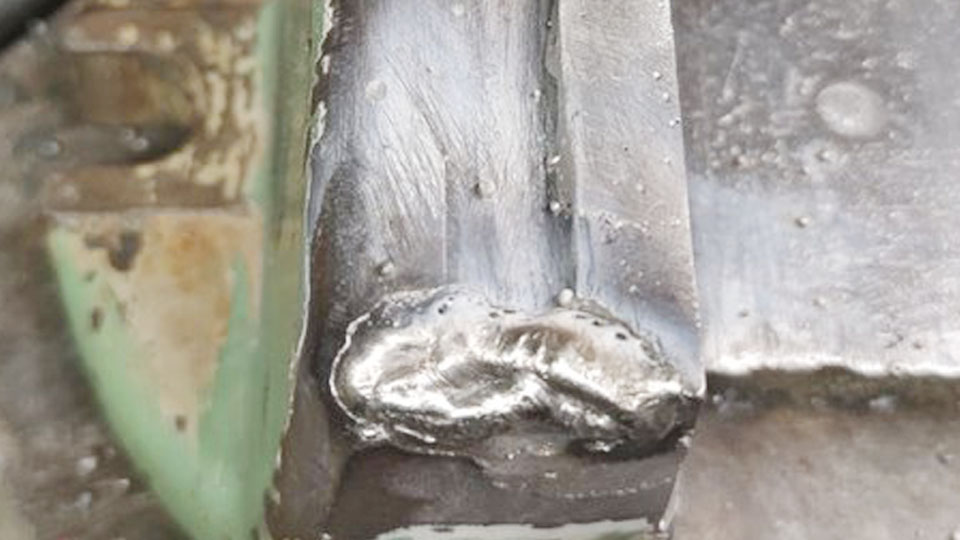
Everything looks fine when you finish the weld—clean bead, solid penetration, no visible defects. Then the next morning, a fine crack shows up along the joint. I’ve had that happen on high-strength steel, and it’s frustrating because cold cracking doesn’t always appear right away. It sneaks in after the metal cools, and by then the damage is done.
Learning how to prevent cold cracking in welding isn’t optional when you’re working on structural or load-bearing parts. Hydrogen, rapid cooling, and high restraint can combine in the worst way if you’re not careful.
I’ve learned—sometimes the hard way—that proper preheat, correct filler choice, and controlled cooling make all the difference.
Cold cracks can weaken a joint that looked perfect just hours earlier. Let me walk you through the practical steps that actually prevent it, so your welds stay strong long after the arc goes out.

Image by toptitech
What Exactly Is Cold Cracking in Welding?
Cold cracking forms in the weld metal or, more commonly, the heat-affected zone (HAZ) after the weld has cooled below about 400°F. Unlike hot cracks that happen during solidification, these develop as the metal contracts and hydrogen does its dirty work.
You’ll typically see them as:
- Toe cracks along the edge of the weld bead
- Underbead cracks parallel to the fusion line
- Transverse cracks cutting across the weld
They often start small and propagate under load, which is why they cause so many failures in service. In my early days, I once had a bracket weld on a skid steer loader crack three days after installation. The customer brought it back, and we traced it straight to insufficient preheat on a cold winter morning. Lesson learned the hard way.
The key is that cold cracks are “delayed.” The weld looks flawless when you slag it off and inspect it. But give it time, and the damage shows up. That’s why prevention beats detection every single time.
The Three Factors That Guarantee Cold Cracks (And How to Break the Chain)
Cold cracking needs all three of these to happen:
- Diffusible hydrogen in the weld pool
- A susceptible microstructure (usually hard, brittle martensite in the HAZ)
- High tensile residual stresses from cooling and restraint
Eliminate just one, and you’re golden. In practice, we attack all three because shop conditions aren’t perfect.
Hydrogen comes from moisture—on the plate, in the air, on your electrodes, even from cutting fluids or rust. The arc breaks it down into atomic hydrogen that dissolves into the molten metal. As the weld cools, it tries to escape but gets trapped, building pressure until cracks form.
The microstructure gets brittle when thick sections or high-carbon steels cool too fast, forming martensite instead of softer pearlite or ferrite. Residual stresses build because the weld wants to shrink but the surrounding cold metal won’t let it.
In a busy shop, these factors combine more often than you’d think. I’ve seen it on everything from 3/4-inch A36 plate to chrome-moly tubing on race car chassis.
How to Spot Cold Cracking Before It Costs You
The best defense is a good offense, but you still need to know what you’re looking for during inspection.
Cold cracks are fine and often subsurface at first. Use these tricks:
- Visual check after 24-48 hours. Look for tiny lines at the toe or in the HAZ.
- Dye penetrant or magnetic particle testing on critical welds.
- Ultrasonic testing for deeper ones on thick material.
In my shop, we always do a “next-day walk-around.” Grab a flashlight and a mirror on a stick. If you see anything suspicious, grind it out immediately. Catching it early saves hours of repair.
Preheating: The Single Most Effective Weapon Against Cold Cracks
If I could only give you one piece of advice, it would be this: preheat, preheat, preheat.
Preheating does three things:
- Slows the cooling rate so you don’t form hard martensite
- Drives off moisture before it gets into the weld
- Reduces the temperature gradient, lowering residual stresses
For mild steel like A36 under 1 inch thick, you can often get away without it if you’re using low-hydrogen processes. But once you hit 1-1/4 inches or start welding higher-strength stuff like A514 or 4130, preheat becomes non-negotiable.
Here’s a practical preheat guide I’ve used for years (based on AWS and real shop results):
| Material Type | Thickness (inches) | Minimum Preheat (°F) | Notes |
|---|---|---|---|
| A36 Mild Steel | Up to 1 | 50-100 | Optional if dry and clean |
| A36 Mild Steel | 1-2 | 150-200 | Always for multi-pass |
| A572 Gr.50 | 1-2 | 200-250 | Structural beams |
| 4130 Chrome-Moly | Any | 250-400 | Depends on thickness |
| High-Carbon Repair (0.4%+ C) | Any | 300-500 | Test first |
Measure temperature 3 inches from the joint on the opposite side from the torch. Use temp sticks, infrared guns, or even a good old soapstone mark that disappears at the right temp.
In winter, I crank the shop heaters and use rosebud torches or induction heaters on big pieces. One time on a 2-inch thick excavator boom repair, we preheated to 300°F and held interpass at 250°F minimum. No cracks after six months in service.
Choosing Filler Metals That Fight Hydrogen
Low-hydrogen electrodes are your best friend. Look for the “H” designation: H4, H8, or better yet H2.
My go-to for most shop work:
- E7018 for general structural—smooth, low spatter, and hydrogen-controlled when stored right.
- E8018 for higher strength.
- E11018 for really tough stuff.
Stick to 3/32″ or 1/8″ diameters for most work. Bigger rods mean more heat and more chance of trapped hydrogen if your technique slips.
For MIG, use solid wire with proper shielding gas (75/25 or tri-mix) and avoid flux-cored unless it’s a low-hydrogen variant designed for it.
Pro tip: When welding root passes on open joints, I sometimes run a 6010 for penetration, then switch to 7018 for the fill and cap. But only if I preheat properly.
Electrode Storage and Handling: Don’t Let Moisture Sneak In
This is where a lot of good welders drop the ball. Low-hydrogen rods absorb moisture like a sponge if left out. Once they do, they’re basically useless for crack-sensitive work.
My shop rules:
- Store in a rod oven at 250-300°F.
- Never open a new pack until you’re ready to use it.
- Limit exposure time: 4 hours max for 7018 at normal humidity.
- If rods get damp, rebake them at 500-800°F for 1-2 hours (check manufacturer specs).
I keep a small bench oven right by the welding stations so guys don’t have excuses. One welder I trained learned this the hard way—left a pack out overnight in humid Florida air. The next day’s welds cracked on a critical lift arm. He never forgot again.
Joint Preparation That Reduces Stress Concentrations
Poor fit-up is a silent killer. Gaps, misalignment, and sharp transitions create stress risers where cracks love to start.
Do this every time:
- Grind or mill to bright, clean metal at least 1 inch on either side of the joint.
- Remove all rust, scale, oil, paint, and mill scale.
- Use a 60-70° included angle on V-grooves for good access.
- Maintain consistent root opening—1/16″ to 1/8″ max.
- Tack welds should be full size and ground smooth.
On repair work, I always grind out old cracks in a U-shape rather than V. It gives better access and reduces the chance of leaving stress points.
Welding Parameters and Techniques That Minimize Risk
Heat input is a balancing act. Too low and you get fast cooling. Too high and you get distortion and wider HAZ.
For SMAW:
- 3/32″ 7018: 70-110 amps
- 1/8″ 7018: 110-155 amps
- Travel speed: Steady, no whipping unless necessary
I run stringer beads on thick material rather than wide weaves. Weaves can trap slag and hydrogen. Keep interpass temperature within 50°F of your preheat minimum.
Backstepping on long seams helps control distortion and stress.
Post-Weld Heat Treatment and Controlled Cooling
For the most crack-sensitive jobs, don’t just walk away.
- Maintain interpass and post-weld temperature for at least 30 minutes per inch of thickness.
- Wrap thick sections in insulating blankets or bury small parts in lime or vermiculite.
- On critical repairs, do a full stress-relief at 1100-1200°F if the code allows.
In one memorable job, we stress-relieved a set of 2-inch thick crane hooks in a big furnace. The customer was skeptical until we showed him the X-rays—no cracks, perfect soundness.
Lessons From the Shop Floor: Real Stories of Near-Misses
Early in my career, I was welding 1-1/2 inch plate for a custom press brake frame. It was cold in the shop, I was in a hurry, and I skipped preheat.
Two days later, three separate cracks appeared in the HAZ. We had to grind out 18 inches of weld and start over. Cost us two days and $800 in materials.
Another time, on a 4130 roll cage for a sprint car, I used old 7018 rods that had been out too long. The root pass looked good, but the caps cracked transversely. Lesson: Never trust “maybe it’s still okay” rods.
These aren’t failures—they’re tuition. Now I drill these habits into every apprentice who walks through the door.
Common Mistakes That Lead to Cold Cracks (And Easy Fixes)
- Assuming mild steel is immune. Wrong. Thick sections or cold weather change everything.
- Using 6010/6011 for everything. Great for root, terrible for fill on restrained joints.
- Welding in drafts. Even a small breeze can speed cooling.
- Ignoring interpass temperature. Let it drop too low between passes and you’re asking for trouble.
- Over-welding. Bigger isn’t always better—excess weld metal increases stress.
Fix these, and you’ll eliminate 90% of your cracking issues.
Tools and Setup That Make Prevention Easier
Invest in:
- Digital preheat thermometer or infrared gun
- Rod oven (even a cheap one pays for itself)
- Good grinders and wire wheels for prep
- Tempilstiks for quick checks
For home shops, a rosebud torch and fire bricks work fine for small jobs.
Why Mastering Cold Crack Prevention Makes You a Better Welder
Once you internalize these practices, your welds become more reliable, your rework drops, and your confidence soars. Customers notice when your work holds up.
The next time you’re staring at a thick plate on a chilly morning, remember: a little extra time on preheat and proper rods will save you hours of grief later. When in doubt, over-preheat by 50°F and use H4 rods. It’s cheap insurance that pays dividends every single time.
FAQ: Your Most Common Cold Cracking Questions Answered
How long after welding can cold cracks appear?
Anywhere from a few hours to two weeks, though most show up within 48 hours. That’s why we always inspect critical welds the next day or after a full cool-down cycle.
Can I weld without preheat if I use low-hydrogen rods?
On thin mild steel in a warm shop, yes. But on anything over 3/4 inch or in cold conditions, preheat is still your safest bet. The rods help, but they don’t replace proper temperature control.
What’s the difference between cold cracking and hot cracking?
Hot cracks happen while the weld is still molten or just solidifying—usually from impurities or high sulfur. Cold cracks are hydrogen-related and form after cooling. Different causes, different fixes.
Do I need post-weld heat treatment on every job?
Not always. For most structural steel under AWS D1.1, it’s not required unless specified. But on high-strength or thick material, even a simple hydrogen bake-out at 400°F for an hour can make a huge difference.
What if I already have cracks—how do I fix them?
Grind them out completely, at least 1/8 inch past the visible crack in all directions. Re-prep the joint, preheat properly, and reweld with low-hydrogen consumables. Then inspect again after 24 hours. Don’t just weld over them—that never works.