
The first time I pressure-tested a homemade air tank, I’ll never forget the sound — that sharp hiss when the safety valve popped open right on cue. It startled me, but it also reminded me why that little valve is one of the most important parts of any pressurized system.
If you’ve ever wondered how a pressure safety valve works, the answer is simple: it’s the one thing standing between normal operation and catastrophic failure.
A pressure safety valve automatically opens when internal pressure builds beyond a safe limit, releasing just enough air or steam to keep the system from bursting. It’s a small part, but it’s what keeps boilers, compressors, and pipelines from turning into dangerous projectiles. Understanding how it works isn’t just technical knowledge — it’s about safety, reliability, and peace of mind.
In this guide, I’ll break down how pressure safety valves operate, what parts make them tick, and how they’re set and tested to meet safety standards. Let’s lift the lid on how these valves quietly do the heavy lifting to keep your equipment — and you — safe.
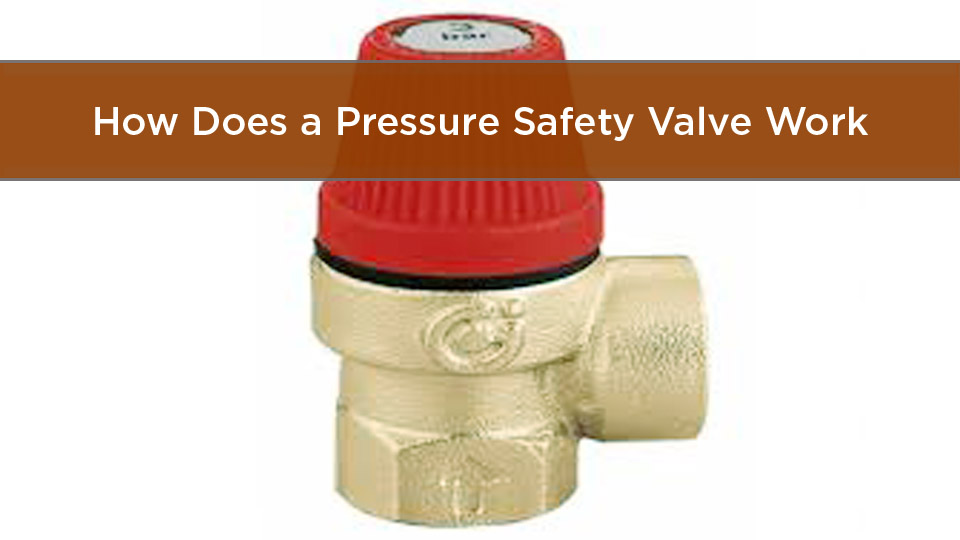
Image by brooksonline
What Exactly Is a Pressure Safety Valve?
You’re welding a high-pressure air receiver or an oxy-acetylene manifold. Inside, gases or fluids build heat, expand, or react—pressure climbs fast. A PSV is that automatic hero valve mounted on top (usually), set to crack open at a precise “set pressure” above your max operating level. It dumps the excess pop—full bore—to drop pressure back to safe.
Unlike a regulator that babysits steady flow, a PSV only wakes up in emergencies: blocked lines, fire exposure, thermal expansion from a hot weld nearby, or a runaway chemical reaction in a reactor vessel. It’s spring-loaded muscle, no electricity needed, built to ASME Section VIII standards for us Yanks.
Set it 3% over max allowable working pressure (MAWP), and it snaps wide open—often lifting the disc a full quarter-inch or more for max flow.
I’ve fabbed hundreds of these nozzles. They’re your insurance against overpressure turning a good weld bad. Pro tip: Always spec stainless 316 for corrosive gigs—matches your filler rod and laughs at rust.
Why Every Welder Needs to Master PSVs
You’re prepping a joint for a steam drum or hydrostatic testing a custom fab. Ignore the PSV, and one bad calc means boom—weld cracks, vessel fails, inspector walks. But nail it? Flawless UT reads, happy customer, fat paycheck.
In my shop, we’ve dodged disasters from “fire case” scenarios—external flames heating a vessel faster than it vents. PSVs handle that, plus blocked inlets (valve slams shut mid-weld heat-up) or tube ruptures in heat exchangers. Cost-wise? A $500 PSV saves $100K+ in scrap metal and downtime.
For DIYers: On your garage compressor tank? Slap on a PSV rated to your welds’ hydro test. Students: ASME UG-125 mandates ’em—study up for that cert. Pros: Pair with rupture disks for hybrid protection on toxic gigs. Bottom line: Know your PSV, weld confidently.
Breaking Down the Key Components of a PSV
No fluff—here’s the guts, like stripping down a Miller rig.
- Nozzle/Seat: The choke point. Precision-machined inlet where pressure senses. Weld this flange clean—any undercut, and it leaks.
- Disc: The plugger. Lifts off the seat to vent. Hardened stainless or Inconel for steam abuse.
- Spindle: Rod connecting disc to spring. Guides lift—lube it during PM, or it binds.
- Spring/Bonnet: The boss. Compressed coil sets your pop pressure. Adjust via cap screw—clockwise tightens.
- Bellows (on balanced types): Seals bonnet from backpressure corrosion. Vital for welding near dirty vents.
- Hanger/Lift Lever: Test handle. Yank it under pressure to sim-pop.
I’ve rebuilt dozens. Common fab hack: Match nozzle material to vessel shell—ER308L filler for 304SS keeps it code-legal.
| Component | Function | Welding Tip |
|---|---|---|
| Nozzle | Senses pressure | Bevel 37° for full pen GTAW |
| Disc | Seals/opens | Inspect for galling post-test |
| Spring | Sets pop force | Never weld near—heat kills tension |
| Bonnet | Houses spring | Bolt torque: 50 ft-lbs dry |
How Does a Pressure Safety Valve Work? Step by Step
Alright, trainee—eyes on. Here’s the dance, blow-by-blow.
Normal Operation: Locked and Loaded
System hums at 150 PSI. Spring crushes disc against seat—zero leak. Your weld cools, pressure stabilizes. PSV sleeps.
Overpressure Hits: The Crack and Pop
Pump kicks or fire licks—pressure climbs to set point (say 165 PSI). Fluid force > spring force. Disc cracks 1/24″ (low lift) or snaps full (pop action). Flow surges—full lift hits bore area max, dumping 10,000+ SCFH steam.
Mechanics: Pressure on disc area (bore x lift) overcomes spring (K x compression). Blowdown: 5-10% drop before reseat—prevents chatter.
Reseating: Snap Back
Pressure dips to 155 PSI. Spring slams disc home. Chatter? Bad—means wrong sizing or backpressure. Vent to atmosphere or flare stack.
Anecdote: Once, on a boiler job, backpressure from clogged pipe chattered my PSV like a machine gun. Fix? Bigger orifice, clean line. Saved the disc.
Types of Pressure Safety Valves You’ll Encounter
Not all PSVs equal. Pick wrong, inspector red-tags your fab.
| Type | How It Works | Pros | Cons | Best For Welders |
|---|---|---|---|---|
| Conventional Spring-Loaded | Direct spring pop | Cheap, simple | Backpressure sensitive | Clean steam vessels |
| Balanced Bellows | Bellows isolates backpressure | Handles dirty vents | Bellows rupture risk | Corrosive fab shops |
| Pilot-Operated | Pilot senses, main dumps | Tight seal, high capacity | Complex, pricier | High-flow reactors |
| Full Lift | Max disc travel | Huge flow | Noisy pop | Fire case boilers |
| Low Lift | Minimal travel | Quiet | Low capacity | Small air receivers |
I’ve welded ’em all. Pilot for big oilfield tanks—zero simmer till boom time.
PSV vs. PRV: Quick Showdown
| Feature | PSV | PRV |
|---|---|---|
| Action | Full pop-open | Gradual modulate |
| Set Over MAWP | 3% | 10% |
| Fluid | Gas/steam | Liquids |
| Use | Emergencies | Regulation |
PRV for your coolant lines; PSV for vessel safety.
PSVs in Welding: Real-World Applications
- Pressure Vessels: ASME VIII Div 1—weld nozzle per UW-16. Hydro to 1.3x MAWP, PSV vents.
- Boilers: Section I—dual PSVs, low-water cutoff.
- Oxy-Fuel Rigs: Regulators have mini-PSVs. Welded carts? Test yearly.
- Fab Shop Compressors: 135 PSI set—your lungs thank you.
Story: DIY pal built a moonshine still (shh). No PSV—exploded. Welded one on v2: Golden.
Step-by-Step Guide to Installing a PSV on a Welded Vessel
- Design: Calc orifice (API 520). Nozzle: Sch 80 pipe, full pen weld.
- Prep: Bevel ends 30° included, grind clean. Preheat 300°F carbon steel.
- Tack: 4 tacks, 1″ apart. Check alignment—shim if needed.
- Root Pass: GTAW, 100A, ER70S-2. Back purge argon.
- Fill/Cap: SMAW E7018, stringer beads. Interpass 450°F.
- PWHT: 1100°F hold 1hr/inch if >1″ thick.
- NDT: PT/MT full length. UT if code.
- Mount PSV: Torque flanges 60 ft-lbs. Pipe away vent never indoors.
Settings: Miller Syncrowave 350, AC balance 60% electrode negative.
Welding Tips for PSV Nozzles and Flanges
- Material Match: 516 Gr70 vessel? Use matching filler.
- Avoid Distortion: Skip weld tacks.
- Backpressure Prep: Drill vent holes in bonnet.
Mistake: Welded live—near miss. Always depressurize!
How to Test and Maintain Your Pressure Safety Valve
Bench Test:
- Clamp in test rig.
- Ramp air to set pressure.
- Pop? Measure lift, reseat.
- Cert every 1-3 years (NBIC).
In-Situ: Lift lever under steam—steam plume = good.
PM: Clean seat annually. Check spring for set creep.
Common Mistakes Welders Make with PSVs (And How to Avoid Them)
- Undersized Orifice: Fix—API 521 calc before fab.
- Backpressure Trap: Pipe vent straight up, 10D upstream.
- No PWHT: Cracks galore—follow code.
- Wrong Orientation: Vertical only—invert fails.
- Ignore Codes: ASME stamp or bust.
I’ve fixed ’em all. Lesson: Document everything.
Wrapping Up
How a pressure safety valve works, from pop mechanics to your weld bench. Set right, weld clean, test often. You’re safer, faster, code-compliant. Next fab? Sleep easy knowing your PSV’s got your back. For killer flow, go full-lift on steam—pairs perfect with your 7018 hot pass.
FAQ
What’s the difference between a PSV and a rupture disk?
PSV reseats reusable; disk bursts once. Combo: Disk first for corrosion, PSV backup.
How often should I test my welding shop’s PSV?
Yearly bench for critical; every 3 for air receivers. Log it—OSHA loves paper.
Can I weld directly on a PSV body?
Hell no! Remove, weld nozzle, reinstall. Heat warps spring.
What causes PSV chatter, and how do I stop it?
Backpressure or oversize. Downsize orifice, add choke.
Is a PSV required on my DIY pressure washer tank?
If over 15 PSI and welded steel—yes, per ASME. Cheap insurance.


