You can have a solid MIG machine sitting on your bench, but if the setup isn’t right for flux core wire, the weld will tell on you fast—excess spatter, poor penetration, and a bead that just doesn’t look right.
It’s one of those situations where small setup mistakes turn into big frustrations. That’s why understanding How to Set Up a MIG Welder for Flux Core Wire is something every welder needs to get right early on.
Flux core can be a game changer—especially when you’re welding outdoors or dealing with dirty metal. But it’s not as simple as swapping the wire and pulling the trigger. Polarity, drive rolls, tension, and settings all need to be dialed in correctly, or you’ll spend more time grinding than welding.
Getting this setup right matters for both weld quality and efficiency. Once everything is tuned properly, flux core can produce strong, consistent welds with less hassle than you might expect.
I’ll walk you through the exact steps and practical tips to set up your MIG welder the right way—so you can focus on laying down clean, solid beads instead of fighting your machine.
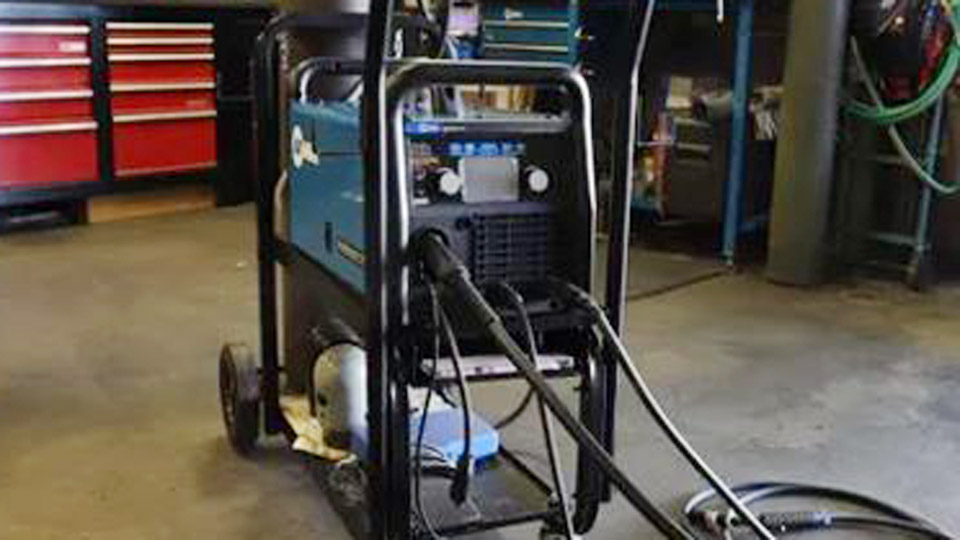
Image by hotrod
Why Flux Core Matters in Real Welding Jobs
Flux core wire contains flux that generates shielding gas and forms slag as it burns. This self-shielded process (FCAW-S) lets you weld in wind, on rusty or painted surfaces, and without hauling a gas cylinder. It’s ideal for hobbyists fixing trailers, professionals doing outdoor fabrication, or students practicing in windy shops.
Compared to solid wire MIG (GMAW), flux core runs hotter, deposits metal faster, and tolerates contamination better. But it demands different polarity, drive rolls, stickout, and technique. Wrong setup leads to excessive spatter, worm tracks, lack of fusion, or weak welds that fail inspection or break under load.
In my experience, the biggest real-world wins come on mild steel from 16 gauge up to 1/2 inch or thicker. You avoid gas wind issues on job sites and cut costs—no tank refills. The trade-off is more post-weld cleanup from slag and spatter, plus a learning curve on settings.
Understanding Flux Core Wire Basics
Flux-cored arc welding uses a hollow wire filled with flux compounds. As the arc melts the wire, the flux decomposes into shielding gas that protects the weld pool and adds alloying elements for strength and deoxidizers.
Self-shielded wires (like E71T-11) need no external gas. Gas-shielded flux core (dual-shield) uses CO2 or mixes for cleaner welds on thicker plate but requires a tank. Most DIY and hobby setups stick with self-shielded for simplicity.
Wire comes in diameters like 0.030″, 0.035″, and 0.045″. The flux makes the wire softer and more prone to crushing than solid wire, so handling matters.
What it is: A continuous electrode that provides filler metal, shielding, and slag protection in one package.
How it works: The arc melts the sheath and flux. Gas shields the pool; slag floats impurities and shapes the bead. Cooling is slower, which helps with out-of-position welding but increases heat input.
When and why to use it: Outdoor repairs, rusty farm equipment, thick materials over 1/8″, or windy conditions. It shines where gas MIG would suffer porosity from drafts. Avoid it on very thin sheet (under 20 gauge) unless you’re extremely careful—flux core tends to burn through easier than solid wire.
Practical tip: Start with 0.030″ or 0.035″ wire on common mild steel. Check your machine’s manual or door chart for recommended ranges. Brands like Hobart Fabshield or Lincoln Innershield perform well in US shops.
Common Mistakes When Switching to Flux Core
Beginners often forget polarity and pay for it with a spitting arc and weak penetration. Pros sometimes rush joint prep and fight slag inclusions later.
- Using DCEP (electrode positive) instead of DCEN for self-shielded wire.
- Keeping the same smooth drive rolls from solid wire.
- Short stickout like MIG (1/4″ instead of 3/4″).
- Pushing the gun instead of dragging.
- Insufficient metal cleaning despite flux core’s tolerance.
- Overly high voltage causing porosity or worm tracks.
I’ve fixed countless setups where the previous user left the machine on solid wire settings. One quick polarity swap and drive roll change turned frustration into clean beads.
Step-by-Step: How to Set Up Your MIG Welder for Flux Core Wire
Here’s the exact sequence I follow every time I switch wires in the shop. It takes 10-15 minutes once you’re used to it.
Power down and open the machine
Unplug or turn off the welder. Open the side panel to access the drive mechanism and polarity studs.
Change polarity to DCEN
Most MIG machines ship set for DCEP (torch positive) for solid wire. For self-shielded flux core, swap to DC electrode negative—torch negative, work positive. Loosen the nuts on the output studs inside the machine, move the torch cable to the negative terminal, and the ground/work cable to the positive.
Tighten securely. This is the #1 reason setups fail. Wrong polarity gives unstable arc, spatter, and poor penetration.
Install correct drive rolls
Flux core needs knurled (grooved or serrated) rolls to grip the softer tubular wire without crushing it. Smooth V-grooves for solid wire will slip or deform flux core. Select the groove matching your wire diameter—usually marked .030/.035. Some machines have U-groove options. Install and align properly.
Load the wire spool
Place the flux core spool on the hub. Set spool tension so it doesn’t freewheel but isn’t overly tight—test by pulling wire; it should resist slightly without unwinding freely. Thread the wire through the inlet guide, over the drive rolls, into the gun liner, and out the contact tip. Cut off any bent or rusty end.
Set drive roll tension
Tension should be just enough to feed wire smoothly without slipping. Too tight flattens or birdnests the wire; too loose causes slipping and erratic feeding. A good test: stop the wire with your fingers at the gun tip with light pressure—it should hold but not require excessive force.
Remove or replace the gas nozzle
For true gasless flux core, remove the gas diffuser/nozzle or install a flux core-specific nozzle if your gun has one. No need for gas hookup.
Install proper contact tip
Match the tip bore to your wire size—slightly larger than the wire diameter to avoid jamming as the wire heats and expands. Replace if worn or spattered.
Check cables and ground
Ensure all connections are tight and cables undamaged. Clean the ground clamp contact area on your workpiece.
Once set, plug in, turn on, and test feed without striking an arc. Wire should come out straight and smooth.
Choosing the Right Wire Diameter and Settings
Wire size affects amperage range, deposition rate, and suitability for material thickness.
- 0.030″: Great for thinner materials (up to about 1/4″), lower heat machines, and better control on sheet metal. Runs smoother on 110V welders.
- 0.035″: Versatile all-rounder for 1/8″ to 3/8″ mild steel. Good penetration without excessive burn-through risk.
- 0.045″: For heavier plate and higher-output machines. Higher deposition but needs more power.
A rough rule: Aim for about 1 amp per 0.001″ of material thickness as a starting point for penetration. Wire feed speed (WFS) primarily controls amperage—higher speed means more amps and filler.
Voltage sets arc length and bead shape. Too low: stubbing and poor fusion. Too high: spatter, porosity, or convex beads.
Example starting settings for self-shielded flux core on mild steel (adjust based on your machine and wire brand):
For 0.030″ wire:
- 1/16″ to 1/8″ thick: 16-18V, 150-250 IPM wire speed
- 3/16″: 17-19V, 250-350 IPM
For 0.035″ wire:
- 1/8″: 17-19V, 200-300 IPM
- 1/4″: 19-21V, 300-400 IPM
These are ballpark figures from shop experience and manufacturer guidelines. Your machine’s chart or a test coupon is better than any generic number. Run a bead on scrap matching your job, listen for a steady “frying bacon” sound, and adjust. Crisp arc with minimal spatter is the goal.
Comparison of Flux Core vs Solid Wire MIG Setup
| Aspect | Flux Core (Self-Shielded) | Solid Wire MIG (with Gas) |
|---|---|---|
| Polarity | DCEN (torch negative) | DCEP (torch positive) |
| Drive Rolls | Knurled | Smooth V-groove |
| Shielding | Internal flux | External gas (75/25 Ar/CO2 typical) |
| Stickout | 3/4″ typical | 1/4″ to 3/8″ |
| Technique | Drag (pull) | Push or drag |
| Outdoor use | Excellent (wind tolerant) | Poor without shelter |
| Cleanup | Slag and spatter | Minimal |
| Best for | Thicker/dirty/outdoor | Thin/clean/indoor |
Flux core often needs higher voltage and different WFS multipliers than solid wire. Test and fine-tune.
Joint Preparation and Material Handling
Even though flux core forgives some dirt, clean metal still welds better. Remove heavy rust, mill scale, paint, or oil with a grinder, wire brush, or flap disc. Clean at least 1-2 inches around the joint and the ground area.
For butt joints over 1/4″ thick, bevel edges for better penetration and fusion. Leave a small root gap if needed. Tack welds should use the same settings—clean tacks thoroughly before filling.
On rusty farm equipment or used steel, flux core shines because the flux deoxidizes contaminants. Still, excessive dirt increases porosity risk.
For thin sheet, back the joint with copper or steel backing to control burn-through. Preheat isn’t usually needed on mild steel but helps on thicker or high-carbon pieces to reduce cracking.
Welding Technique and Practical Tips
Hold a 10-20° drag angle—torch tilted back toward the finished weld, like stick welding. Maintain 3/4″ stickout (contact tip to work distance). Longer stickout on larger wires or to reduce heat.
Travel speed: Move fast enough to stay ahead of the slag but slow enough for good fusion. Watch the puddle—slag should trail behind cleanly.
Gun angle and weave: Small circles or slight weave help on wider joints or vertical welds. Keep the arc in the joint.
Inductance (if your machine has it): Lower settings reduce spatter on flux core.
Run multiple passes on thick material, cleaning slag between each. Slag inclusions ruin otherwise good welds.
In vertical-up, use a slight weave and pause at the toes to tie in. Overhead requires faster travel and good slag control.
Shop-tested advice: Always run test beads on scrap identical to your workpiece. Note voltage, WFS, and material thickness. Mark what works—saves time next job.
Safety Considerations for Flux Core Welding
Flux core produces more smoke and fumes than solid wire MIG because of the flux. Work in a well-ventilated area or use exhaust. Wear a respirator if welding indoors for long periods.
UV rays are intense—full leather or flame-resistant jacket, gloves, and pants. Auto-darkening helmet with proper shade (11-13 typical).
Hot slag flies farther than MIG spatter. Clear your workspace and wear boots.
Electrical safety: Keep cables dry and in good condition. Proper polarity prevents erratic behavior that could shock or damage equipment.
Never weld on closed containers or near flammables without precautions.
Troubleshooting Common Flux Core Problems
Porosity or worm tracks: Wrong polarity, too much voltage, dirty metal, or too short stickout. Fix: Swap polarity, lower volts, clean better, increase stickout.
Excessive spatter: Voltage too high or low, wrong tension, or poor technique. Dial voltage until arc sounds smooth.
Birdnesting or feeding issues: Wrong drive rolls, too much tension, dirty liner, or kinked wire. Use knurled rolls and proper tension.
Lack of penetration: Amperage too low (slow WFS), wrong polarity, or fast travel speed. Increase wire speed or slow down.
Slag inclusions: Poor cleaning between passes or bad angle. Chip slag thoroughly and adjust drag angle.
If the arc won’t start cleanly, check contact tip, ground, and wire protrusion.
Pros and Cons of Flux Core on a MIG Welder
Pros:
- Portable—no gas bottle.
- Wind and dirt tolerant.
- High deposition rates.
- Good for thicker materials and all positions.
- Lower equipment cost for outdoor work.
Cons:
- More cleanup (slag, spatter).
- Rougher bead appearance until you dial it in.
- Higher fume levels.
- Not ideal for very thin metal.
- Requires polarity and roll changes when switching from solid wire.
In fabrication shops, many run both setups and switch based on the job. For hobbyists with one machine, flux core often becomes the go-to for versatility.
Real-World Examples from the Shop
On a trailer frame repair with 3/16″ rusty angle iron, I used 0.035″ flux core at about 19V and 280 IPM. Dragged the gun with 3/4″ stickout after grinding off scale. Beads penetrated well with minimal distortion compared to stick.
For thin 18-gauge auto body patches, flux core can work but needs low settings and backing. Often I switch back to solid wire with gas for cleaner results on sheet.
In windy outdoor structural tacks, flux core saved the day when gas MIG kept losing shielding.
Taking Your Flux Core Setup to the Next Level
Once basics click, experiment with inductance for smoother arc, or try different wire brands for varying slag release and arc characteristics. Some wires run hotter or produce less smoke.
Keep your liner clean—flux residue builds up faster. Replace contact tips regularly; they wear quicker with flux core.
Document your successful settings in a notebook or on the machine. Material thickness, wire size, voltage, WFS, and notes on bead quality.
Key Takeaways for Better Flux Core Welds
Setting up a MIG welder for flux core wire comes down to polarity (DCEN), knurled drive rolls, proper tension, longer stickout, and drag technique. Clean metal, test on scrap, and listen to the arc. Understand your wire diameter choices and how voltage versus wire speed interact.
You’re now equipped to handle flux core confidently on real jobs—whether it’s a quick farm fix or a weekend fab project. The process rewards attention to those setup details with strong, penetrating welds that hold up.
One pro-level tip I’d give any welder: Treat every flux core setup like a new machine. Double-check polarity first, then run a short test bead before committing to the workpiece. A minute of testing prevents hours of grinding bad welds.
FAQ
Do I really need to change polarity for flux core wire?
Yes, for self-shielded flux core. Switch to DCEN (torch negative). Running on DCEP designed for solid wire causes unstable arc, heavy spatter, and weak welds. It’s the most common mistake and the fastest fix.
What drive rolls should I use with flux core?
Knurled or serrated rolls sized for your wire diameter. They grip the softer tubular wire without crushing it. Smooth rolls from solid wire often cause slipping or deformation.
How long should my stickout be with flux core?
Typically 3/4 inch—longer than solid wire MIG. This allows the flux to generate proper shielding and reduces heat at the tip. Adjust slightly based on wire size; larger diameters may need a bit more.
Can I use flux core on thin metal like auto body sheet?
It’s possible but tricky. Use 0.030″ wire, low settings, backing material, and very controlled travel speed. Many welders prefer solid wire with gas for thin materials to avoid burn-through and excessive distortion. Test thoroughly.
Why is my flux core weld porous or full of holes?
Common causes include wrong polarity, excessive voltage, dirty base metal, or too short stickout. Clean the joint better, confirm DCEN, lower voltage slightly, and maintain proper stickout. Also check for drafts or moisture on the wire.