
Thin sheet metal has a way of exposing every mistake you make. One second you’re laying what looks like a decent bead, and the next you’ve blown a hole straight through or warped the panel beyond saving.
That’s exactly why learning How to Weld Sheet Metal with a MIG Welder is such a valuable skill, especially if you’re working on auto panels, light fabrication, or repair jobs.
In real shop conditions, MIG welding sheet metal is all about control—heat, travel speed, and technique. Too much heat and you burn through; too little and you don’t get proper fusion.
I’ve had jobs where rushing the weld led to more grinding and patching than actual welding, which is something every welder wants to avoid. Getting this right matters for both appearance and strength. Clean welds mean less rework, better-looking finishes, and panels that actually hold up over time.
I’ll walk you through the practical steps, settings, and techniques that help you weld sheet metal cleanly without constant frustration.
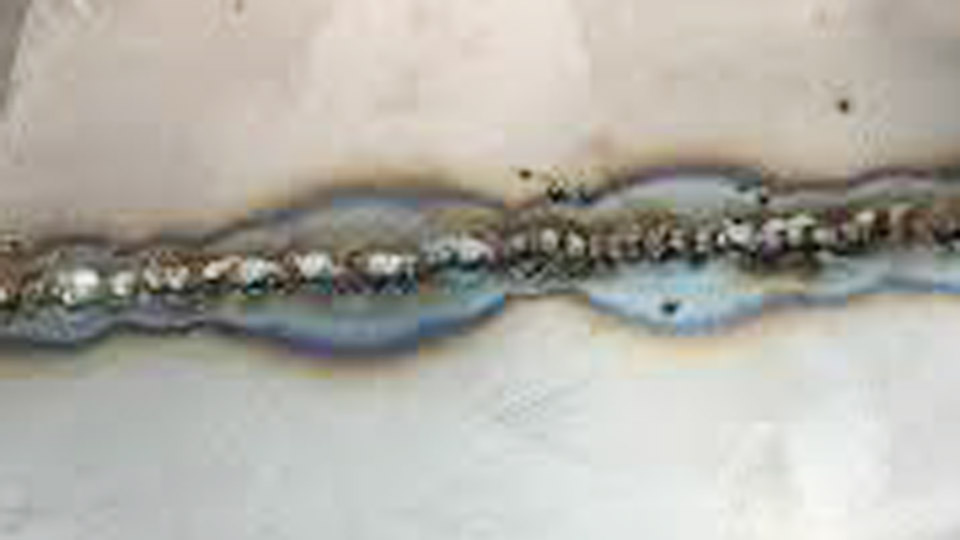
Image by metal.fabrication.tips
Why MIG Excels for Sheet Metal (and When It Doesn’t)
MIG, or Gas Metal Arc Welding (GMAW), feeds a continuous solid wire electrode through a gun while shielding gas protects the molten pool. On sheet metal, it shines because of its speed and relatively low skill barrier compared to TIG. You can lay down precise stitches or tacks without constantly changing rods like in stick welding.
The short-circuit transfer mode—common on most home and light industrial machines—keeps heat input manageable. The wire touches the workpiece, shorts out, and melts in quick bursts rather than spraying hot metal everywhere. This helps on thin stuff where continuous spray transfer would overwhelm the material.
That said, MIG isn’t perfect here. It inputs more heat than TIG, so distortion remains a constant battle on large panels. Flux-cored wire without gas works in a pinch outdoors but leaves slag and more spatter, making cleanup a chore on visible auto body work. For the cleanest results on mild steel sheet, stick with solid wire and mixed gas.
In my experience, MIG handles 16-gauge and thicker sheet metal reliably for structural patches or brackets. Drop below 20-gauge, and you shift toward pulsing or careful stitch techniques to avoid turning your project into Swiss cheese.
Choosing the Right MIG Welder and Consumables for Thin Metal
Not every machine handles sheet metal gracefully. Look for one with good low-end control—many 110-volt units like popular Miller or Lincoln models offer “auto-set” features or fine voltage taps that prevent overwhelming thin stock.
Higher-end machines with pulse capability give even better heat management, but you can succeed with basic setups if you understand the dials.
Wire diameter is your first critical decision. For sheet metal under 1/8 inch:
- .023″ or .024″ wire: Ideal for 20- to 24-gauge. It melts at lower amperage, reducing burn-through risk.
- .030″ wire: Works on 18- to 16-gauge and gives a bit more deposition when you need to fill gaps.
- Avoid .035″ or thicker unless you’re on 14-gauge or heavier; it demands higher settings that easily punch holes.
I almost always reach for ER70S-6 wire on mild steel sheet. The extra deoxidizers handle light surface rust or mill scale better than ER70S-3, producing smoother beads with less porosity.
Both run well with 75% argon/25% CO2 (C25) shielding gas, which gives a stable arc and nice wetting action. Pure CO2 is cheaper but increases spatter.
Gas flow should sit around 15-20 cubic feet per hour (CFH). Too low and you get porosity; too high and you create turbulence that sucks in air.
Contact tips and nozzles: Match the tip to your wire size exactly. A recessed tip helps on thin work by allowing slightly longer stickout without losing heat control.
Essential Safety Gear and Shop Setup
Before striking an arc, protect yourself. Sheet metal welding throws less UV than heavy plate but still demands a quality auto-darkening helmet with at least shade 10-11.
Leather gloves, flame-resistant jacket, and steel-toed boots are non-negotiable—molten droplets bounce everywhere on thin stuff.
Work in a well-ventilated area. Even with gas shielding, fumes from zinc coatings on galvanized sheet or residual oils can be nasty. Keep a fire extinguisher handy; thin metal heats up fast and can ignite nearby flammables.
Secure your workpiece. Clamps, magnets, or fixturing jigs prevent movement as heat builds. For auto body patches, I often back the area with a copper or aluminum chill bar—it pulls heat away without sticking to the weld if you accidentally burn through.
Preparing Sheet Metal for MIG Welding
Clean metal is half the battle. I can’t count the times beginners blamed their machine when the real culprit was grease, rust, or paint.
Start by removing all contaminants at least 1 inch back from the joint. Use a dedicated grinder with a flap disc or wire wheel—never the same wheel you use on aluminum or stainless to avoid cross-contamination. For oily panels, wipe with acetone or a degreaser, then let it flash off completely.
Joint fit-up matters enormously on thin stock. Gaps larger than 1/16 inch invite burn-through because the puddle has nowhere to bridge. If you must bridge a gap, tack frequently and consider a small amount of filler wire manually fed if needed, though that’s rare.
Common joint types for sheet:
- Butt joints: Align edges perfectly. Square edges work fine on thin material—no bevel needed.
- Lap joints: Overlap by at least 3-4 times the thickness. These tolerate minor gaps better but can trap contaminants.
- T-joints or corner joints: Watch your gun angle to avoid melting one leg more than the other.
For patches, cut the damaged area straight and make your insert fit snug. A 1/32-inch gap is about the maximum I accept before adjusting.
Dialing In MIG Settings for Sheet Metal
Settings separate pros from frustrated hobbyists. The golden rule: run it “hot and fast” in short bursts rather than “cold and slow” with long beads.
General starting point (mild steel, C25 gas, short-circuit mode):
- 20-22 gauge (~0.030-0.036″): .023″ wire, 14-16 volts, wire speed 80-120 IPM (roughly 40-60 on many dial machines). Expect 30-60 amps.
- 18 gauge (~0.047″): .023″ or .030″ wire, 16-18 volts, 120-180 IPM.
- 16 gauge (~0.059″): .030″ wire, 17-19 volts, 150-220 IPM.
These are starting points only. Every machine behaves differently, and factors like cable length or input voltage affect output. Test on scrap of identical thickness and material.
Listen to the arc: It should sound like sizzling bacon or frying eggs—steady and crisp. A steady “crackling” with minimal spatter means you’re in the zone. Globular sounds or popping indicate voltage too low or wire speed too high.
Voltage controls arc length and bead shape. Too low and the wire stubs into the plate. Too high and the arc gets long and floppy, increasing heat and spatter.
Wire speed (which primarily sets amperage) feeds more filler. Crank it too high on thin metal and you deposit excess wire before the base melts, creating cold laps or proud beads with no fusion.
Stickout: Keep it short—about 1/4″ to 3/8″ maximum. Longer stickout drops voltage at the arc, cools the weld, and lets shielding gas dissipate. Push too close and you risk burning the contact tip.
Many modern machines have charts inside the door or auto-set modes. Use them as a baseline, then fine-tune by watching the puddle and listening.
Step-by-Step Guide: MIG Welding Sheet Metal
Setup and test: Assemble your machine, fill the gas, load wire, and check polarity (DCEP—electrode positive). Run a test bead on scrap. Adjust until the bead is flat, ties in nicely at the toes, and penetrates without melting through.
Tack it up: Place small tacks every 1-2 inches, alternating sides to balance heat. Let each tack cool slightly before the next. On large panels, space tacks farther but never run a continuous bead yet.
Weld in stitches or spots: Use the “pulse” or “stitch” technique. Pull the trigger for 1/2 to 1 second to form a small puddle, release, and move 1/2 to 1 inch ahead. Overlap each stitch by about half. This lets the metal cool between passes, minimizing distortion. For very thin material, the “whip” or “stack dimes” motion helps—move forward quickly then pause briefly to let filler add.
Gun technique: Hold the gun at 10-15 degrees push angle (forehand) for better shielding and flatter beads. Travel speed should be fast enough that the puddle doesn’t get too large—aim to stay ahead of excessive heat buildup.
Monitor and cool: If the panel gets too hot to touch near the weld, stop and let it air cool or use compressed air (carefully). Never quench with water unless the job allows it—rapid cooling can crack welds or harden the heat-affected zone undesirably.
Post-weld: Let everything cool completely before grinding or hammering. Grind welds flush only if appearance demands it; over-grinding thins the material further.
Techniques to Control Heat, Distortion, and Burn-Through
Distortion is the silent killer on sheet metal. Heat causes expansion, then contraction pulls everything out of shape.
Skip welding: Weld short sections in different areas, jumping around the piece like a checkerboard. This balances shrinkage.
Backstepping: Weld a short stitch, then start the next one ahead of it and weld backward toward the previous one.
Clamping and fixturing: Use strong clamps or magnets. For bodywork, I sometimes sandwich panels with aluminum bars as heat sinks.
Copper backing: A copper bar behind the joint absorbs heat rapidly and won’t fuse if you blow through. Aluminum works too but conducts less efficiently.
Pulse settings: If your machine offers it, pulsed MIG drops average heat input while maintaining good fusion—game-changing for 18-gauge and thinner.
Watch travel speed. Too slow piles heat; too fast gives shallow penetration and cold laps.
Common beginner mistake: Trying to run one long beautiful bead like on 1/4″ plate. On sheet, that almost guarantees warpage or holes. Pros use many small controlled deposits.
Common Mistakes and How to Fix Them
I’ve made (and seen) every one of these:
Burn-through: Caused by settings too hot, excessive stickout, poor fit-up, or long continuous beads. Fix: Lower voltage/wire speed, shorten stickout, use stitch technique, add backing.
Lack of fusion / cold lap: Settings too cold or travel too fast. The bead sits on top without tying in. Increase wire speed slightly or slow down just enough for the puddle to wet the edges.
Excessive spatter: Wrong gas mix, voltage too high, or dirty metal. Clean better and tweak voltage down a hair.
Warping: Overheating from poor sequencing. Tack more frequently, weld alternately, and allow cooling time.
Porosity: Drafts disrupting gas shield, low gas flow, or contaminated wire. Check hoses for leaks and keep the nozzle clean.
Proud beads with no penetration: Too much wire speed or long stickout. Shorten stickout and balance settings so the arc melts base metal first.
Test settings relentlessly on scrap. What works on clean 18-gauge may fail on slightly rusty 16-gauge.
Filler Metal Compatibility and Material Notes
Stick with mild steel wire for mild steel sheet. For galvanized material (common on ductwork or some auto panels), grind or burn off the zinc coating first—zinc fumes are toxic, and the coating interferes with fusion.
On stainless sheet, switch to ER308L or similar and use tri-mix gas (90% He / 7.5% Ar / 2.5% CO2) for best results, though C25 can work in a pinch with more cleanup.
Aluminum sheet metal usually demands TIG for best control, though MIG with spool guns and 100% argon is possible on thicker gauges with pulse.
Comparison: MIG vs. Other Processes for Sheet Metal
Here’s a quick practical breakdown:
MIG:
- Pros: Fast, continuous feed, easy to learn, good for production patches.
- Cons: Higher heat input, more distortion risk, requires gas.
TIG:
- Pros: Lowest heat, precise control, beautiful beads, excellent on very thin or exotic metals.
- Cons: Much slower, higher skill and equipment cost.
Stick (SMAW):
- Pros: Portable, no gas, works outdoors.
- Cons: Slag cleanup, harder to control on thin metal, frequent rod changes—rarely ideal for sheet.
Flux-Cored:
- Pros: No gas needed, deeper penetration in some cases.
- Cons: More spatter and slag, rougher appearance.
For most USA shop or garage work on mild steel auto body or light fab, MIG strikes the best balance of speed and results once you master thin-metal techniques.
Advanced Tips from the Shop Floor
- Use magnets or Cleco fasteners to hold patches perfectly aligned during tacking.
- On vertical or overhead sheet work, drop settings slightly and use a tighter whip to control the puddle.
- Keep multiple contact tips and nozzles clean—spatter buildup changes your effective settings.
- For cosmetic bodywork, plan to hammer and dolly after welding while the metal is still warm to shrink and straighten.
- Invest in a good ground clamp with strong spring pressure. Poor grounding causes unstable arcs that feel like machine problems.
Taking Your Sheet Metal MIG Skills Further
Once you can consistently stitch 18-gauge without distortion or holes, experiment with different joint designs and positions. Practice on scrap car fenders or HVAC duct material—the real-world feedback beats any textbook.
Pay attention to how your specific welder responds. Machines vary, even within the same model. Note your successful settings in a shop notebook for quick recall on future jobs.
The biggest leap comes when you stop chasing “pretty” beads and focus on sound fusion with minimal heat. A slightly convex stitch that penetrates fully beats a flat bead with cold laps every time.
Final Thoughts
You’ve now got the practical framework to tackle sheet metal confidently with your MIG welder. Setup clean, dial conservative, weld in controlled short bursts, and manage heat like it’s trying to ruin your project—because it is.
Always prioritize heat management over bead appearance in the moment. You can dress a good weld later, but you can’t fix a burned hole or warped panel without starting over. Take the time to tack, cool, and sequence properly, and your work will look and perform like it came from a seasoned fabricator.
FAQ
How do I prevent burning through when MIG welding 20-gauge sheet metal?
Use .023″ wire, keep voltage low (around 14-16V), maintain short stickout (1/4-3/8″), and weld in 1-second stitches with pauses for cooling. Back the joint with copper if possible and ensure tight fit-up with no gaps.
What wire size and gas should I use for MIG welding auto body sheet metal?
.023″ or .024″ ER70S-6 wire with 75/25 argon/CO2 at 15-20 CFH. This combination gives good arc stability and low heat input while handling minor surface impurities common on vehicle panels.
Why is my MIG weld on sheet metal warping so badly?
You’re likely running continuous beads or not allowing cooling time. Switch to stitch or skip welding, alternate sides when tacking, clamp securely, and let sections cool between passes. Balance your welding sequence around the part.
Can I use flux-cored wire for sheet metal instead of gas MIG?
You can, but it produces more spatter and slag, requiring extra cleanup. It’s handy outdoors or when gas isn’t available, but solid wire with shielding gas delivers cleaner results on visible thin panels.
What’s the best MIG technique for thin sheet metal patches?
Tack the patch every inch or so, alternating locations. Then apply overlapping short stitches (1/2-1″ long), moving around the perimeter to distribute heat evenly. Keep the gun pushing at a slight angle and watch the puddle size closely.


