Dialing in a MIG welder isn’t just about voltage and wire speed—sometimes the arc still feels harsh, spattery, or hard to control even when everything looks right on paper.
That’s usually when welders start asking, What Does Inductance Do on a MIG Welder, and whether that small setting can actually make a difference in real weld quality.
In day-to-day shop work, inductance plays a big role in how the arc behaves. It affects how smoothly the current rises, which directly impacts spatter, puddle control, and how soft or crisp the arc feels.
I’ve seen the same machine produce completely different results just by tweaking inductance a little—especially on thin metal or out-of-position welds.
That’s why understanding this setting matters more than most beginners think. It can mean the difference between fighting the arc and laying down a clean, controlled bead. I’ll break down what inductance actually does, how to adjust it properly, and when to turn it up or down for the best results.
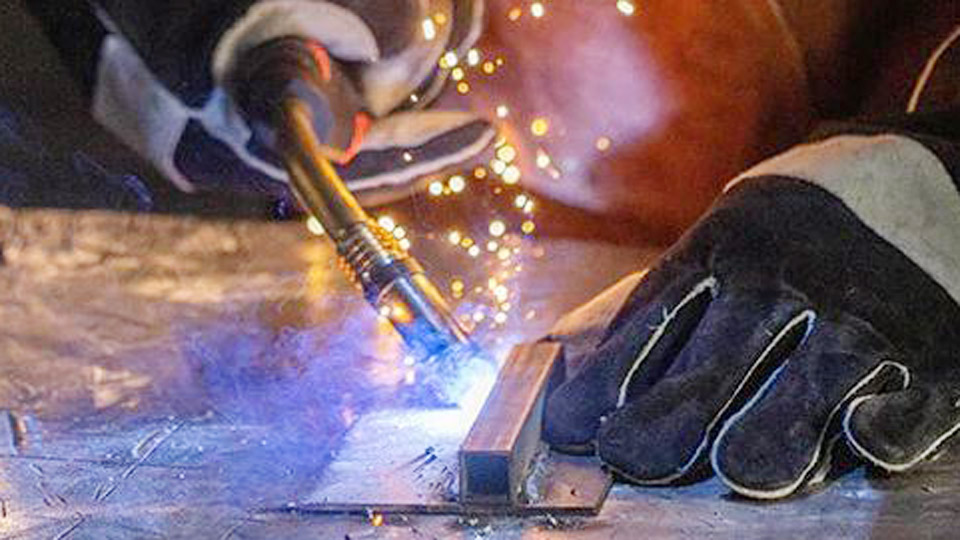
Image by yeswelder
What Is Inductance in MIG Welding?
Inductance, sometimes labeled as “arc control,” “pinch,” or simply a percentage knob on machines like Millermatic, Lincoln Power MIG, or Hobart models, is an electrical property in the welding circuit. It slows or speeds up the rate at which current climbs to the set amperage right after the welding wire touches and shorts to the molten puddle.
In short-circuit MIG (the mode most hobbyists and many pros use for versatility), the wire repeatedly contacts the pool, shorts out, and then the arc reignites as the wire melts off.
Without adjustable inductance, this cycle happens at a fixed speed set by the machine’s internal design. When your welder has a control, you can tweak how “quick” or “lazy” that current rise becomes.
Low inductance lets current spike almost instantly after the short. High inductance delays that rise, creating a magnetic field that opposes the sudden surge.
This isn’t theoretical—I’ve felt the difference in my gloves. Low settings produce a crisp, aggressive arc sound. High settings give a softer, deeper hum with longer individual arc events.
How Does Inductance Actually Work in the Welding Circuit?
Picture this: the wire feeds forward, stubs into the puddle, and current starts to flow to melt it off. Inductance acts like a shock absorber on that current ramp-up.
Low inductance: Current rises rapidly. The short clears quickly with a sharp “pop.” This creates more short-circuit events per second, a stiffer arc, and often more spatter because the droplet explodes off violently.
High inductance: Current rises more slowly. Each short lasts longer, the arc stays on longer between shorts, and the molten metal transfers more gently. The puddle becomes more fluid, wetting out better into the toes of the joint.
This directly influences heat input timing, not total heat. Higher inductance often lets you run slightly lower wire speeds while keeping a stable arc, which is handy for thin stuff or when you need to baby the heat.
On many US machines, the control ranges from 0% (or minimum) to 100%, or a 1-10 scale. Start in the middle and adjust by ear and by eye.
The effect is most noticeable in short-circuit transfer. In spray or pulsed modes on advanced machines, it still helps fine-tune but plays a smaller role.
Why Inductance Matters for Real-World Welding Outcomes
I’ve seen too many beginners blame their machine or wire when the real culprit is ignoring inductance. Poor settings lead to:
- Excessive spatter on mild steel repairs, meaning extra grinding and wasted wire.
- Lack of fusion or cold laps on thicker joints because the puddle doesn’t wet properly.
- Burn-through on thin auto body panels or sheet metal fab work.
- Convex beads that crack under load instead of flat, well-tied-in profiles.
On the flip side, mastering it reduces distortion (critical for thin aluminum or stainless fab), improves travel speed without sacrificing quality, and cuts post-weld cleanup time. In a busy shop, that translates to real money—fewer rejected parts and less consumable waste.
Safety ties in too. Less spatter means fewer hot sparks flying into your boots or onto flammable materials nearby. A stable arc reduces the chance of the wire stubbing and kicking back, which can lead to tip damage or unstable starts.
When to Use High Inductance vs. Low Inductance
High inductance shines when you want a fluid puddle that flows nicely into the base metal:
- Thicker materials (1/8 inch and up) where good toe wetting prevents undercut or incomplete fusion.
- Fillet welds on structural mild steel or repair work on farm equipment.
- Situations calling for a flatter bead profile with less crown.
- When running mixed shielding gas (75/25 Ar/CO2) on mild steel for smoother performance.
Low inductance works better for:
- Thin materials (under 1/8 inch) to keep the arc more focused and avoid excessive heat buildup.
- Root passes or open-root joints needing a narrower, more controlled bead.
- Vertical-up welding where a stiffer puddle helps fight gravity.
- Flux-cored wire applications, where many pros prefer lower settings to control the arc.
I always start at around 30-50% (or mid-scale) on most jobs, then tweak while listening. The arc should sound like frying bacon—not popping corn (too low) or a dull roar (too high).
Practical MIG Welder Settings Tips Including Inductance
Voltage and wire feed speed (WFS) set your baseline amperage and arc length. Inductance fine-tunes the character of that arc.
For mild steel with .030-inch solid wire and 75/25 gas (common in US shops):
- 1/8-inch thickness: ~18-20V, 200-300 ipm WFS (roughly 140-180 amps), inductance 40-60%.
- 1/4-inch thickness: ~20-22V, 300-400 ipm WFS, inductance 60-80% for better wetting.
On thin 18-20 gauge auto body:
- Lower WFS (100-200 ipm), 16-18V, and drop inductance to 20-40% to prevent burn-through while keeping the arc stable.
Always clean your metal first—mill scale, rust, or paint will amplify bad inductance effects into porosity or lack of fusion. Use a 5/8-inch stickout max for .030 wire to maintain consistent amperage.
Push technique (forehand) often pairs well with moderate-to-high inductance for better shielding and flatter beads on flat/horizontal positions. Pull (backhand) can help on vertical with lower inductance for control.
Step-by-Step Guide to Dialing In Inductance on Your MIG Welder
Prep the joint: Grind or wire-brush to bright metal. Bevel as needed for thicker stock. Tack securely to control distortion.
Set baseline parameters: Use your machine’s chart or the 1 amp per .001 inch rule for mild steel. Set WFS first based on thickness and wire size, then voltage for a stable arc (crisp but not stubbing).
Start inductance mid-range: 35-50% or 4-6 on a 1-10 scale.
Run a test bead: Listen and watch. Too much spatter and a harsh crackle? Increase inductance slightly. Puddle too sluggish or wire stubbing? Decrease it.
Adjust while welding: Make small changes (5-10%) and run another inch or two. Note how the toes wet in and how easily slag or spatter releases.
Check the bead: Good settings give even ripples, good tie-in, minimal spatter, and a slightly convex-to-flat profile without undercut.
Record it: Write the full settings (V, WFS, inductance, gas flow, wire type) on a shop card or inside the machine door for repeat jobs.
Inductance Settings for Different Materials and Wire Sizes
Mild steel forgives a lot, but stainless and aluminum demand more attention.
For stainless (use tri-mix gas like 90/7.5/2.5 He/Ar/CO2):
- Higher inductance often helps because stainless conducts heat differently and needs good wetting to avoid sugar or oxidation. Start 10% higher than mild steel equivalents.
For aluminum (pure argon, .035 or .047 wire):
- Many machines run spray transfer here, where inductance has less impact, but in short-circuit on thinner sections, moderate settings prevent the puddle from becoming too runny. Aluminum’s high thermal conductivity means you may favor slightly lower inductance to keep heat focused.
Wire diameter matters too:
- .023-.030 inch: More responsive to inductance changes; great for thin work.
- .035 inch: Common shop workhorse; balance inductance around 50% for most jobs.
- .045 inch: Heavier fabrication; higher inductance helps manage the bigger droplets.
Common Mistakes with Inductance (and How to Avoid Them)
Beginners often leave it at default and blame everything else. Pros sometimes over-tweak and chase perfection instead of “good enough for the job.”
Mistake 1: Setting inductance too low on thick material. Result: lots of spatter, narrow bead with poor wetting, and potential cold laps. Fix: Bump it up and slow travel speed slightly.
Mistake 2: Cranking it too high on thin sheet. The puddle stays hot longer and you burn through or warp the piece. Fix: Lower it and shorten stickout.
Mistake 3: Ignoring gas and prep. Even perfect inductance won’t save a dirty joint or wrong CFH flow (aim 15-25 CFH depending on nozzle size and drafts).
Mistake 4: Not testing on scrap. Every machine, wire lot, and gas mix behaves a bit differently. Always run test coupons.
I’ve watched students fight a spitting arc for an hour only to realize the inductance was at minimum. One quick turn and the weld transformed.
Pros and Cons of Adjustable Inductance
Pros:
- Finer control over spatter and bead shape.
- Better performance across material thicknesses without changing wire.
- Improved arc starts and stability at low WFS settings.
- Reduced post-weld cleanup on production or repair work.
Cons:
- Not every entry-level MIG has it (many transformer machines fix it internally).
- Over-reliance can mask issues with voltage/WFS or technique.
- Learning curve—requires practice to “hear” the sweet spot.
On modern inverter machines popular in US garages and shops, the control is often digital and precise, making experimentation easier.
Comparison of Inductance Effects at a Glance
| Setting | Arc Sound | Spatter Level | Puddle Fluidity | Best For | Typical Bead Profile |
|---|---|---|---|---|---|
| Low (0-30%) | Crisp, popping | Higher | Stiffer | Thin material, vertical | Narrower, more convex |
| Medium (30-60%) | Balanced sizzle | Moderate | Good | Most general fab | Even ripples, solid tie-in |
| High (60-100%) | Soft, humming | Lower | Very fluid | Thicker plate, fillets | Flatter, excellent wetting |
Use this as a starting reference, then adjust to your eyes and ears.
Joint Preparation and Material Handling Notes
Inductance works best on clean metal. For mild steel, remove mill scale with a grinder or flap disc. Stainless needs thorough degreasing to avoid carbon contamination. Aluminum demands dedicated stainless brushes and immediate welding after cleaning to beat oxide formation.
For butt joints on thicker plate, a 60-70° V-prep with root face helps high-inductance settings flow nicely without excessive reinforcement. Fillets on tubing? High inductance + push angle often gives the best wash-in.
Always consider position: flat and horizontal forgive more aggressive settings. Vertical and overhead usually need lower inductance for puddle control.
Safety Considerations When Adjusting Inductance
A stable arc from proper inductance reduces accidental stubbing that can fling hot wire. Still, wear proper PPE—leather gloves, jacket, helmet with good shade (11-13 for MIG), and safety glasses underneath. Ensure good ventilation, especially with CO2 mixes or when welding galvanized material.
Keep your workspace clear of flammables. High-inductance settings can create a hotter, longer-lasting puddle, so watch for heat buildup on thin sections that might ignite nearby materials.
Beyond Basic Short-Circuit: Inductance in Other Modes
While most powerful in short-circuit, inductance (or equivalent “arc control” on pulsed machines) can still refine spray transfer or pulse settings.
On advanced US brands with synergic modes, the machine may auto-adjust related parameters, but manual override lets experienced welders fine-tune for specific jobs like aluminum truck beds or stainless food-grade fab.
Real Shop Examples from Fabrication and Repair
On a recent gate repair with 3/16-inch mild steel, I ran .035 wire at 21V, 350 ipm WFS, and 65% inductance. The bead laid flat with minimal spatter, and the toes tied in perfectly—no grinding needed before painting.
For thin 20-gauge patch panels on a classic car, I dropped to 17V, 150 ipm, and 25% inductance. Controlled heat input prevented distortion, and the arc stayed focused without blowing holes.
These aren’t lab settings—they’re what works when the customer wants it done right the first time.
Wrapping Up
You’ve now got a solid grasp of how inductance shapes your MIG arc, from the electrical basics to hands-on dialing for different jobs. You understand its impact on spatter, wetting, and heat control across common materials and thicknesses. That knowledge alone puts you ahead of most weekend welders who never touch the knob.
Treat inductance as your fine-tuning dial after voltage and wire speed are close. Practice on scrap until the arc tells you what it needs.
A professional welder I learned from years ago always said: “Listen to the machine—it’ll sing when it’s happy.” Get your settings singing, and your welds will too.
FAQs
Does changing inductance affect penetration on a MIG welder?
It influences how heat is delivered more than total penetration depth. Higher inductance creates a fluid puddle that can improve fusion at the toes without dramatically increasing overall heat input. Lower settings give a more forceful arc that can dig slightly better on dirty metal but often at the cost of spatter. Adjust voltage and WFS first for penetration needs.
Do all MIG welders have adjustable inductance?
No. Many basic or older transformer-style machines (common in home shops) have fixed inductance optimized for general use. Higher-end inverters and multi-process machines from Miller, Lincoln, or ESAB usually include it. If yours doesn’t, focus on voltage, WFS, stickout, and technique to approximate similar control.
What inductance setting should I use for flux-cored wire?
Most pros prefer lower inductance with flux-cored (self-shielded or gas-shielded) because it helps control the harsher arc and larger droplet transfer. Start at 20-40% and increase only if you need better wetting on thicker joints. Always check your machine manual—some flux-cored optimized modes interact differently.
How do I reduce spatter using inductance?
Increase inductance gradually while watching the arc. Combined with correct voltage (not too low) and proper gas flow, higher settings soften the short-circuit events and let droplets transfer more smoothly. Clean metal and correct stickout (3/8 to 5/8 inch) amplify the improvement.
Can inductance help when welding very thin metal without burn-through?
Yes—lower settings keep the arc more crisp and reduce the time the puddle stays molten, giving you better control over heat. Pair it with smaller wire (.023 or .030), lower WFS, and a slight push angle. Test frequently on scrap of the same thickness.