
Strike an arc and you’ll see it instantly—that bright, controlled spark bridging the gap between electrode and metal is where everything begins. If the arc feels unstable or the puddle doesn’t behave, the whole weld starts going sideways fast.
That’s exactly why understanding What Is the Basis of the Arc Welding Process? matters more than most beginners realize.
In real shop work, arc welding isn’t just about melting metal—it’s about controlling electricity, heat, and arc length at the same time.
The current creates the arc, the arc generates intense heat, and that heat forms the weld pool that fuses your joint. Miss one of those elements, and you’ll deal with weak fusion, spatter, or inconsistent beads.
Getting a solid grip on these basics makes a big difference in how quickly your skills improve. It affects everything from bead appearance to joint strength and overall safety.
I’ll break down the core principles in simple, practical terms so you can understand what’s really happening when you strike that arc—and how to use it to your advantage.
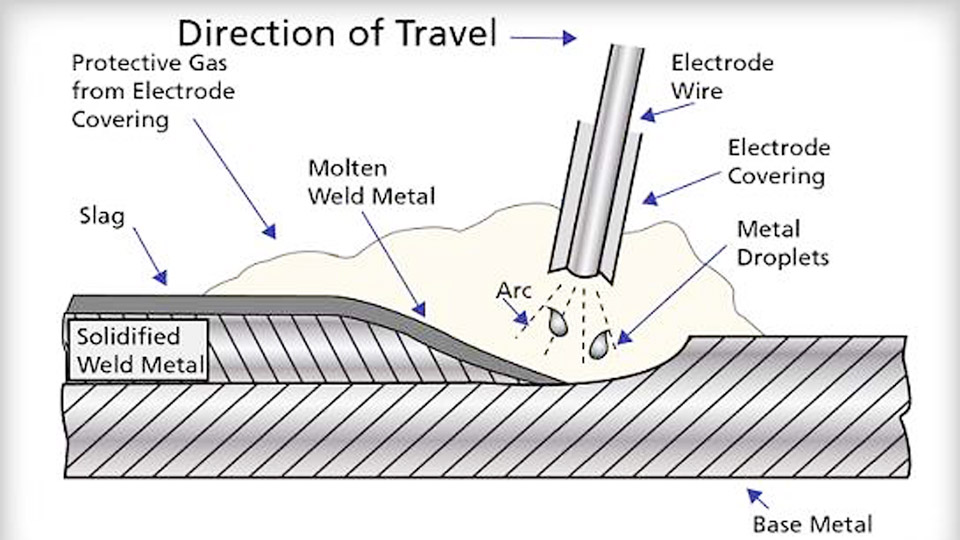
Image by learnmech
How Does the Electric Arc Actually Form and Deliver Heat?
You have a power source—either AC or DC—connected through cables to an electrode holder (or gun) and a ground clamp on the workpiece. When you touch the electrode to the metal and pull it back slightly, the air gap ionizes. Current jumps across, creating a plasma channel that glows white-hot and sustains the arc.
The resistance in that ionized gas turns electrical energy into heat. The arc acts like a pinpoint flame, but way hotter and more controllable than any oxy-fuel torch.
In consumable processes like stick welding (SMAW), the electrode itself melts and adds filler metal to the pool. In non-consumable ones like TIG (GTAW), you add filler rod separately.
I’ve seen beginners strike the arc by scratching like lighting a match—that works okay on DC but can leave marks. A quick tap-and-lift motion is cleaner once you get the feel. Maintain the right arc length (usually about the diameter of the electrode core) and you keep stable voltage and consistent heat input.
Why the Basis of Arc Welding Matters in Everyday Shop and Field Work
Understanding this foundation directly impacts real outcomes. Too much heat input and you get excessive distortion on thin mild steel panels or burn-through on exhaust tubing. Too little and you lack fusion, leaving cold laps that crack under vibration.
On a repair job fixing a cracked trailer hitch, proper arc control meant I could weld in position without preheating the whole assembly, saving time and gas.
In structural work, it lets you achieve the 1.5–2x base metal strength often seen in properly executed welds because the rapid melt and cool cycle refines the grain structure.
It also ties into cost. Stable arcs mean better deposition efficiency, less spatter cleanup, and fewer electrodes wasted. For hobbyists in a garage with a budget welder, it prevents constant trips to the store for more rods.
Main Types of Arc Welding Processes and When to Choose Each
Arc welding covers several processes that all rely on the same electric arc principle but differ in how they shield the molten pool and deliver filler.
Shielded Metal Arc Welding (SMAW or Stick Welding)
This is the workhorse for many of us. A flux-coated consumable electrode creates the arc. As it melts, the coating releases shielding gas and forms slag that protects the bead from oxygen and nitrogen.
Use SMAW when you’re outdoors, on rusty or dirty metal, or in tight spots where gas cylinders are a hassle. It’s portable—grab your machine and go. Common on farm equipment repairs, structural steel, and pipeline work.
Gas Metal Arc Welding (GMAW or MIG Welding)
Here a continuous wire electrode feeds through a gun, and external shielding gas (usually CO2 or argon mixes) protects the pool. The arc is smooth and easy to control.
Choose MIG for shop fabrication on clean mild steel or stainless, especially when you need speed and nice-looking beads. It’s forgiving for beginners once settings are dialed, but wind can blow the gas away outdoors.
Flux-Cored Arc Welding (FCAW)
Similar to MIG but the wire has flux inside. Self-shielded versions work without gas—great for outdoor or windy conditions.
It’s fast with high deposition rates, ideal for thicker materials or heavy fabrication. Many pros run it on construction sites.
Gas Tungsten Arc Welding (GTAW or TIG Welding)
Non-consumable tungsten electrode with inert gas shielding (argon or helium). You control the arc precisely and add filler by hand.
TIG shines on thin materials, aluminum, stainless, or when appearance and quality are critical—like custom bike frames or food-grade stainless. It demands steady hands and more skill, but the control is unmatched.
Each process builds on the same arc basis, but shielding method, electrode type, and heat input vary. Pick based on material, position, environment, and required weld quality.
Electrode Basics: Types, Diameters, and Compatibility
Electrodes (or wire) are the heart of most arc processes. In SMAW, the coating type determines characteristics:
- 6010/6011: Deep penetration, fast-freeze, good for root passes on dirty steel. Run DC+ or AC.
- 7018: Low-hydrogen, strong welds with good ductility. Needs proper storage to stay dry.
- 6013: Easy arc, smooth bead, great for thin material or beginners.
Diameters range from 1/16″ for thin stuff up to 5/32″ or larger for heavy plate. Smaller rods need lower amps and give better control on thin metal. Larger ones deposit more metal faster but require higher settings and thicker material.
Match electrode to base metal. For mild steel, E70 series is common. On cast iron, nickel rods help prevent cracking. Always check manufacturer charts for your specific rod—I’ve seen pros ruin good 7018 by using it on thin sheet with amps set for thick plate.
Store low-hydrogen rods in a rod oven at 250–300°F to prevent moisture pickup, which causes hydrogen cracking.
Amperage Ranges and Machine Settings That Actually Work
Amperage controls heat. Too low and the arc struggles, rod sticks, and you get poor penetration. Too high and you get undercut, excessive spatter, or burn-through.
General starting points for SMAW on mild steel (adjust by feel and position):
- 3/32″ 6010/6011: 40–80 amps
- 1/8″ 6010/6011: 75–125 amps
- 1/8″ 7018: 90–150 amps
- 5/32″ 7018: 120–200 amps
For vertical or overhead, drop 10–20% from flat position settings to control the puddle. On a typical US 220V stick welder like a Miller or Lincoln, dial in the machine and watch the puddle—not just the gauge.
In MIG, voltage and wire speed work together. Higher voltage lengthens the arc for flatter beads; wire speed controls amperage and deposition.
Test on scrap. Run a bead and look at the ripple pattern, penetration, and spatter. A good arc sounds steady, like frying bacon, not popping or hissing.
Joint Preparation and Material Handling Tips from the Shop Floor
Clean metal is non-negotiable. Grind or wire-brush rust, mill scale, paint, and oil. Even light contamination can cause porosity or lack of fusion.
For butt joints on thicker plate, bevel edges to 30–35 degrees for good penetration. Leave a small root gap (1/16″ or so) on open roots. Tack welds should be strong enough to hold but not so big they interfere with the final pass.
On thin material like 1/8″ sheet, fit-up must be tight or you’ll burn holes. Clamp everything securely to control distortion—back-step welding or clamping with copper backing helps.
Preheat thick or high-carbon steel to 200–400°F to reduce cracking risk. Let multi-pass welds cool slowly between passes on sensitive materials.
Step-by-Step: Striking and Running a Basic SMAW Bead
Setup: Clean the joint. Clamp ground close to the weld area. Set polarity (usually DCEP for most rods). Dial amperage in the middle of the recommended range.
Strike the Arc: Tap or scratch the rod on the plate, then lift to about 1/8″ gap. For 1/8″ rod, keep arc length roughly 1/8″.
Run the Bead: Move at a speed that keeps the puddle about 1/4–3/8″ wide. Use a slight weave if needed for wider beads, but straight drag works for stringers.
Watch the Puddle: The leading edge should melt the base metal cleanly. Slag should trail behind. If the puddle is too small and rod sticks, increase amps slightly. If it’s too fluid with lots of spatter, drop amps or speed up travel.
End the Bead: Pause slightly to fill the crater, then break the arc cleanly.
Chip slag thoroughly between passes—trapped slag causes inclusions.
Common Mistakes Beginners (and Sometimes Pros) Make
- Wrong amperage: Most common. Too high causes undercut and spatter; too low gives convex beads with no penetration. Always start in range and fine-tune by watching the puddle.
- Arc length too long: Unstable arc, spatter, and weak welds. Keep it tight.
- Dirty metal: Leads to porosity and weak fusion. Clean twice if you’re unsure.
- Poor storage: Wet 7018 rods cause hydrogen cracks days later.
- Wrong travel speed: Too fast leaves narrow, under-penetrated beads; too slow overheats and distorts.
- Ignoring position: Vertical-up needs lower amps and a different technique than flat.
I’ve fixed plenty of “pro” welds that failed inspection because someone rushed prep.
Safety Considerations Every Welder Must Respect
Arc welding throws intense UV light that causes “welder’s flash”—painful and avoidable with proper shade 10–13 helmets. Wear leather gloves, jacket, and boots. Cover skin completely.
Fumes are a real hazard, especially on galvanized or painted metal. Work in ventilated areas or use fume extraction. Never weld in confined spaces without proper setup and monitoring.
Inspect cables and holders for damage. Keep your workspace dry—electricity and moisture don’t mix. Remove electrodes from the holder when not welding to prevent accidental arcs.
Ground properly to avoid stray current shocks. On jobsites, follow OSHA guidelines for hot work permits when needed.
Pros and Cons Comparison of Major Arc Welding Processes
SMAW (Stick)
Pros: Inexpensive equipment, portable, works on dirty metal, all positions, no gas needed.
Cons: Slower, slag cleanup required, frequent rod changes, more skill for nice beads.
GMAW (MIG)
Pros: Fast, continuous wire, easy to learn, clean welds, high productivity.
Cons: Needs gas (wind-sensitive), less portable, not great on thick rusty material without prep.
FCAW
Pros: High deposition, outdoor capable (self-shielded), good on thick plate.
Cons: More spatter than solid wire MIG, slag removal, higher fume levels.
GTAW (TIG)
Pros: Precise control, highest quality, excellent on thin or exotic metals.
Cons: Slow, requires high skill, expensive for big jobs, very clean metal required.
Choose based on your shop setup, job requirements, and how much time you want to spend cleaning versus welding.
Practical Tips for Better Results on Common Materials
On mild steel: 6010 for roots, 7018 for fill and cap. Keep heat input balanced to minimize distortion on frames.
Stainless: Use matching or low-carbon rods/wire to prevent carbide precipitation. TIG often gives the best corrosion resistance.
Aluminum: TIG with AC and pure argon. Clean with stainless brush just before welding—oxide reforms fast.
Cast iron: Nickel-based rods, short beads, peen while hot to relieve stress.
Always match filler strength to or above base metal for critical loads.
Building Experience: From First Beads to Shop-Ready Welds
Start on scrap plate in flat position. Practice striking arcs until consistent. Then run straight beads, checking penetration by breaking test coupons or cutting sections.
Move to T-joints and butt joints. Film yourself or use a mirror to see technique. Over time, you’ll read the puddle like a book—its color, shape, and how slag flows tell you everything about settings.
In real jobs, like repairing a loader bucket, understanding the arc basis let me adjust on the fly for varying thicknesses without constant machine changes.
Reflection on Mastering Arc Welding Fundamentals
After running thousands of inches of bead, the biggest takeaway is that the electric arc is a tool you control, not something that controls you. When you grasp how heat, shielding, and filler interact, you stop fighting the process and start working with it.
You now know why certain settings work, how to read common problems, and which process fits the job. That knowledge cuts down on wasted rods, failed tests, and frustrating rework.
Whether you’re a student learning in a vo-tech shop, a hobbyist building in your garage, or a pro on a deadline, these basics make every weld more reliable.
Always run a test bead on similar material and thickness before the actual weld. Adjust based on what you see in the puddle, not just the chart. A few extra minutes on scrap saves hours of grinding out bad welds later.
FAQs
How do I know if my amperage is too high or too low in stick welding?
If the puddle is huge, fluid, and throwing lots of spatter with undercut edges, drop the amps. If the arc keeps going out, the rod sticks constantly, and the bead sits tall with poor penetration, raise them. Listen for a steady crackle and watch for even ripples.
What’s the best electrode for beginners welding mild steel?
Start with 6013 or 7014 in 3/32″ or 1/8″. They have forgiving arcs and easy slag release. Move to 6010/11 once you have arc control, then low-hydrogen 7018 for stronger work.
Do I need to clean between every pass in multi-pass welds?
Yes—every single pass. Slag inclusions are a common cause of weld failure. Chip it off thoroughly and wire brush before the next pass.
Can I use the same settings for vertical welding as flat?
Usually not. Drop amperage 10–20 amps and use a slight weave or whip technique to control the puddle so it doesn’t sag. Travel speed matters more in out-of-position work.
Why does my weld have porosity and how do I fix it?
Most often from dirty metal, moisture in the electrode, or wrong shielding (wind disrupting gas or wet rods). Clean the joint aggressively, dry your rods, and check for drafts. On MIG/FCAW, ensure proper gas flow (20–25 CFH typical).


