A bent aluminum bracket or cracked household frame can be frustrating, especially when it feels like you need expensive equipment just to fix it. Aluminum is tricky—it heats up fast, warps easily, and doesn’t behave like steel at all.
That’s why the idea of how to weld aluminum at home without a welder often comes up when someone is trying to make a quick repair with limited tools.
In reality, working with aluminum at home is more about controlled heat, smart repair methods, and the right bonding techniques than traditional welding.
One wrong move with temperature or filler material, and the metal can deform or lose strength completely. I’ve seen simple repair attempts turn into scrap just because the process wasn’t matched to the material.
Whether you’re repairing small parts or trying a DIY fix, knowing what actually works—and what doesn’t—can save time, money, and frustration.
I’ll walk through realistic methods you can use at home, along with the safest ways to get a strong and lasting repair on aluminum without a full welding setup.
Image by instructables
What Does “Welding Without a Welder” Actually Mean?
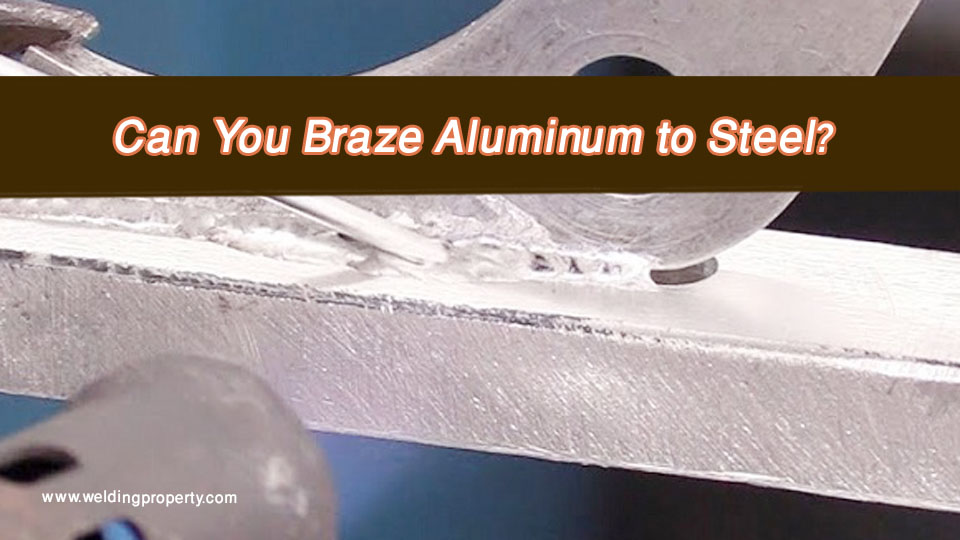
In the strict sense of the word, welding is the fusion of two base metals. When we talk about doing this without a machine, we are primarily discussing Aluminum Brazing or Lumiweld processes.
What it is
Aluminum brazing uses a specialized filler rod with a melting point lower than the aluminum workpiece but higher than standard plumbing solder. These rods are usually a zinc-aluminum alloy designed to “wet” the surface of the aluminum once the oxide layer is broken.
How it works
Aluminum is a tricky beast because it develops a microscopic layer of aluminum oxide almost instantly. This oxide melts at roughly 3,700°F, while the aluminum underneath melts at about 1,200°F. If you don’t break that oxide, your filler rod will just bead up like water on a waxed car.
Brazing rods contain elements that help penetrate this layer when combined with mechanical friction or specialized flux.
When and why it should be used
- Thin Gauge Materials: Excellent for radiator repairs or thin sheets where a TIG arc would just blow a hole through the metal.
- Emergency Repairs: When you can’t bring the work to the machine (e.g., a fixed irrigation pipe).
- Budget Constraints: When the cost of an AC/DC TIG setup isn’t justifiable for a one-off fix.
Practical Tip: Don’t expect these rods to bridge massive 1/4-inch gaps. This process relies on tight fit-ups and capillary action. If your joint isn’t tight, your strength will plummet.
The Gear: Choosing Your Heat Source and Filler
If you aren’t using an electrode, your heat source becomes your “amperage control.”
Propane vs. MAPP Gas (Propylene)
A standard blue propane bottle is fine for very thin jewelry or small tabs. However, for anything 1/8″ or thicker, you need the yellow bottle—MAPP gas. It burns significantly hotter and helps you reach the “tinning” temperature before the surrounding atmosphere sucks all the heat out of your part.
Selecting the Right Brazing Rod
Not all “As Seen on TV” rods are created equal. You want a rod with a high zinc content. In the US, brands like Bernzomatic or Alumiweld are common. These rods typically melt between 700°F and 800°F.
Step-by-Step: The “Friction and Fusion” Method
Success in aluminum brazing isn’t in the torch hand; it’s in the prep work. If you spend five minutes welding, you should have spent twenty minutes cleaning.
1. Mechanical Cleaning (The “Stainless” Rule)
You must remove the oxide layer manually. Use a stainless steel wire brush. Crucially, this brush must be brand new and used only for aluminum. If you use a brush that previously touched carbon steel, you’ll embed iron particles into the aluminum, causing “galvanic corrosion” and a failed joint.
2. Chemical Degreasing
Aluminum is porous. It soaks up oils, cutting fluids, and even fingerprints. Use pure acetone (not nail polish remover, which contains oils) to wipe the area until the rag comes away white.
3. Heating the Workpiece (Not the Rod!)
This is the mistake that kills 90% of home repairs. Do not put the rod in the flame. If you melt the rod with the torch, it will just drop onto the cold aluminum and “cold lap,” meaning it won’t actually bond.
- Apply the heat to the base metal.
- Periodically rub the rod against the metal.
- When the base metal is hot enough to melt the rod on contact, you’ve hit the “wetting” temperature.
4. Breaking the Surface Tension
Once the rod begins to melt, use the rod itself to “scrub” the joint. This mechanical action breaks the last of the oxide layer and allows the zinc-aluminum alloy to flow into the pores of the metal.
Comparison: Brazing vs. Traditional Arc Welding
| Feature | Aluminum Brazing (No Welder) | TIG Welding (Professional) |
| Equipment Cost | $30–$60 | $1,500–$5,000 |
| Learning Curve | Low (Hours) | High (Months/Years) |
| Joint Strength | High (Often exceeds base) | Maximum (Structural) |
| Appearance | Clean, similar to solder | Professional “Stack of Dimes” |
| Portability | Excellent (Handheld torch) | Poor (Requires Gas/Power) |
Shop-Tested Advice: Avoiding the “Meltdown”
The biggest danger when learning how to weld aluminum at home without a welder is the “invisible melt.” Unlike steel, which turns cherry red before it fails, aluminum gives no warning. It goes from solid to a puddle of silver soup in a heartbeat.
Managing Thermal Mass
If you are joining a small piece to a large piece, the large piece will act as a heat sink. You must direct 90% of your torch heat toward the larger mass. If you aim it at the small part, it will vanish before the large part is even warm.
Joint Preparation and Fit-up
V-Groove: For anything thicker than 1/16″, grind a 45-degree bevel on both edges. This gives the filler rod a “pocket” to sit in, increasing the surface area of the bond.
Tack Fastening: Since you don’t have a trigger to “zap” a tack weld, use stainless steel clamps or safety wire to hold your parts in perfect alignment. Aluminum moves significantly as it expands.
Common Mistakes to Dodge
Using Oxygen-Acetylene improperly: A cutting torch is too hot for thin aluminum brazing and will oxidize the metal before you can blink. If you use Oxy-Acet is must be a very small tip with a carburizing flame.
Quenching the part: Never throw a hot aluminum brazed part into a bucket of water. The sudden contraction will shatter the grain structure of the joint. Let it air cool until you can touch it.
The “Over-Brush”: Don’t brush the aluminum an hour before you weld. The oxide layer begins to reform immediately. Brush it, wipe it, and heat it within 10 minutes.
Why This Matters in Real-World Repair
I once had a neighbor bring over a cast aluminum transmission housing with a hairline crack. A TIG welder would have required stripping the entire transmission to avoid burning out the seals with high-frequency interference.
By using a MAPP torch and a high-strength zinc-aluminum rod, we were able to “veed” out the crack and seal it in place. It saved him $1,200 and a week of teardown time.
This process is about being a “mechanic of materials.” It’s knowing that while an arc is great, controlled heat and chemistry can be just as effective for the right application.
Mastery Through Heat Control
You’re now equipped to handle those “impossible” aluminum fixes without needing to wire a 220v outlet in your garage. The key takeaway is that you aren’t just melting a rod; you are performing a delicate dance between the melting point of your filler and the structural integrity of your base metal.
By focusing on the “stainless-only” cleaning rule, prioritizing the heating of the base metal over the rod, and using MAPP gas for the necessary BTU output, you can achieve repairs that are indistinguishable from professional work to the untrained eye.
You have the knowledge to save parts that others would scrap, and in the world of fabrication, that is the definition of a pro.
Keep an old piece of 1/4″ aluminum plate on your bench to use as a “practice heat soak.” Before you touch your actual project, spend 2 minutes heating the scrap and flowing a bit of rod. It “calibrates” your eyes to how the metal reacts to the torch in your specific environment (wind, ambient temp, etc.) before the stakes are high.
Frequently Asked Questions
Can I use a regular propane torch for aluminum brazing?
Yes, but only for very thin gauge material (like soda can thickness or small wires). For anything structural or thicker than 1/16″, propane usually can’t keep up with the heat dissipation of aluminum. Use MAPP gas for a more consistent, professional result.
Is the bond as strong as a real weld?
In many cases, the tensile strength of the brazing rod (up to 40,000 PSI) exceeds the strength of the aluminum itself. However, it is a “surface bond” rather than a deep fusion weld. It is excellent for vibration and pressure but shouldn’t be used for critical overhead lifting or high-stress automotive suspension components.
How do I know if the aluminum is hot enough?
Don’t look for color changes. Instead, touch the rod to the metal outside of the flame. If it melts instantly and flows like water into the joint, you are at the perfect temperature. If it sticks or looks like thick paste, keep the heat on the base metal.
Can I braze “pot metal” or cast aluminum?
Cast aluminum is very porous and often “spits” oils when heated. You need to “outgas” it by heating it slowly to about 400°F, cleaning it again with acetone, and then proceeding with the brazing process. It’s harder than extruded aluminum but entirely possible with patience.