Ultrasonic welding systems rely on precise vibration delivery, and understanding what is a Sonotrode in Ultrasonic Welding is essential for controlling weld energy and joint quality.
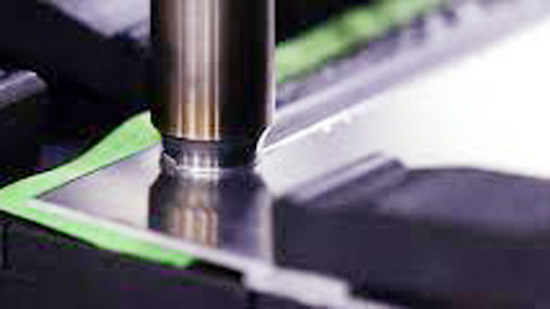
A sonotrode is the tuned metal tool that transfers high-frequency mechanical vibrations from the transducer directly into the workpiece, converting electrical energy into localized frictional heat at the joint interface.
Its geometry, material, and resonance tuning determine amplitude stability, pressure distribution, and weld consistency. In real production, an improperly designed or worn sonotrode can cause weak bonding, surface damage, excessive flash, or inconsistent cycle times that lead to rejected parts and higher tooling costs.
Knowing how the sonotrode functions helps welders and engineers select the correct horn profile, maintain proper contact conditions, and keep vibration energy focused where fusion must occur. The following explanation clarifies sonotrode design, operating role, and how it influences reliable ultrasonic weld performance.

Image by herrmannultrasonics
Understanding Ultrasonic Welding Basics
Ultrasonic welding uses high-frequency mechanical vibrations to join materials. The process generates friction heat at the contact point, melting the surfaces just enough to form a bond as they cool under pressure. This technique works well for thermoplastics, thin metals, and some composites, offering speed and cleanliness over traditional methods like gluing or soldering.
Key elements include a power supply that converts electrical energy into ultrasonic waves, typically between 20 kHz and 40 kHz. These waves travel through a converter, which changes them into mechanical motion.
A booster then adjusts the vibration amplitude before it reaches the sonotrode. The sonotrode applies this energy directly to the workpiece, while an anvil holds the parts steady.
This method excels in applications requiring hermetic seals or where heat-sensitive components are involved, such as electronics or medical devices. It minimizes material distortion and eliminates consumables, making it cost-effective for high-volume production.
Definition and Function of a Sonotrode
A sonotrode is the tool in an ultrasonic welding system that contacts the materials and delivers vibrational energy. Often called a welding horn, it acts as the final link in the vibration chain, focusing oscillations to create the necessary friction for bonding.
Its primary function is to transmit mechanical vibrations from the booster to the workpiece. As the sonotrode vibrates, it presses against one part, causing rapid back-and-forth motion at the joint interface. This motion breaks down surface oxides or contaminants, allowing clean material contact and localized melting.
In practice, the sonotrode ensures uniform pressure distribution across the weld area. Without it, vibrations would dissipate inefficiently, leading to inconsistent bonds. For example, in plastic welding, it shapes the energy to match joint geometries, preventing over-melting or under-bonding.
Materials Used for Sonotrodes
Sonotrodes are crafted from materials that balance acoustic performance, durability, and cost. Common choices include titanium, aluminum, and steel, each suited to specific welding demands.
Titanium offers excellent fatigue resistance and low acoustic damping, meaning it transmits vibrations efficiently without losing energy. It’s ideal for high-amplitude applications and lasts longer under continuous use, though it’s more expensive.
Aluminum is lightweight and provides good vibration transmission at a lower cost. However, it wears faster, so it’s often coated with chrome or nickel for added hardness. This material suits lower-frequency welding or prototypes where budget is a concern.
Steel, including hardened tool steel, provides superior wear resistance for abrasive tasks like metal welding. It handles low-amplitude operations well but has higher acoustic impedance, which can reduce efficiency in some setups.
| Material | Key Properties | Best For | Drawbacks |
|---|---|---|---|
| Titanium | High strength, low damping, fatigue-resistant | High-volume plastic or metal welding | Higher cost |
| Aluminum | Lightweight, good transmission, affordable | Prototyping, low-wear applications | Faster wear, needs coatings |
| Steel | High hardness, wear-resistant | Abrasive or low-amplitude tasks | Higher impedance, heavier |
Select based on your workpiece material and production scale to optimize performance.
Design Principles of Sonotrodes
Sonotrode design focuses on achieving resonance at the system’s frequency to maximize energy transfer. It operates as a half-wavelength resonator, where the length matches half the sound wave in the material, ensuring standing waves for consistent vibration.
Finite Element Method (FEM) simulations guide the shape to minimize stress concentrations and ensure uniform amplitude at the working face. The design accounts for the workpiece geometry; for instance, a contoured tip focuses energy on irregular joints.
Amplitude magnification is key—the sonotrode tapers to increase vibration intensity from the booster end to the tip. Typical amplitudes range from 13 to 130 micrometers, depending on the material and frequency.
Surface texture, like knurls or serrations, enhances grip on the workpiece, preventing slippage during vibration. For metal welding, harder textures disperse oxides effectively.
Overall, the goal is balanced oscillation: too much flexing causes fatigue cracks, while poor tuning leads to energy loss. Proper design extends tool life and improves weld consistency.
Types of Sonotrodes
Sonotrodes vary in shape and function to suit different welding needs. Basic categories include cylindrical, blade, and block types, with specialized variants for precision tasks.
Cylindrical sonotrodes, often round or tubular, provide focused energy for spot welding or small joints. They’re common in electronics for their precise amplitude control.
Blade sonotrodes feature a flat, elongated edge, ideal for continuous seams in fabrics or films. They distribute vibrations evenly over linear areas.
Block sonotrodes are rectangular or square, handling larger surfaces like panels. They’re used in automotive assembly for broad welds.
Advanced types include torsional sonotrodes, which produce twisting vibrations for delicate materials like membranes, reducing damage from linear motion. Composite sonotrodes combine multiple tips on a carrier for multi-point welding.
Other designs: stepped for amplitude gain, catenoidal for smooth transitions, or exponential for gradual tapering. Choose based on joint type—point for riveting, knife for cutting-and-sealing.
| Type | Shape | Primary Use | Example Application |
|---|---|---|---|
| Cylindrical | Round/tubular | Spot or focused welds | Electronics components |
| Blade | Flat, elongated | Linear seams | Textile bonding |
| Block | Rectangular/square | Broad surfaces | Automotive panels |
| Torsional | Twisting motion | Delicate films | Medical membranes |
| Composite | Multi-tip carrier | Multiple points | Assembly lines |
This variety allows adaptation to specific fabrication challenges.
How the Sonotrode Works in the Ultrasonic Welding Process
The sonotrode integrates into the welding stack: converter, booster, then sonotrode. Electrical energy at ultrasonic frequency excites piezoelectric elements in the converter, producing mechanical vibrations.
The booster amplifies or attenuates these vibrations, passing them to the sonotrode. Tuned to resonate, the sonotrode vibrates longitudinally, creating standing waves that peak at the tip.
In operation, the sonotrode presses against the top workpiece with controlled force, typically 100-500 N. Vibrations cause friction at the interface, generating heat up to 200-300°C locally for plastics.
For metals, it shears surface layers, enabling atomic bonding without full melting. The process lasts 0.1-1 second, followed by a hold time for solidification.
Key parameters: frequency (20-40 kHz), amplitude, and pressure. Higher frequency suits thinner materials, while amplitude affects heat generation. The sonotrode’s textured face ensures grip, preventing energy waste.
This sequence results in strong, repeatable welds with minimal thermal impact.
Applications of Sonotrodes in Industry
Sonotrodes enable ultrasonic welding in diverse sectors, from consumer goods to high-tech manufacturing.
In automotive, they’re used for joining interior panels, wire harnesses, and insulation. For example, composite sonotrodes weld multiple spots on door trims efficiently.
Electronics benefit from precise spot welding of batteries or circuits, where sonotrodes minimize heat to protect sensitive parts.
Medical devices rely on them for sealing filters or assembling syringes, ensuring sterile bonds without contaminants.
Packaging uses blade sonotrodes for film sealing in food wrappers, providing airtight joins.
Textiles and nonwovens employ torsional types for masks or filters, handling delicate fabrics gently.
In aerospace, they bond composites like carbon fiber, offering lightweight strength.
These applications highlight the sonotrode’s versatility, adapting to materials from plastics to metals for reliable, efficient production.
Maintenance and Care of Sonotrodes
Regular maintenance keeps sonotrodes performing optimally and extends their lifespan.
Inspect daily for wear on the contact face—cracks or erosion reduce efficiency. Clean with compressed air or soft brushes to remove residue; avoid abrasives that alter texture.
Check tuning periodically: frequency shifts indicate joint issues or fatigue. Use a frequency meter to verify resonance matches the system.
When disassembling, use proper tools to avoid damaging threads. Lightly oil contact surfaces before reassembly for smooth vibration transfer.
Store unused sonotrodes in protective cases to prevent oxidation, especially for aluminum or titanium.
Replace when amplitude drops below 80% of original or visible cracks appear. For high-use setups, schedule resurfacing every 50,000-100,000 cycles.
Proper care prevents downtime and maintains weld quality.
Final Thoughts
A solid grasp of the sonotrode equips you to handle ultrasonic welding tasks with confidence. It bridges the gap between vibration generation and material bonding, ensuring precision in every application.
For those advancing in fabrication, consider how sonotrode material and design influence energy efficiency—optimizing these can reduce cycle times by up to 20% in repetitive operations, enhancing overall shop productivity.
FAQs
What frequency should a sonotrode be tuned to?
Sonotrodes are tuned to the system’s operating frequency, commonly 20 kHz for thicker materials or 40 kHz for finer work. This ensures resonance for maximum energy transfer.
How do I choose between titanium and aluminum sonotrodes?
Opt for titanium in high-duty cycles for durability; aluminum works for budget-conscious, low-wear tasks but may need coatings.
What causes sonotrode wear?
Wear stems from friction with workpieces, especially metals, or misalignment causing uneven stress. Regular cleaning and alignment checks mitigate this.
Can sonotrodes be used for both plastics and metals?
Yes, but designs differ—plastics use smoother tips for melting, while metals require textured surfaces to break oxides.
How long does a sonotrode typically last?
Lifespan varies: 50,000-200,000 cycles depending on material and use. Maintenance extends this significantly.