When it comes to manufacturing, efficiency and precision are key. One technology that has revolutionized the manufacturing industry is ultrasonic welding. This cutting-edge technique has made it possible to join materials together with unparalleled speed and accuracy.
I will delve into the world of ultrasonic welding technology, exploring how it works, its advantages, applications, case studies, challenges, and future trends. By the end, you’ll have a clear understanding of why ultrasonic welding is transforming the manufacturing landscape.

Photo by cokhiphutrotruongthinh
How Does Ultrasonic Welding Work?
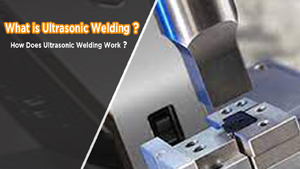
Ultrasonic welding is a process that uses high-frequency vibrations to create a solid-state bond between two materials. The materials being joined are held together under pressure, and an ultrasonic vibrating tool, known as a sonotrode, is used to generate the vibrations. These vibrations create frictional heat at the interface of the materials, causing them to soften and fuse together. Once the vibrations cease, the materials cool and form a strong, durable bond.
One of the key advantages of ultrasonic welding is its ability to join materials without the need for additional adhesives, solder, or fasteners. This not only saves time and money but also eliminates the risk of contamination or weak points in the joint. Ultrasonic welding is commonly used for thermoplastic materials, such as ABS, polypropylene, and polycarbonate, but it can also be used for certain metals and non-thermoplastic materials.
Advantages of Ultrasonic Welding Technology
Ultrasonic welding offers numerous advantages over traditional welding methods. Firstly, it is a non-destructive process, meaning that it does not alter the properties of the materials being joined. This is particularly important when working with delicate or sensitive materials, as it ensures the integrity of the final product. Ultrasonic welding is a clean process that does not produce any smoke, fumes, or by-products, making it environmentally friendly.
Another major advantage of ultrasonic welding is its speed and efficiency. Traditional welding methods often require heating the entire material or component being joined, which can be time-consuming. Ultrasonic welding only heats the interface between the materials, allowing for rapid joining. This makes it ideal for high-volume production lines, where speed and productivity are paramount.
Ultrasonic welding offers excellent repeatability and precision. The vibrations generated by the sonotrode can be precisely controlled, ensuring consistent weld quality throughout the manufacturing process. This level of precision is crucial in industries where even the smallest defect can have catastrophic consequences, such as the automotive or aerospace sectors.
Applications of Ultrasonic Welding in Manufacturing
Ultrasonic welding has a wide range of applications across various industries. In the automotive industry, it is used to join plastic components, such as dashboards, door panels, and interior trim. The medical industry also benefits greatly from ultrasonic welding, as it can be used to create air and fluid-tight seals in medical devices, such as syringes, IV bags, and catheters.
Packaging is another industry where ultrasonic welding is widely employed. It is used to seal blister packs, clamshell packaging, and other types of plastic packaging. The electronics industry also relies on ultrasonic welding to join delicate components, such as wires, connectors, and sensors.
The versatility of ultrasonic welding technology extends to the textile industry as well. It can be used to bond fabrics together, creating strong and durable seams in garments, bags, and upholstery. In fact, ultrasonic welding has even found its way into the food industry, where it is used to seal and package various food products, ensuring freshness and hygiene.
Success Stories of Ultrasonic Welding in Various Industries
To truly understand the transformative power of ultrasonic welding, let’s explore some real-world success stories. In the automotive industry, a leading car manufacturer implemented ultrasonic welding to join plastic fuel tanks. The ultrasonic welding process not only improved the production speed but also enhanced the strength and durability of the fuel tanks. As a result, the company was able to meet the growing demand for fuel-efficient vehicles while maintaining high-quality standards.
Ultrasonic welding has been instrumental in the manufacturing of disposable medical devices, such as face masks. By using ultrasonic welding to create a secure bond between the layers of the mask, manufacturers were able to produce a large volume of high-quality masks in a short amount of time. This played a crucial role in meeting the sudden surge in demand during the COVID-19 pandemic.
Challenges and Limitations of Ultrasonic Welding Technology
While ultrasonic welding offers numerous advantages, it also has its share of challenges and limitations. One limitation is the difficulty of joining certain materials that have different melting points or incompatible properties. For example, welding dissimilar metals or joining metals to non-metals can be challenging with ultrasonic welding. In such cases, alternative welding methods may need to be considered.
Another challenge is the precise control of vibrations during the welding process. The frequency and amplitude of the vibrations must be carefully adjusted to ensure optimal weld quality. The size and shape of the sonotrode can affect the efficiency and effectiveness of the welding process. Therefore, it is important to have skilled operators who can properly set up and monitor the ultrasonic welding equipment.
Future Trends and Advancements in Ultrasonic Welding
As technology continues to advance, so does ultrasonic welding. One of the future trends in ultrasonic welding is the integration of robotics and automation. By combining ultrasonic welding with robotic systems, manufacturers can achieve higher precision, productivity, and consistency. This opens up new opportunities for complex manufacturing processes that require intricate welding patterns or multiple welds in quick succession.
Another area of advancement is the development of ultrasonic welding for new materials. Researchers are exploring the use of ultrasonic welding for joining dissimilar materials, such as metal to plastic or metal to composite. This has the potential to expand the applications of ultrasonic welding even further, enabling the creation of lightweight and durable hybrid materials.
Choosing the Right Ultrasonic Welding Equipment for Your Manufacturing Needs
When it comes to selecting ultrasonic welding equipment for your manufacturing needs, there are several factors to consider. Firstly, you need to determine the type of materials you will be working with and ensure that the equipment is compatible with those materials. The power and frequency of the ultrasonic welding equipment should also be matched to the requirements of your specific application.
The size and design of the sonotrode should be chosen based on the size and shape of the parts you will be welding. The welding speed and control options of the equipment should also align with your production requirements. It is recommended to work closely with a reputable ultrasonic welding equipment supplier to ensure that you choose the right equipment for your manufacturing needs.
Transformative Impact of Ultrasonic Welding Technology on Manufacturing
Ultrasonic welding technology has undoubtedly revolutionized the manufacturing industry. Its speed, precision, and versatility have made it an invaluable tool for joining materials in various industries, ranging from automotive and medical to packaging and textiles. As advancements continue to be made, ultrasonic welding is poised to play an even greater role in manufacturing processes, enabling new possibilities and driving efficiency and innovation.
If you’re looking to take your manufacturing capabilities to the next level, consider harnessing the power of ultrasonic welding technology. By choosing the right equipment, understanding its capabilities and limitations, and staying abreast of the latest advancements, you can unlock a world of possibilities and join the ranks of successful manufacturers who have embraced this game-changing technology.