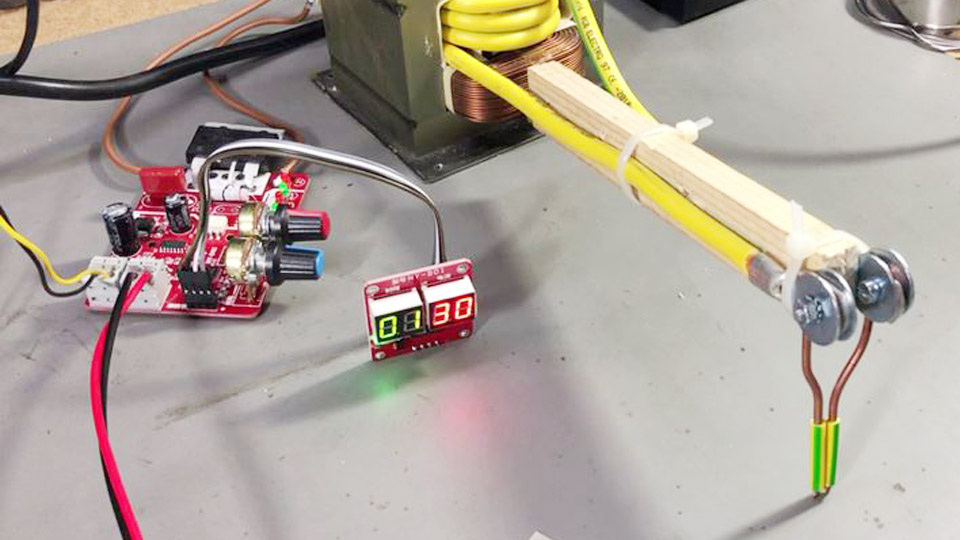
If you’ve ever tried repairing a car panel or fabricating thin sheet metal, you already know the headache of choosing the right weld. I’ve had projects where a simple mistake—using a plug weld when a spot weld would’ve been cleaner—left me grinding, reworking, and wasting time. That’s when I realized how important it is to understand the difference between the two.
Spot and plug welds might look similar on the surface, but they serve very different purposes in strength, appearance, and workflow. Knowing when to use each one can save you from weak joints, warped panels, and a lot of unnecessary frustration.
In this guide, I’ll break down spot weld vs plug weld in a way that’s easy to apply in real projects, so you can pick the right method every time.

Image by mig-welding-co.uk
Understanding Spot Welding
Spot welding has been a staple in my toolkit since I started out as an apprentice in a body shop. It’s that go-to method when you need to join thin sheets quickly without adding extra material. Think of it as pinching two pieces of metal together with heat—simple, effective, and widely used in everything from car assembly lines to appliance manufacturing.
What is Spot Welding?
At its core, spot welding is a resistance welding process where you fuse two or more metal sheets at specific points. No filler rod or wire needed; it’s all about electrical resistance generating heat. You clamp the sheets between copper electrodes, zap them with current, and boom—the metal melts and bonds as it cools under pressure.
I’ve used it on 18-gauge steel panels, and it’s perfect for creating those dimpled joins you see on factory car bodies. In the US, it’s governed by standards like AWS D8.1 for automotive spot welding, ensuring consistency in strength and quality.
From a practical standpoint, spot welding shines in high-volume production because it’s automated-friendly. But in a DIY setup, you’ll need a spot welder machine—something like a handheld unit or a pedestal model. I’ve got a 220V spot welder in my shop that handles up to 1/8-inch thick sheets, and it’s saved me time on overlapping flanges.
How Spot Welding Works
You align your sheets, position the electrodes on either side, and apply pressure—around 400 to 800 pounds per square inch, depending on the material. Then, you fire a burst of current, say 5,000 to 10,000 amps for a fraction of a second.
The resistance at the contact point creates intense heat, melting the metal into a nugget about 1/4-inch in diameter. As the current stops, the electrodes hold firm while the weld solidifies.
In my experience, the key is clean surfaces—any paint, rust, or oil will mess with conductivity and lead to weak welds. I always grind down to bare metal and use a weld-through primer if corrosion is a concern. For machine settings, start low: on 16-gauge steel, I set my timer to 0.5 seconds and adjust amps until I get a good pull-test nugget without burn-through.
When to Use Spot Welding
I reach for spot welding when speed and aesthetics matter, like attaching brackets to frames or repairing door skins on classic cars. It’s ideal for lap joints in sheet metal where access allows the electrodes to reach both sides. In automotive work, it’s the factory standard for body panels because it minimizes distortion—no long heat-affected zones like in arc welding.
But here’s a tip from the trenches: if you’re working on high-strength steels common in modern US vehicles, check the material specs. Spot welding works great on mild steel, but boron-alloyed stuff needs higher currents to avoid brittle welds.
I’ve learned the hard way that skipping a test piece can lead to cracks under load, so always verify with a chisel test—pry apart scraps to ensure the nugget pulls material from both sides.
Exploring Plug Welding
Let’s shift gears to plug welding, which has bailed me out more times than I can count in tight spots. This technique is essentially an arc weld through a hole, making it a versatile alternative when spot welding isn’t feasible. I’ve used it extensively in rust repairs, where drilling access holes lets me join panels securely.
What is Plug Welding?
Plug welding involves drilling a hole in the top sheet, then filling it with weld material to bond to the bottom sheet. It’s typically done with MIG or TIG setups, using filler wire to create a strong, dome-shaped weld.
Unlike spot welding’s no-filler approach, plugs add material for extra reinforcement. In shop lingo, it’s often called a “rosette weld” because of its flower-like appearance when ground flush.
For US-based welders, it aligns with codes like AWS D1.3 for sheet metal, emphasizing penetration and fusion. I prefer it for its forgiveness on varying thicknesses—say, joining 16-gauge to 20-gauge without warping.
How Plug Welding Works
Start by drilling a hole—7.5mm is my sweet spot for 0.8mm to 1.0mm sheets. Clamp the pieces tight, position your torch dead center in the hole, and arc against the bottom sheet. Build the weld in circles, filling until it’s slightly proud, then grind smooth if needed.
Machine settings are key: for MIG on 18-gauge steel, I set 18-20 volts and 150-200 amps, with 0.023-inch wire at 250 inches per minute feed. Gas shielding with 75/25 argon/CO2 prevents porosity. Always test on scraps—I’ve burned through thin metal by cranking amps too high, so dial it in gradually.
When to Use Plug Welding
Plug welding is my pick for repairs where spot welder arms can’t reach, like inside wheel wells or floor pans. It’s stronger for overlapping joints in automotive restoration, and rally builders swear by it for durability. In DIY scenarios, it’s cost-effective—no fancy spot welder required, just your standard MIG rig.
One lesson from a botched job: on a Ford truck bedside, I skipped clamping properly, and the weld didn’t penetrate. Now, I always use specialized plug weld clamps to keep sheets flush, ensuring full fusion without gaps.
Key Differences Between Spot Weld and Plug Weld
Diving deeper, the spot weld vs plug weld debate boils down to process, strength, and application. Spot welding is resistance-based, no holes or filler, creating quick point joins with minimal heat input. Plug welding uses arc processes, requires drilling, and adds filler for a bulkier, often stronger bond.
In terms of setup, spot needs dual-side access and specialized gear, while plug works single-sided with common welders. Strength-wise, plugs can be several times tougher if done right, tearing metal before failing, whereas spots mimic factory but can pop under shear. Cost? Spot is cheaper in production but pricier for DIY equipment; plug leverages existing tools.
From my shop floor, spots keep things looking original, but plugs offer versatility in repairs. Material compatibility differs too—spots suit uniform thin sheets, plugs handle dissimilar thicknesses better.
Pros and Cons of Each Welding Method
Let’s lay this out plainly in a comparison table I’ve used in my own planning:
| Aspect | Spot Weld Pros | Spot Weld Cons | Plug Weld Pros | Plug Weld Cons |
|---|---|---|---|---|
| Strength | Reliable for factory loads | Can be weaker if not penetrated fully | Often stronger, resists tearing | Depends on filler quality |
| Speed | Very fast, seconds per weld | Setup time for electrodes | Slower due to drilling | More prep but quick fills |
| Cost | Low material use | Expensive welder needed | Uses existing MIG/TIG | Filler wire adds minor cost |
| Accessibility | Needs both sides | Limited in tight spaces | Single-sided access | Requires hole drilling |
| Aesthetics | Clean, dimpled look | Visible dimples if not ground | Can grind flush for seamless | Dome needs finishing |
| Distortion | Minimal heat input | Can warp thin metal if overdone | Higher heat but controllable | Risk of burn-through |
In practice, spot welding’s pros shine in clean, accessible jobs like electronics enclosures, but its cons bite in restorations. Plugs’ strength saved a trailer frame I fixed, but the extra steps mean planning ahead.
Step-by-Step Guide to Spot Welding
Let’s walk through spot welding like I’m showing you in the shop. First, prep your materials: grind to bare metal, align sheets with at least 1/2-inch overlap. Clamp if needed to ensure contact.
Step two: set your machine. For 20-gauge steel, aim for 6,000 amps, 0.3-second cycle, and 600 psi pressure. Test on scraps—adjust until the nugget is 4-5 times the sheet thickness.
Step three: position electrodes perpendicular, apply pressure, and trigger. Hold for cooling. Inspect: no expulsion (spatter) means good; chisel test for pull-out.
Safety first—wear your helmet, gloves, and ensure ventilation. I’ve singed eyebrows ignoring that.
Step-by-Step Guide to Plug Welding
For plug welding, start with marking spots 1-1.5 inches apart, matching original if repairing. Drill 5/16-inch holes in the top sheet only—clean burrs.
Clamp sheets tight. Set MIG to 17 volts, 140 amps for thin steel, wire speed 200 ipm. Arc in the hole center, circle out to fill without overflowing.
Cool, grind flush. Tip: use anti-spatter spray to ease cleanup. Common fix: if no penetration, increase amps slightly.
Common Mistakes and How to Avoid Them
One big blunder in spot welding is dirty surfaces—always degrease. For plugs, arcing on the hole edge instead of bottom skips fusion; aim center.
Overheating causes burn-through—dial down settings. I’ve fixed weak plugs by seam welding edges as backup. Prep is king: test welds prevent regrets.
Practical Applications in Welding Projects
In US shops, spot welding dominates assembly lines for cars per OEM specs, ensuring crash safety. Plugs excel in body shops for rust patches, like F150 bedsides.
For hobbyists, spots for quick brackets; plugs for trailer repairs. I’ve used plugs on exhaust hangers for vibration resistance.
Choosing the Right Weld for Your Needs
Weigh access, strength, and tools. For factory mimicry, spot; for robust repairs, plug. Hybrid approaches work too—spot where possible, plug elsewhere.
Conclusion
You’ve now got the lowdown on spot weld vs plug weld, from basics to shop-tested tips. Whether you’re a student sketching joints or a pro tackling a fleet repair, you’re better equipped to pick the technique that ensures weld integrity, saves time, and fits your budget. Remember, the right weld isn’t just about holding—it’s about lasting under real-world abuse.
Always prioritize safety with proper PPE and ventilation; one spark in the wrong place can ruin your day faster than a weak join.
FAQ
What is the main difference in strength between spot and plug welds?
From my hands-on work, plug welds often outperform spot welds in shear strength because they add filler material and create a larger fusion zone. Spots are great for quick holds but can fail if not perfectly executed—I’ve seen plugs tear surrounding metal before breaking, making them ideal for high-stress repairs.
When should I choose plug welding over spot welding in auto repairs?
Go with plug welding when access is limited or you’re dealing with overlapping panels in rust-prone areas like floor pans. It’s more forgiving for DIYers without pro spot welders, and in US body shops, it’s common for restoring classics where strength trumps speed.
What machine settings work best for plug welding thin sheet metal?
For 18-gauge steel with MIG, I start at 16-18 volts, 120-150 amps, and wire feed around 180 ipm using 0.023-inch ER70S-6 wire. Test on scraps to avoid burn-through—adjust up if penetration lacks, and use short bursts to control heat.
Can spot welds be as strong as plug welds?
Yes, if done with quality equipment on clean metal, spot welds match factory durability for lap joints. But in practice, plugs edge out for versatility and added material, especially in hobbyist setups where pro spot welders aren’t available.
How do I prevent corrosion in spot or plug welds?
Seal ’em up—apply weld-through primer before joining, then seam sealer on edges post-weld. I’ve used Eastwood products for this; they keep moisture out, extending life in salty US winters. Always grind and paint over for full protection.