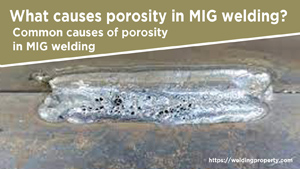
Grinding back a weld that looked fine but failed under a hammer test is a mistake that sticks with you. The arc sounded harsh, the bead was ropey, and no matter how steady my hand was, the puddle just wouldn’t flow right.
That experience forced me to learn what is inductance on a mig welder, because it turned out the machine setting mattered just as much as my technique. After years of dialing in MIG machines on real jobs, I’ve seen welders blame wire, gas, or their hands when the real issue was inductance.
This setting controls how soft or aggressive the arc feels, how much spatter you fight, and how smoothly the puddle wets in—especially on thin steel. I figured this out through trial, error, and plenty of ugly beads.
If you want a smoother arc, better bead shape, and fewer surprises when you pull the trigger, keep reading. I’ll show you how to set inductance the right way and why it makes such a big difference.
Photo by millerwelds
What Is Inductance in MIG Welding?
Inductance might sound like something out of an electrical engineering class, but in the world of MIG welding, it’s pretty straightforward. At its core, inductance is a setting on your welder that controls how quickly the current ramps up during the short-circuit phase of the welding process.
In MIG, especially when you’re running in short-circuit transfer mode—which is common for thinner materials or positional welding—the wire electrode touches the weld pool, creating a momentary short. Without inductance, that current spike would be too aggressive, leading to explosive spatter and an unstable arc.
Think of it as a damper on your welder’s power delivery. It introduces a slight delay in the current rise by building a magnetic field in the circuit, which opposes sudden changes. This smooths things out, making the metal transfer from wire to puddle more controlled.
On most modern MIG machines, like those from Lincoln or Miller that you’ll find in US shops, inductance is adjustable via a knob or digital menu, often labeled as “inductance,” “arc control,” or “pinch.”
If your welder doesn’t have it adjustable, it’s usually fixed at a middle-ground setting that works okay for general use, but having control lets you fine-tune for specific jobs.
Why does this matter? In my experience, ignoring inductance is like driving a truck without shocks—everything feels jerky.
For instance, on a repair job for a farm gate made of 16-gauge steel, low inductance gave me a harsh arc that popped and spit, while bumping it up created a buttery smooth bead with minimal cleanup. It’s all about balancing the energy to avoid defects like lack of fusion or excessive heat input that warps your metal.
How Does Inductance Work in Your MIG Welder?
To really get how inductance operates, let’s walk through the MIG process step by step. When you pull the trigger, your welder feeds wire at a set speed while voltage maintains the arc length.
In short-circuit MIG, the wire dips into the puddle about 100-200 times per second, shorting out each time. The machine senses this drop in voltage and boosts current to melt the wire tip and clear the short.
Here’s where inductance kicks in: It slows that current surge. Low inductance means the current rises fast—like slamming on the gas—causing the wire to pinch off sharply, which can eject molten droplets as spatter. Higher inductance delays the rise, allowing the puddle to wet out more fluidly, reducing spatter and giving a softer arc that’s easier on thin stuff.
Mechanically, it’s tied to the welder’s inductor coil, which stores energy in a magnetic field. When the short happens, this field resists the rapid current change, extending the “arc time” slightly.
This affects bead profile: Low settings yield a narrower, more convex bead with deeper penetration, great for thicker plates. High settings flatten the bead for better tie-in on laps or fillets, minimizing distortion.
I’ve tinkered with this on various machines. Take a standard 200-amp MIG unit: At zero inductance, you’re getting a crisp, snappy arc ideal for spray transfer on heavy sections. Crank it to max, and it’s like adding cream to your coffee—smoother and more forgiving for out-of-position work.
When Should You Adjust Inductance Settings?
Not every weld calls for tweaking inductance, but knowing when to touch that dial separates the hobbyists from the pros. Use it primarily in short-circuit mode, which is your go-to for materials under 1/8 inch thick or when you’re welding overhead to avoid drips.
If you’re in spray transfer—higher voltage and amps for thicker stock—inductance has less impact since there’s no short-circuiting.
Adjust when you notice issues like excessive spatter on clean metal, a bead that’s too peaked or undercut, or if the arc feels unstable, popping like popcorn. For example, on aluminum with argon mix, higher inductance helps the softer wire transfer without exploding. On steel with CO2 shielding, lower might be better for penetration.
In the shop, I adjust based on the job. Welding exhaust tubing? Bump inductance up to prevent burn-through. Tackling structural beams? Keep it low for solid fusion. Always start at the manufacturer’s recommended midpoint—say 50% on a scale of 0-100—and test on scrap. Listen to the arc: A good setting sounds like steady bacon frying, not erratic snaps.
Practical Tips for Setting Inductance in the Shop
First, ensure your basics are solid: Clean metal, proper gas flow (20-25 CFH for most), and matched wire diameter—0.030″ for light work, 0.035″ for medium. Amperage wise, aim for 100-150 amps on 1/8″ steel, but pair it with voltage around 18-22V.
Step-by-step guide to dialing in inductance:
- Set your wire feed speed and voltage for the material—faster feed needs more voltage to maintain arc.
- Weld a test bead on scrap similar to your project.
- If spatter is high and the bead is rough, increase inductance by 10-20% increments.
- Retest: Look for a flatter bead with good wetting at the toes.
- If penetration is lacking or the puddle freezes too quick, dial back.
Pro tip: Match to your gas. Pure CO2 runs hotter and spattery, so higher inductance tames it. Argon/CO2 blends are more forgiving at mid-settings.
One lesson I learned the hard way: On a custom trailer frame, I forgot to reset inductance after switching from thin panels to thick angles. Ended up with cold laps that required grinding out. Always recalibrate when changing setups.
Common Mistakes with Inductance and How to Avoid Them
Even seasoned welders trip up here. Biggest blunder? Ignoring it altogether, thinking voltage and amps are enough. That leads to inconsistent welds, especially on varying thicknesses.
Another common one: Cranking inductance too high, which can cause a lazy arc with poor penetration—great for cosmetics but weak structurally. I see beginners do this chasing a “smooth” sound, only to have joints fail under load.
Low inductance pitfalls include burn-through on thin gauge and nozzle buildup from spatter. Pros sometimes overdo low settings for speed, but it bites back with distortion.
Fixes? Always joint prep first—bevel edges on thicker stuff for better fusion. Use a chart: For 0.035″ wire on mild steel, start at 40-60% inductance. Test weld, cut, and etch to inspect penetration. And safety-wise, wear your PPE—spatter from wrong settings can sting.
Inductance and Material Thickness: Tailoring Your Approach
Material thickness dictates a lot. On thin sheets (under 16 gauge), high inductance (70-90%) softens the arc to prevent holes and warping. It lets the puddle flow without overheating.
For medium stock (1/8-1/4″), mid-range (40-60%) balances penetration and control. I’ve used this on truck frames, getting clean fillets without undercut.
Thick plates? Low inductance (20-40%) for deep bite, but watch heat input to avoid cracks.
Table comparing effects:
| Thickness | Recommended Inductance | Key Benefits | Potential Issues if Wrong |
|---|---|---|---|
| Thin (<16ga) | High (70-90%) | Reduced burn-through, less distortion | Poor fusion if too high |
| Medium (1/8-1/4″) | Medium (40-60%) | Good wetting, minimal spatter | Undercut on edges |
| Thick (>1/4″) | Low (20-40%) | Deep penetration | Excessive spatter, warping |
Adapt for alloys: Stainless needs slightly higher to handle its resistance.
Pairing Inductance with Wire Diameters and Amperage Ranges
Wire size is key—thinner wires (0.023-0.030″) pair with higher inductance for smooth transfer, amperage 80-140A. Thicker (0.035-0.045″) handle lower for power, 140-250A.
Amperage sets the heat: Too low with high inductance? Sluggish puddle. Too high with low? Chaos. For 0.035″ ER70S-6 on steel, 160A at 20V with 50% inductance is a sweet spot for flat beads.
Welding a boat trailer, I switched to 0.030″ wire mid-job without adjusting—spatter everywhere. Dropped inductance, problem solved.
Inductance in Different Welding Positions and Joint Types
Out-of-position welding amplifies inductance’s role. Vertical up? Higher settings prevent sagging. Overhead? It keeps drips at bay.
For joints: Butt welds on thin material love high inductance for flush beads. Fillets? Mid to low for toe wetting without rollover.
Prep tips: Clean to bare metal, gap joints 1/16″ for penetration. Clamp to minimize distortion.
Safety Considerations When Working with Inductance
Safety isn’t optional. Wrong inductance amps up risks: High spatter means more burns or eye hazards—always use auto-darkening helmets rated 9-13 shade.
Electrical side: Inductance tweaks current, so ensure grounding is solid to avoid shocks. Ventilate for fumes, especially with flux-cored wire where inductance helps but gases build up.
In my shop, we drill “test first” into new guys—prevents accidents from unstable arcs.
Comparing Inductance to Other Arc Controls in MIG and Beyond
While MIG inductance is specific, compare to SMAW where rod type (like 7018) inherently controls similar via coatings. In TIG, it’s pulse settings.
Pros of adjustable inductance: Customizable, reduces consumables waste.
Cons: Overcomplication for simple jobs; not all machines have it.
Versus fixed: Adjustable gives edge on varied work.
Real-World Applications: From Garage Repairs to Pro Fabrication
In DIY: Fixing mower decks—high inductance for thin decks.
Hobbyists: Custom racks—mid for strength.
Pros: Pipeline work—low for root passes.
Students: Practice on scraps to feel differences.
Advanced Tips: Integrating Inductance with Voltage and Wire Feed
Voltage controls arc length, wire feed heat input. High voltage with low inductance? Long arc, globular transfer. Balance: For 18V, 300 IPM feed, 50% inductance.
Pulse MIG? Inductance fine-tunes peaks.
Shop hack: Use oscilloscopes if available, but ear and eye suffice.
Wrapping Up
Getting inductance right transformed my welds from okay to outstanding. You’ve now got the tools to experiment confidently, spotting issues before they ruin a job and dialing in settings that make your work efficient and safe. It empowers you to tackle tougher materials and positions without second-guessing.
Always log your successful settings in a notebook—machine, material, gas, wire, amps, volts, inductance. Next time a similar job rolls in, you’re ahead of the game.
FAQs
What happens if I set inductance too high on my MIG welder?
You’ll get a soft, lazy arc with a fluid puddle that’s great for cosmetics but risks shallow penetration and lack of fusion. Fix by lowering it and checking with a macro etch on test pieces—aim for good sidewall tie-in without cold laps.
How does inductance affect spatter in MIG welding?
It directly reduces spatter by slowing current rise during shorts, preventing explosive wire pinch-off. Low settings increase it; high tame it. For minimal cleanup, start mid and adjust up if needed, especially with CO2 gas.
Should I adjust inductance for different wire sizes?
Absolutely. Thinner wires (0.030″) benefit from higher inductance to smooth transfer; thicker (0.045″) can handle lower for power. Match to amps: Smaller wires at lower amps need more control to avoid instability.
Does inductance matter in spray transfer MIG?
Less so, since there’s no short-circuiting—it’s continuous arc. But subtle tweaks can refine bead shape. Stick to short-circuit mode for max benefit, like on thin auto panels.
What’s a good starting inductance for mild steel welding?
Aim for 50% on most scales for 1/8″ steel with 0.035″ wire at 160A/20V. Test and tweak: If the bead is peaked, increase; if flat but weak, decrease. Always prioritize puddle observation over numbers.