
I’ve welded in all kinds of spaces—from open yards with a good breeze to cramped corners of a shop where the air barely moved—and let me tell you, the difference is night and day. The first time I ran a long bead in a poorly ventilated area, the fumes hit me like a wall.
Eyes burned, throat scratched, and I knew right then that I’d made a rookie mistake. That’s exactly when forced ventilation must be used in welding—anytime natural airflow isn’t enough to clear the fumes or protect your lungs.
It’s not just about comfort; it’s about safety and long-term health. Welding fumes contain metal oxides, gases, and particulates that can build up fast, especially when you’re working on stainless, galvanized steel, or aluminum. Without proper ventilation, those invisible clouds can lead to headaches, dizziness, or worse—chronic respiratory damage.
If you’ve ever wondered when to flip on the fans, use exhaust hoods, or bring in a fume extractor, you’re asking the right question. Let’s break down exactly when forced ventilation becomes a must, how to set it up right, and how to keep your air—and your lungs—clear while you weld.
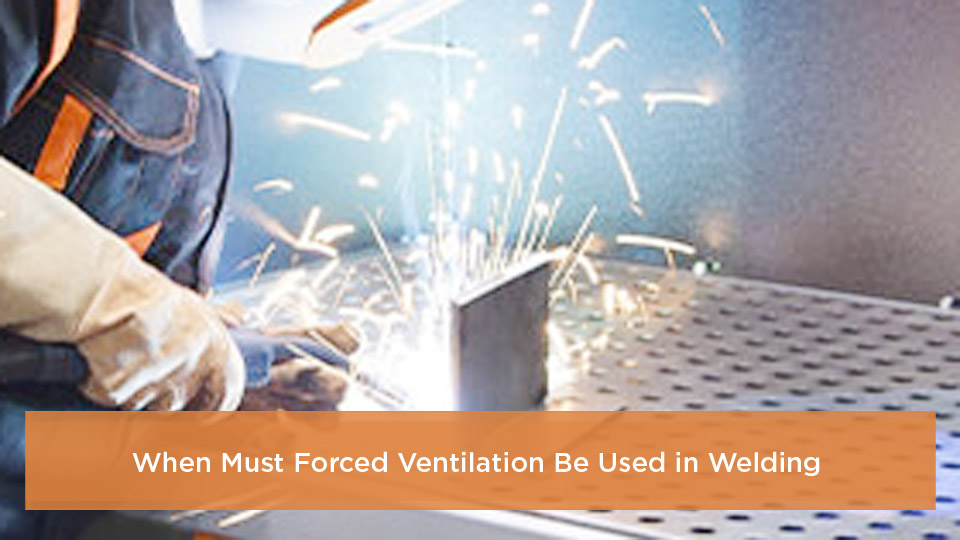
Image by metalfabsupplies
What Exactly Is Forced Ventilation in Welding and Why Does It Matter?
You’re laying down a bead on some galvanized steel, and the shop’s natural breeze just isn’t cutting it. Forced ventilation steps in as your mechanical hero—fans, ducts, and hoods actively pulling or pushing air to clear out the bad stuff before it settles.
Unlike passive setups where you hope a cracked window does the trick, this is engineered airflow, measured in cubic feet per minute (CFM), designed to dilute or capture contaminants right at the source.
In my experience, it matters most because welding isn’t a clean hobby. Arc processes like SMAW or GTAW kick up particulates that linger, especially indoors. Without forced air movement, you’re recycling your own exhaust, risking everything from short-term dizziness to long-haul issues like siderosis.
I’ve seen buddies push through “just one more stick” in a stuffy bay, only to bail early with nausea. The fix? Knowing forced ventilation keeps exposure under OSHA’s permissible limits (PELs)—think 5 mg/m³ for total particulates—and lets you focus on the puddle, not the plume.
Practically, it ties into your whole setup. Pair it with the right filler rod, like an E7018 for mild steel, and you avoid slag inclusions from poor air quality. For hobbyists, it’s about turning a weekend project into a pro-level build without the hospital bill.
Key OSHA Requirements for Welding Ventilation You Need to Know
Diving into the regs might sound like homework, but trust me, it’s your best insurance policy. OSHA’s 1910.252 and 1926.353 lay it out plain: Mechanical ventilation—aka forced—is non-negotiable when natural airflow can’t keep fumes below safe levels. That kicks in for any operation where contaminants exceed PELs, like welding cadmium-coated parts (hello, 0.005 mg/m³ limit).
From what I’ve enforced on job sites, the biggie is local exhaust systems: Hoods positioned 12-18 inches from the arc, sucking at 100 linear feet per minute. Why? It captures 90% of fumes before they waft into your mask.
For general dilution, aim for 10-15 air changes per hour in the space, but don’t skimp—I’ve audited shops where “adequate” meant a box fan, and it failed inspections every time.
Here’s a quick comparison to help you map it to your rig:
| Ventilation Type | When to Use | Pros | Cons | Typical CFM for 10×10 Shop |
|---|---|---|---|---|
| Local Exhaust (Hood/Duct) | High-fume processes like flux-core MIG on galvanized | Captures at source; efficient for one station | Setup cost; needs positioning | 500-1000 |
| Dilution (Ceiling Fans/Push-Pull) | Multi-station shops with mild steel stick | Covers area; easier install | Less precise; recirculates if not vented out | 2000-4000 |
| Portable Extractors | Mobile jobs, DIY garages | Flexible; no permanent mods | Hose drag; filter clogs fast | 300-600 |
This table’s pulled from setups I’ve tweaked over the years—start with local for precision, layer dilution for backup. Always log your air tests; it’s gold for compliance and proving you’re not winging it.
When Does Forced Ventilation Become Mandatory in Welding Operations?
You feel it before you see it—that thick, blue haze signaling it’s time to act. Forced ventilation jumps from “nice to have” to must-do in scenarios where passive air just can’t hack it. Top trigger? Confined spaces: Tanks, pipes, or crawlspaces under 100 cubic feet, per OSHA.
If you’re welding inside something that limits natural flow, crank it up immediately—fumes build 10x faster, turning a 30-minute job into an oxygen-starved nightmare.
Another red flag: Toxic metals. Galvanized (zinc), stainless (chromium), or brass (cadmium) releases hit hard. I once prepped a HVAC duct run without exhausting the zinc oxide—next shift, half the crew was down with flu-like chills. Rule of thumb: If your base metal’s coating screams “hazard,” force the air out.
High-volume shops or hot processes like plasma cutting? Same deal. When multiple arcs overlap or you’re burning off paints/primer, unusual conditions demand it to prevent buildup. For students in a lab, it’s every indoor session; for pros, it’s code on any enclosed fab.
Pro tip from the trenches: Test with a smoke tube before striking an arc. If it hangs, ventilate. It’s saved me from rework on contaminated joints more times than I can count.
Types of Forced Ventilation Systems Every Welder Should Consider
Not all blowers are created equal, and picking the wrong one is like using the wrong rod for dirty steel—frustrating and flawed. Let’s break down the big three I’ve relied on.
First, local exhaust ventilation (LEV): The gold standard for source capture. A fume arm or downdraft table pulls straight from the weld pool. Works killer for TIG on aluminum—keeps the argon shield pure while yanking ozone.
Setup’s straightforward: Mount the hood parallel to your torch angle, seal joints with foil tape, and filter to HEPA for fine stuff like manganese.
Then there’s dilution ventilation: Fans pushing fresh air in while exhausting stale out. Great for open bays welding structural beams with 6010 rods. I’ve jury-rigged these in field trailers by ducting a shop vac exhaust—cheap, but monitor velocity to avoid drafts messing your arc stability.
Portable units round it out: Think backpack extractors or wheeled carts for on-site repairs. In a shipyard gig, these were lifesavers for overhead welds in compartments—no permanent install, just plug and play. Drawback? Filters clog quick on heavy flux, so swap ’em weekly.
| System | Best For | Setup Time | Cost Range (USD) | Maintenance Needs |
|---|---|---|---|---|
| LEV Hood | Precision work (TIG/GMAW) | 1-2 hours | $500-2000 | Monthly filter clean |
| Dilution Fans | General shop | 30 min | $200-800 | Annual motor check |
| Portable Cart | Field/Mobile | Instant | $300-1000 | Daily hose inspect |
Match to your process: Flux-core? Go LEV. Stick on carbon steel? Dilution suffices. Always vent outdoors—recirculating’s a no-go for toxics.
How to Set Up Forced Ventilation Step by Step for Your Welding Area
I’ve walked new hires through this a hundred times, and it boils down to prep, install, test, tweak. Start by mapping your space: Measure volume (length x width x height), note entry points for fresh air, and ID exhaust routes away from intakes.
Step 1: Choose your system based on the table above. For a garage MIG setup, grab a portable LEV—$400 at the local supplier.
Step 2: Position strategically. Hood 6-12 inches above the bench, angled to your typical joint (butt, lap, fillet). For dilution, mount push fans low (intake) and pull high (exhaust) to create a crossflow.
Step 3: Wire it safe—GFCI outlets, no daisy-chaining with your welder. I’ve fried a rig ignoring this; lesson learned.
Step 4: Prime the filters. Dry-run with a shop light to check seals—no leaks, or you’re just stirring the pot.
Step 5: Calibrate airflow. Use an anemometer (under $50 online) for 100 fpm at the hood face. Adjust dampers till it’s steady.
Step 6: Integrate with your workflow. Stag the system pre-heat—give it 5 minutes to cycle. Post-weld, run 10 minutes to clear residue.
Common hitch? Undersized ducts choking flow. Fix: Upsize to 6-inch for 500 CFM. And for joint prep, clean metals first—oily surfaces volatilize worse under heat, overwhelming your setup.
This routine turned a chaotic rental shop I managed from fume-choked to certifiable clean. Your turn—dial it in, and watch productivity soar.
Essential Ventilation Strategies for Welding in Confined Spaces
Confined spaces are the wild west of welding—tight, hot, and unforgiving. I’ve crawled into silos and vats, torch in one hand, worry in the other. Forced ventilation here isn’t optional; it’s your lifeline, mandated when entry’s possible but exit’s tricky.
Key: Pre-entry purge. Blow in fresh air for 20-30 minutes to displace stagnants—CO2 from old shielding, say. Then, continuous LEV: A flexible arm snaked in, capturing at the root. For oxygen, monitor to 19.5-23.5%; dip below, and you’re suiting up in SCBA.
Anecdote time: On a brewery tank reline, we skipped the attendant’s airflow check—fumes pooled, arc sputtered, and we aborted mid-pass. Fix? Dual blowers: One supply, one exhaust. Now, pair with a buddy system—radio check every 15 minutes.
For techniques, stick to low-amperage processes like GTAW to minimize generation. Prep joints externally where possible, and use low-hydrogen rods to cut moisture-released gases. If it’s a vertical up, tilt the hood to follow—keeps pull strong without blocking your view.
Bottom line: In these spots, ventilation buys time. Skimp, and you’re gambling health for haste.
Dealing with Toxic Fumes: Ventilation for Specific Welding Materials
Some metals fight dirty, belching fumes that demand respect. Zinc in galvanized? White fever city—forced ventilation or bust, with LEV pulling 150 fpm to beat the oxide cloud.
Stainless steel’s chromium VI is sneakier—carcinogenic at 0.005 mg/m³. I’ve fabbed exhaust manifolds without it, ending shifts with bloody noses. Solution: Dedicated hoods, post-weld bake-out to volatilize residuals, and E308L rods for compatibility.
Cadmium or beryllium? Double down—LEV plus airline respirators, per code. These hit nerves fast; ventilation dilutes to trace levels.
Practical know-how: Segregate zones. Weld toxics in isolated booths with negative pressure—doors seal, air flows out only. For filler, match to base: ER70S-6 for galvanized MIG, but ventilate like it’s poison ivy.
Mistake magnet: Wet prep. Damp rags near the arc? Hydrogen spikes. Dry everything, ventilate heavy, and your beads stay sound.
| Material | Key Fume Hazard | Ventilation Threshold | Recommended Rod/Filler |
|---|---|---|---|
| Galvanized Steel | Zinc Oxide | LEV at 100+ fpm | E71T-1 flux-core |
| Stainless | Hex Cr(VI) | Full booth exhaust | ER308L |
| Cadmium-Plated | Cadmium Vapor | LEV + Respirator | Avoid if possible; use Ni-based |
| Aluminum | Ozone/Al Oxide | Dilution 20 ACH | ER4043 |
This chart’s my go-to cheat sheet—laminate it for the bench.
Common Ventilation Mistakes in Welding Shops and Quick Fixes
Biggest blunder? Poor placement. Hoods too far? Fumes escape 70%. Fix: Velcro mounts for adjustability—I’ve modded arms with clamps for $10.
Clogged filters next—neglect ’em, and backpressure kills suction. Weekly shake-outs, monthly swaps. In one shop turnaround, this alone dropped complaints 80%.
Overlooking shielding gas: Argon displaces O2 in tight spots. Ventilate to refresh, or dizziness hits mid-tack.
And the DIY sin: Box fans indoors. They stir, don’t clear. Upgrade to rated units—ROI in avoided sick days.
For students: Don’t test post-setup. Smoke bombs reveal leaks fast. Pros: Annual pro audits. These tweaks keep your shop humming, not hacking.
Pairing Ventilation with PPE and Other Safety Protocols
Ventilation’s the quarterback, but PPE’s the line—together, they block every threat. Start with a powered air-purifying respirator (PAPR) over basic N95s; it filters to 0.3 microns while your LEV handles bulk.
Gloves, FR jackets—non-negotiable, but ventilate to cut sweat buildup. I’ve layered a cooling vest under mine in summer fabs; game-changer.
Tie in electrical: Grounded outlets prevent arcs igniting pooled gases. Fire watch? Mandatory post-weld, extinguisher at arm’s reach.
For processes, low-fume wires like metal-cored reduce load. Prep tip: Bevel edges clean, no mill scale—less volatilization.
Holistic view: Train weekly. Role-play confined entries. This combo’s turned risky sites into routines for me.
Shop Floor Tips: Real Experiences with Ventilation Tweaks
Early ’90s, oil rig repair. No exhaust, just ocean breeze—until a CO spike dropped two guys. Post-that, we rigged diesel blowers with carbon filters. Instant trust restored.
For hobbyists: Garage hack—window AC exhaust hose to a shop vac. Pulls 400 CFM, costs zilch extra.
Pro tweak: Variable speed drives on fans—dial per process. Saves energy, matches flux-core’s dirt to TIG’s clean.
Machine settings: Drop amps 10% in poor air; stabilizes arc without porosity. Joint prep: 37.5-degree bevels for full pen, but ventilate during grind dust.
These nuggets? Born from scars. Apply ’em, and you’re ahead of the curve.
Wrapping It Up: Breathe Easy and Weld Strong
Your roadmap to mastering when must forced ventilation be used, from regs to rigs. Key takeaways? Mandate it in confined spots, toxics, or high-heat hauls; pick LEV for precision, dilution for breadth; always test and maintain. You’re now equipped to shield your crew, nail pristine beads, and sidestep fines that sting worse than fumes.
Feeling empowered? Hit that first project with fresh eyes—your lungs will thank you. Pro tip: Invest in a $20 manometer for hood checks; it’ll pay off in cleaner air and sharper focus every strike.
FAQs
Is forced ventilation required for all indoor welding?
Not always—natural flow works for low-fume outdoor mild steel, but indoors with any arc, yes, to hit PELs. Assess your setup; if haze builds, force it.
How do I know if my ventilation is adequate for welding galvanized steel?
Smoke test: Release near the arc—if it clears in seconds at 100 fpm, good. Monitor zinc oxide under 5 mg/m³; add LEV if not.
What’s the difference between local exhaust and dilution ventilation in welding?
Local captures at the source (hoods, 90% efficiency); dilution mixes room air (fans, broader but less precise). Use local for toxics, dilution as backup.
Can I use a regular shop fan for welding ventilation?
Short answer: No for compliance—needs rated CFM and outdoor exhaust. It’ll stir fumes; upgrade to a welding-specific unit to avoid recirculation risks.
How often should I maintain my welding ventilation system?
Weekly filter checks, monthly full cleans, annual pro tune-up. Clogs kill flow—I’ve seen 50% drops from ignored buildup.


