Nothing brings a welding project to a halt faster than pulling the trigger and getting no arc. The wire feeds out, the machine powers on, and everything looks normal—yet the metal refuses to spark.
If you’ve been asking why is my MIG welder not arcing, you’re dealing with one of the most common and frustrating problems welders face in the shop.
A MIG welder can stop arcing for several reasons, from a poor ground connection and incorrect polarity to worn consumables or internal electrical issues.
I’ve seen situations where a simple loose clamp was the culprit, while other cases required a deeper look into the machine’s wiring and components. The challenge is that several different problems can produce the exact same symptom.
Finding the cause quickly can save hours of frustration and prevent unnecessary repairs or part replacements. I’ll walk through the most common reasons a MIG welder won’t arc, how to diagnose each one, and the practical fixes that can get you back to welding as soon as possible.
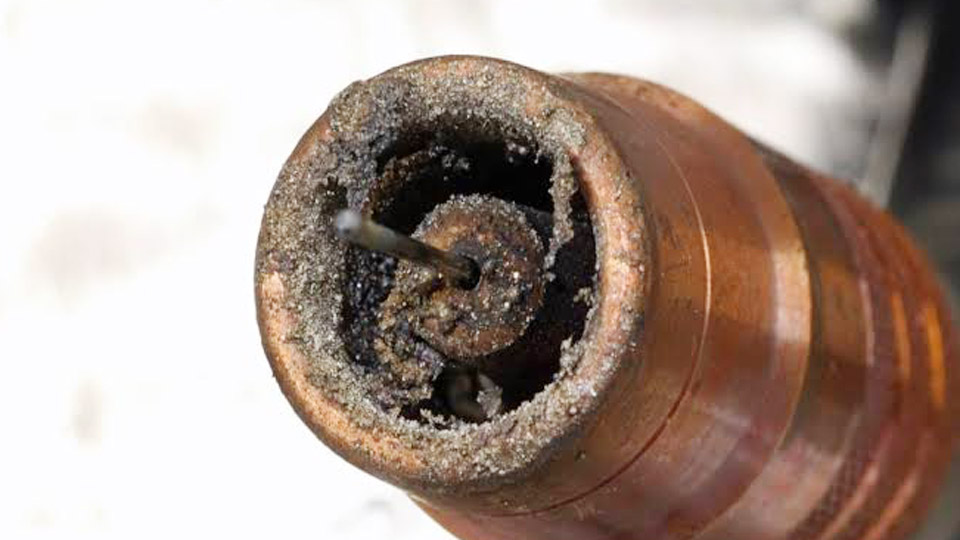
Image by thefabricator
Common Reasons Your MIG Welder Won’t Arc
Let’s start with the basics because most “no arc” problems come down to the fundamentals of completing the electrical circuit. MIG welding (Gas Metal Arc Welding or GMAW) relies on a continuous wire electrode, shielding gas, and proper power delivery to create that stable arc.
The arc forms when there’s sufficient voltage and current between the wire tip and the workpiece, with the ground clamp completing the circuit. If anything breaks that loop—poor contact, wrong settings, or a mechanical issue—you get nothing.
Is Your Ground Clamp Making Solid Contact?
This is the number one culprit I see in my shop and on job sites. If the ground clamp isn’t biting into clean metal, the circuit isn’t complete, and no arc happens even if the wire feeds perfectly.
What it is: The work lead (ground clamp) carries current back to the machine. Rust, paint, oil, or scale on the metal creates resistance.
How it works: Electricity follows the path of least resistance. Dirty contact means high resistance, so the voltage drops before it can jump the gap at the wire.
When and why to check it: Always, especially on repairs involving old steel, galvanized material, or outdoor projects. On thin auto body panels, even a little mill scale can kill the arc.
Practical tips: Grind or wire brush a clean spot for the clamp, preferably close to the weld area. For big pieces, use a magnetic ground or C-clamp setup. I keep a dedicated grinding spot on my bench just for this. Test by touching the wire to the metal with the trigger pulled—if it still doesn’t arc, move the clamp.
Common mistake: Clamping onto painted frames or rusty corners without cleaning. Pros make this second nature; beginners skip it and chase ghosts inside the machine.
Power Supply and Machine Basics
Before diving deeper, confirm the obvious. Is the welder plugged in, switched on, and getting the right voltage? Many home/shop machines run on 110/120V or 220/240V—mismatched input wrecks performance.
Check breakers, extension cords (use heavy gauge, short ones), and internal fuses if applicable. On older transformer machines common in the US, a tripped thermal overload from overheating can shut things down.
Step-by-step: Unplug, inspect cords for damage, reset breakers, and try a direct wall outlet. Listen for the fan or contactor click when you pull the trigger.
Polarity Issues – A Silent Killer
MIG with solid wire and gas usually needs electrode positive (DCEP) polarity. Flux-cored wire often flips to electrode negative (DCEN). Wrong polarity means poor arc characteristics or none at all.
Inside the machine, swap the leads at the terminals. Many small shop welders like Millermatic or Hobart models have clear markings. If you recently switched wires for flux core and forgot to change back, that’s your problem.
Real-world example: A buddy brought his flux-cored setup for a farm repair. Wire fed but no arc. We flipped polarity, and it lit right up on dirty steel.
Wire Feed Problems That Kill the Arc
Even if power is there, the wire has to reach the workpiece cleanly to initiate the arc.
Contact Tip Problems
The contact tip transfers current to the wire. If it’s worn, clogged, or the wrong size, you lose consistent contact.
What it is: A copper or copper-alloy tube at the gun’s end.
How it works: Wire slides through, electricity jumps from tip to wire.
Practical tips: Match tip size exactly to wire diameter—0.030″ wire needs a 0.030″ tip. Replace every few pounds of wire or when you see spatter buildup. Clean with a tip cleaner or drill bit carefully. I carry spares in my toolbox.
Common beginner mistake: Using an oversized tip thinking it gives more room. It causes arcing inside the tip and burnbacks.
Drive Rollers, Tension, and Liner Issues
Wire slipping or jamming prevents proper feed and contact.
Check tension: Too loose, wire slips and doesn’t push forward. Too tight, it flattens and creates debris. Rollers must match wire size and type (grooved for solid, knurled for flux-cored).
Liner: Kinks, dirt, or wrong length cause drag. Trim liner flush to the tip holder.
Step-by-step fix:
- Release tensioner.
- Pull wire out and inspect for bends.
- Clean rollers and check alignment.
- Re-thread carefully.
- Test feed with gun disconnected if possible.
On aluminum wire, use U-groove rollers and be extra gentle.
Settings and Material Factors
Wrong parameters are a frequent issue, especially for hobbyists jumping between jobs.
Voltage, Wire Speed, and Amperage Basics
MIG is voltage-controlled. Wire feed speed (WFS) sets amperage roughly.
For mild steel with 0.030″ wire and C25 gas (75% argon/25% CO2):
- 1/8″ thick: Around 18-20V, 250-350 IPM WFS.
- Thinner sheet: Lower voltage to avoid burn-through.
- Thicker plate: Higher settings for penetration.
Listen for the “bacon sizzling” sound—too low and it stubs; too high and it hisses wildly.
Comparison Table: Typical Settings for Mild Steel (0.030″ Wire, C25 Gas)
| Material Thickness | Voltage | Wire Feed Speed (IPM) | Approx. Amps | Notes |
|---|---|---|---|---|
| 18-20 ga (thin sheet) | 14-17V | 100-200 | 50-120 | Short circuit transfer, push technique |
| 1/8″ (0.125″) | 18-20V | 250-350 | 130-180 | Balanced, good penetration |
| 1/4″ (0.250″) | 20-23V | 400-500+ | 180-250 | Spray or globular, watch heat |
| Over 3/8″ | 22-26V | Higher | 200+ | Consider larger wire or multi-pass |
Adjust based on your machine’s chart. Test on scrap first.
Gas Flow and Shielding Issues
No gas or low flow means the arc won’t stabilize, especially outdoors. Set 15-25 CFH typically. Check hoses for leaks, regulator for proper pressure, and ensure the cylinder isn’t empty.
For flux-cored (self-shielded), gas isn’t needed, but polarity and settings still matter.
Material Preparation and Compatibility
Dirty metal, wrong wire for material (e.g., mild steel wire on stainless or aluminum), or poor fit-up kills arcs. Clean to bright metal. Use ER70S-6 for general mild steel—handles rust better than ER70S-3.
For aluminum, pure argon and 0.030″ or 0.035″ 4043/5356 wire with push gun angle.
Joint prep: Bevel thick plates, gap thin ones properly. Tack welds help on long seams.
Step-by-Step MIG No-Arc Troubleshooting Guide
Here’s the sequence I use in the shop:
- Safety first: Unplug, wear gloves, eye protection.
- Verify power and ground: Clean clamp spot, solid connection.
- Check trigger and gun: Listen for contactor, test continuity if possible.
- Inspect consumables: Tip, liner, rollers, wire.
- Confirm settings and polarity: Match material and wire.
- Test on clean scrap: Adjust voltage up slightly while triggering.
- Internal checks: For persistent issues, look at connections inside the machine, diodes on older units.
If wire feeds but no voltage at the gun, suspect internal wiring or rectifier issues. Pros often take it to a tech at that point.
Advanced Troubleshooting for Shop Welders
On inverter machines popular today (like YesWelder or multiprocess units), check display errors or thermal protection. Older stick/TIG convertibles need correct process selection.
Burnback: If wire sticks to tip, increase burnback control or voltage. Erratic feeding points to liner or spool tension.
For flux-cored on dirty steel: Higher voltage helps, and clean ground is critical.
Safety Considerations Every Time
No arc doesn’t mean no risk. Always assume power is live. Check cables for frays—high resistance can overheat. Proper PPE: helmet with good lens (shade 10-12 for MIG), gloves, jacket. Ventilation for fumes, especially indoors.
In US shops, follow OSHA guidelines for electrical safety. Ground your workpiece properly to avoid shocks.
When to Call a Pro or Upgrade
If you’ve checked everything and it’s still dead, it could be a bad board, transformer, or gun switch. Small machines under $500 aren’t always worth deep repair. For serious work, invest in a name-brand like Lincoln, Miller, or Hobart with good support.
Real-World Insights from the Shop Floor
I’ve welded everything from thin exhaust pipes to heavy structural steel. One common pro mistake: rushing setup on repeat jobs and skipping cleaning. Beginners overload small machines on thick material, expecting miracles.
Material handling: Store wire sealed to prevent rust. Keep guns straight—no sharp bends in cables.
Pros and cons of common fixes:
- Cleaning ground: Free, instant, but requires access.
- New contact tip: Cheap insurance, quick swap.
- Full machine service: Costly but restores reliability.
Wrapping Up What You’ve Learned
After troubleshooting your MIG welder’s arc issues, you’re now equipped with practical knowledge on circuits, consumables, settings, and prep that separates weekend warriors from consistent welders. Understanding why the arc fails—whether ground contact, polarity, or dirty tips—means fewer headaches and stronger results on your next project.
MIG is forgiving when basics are right. Focus on clean metal, matched settings, and good connections, and most problems vanish.
Keep a small dedicated “test coupon” station near your machine. A piece of fresh 1/8″ plate lets you dial in settings and verify arc before committing to the real job. It saves time and material in the long run.
FAQ: MIG Welder No Arc Problems
Why does my MIG welder feed wire but not arc?
Usually a ground clamp issue or bad electrical connection. Clean the clamp area thoroughly and check polarity. Test voltage at the gun if possible.
Can wrong polarity prevent arcing in MIG?
Absolutely. Solid wire with gas needs DCEP. Switch terminals and test. Flux-cored often requires the opposite.
How do I fix erratic or weak arc on my MIG?
Check contact tip size/wear, drive roll tension, gas flow, and voltage. Increase voltage slightly for stability on thicker material.
Does metal thickness affect MIG arc starting?
Yes. Too low settings on thick steel won’t penetrate or start well. Use charts as a baseline and adjust on scrap.
Should I use gas or flux-cored for easier arc starting?
Flux-cored handles dirty metal better for outdoor or repair work, but requires correct polarity and often higher voltage. Gas gives cleaner arcs indoors.