Welding aluminum takes a bit of practice, and getting the right settings is key to achieving strong and clean welds. If you’re working with 3/64 aluminum welding wire, you need to set up your machine correctly to avoid common issues like burn-through, weak penetration, or excessive spatter.
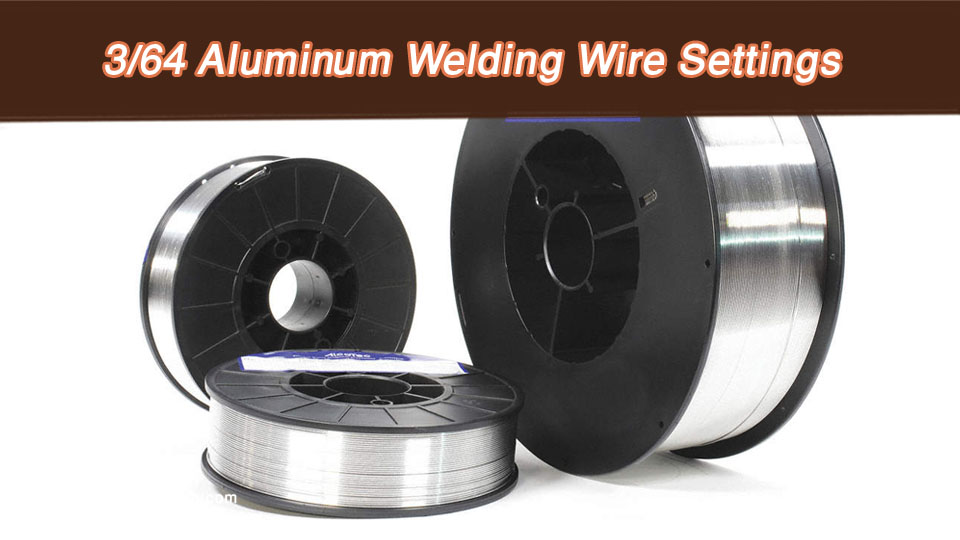
Image by grainger
I’ve spent plenty of time dialing in the right parameters, and I’ll walk you through everything you need to know to get the best results.
Aluminum behaves differently from steel, and it requires special care when setting your welder. Things like voltage, wire feed speed, gas flow, and travel speed all play a role in the final weld quality.
If you get these settings right, you’ll end up with smooth, durable welds that hold up over time. But if they’re off, you could deal with porosity, warping, or a weak joint. Let’s go over everything step by step so you can set up your welder the right way.
Understanding the 3/64 Aluminum Welding Wire
Before we get into settings, let’s talk about what makes 3/64 aluminum welding wire unique. This wire size is commonly used for MIG welding aluminum and is slightly thicker than 1/16″ but thinner than 1/8″, making it a versatile option for many applications.
- Wire diameter: 3/64″ (about 1.2 mm)
- Commonly used alloys: ER4045, ER5356, ER4043
- Best suited for: Thin to medium aluminum sheets and structural applications
- Best welding method: Pulse or spray transfer with a spool gun or push-pull setup
If you’re working on automotive parts, aluminum trailers, or boa6] repairs, this wire size is often the perfect balance of strength and ease of use. But getting the right machine settings is critical to ensuring good weld penetration and appearance.
Best Welding Process for 3/64 Aluminum Wire
There are two common ways to weld aluminum with 3/64 wire:
- MIG (Metal Inert Gas) welding – Best for speed and efficiency. Usually done with a spool gun or push-pull system to prevent wire feeding issues.
- Pulse MIG welding – Provides better control over heat input, reduces spatter, and helps with out-of-position welding.
Most people using 3/64 aluminum wire will be running MIG welding with a spool gun, as it’s the easiest way to feed aluminum wire without it getting jammed or bird-nested in the liner.
Recommended Settings for 3/64 Aluminum Wire
Now, let’s get into the actual settings you’ll need to use. These numbers may vary slightly depending on your machine, gas mix, and base material thickness, but they’ll give you a great starting point.
Voltage, Wire Speed, and Amperage
Here’s a general guideline for setting up your welder:
| Material Thickness | Voltage (V) | Wire Speed (IPM) | Amperage (A) |
|---|---|---|---|
| 1/8″ (3.2 mm) | 18-20V | 250-300 | 130-160A |
| 3/16″ (4.8 mm) | 20-22V | 280-320 | 160-180A |
| 1/4″ (6.4 mm) | 22-24V | 320-380 | 180-200A |
| 3/8″ (9.5 mm) | 24-26V | 350-420 | 200-250A |
Keep in mind that pulsed MIG settings will require slightly different parameters. If your welder has a pulse feature, you can reduce voltage slightly while maintaining good penetration.
Shielding Gas Selection and Flow Rate
Aluminum requires 100% argon gas for proper shielding. You should set your gas flow rate between 25-30 CFH (cubic feet per hour) to ensure proper protection from contamination. If you’re welding thicker material, you might go up to 35 CFH for better shielding.
Some people use an argon-helium mix for deeper penetration on thicker aluminum, but for general use, pure argon is the best choice with 3/64 wire.
Tips for Welding Aluminum with 3/64 Wire
Getting your welder settings dialed in is just one part of the equation. Here are some additional tips to make sure your welds turn out great:
- Clean the aluminum thoroughly – Use a stainless steel brush to remove oxidation before welding.
- Use a push welding technique – Always push the weld puddle forward instead of pulling it. This improves gas coverage and prevents contamination.
- Keep travel speed steady – Moving too slow can cause excessive heat buildup, leading to burn-through. Too fast, and you won’t get proper penetration.
- Use a spool gun or push-pull system – Feeding aluminum wire is tricky. A spool gun prevents wire from tangling inside the welder.
- Preheat thick materials – If you’re welding aluminum thicker than 1/4″, preheating to 200-300°F can help prevent cracking.
Common Problems and How to Fix Them
Aluminum welding comes with its own set of challenges. Here are some of the most common issues and how to troubleshoot them:
Excessive Spatter
- Possible Cause: Voltage too low or wire speed too high.
- Solution: Increase voltage slightly and fine-tune wire speed.
Poor Penetration
- Possible Cause: Low amperage or travel speed too fast.
- Solution: Increase amperage or slow down your travel speed slightly.
Porosity (Gas Pockets in the Weld)
- Possible Cause: Contaminated aluminum or improper gas shielding.
- Solution: Clean aluminum thoroughly, check gas flow, and ensure there’s no wind interfering with shielding gas.
Wire Birdnesting
- Possible Cause: Incorrect wire feeding or tension settings.
- Solution: Use a spool gun or push-pull system, adjust wire tension properly.
Conclusion
Welding aluminum with 3/64 wire is all about getting the settings right and maintaining good technique. If you dial in your voltage, wire speed, and gas flow correctly, you’ll end up with strong, clean welds. Using a spool gun or push-pull system will make wire feeding much easier, reducing the risk of birdnesting or jams.
Cleaning the aluminum properly and using the right shielding gas are just as important as your machine settings. If you run into issues, small adjustments to wire speed, voltage, and travel speed can make a big difference. Once you get the feel for it, welding aluminum can be incredibly rewarding, and the results will be worth the effort.
If you’re just starting, don’t be discouraged by the learning curve. With the right setup and practice, you’ll be laying down smooth aluminum welds in no time.
FAQs
What is the best shielding gas for 3/64 aluminum welding wire?
100% argon is the best choice for most applications. Some welders use an argon-helium mix for thicker materials.
Can I use 3/64 wire for thin aluminum sheets?
It’s better suited for medium to thick aluminum. If you’re welding very thin material, consider a smaller diameter wire like 0.035″.
Why is my aluminum weld full of holes?
This is likely due to porosity caused by contamination or poor gas shielding. Make sure your material is clean and your gas flow is set correctly.
Should I use a spool gun for welding aluminum?
Yes, a spool gun is highly recommended for aluminum welding to prevent wire feeding issues like birdnesting.
What happens if my wire speed is too fast?
If your wire speed is too high, you’ll get excessive spatter and poor weld appearance. Try lowering it slightly to find the right balance.
By following these settings and best practices, you’ll get solid results with 3/64 aluminum welding wire and make your aluminum projects much easier to complete. Happy welding!