Welding without shielding gas can catch you off guard the first time you try it. The arc feels harsher, sparks fly everywhere, and the bead doesn’t lay down as smooth as gas MIG. That’s usually when people start digging into How to MIG Weld Without Gas, because it’s clearly a different animal than standard MIG welding.
I’ve used gasless MIG on outdoor jobs and quick repairs where wind made shielding gas useless. This process relies on flux-cored wire to protect the weld, which makes it more portable and cost-effective—but also less forgiving if your settings or technique are off. When done right, it produces strong welds; when done wrong, it creates spatter, slag, and extra cleanup.
If you’ve been fighting messy beads or inconsistent penetration with flux-core wire, you’re not alone. Let me walk you through the practical techniques that actually work.

Image I See You Don’t Know Shit About Welding
What Is MIG Welding Without Gas (and Why It’s Not “MIG” at All)
Most people still call it “gasless MIG” because the gun and feeder look identical to a standard MIG setup. But technically it’s flux-cored welding. The electrode is a tubular steel wire filled with flux powders that, when melted, generate their own shielding gases and form a slag blanket over the puddle. That slag protects the weld from oxygen and nitrogen while it cools—exactly what a gas bottle does, only internally.
The big differences you’ll feel right away: brighter arc, more spatter, heavy white smoke, and a crusty gray slag that you have to chip off. Penetration is usually deeper than gas MIG on the same settings, which is why flux core is a favorite for outdoor structural work, farm equipment, and anything you can’t babysit with a gas shield.
How Flux Core Actually Works on the Shop Floor
When you pull the trigger, the flux inside the wire vaporizes and creates a protective atmosphere around the arc. The same flux also deoxidizes the puddle, scavenges impurities, and forms that slag cap. Because the wire carries its own shielding, you can weld in 25 mph gusts without porosity. The trade-off is the slag must be removed between passes or it traps inclusions.
I’ve welded ¼” plate repairs on snowplow blades in February with the wind howling—no gas, no problem. Try that with straight MIG and you’ll spend half your time chasing the shielding cloud.
When to Choose Flux Core Over Gas MIG (and When to Switch Back)
Use flux core when:
- You’re welding outside or in a drafty shop
- You don’t want to buy or rent gas cylinders
- You need deep penetration on dirty or rusty steel
- You’re doing single-pass fillets on ⅛”–¼” material
- Portability matters (no tank to haul)
Stick with gas MIG when:
- You need the cleanest possible beads (automotive bodywork, visible architectural steel)
- Multi-pass welds on code work (slag cleanup is brutal after three passes)
- Welding very thin sheet (18 ga and below) without burn-through
- You want the absolute smoothest arc and least spatter
Setting Up Any MIG Welder for Flux Core – Step by Step
Flip the polarity to DCEN
Most MIG machines ship set for solid wire (DCEP—electrode positive). For flux core you need electrode negative. Open the side panel, swap the leads on the terminal block (torch to negative, ground to positive). If your machine has a polarity switch, use it. Wrong polarity = massive spatter and a hissing, unstable arc.
Install knurled drive rolls
Flux core wire is softer than solid wire. Smooth rolls will crush it and cause birdnesting. Use the V-groove knurled rolls that came with your machine or buy a set for $15–20.
Remove the gas nozzle and diffuser
You don’t need them, and the extra length makes seeing the puddle harder. Many guys run the gun bare—just the contact tip sticking out.
Set a longer stickout
½”–¾” contact-tip-to-work distance (CTWD). That extra length lets the flux do its job and prevents burnback into the tip.
Load the wire
Straighten the first foot or two by hand so it feeds smoothly. Cut the end square.
Choosing the Right Flux Core Wire for USA Machines
For most DIY and light fab work, E71T-GS is the go-to. It’s cheap, runs on 110V machines, single-pass only, and works great on rusty farm steel. Lincoln NR-211-MP, Hobart Fabshield 21B, or YesWelder/Forney equivalents are all solid.
For multi-pass or structural welds up to ½” thick, step up to E71T-11 (Lincoln NR-212, Hobart 21B). It handles higher amps, produces less slag, and gives better mechanical properties.
Recommended Wire Diameters by Material Thickness
| Material Thickness | Recommended Flux Core Wire | Typical Amperage Range |
|---|---|---|
| 24–20 ga (.025–.037″) | .030″ | 30–80 A |
| 18–16 ga (.050–.063″) | .030″ or .035″ | 60–110 A |
| ⅛” (.125″) | .035″ | 90–140 A |
| 3/16″–¼” | .035″ or .045″ | 120–180 A |
| 5/16″–⅜” | .045″ | 160–220 A |
(Always start in the middle of the range and adjust wire speed first, then voltage.)
Machine Settings That Actually Work – Real Charts from the Shop
On my 110V Hobart Handler 140 (and most similar machines):
- .035″ E71T-GS on ⅛” plate → 17–19 V, wire speed 200–280 ipm (≈110–130 A)
- .045″ E71T-11 on ¼” plate → 19–21 V, wire speed 180–240 ipm (≈140–170 A)
Pro tip: The chart inside your machine door is usually for solid wire. Ignore it for flux core and use amperage as your guide. Dial wire speed until you get a steady “sizzle” instead of a “crackling” sound.
Step-by-Step Welding Technique That Produces Strong Beads
- Clean the joint — grind off mill scale, rust, paint, oil. Flux core forgives some dirt, but clean metal = fewer pores.
- Tack with short ½” tacks, chip slag, then grind tacks flush.
- Hold the gun at 15–20° drag angle (wire pointing back toward the already-welded bead).
- Drag, don’t push. Pushing buries the arc in slag and causes inclusions.
- Travel speed: slow and steady. If the bead is convex and ropey, slow down. If it’s concave or undercut, speed up.
- Pause slightly at the toes on fillets to fill the edges.
- After the bead cools, chip slag with a chipping hammer, then wire-brush. Never weld over slag.
Joint Preparation and Material Notes
- Butt joints: 60° V-groove on anything over ⅛”
- Fillets: ¼” leg size on ¼” plate is standard
- Rusty steel: flux core loves it, but still grind the joint line
- Galvanized: expect extra smoke and zinc fumes—weld outdoors and wear a respirator
Common Mistakes I See Every Week (and How to Fix Them)
- Wrong polarity → giant spatter storm. Swap leads.
- Pushing instead of dragging → slag trapped in the weld. Switch to drag technique.
- Short stickout (½” or less) → burnback into tip, birdnesting. Go to ¾”.
- Too much voltage → undercut and spatter. Drop ½–1 volt.
- Moving too fast → lack of fusion. Slow down until the puddle washes the edges.
- Not chipping slag between passes → inclusions that crack under load.
Safety Essentials for Flux Core Work
The smoke is heavier and contains more manganese and fluorides than gas MIG. Use a powered air-purifying respirator or at least a good N95 plus fan. Slag flies hot—leather sleeves, jacket, and a full face shield are non-negotiable. The arc is brighter; auto-darkening helmet set to shade 10–11.
Pros and Cons of Gasless MIG (Flux Core)
Pros
- Zero gas cost
- Works in wind
- Deeper penetration
- Cheaper wire than solid + gas
- Portable setup
Cons
- Heavy slag cleanup
- More spatter
- Harder to get flat, cosmetic beads
- Single-pass wires are limited in strength
- More fumes
Real-World Comparison: Gas MIG vs Flux Core
| Feature | Gas MIG (Solid Wire) | Flux Core (Gasless) |
|---|---|---|
| Shielding | External CO₂ or 75/25 | Built into wire |
| Wind tolerance | Poor | Excellent |
| Bead appearance | Smooth, flat | Convex, slag-covered |
| Cleanup | Minimal | Chipping + brushing |
| Penetration | Good | Deeper |
| Thin sheet (20 ga) | Excellent | Risk of burn-through |
| Multi-pass structural | Preferred | Possible with T-11 wire |
| Cost per foot (material) | Higher (wire + gas) | Lower |
Final Takeaway: You’re Ready to Weld Without Gas
Next time the gas runs out or the wind kicks up, you won’t be stuck. You’ll flip the polarity, load the right wire, set a long stickout, drag the gun, and lay down a bead that’s stronger than the base metal in most cases. That’s the confidence that comes from understanding the process instead of just following a chart.
One last pro-level tip I learned the hard way: keep a spare contact tip and a small bottle of anti-spatter spray in your toolbox. Five seconds of prevention saves an hour of digging spatter out of your gun liner.
FAQ
Do I really have to change polarity for flux core?
Yes. Almost every self-shielded flux core wire requires DCEN (electrode negative). If you leave it on DCEP you’ll get a loud, spitting arc and weak welds. It takes two minutes and is the #1 reason beginners think flux core “doesn’t work.”
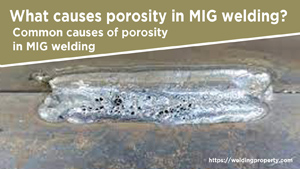
Why am I getting porosity (holes) in my flux core welds?
Most common causes: dirty metal, too short stickout (under ½”), or welding over old slag. Clean the joint thoroughly, use ¾” stickout, and always chip slag between passes.
How do I weld 20-gauge sheet without burning through?
Use .030″ wire, drop to the lowest voltage setting (14–16 V), set wire speed low (100–150 ipm), and tack only—don’t try to run continuous beads. Or switch to gas MIG for bodywork.
What’s the best beginner flux core wire?
Lincoln NR-211-MP or Hobart Fabshield 21B in .035″. Both run smoothly on 110V machines, handle rusty steel, and are forgiving on settings. Avoid the absolute cheapest no-name brands—they feed poorly and produce excessive slag.
Are flux core welds as strong as gas MIG?
Single-pass E71T-GS welds are slightly lower in tensile strength than ER70S-6 gas MIG, but for most non-code repair work they’re more than adequate. For structural or multi-pass welds, use an E71T-11 wire and you’ll match or exceed gas MIG strength.