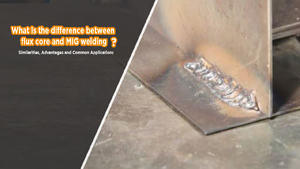
If you’ve ever noticed strange, bubbly lines or grooves on your welds, you’re likely dealing with worm tracks in flux core welding. These imperfections don’t just make your project look messy—they can also weaken the weld if left untreated. Much like tackling stubborn stains during bathroom cleaning or using the right disinfecting method to restore shine, fixing worm tracks comes down to using the proper settings, techniques, and cleanup steps.
Many DIY welders and hobbyists ask: Why do worm tracks happen, and how can I prevent them? The good news is that with the right adjustments—like controlling heat, improving wire feed, and cleaning the surface—you can achieve stronger, smoother, and more professional-looking welds. In this guide, I’ll walk you through practical solutions to remove these flaws and keep your welding projects safe, durable, and visually appealing.

Image by theshedjournal
What Are Worm Tracks in Flux Core Welding?
Worm tracks—sometimes called wormholes or tracking—are those elongated, tunnel-like marks that snake along the top of your flux core weld bead. They’re not just cosmetic scratches; they’re a sign that gases from the flux inside the wire got trapped as the weld solidified.
In flux core arc welding (FCAW), the wire’s got this powdered flux core that melts and produces shielding gases to protect your puddle from the air. When everything’s right, those gases bubble out harmlessly. But if they don’t, they leave these wormy trails under the slag layer.
Think of it like cooking a pot of rice—if you trap steam under the lid without venting, it pushes up weird ridges. Same deal here: The flux generates hydrogen, carbon dioxide, and other gases to deoxidize and shield, but if the weld cools too fast or the gases can’t escape, bam—tracks. I’ve seen them on everything from 1/4-inch plate fillets to vertical-up passes on I-beams. They’re most common in the flat position because gravity helps the slag settle quick, but they pop up anywhere if your setup’s off.
Why does this hit home for us welders? In a shop pushing production, worm tracks mean rework, and on a job site, they could fail a visual inspection under D1.1 code. For you hobbyists, they just make your project look sloppy and might compromise that custom rack you’re building for your ATV. The good news? Spotting them early is easy—look for those dark, irregular lines after slag removal. And fixing ’em? That’s what we’re here for.
Why Do Worm Tracks Happen in My Flux Core Welds?
Man, if I had a dollar for every time a new guy asked me this over a couple of cold ones after shift, I’d have a new Miller. Worm tracks boil down to gases getting bottled up in the molten pool, but the culprits are sneaky. Let’s unpack the big ones I’ve chased down over 15 years of running flux core on everything from shipyards to small fab shops.
First off, moisture is the silent killer. That flux core in your E71T-1 wire? It’s hygroscopic—sucks up humidity like a sponge if you leave the spool open in the garage during a rainy week. When it hits the arc, that water vaporizes into hydrogen gas that bubbles wildly but can’t escape fast enough. I remember one summer in Florida; we had a batch of Hobart wire sitting out, and every bead looked like a bad perm. Baked it at 250°F for an hour, problem solved.
Voltage creep is another beast. Crank it too high—say, over 28 volts on a 0.045-inch wire—and your arc stretches long, letting the puddle freeze before gases vent. It’s like revving your truck in neutral; all power, no control. Paired with wire feed speed, if you’re pushing 400 IPM at 26 volts on thick plate, those gases build pressure and track out.
Short stickout kills me every time I see a trainee do it. Flux core needs that 3/4- to 1-inch electrical stickout to preheat the flux—think of it as giving the wire time to “activate” before it hits the puddle. Too short, like 1/2 inch, and the flux doesn’t break down right, trapping CO2 from the core. I once spent a whole afternoon on a bridge repair crew grinding out tracks because the kid was holding the gun like a paintbrush.
Don’t sleep on base metal prep either. Mill scale, rust, or oil on your A36 plate boils off into extra gas. And technique? Dragging too fast or pushing the gun (instead of dragging at 15-20 degrees) doesn’t give the slag time to let gases rise. Windy days outdoors with dual-shield? Forget it—disrupts your 75/25 Ar/CO2 mix, aspirates the puddle, and boom, tracks.
In short, it’s usually a combo: Wet wire + high volts + rushed travel. But once you dial it in, your beads turn glassy smooth.
Common Mistakes That Cause Worm Tracks in Flux Core Welding
Look, we’ve all been the guy cursing at a grind wheel because of these tracks. As someone who’s mentored apprentices and fixed my own goofs, I can tell you most boil down to habits we pick up from MIG solid wire and forget to adjust for flux core’s quirks. Here’s the dirt on the biggest slip-ups, straight from the shop floor.
One classic: Ignoring wire storage. You unspool half a roll for a quick trailer hitch repair, toss the plastic bag, and leave it on the feeder overnight. Next morning? Tracks galore from absorbed moisture. Pro tip: Always reseal with desiccant packs—I’ve got a cheap rod oven in my garage that saved my bacon on humid Midwest jobs.
Over-volting for “better penetration” is another trap. Newbies see a shallow puddle and jack the voltage to 30, thinking more heat equals deeper fusion. Nope— it elongates the arc, volatilizes the flux too aggressively, and those gases etch tracks like acid. Stick to manufacturer charts; for 0.035 E71T-GS self-shielded on 1/4-inch mild steel, 22-24 volts at 150-200 IPM is your sweet spot.
Gun angle and travel speed—oh boy. Flux core loves a drag technique, pulling the gun at 15-45 degrees to let slag flow back and gases escape. But if you’re weaving like it’s TIG or hauling butt at 20 IPM, the pool cools unevenly, trapping bubbles. I had a fab partner who welded like he was late for lunch; slowed him to 8-12 IPM, tracks vanished.
Wrong shielding gas flow or mix sneaks up on outdoor crews. Running 35 CFH on 75/25? Too much turbulence sucks in air, oxidizing the flux and creating wormy porosity. Dial to 25-30 CFH, and use CO2-heavy mixes for windy days—they hug the puddle better.
Lastly, skimping on joint prep. That rusty beam from the scrap yard? Grind it to bright metal, or the contaminants vaporize into gas pockets. Common across DIYers and pros—I’ve VT’d welds rejected for this under API 1104.
Spot these early, and you’re halfway to clean beads. It’s less about fancy gear and more about respecting the process.
Step-by-Step Guide to Fixing Worm Tracks in Flux Core Welding
Alright, grab your chipping hammer and let’s roll up our sleeves—this is where we turn frustration into fusion. I’ve walked this through on job sites from Texas oil fields to Michigan auto shops, and it works every time. We’ll assume you’re running gas-shielded dual-shield on mild steel, but tweaks apply to self-shielded too.
Step 1: Inspect and Remove the Bad Weld
First things first—don’t patch over it. Fire up your angle grinder with a 4.5-inch flap disc and carve out the tracked section, at least 1 inch beyond the defects on each side. Go down to base metal for integrity. If it’s a multi-pass joint, check for hidden porosity with a dye penetrant kit—cheap insurance per ASME Section V.
Anecdote time: On a pressure vessel repair, I skipped this once; cracked under hydro test. Lesson learned—always grind clean.
Step 2: Dial in Your Machine Settings
Reset like you’re prepping for inspection. For a Miller Multimatic 215 on 0.045 E71T-1 wire:
- Voltage: Start at 24-26V. Too high causes tracks; drop 0.5V increments if needed.
- Wire feed: 250-350 IPM for 3/16-1/2 inch plate. Match to amps around 200-280A.
- Gas flow: 25-30 CFH of 75/25 Ar/CO2. Self-shielded? No gas, but ensure DCEP polarity.
Polarity check: Gun negative, work positive—flux core hates it backward. Test on scrap: Lay a 6-inch bead; if it spits or tracks, tweak.
Step 3: Prep Your Joint and Wire
Grind your base metal to SA 2.5 cleanliness—no rust, scale, or oil. Preheat thick sections (over 1 inch) to 150°F to drive off moisture. For wire: If suspect, bake at 250°F for 1 hour in a rod oven. Unspool fresh, keep that 3/4-1 inch stickout—measure from contact tip to work.
Step 4: Weld with Proper Technique
Mask up, gloves on—FCAW smoke’s no joke, hit that exhaust fan. Drag the gun at 15-20 degrees, travel 8-12 IPM. Keep the arc short, almost “digging” the puddle. For fillets, aim for a 45-degree work angle. Pause every 2 inches to let slag ripple back—helps gases vent.
Run a test bead on matching scrap. Chip and inspect: Smooth, no tracks? You’re golden. Tracks persist? Shorten stickout 1/8 inch or drop voltage.
Step 5: Post-Weld Cleanup and Verify
Chip slag immediately—it’s brittle and hides issues. Grind flush if needed, then VT or UT for codes. If it’s structural, document your WPS tweaks.
Follow this, and your next pass is track-free. Takes 10 minutes extra upfront, saves hours later.
Best Machine Settings to Prevent Worm Tracks in Flux Core Welding
Settings are your weld’s GPS—get ’em wrong, and you’re lost in track town. Over the years, I’ve dialed in hundreds of charts for Lincoln Power MIGs and Hobart Champions, always starting with the wire maker’s data sheet. Here’s a practical table for common setups on A36 mild steel, flat position. Adjust ±1V/50 IPM for position or thickness.
| Wire Diameter | Type | Voltage (V) | Wire Feed Speed (IPM) | Amps (A) | Stickout (in) | Gas Flow (CFH) | Travel Speed (IPM) |
|---|---|---|---|---|---|---|---|
| 0.030″ | E71T-GS (Self-Shielded) | 16-19 | 100-150 | 70-120 | 3/4-1 | N/A | 8-12 |
| 0.035″ | E71T-1 (Dual-Shield) | 18-22 | 150-250 | 110-200 | 3/4-1 | 25-30 (75/25) | 10-14 |
| 0.045″ | E71T-1 (Dual-Shield) | 22-26 | 200-350 | 180-300 | 1 | 25-30 (75/25) | 8-12 |
Pros of these: Balanced heat input prevents overheating (which etches tracks) while ensuring penetration. Cons: Too conservative on thin stuff might lack fusion—test always.
For vertical up, drop voltage 1-2V and slow travel to fight gravity. Self-shielded shines outdoors—no wind worries—but dual-shield gives cleaner beads indoors. My go-to for fab shop work: 0.045 E71T-1 at 24V/300 IPM, 1-inch stickout. Consistent as clockwork.
Essential Prep Work Before Flux Core Welding to Avoid Worm Tracks
Prep isn’t glamorous, but it’s 80% of a good weld. Skip it, and no setting tweak saves you. Start with your joint: Bevel thick edges to 30-37 degrees for root access, feather the toes to avoid undercut. Grind or wire-brush to bare metal—rust boils into hydrogen traps.
Wire-wise: Inspect for dents or rust on the spool. Store vertical in a dry cabinet; if humid, preheat the whole roll. Clean your gun: Swap liners for knurled V-grooves (U for softer wire), trim burr-free. Nozzle clogged? That’s turbulence city, inviting tracks.
Safety first: FCAW flux means manganese fumes—use a 10 CFM respirator, not just a dust mask. Ground your work clean; poor contact spikes voltage. Preheat if over 3/4 inch thick—100-200°F melts out moisture without warping.
I’ve prepped rusted trailer frames in the rain (don’t), but inside a shop? Dry, clean, preheated—tracks stay away. It’s like sharpening your knife before filleting; sets you up for success.
Choosing the Right Flux Core Wire to Minimize Worm Tracks
Wire choice is personal, like boots—fit matters. For worm-free runs, go E71T-1 dual-shield over basic rutile; the flux is formulated for better gas control. Hobart Fabshield 21B self-shielded is my outdoor pick—low hydrogen, less moisture pickup.
Compare:
- E71T-GS (Self): Pros—portable, wind-resistant. Cons—more smoke, potential tracks from uneven flux.
- E71T-1 (Dual): Pros—smoother arc, fewer tracks with gas. Cons—needs cylinder.
Stick to 0.035-0.045 for most DIY/pro work; finer diameters track easier on thin stuff. Brands? Lincoln Innershield or ESAB Coreweld—consistent fill, less variance.
Match to base: AWS A5.20 spec for mild steel. Cost efficiency? A 33-lb spool runs $80-120, pays off in less grinding.
Technique Tips for Clean Flux Core Welds Without Worm Tracks
Hand skills separate good from great. Drag, don’t push—15-20 degree pull lets slag island and gases pop. Short arc: Nozzle barely kisses the puddle. Steady travel: 10 IPM feels slow but builds heat right.
For multi-pass: Clean between layers—chip and wire brush, or slag traps gas. Vertical? Whip slight, 1/8-inch oscillations to float slag.
Common fix: If tracks start mid-bead, pause, let cool 5 seconds—resets the pool. My trick on long seams: Tack ends, weld middle-out to control heat.
Practice on 1/8-inch flat bar; 20 beads, and you’ll feel the rhythm.
Safety Considerations When Fixing Worm Tracks in Flux Core Welding
Welding’s tough enough without adding risks. Grinding out tracks? Eye pro, gloves—sparks fly wild. FCAW’s flux smoke carries hexavalent chromium; ventilate to 10 air changes/hour, or work outdoors upwind.
Voltage tweaks? Lockout/tagout the machine first. And hydrogen from moisture? Cracks brittle steel—test nondestructively if load-bearing.
OSHA 1910.252: No welding near flammables, and ground everything. I’ve seen a flashback from bad prep; don’t be that story.
When to Call in a Pro for Stubborn Worm Tracks
DIY’s great, but if tracks persist after tweaks—porosity deep, or code welds failing VT—grab a CWI. Could be machine fault (erratic feeder) or bad batch wire. Better safe than scrapped.
Conclusion: Tackle Worm Tracks and Weld with Confidence
We’ve covered a lot—from spotting those sneaky tracks to dialing settings and prepping like a pro. Key takeaways? Moisture and voltage are your enemies; proper stickout, clean metal, and drag technique your allies. With this in your kit, you’re set to lay down strong, clean flux core beads that hold up to real-world abuse—whether it’s a hobby rack or a structural beam.
Now you’re more prepared because you know the why behind the fix: It’s about letting those flux gases do their job without drama, ensuring fusion that lasts. So fire up that machine, run a test bead, and watch the tracks fade. You’re not just welding; you’re building right.
FAQ
What Causes Worm Tracks in Flux Core Welding?
Worm tracks stem from trapped gases in the weld pool, usually from moisture in the wire, excessive voltage, or short stickout. They show as surface tunnels after slag removal, often hiding porosity that weakens the joint. Start by baking your wire and checking volts to knock ’em out.
How Do I Prevent Worm Tracks When Welding Outdoors with Flux Core?
Outdoors, wind disrupts shielding—use self-shielded wire like E71T-GS and block breezes with screens. Keep stickout at 1 inch for preheat, and run CO2-heavy gas at 25 CFH if dual-shield. I’ve fabbed trailers in gusts; these keep your beads clean.
Can Worm Tracks Be Fixed Without Grinding the Whole Weld?
Sometimes— if shallow, peen lightly with a carbide burr to open paths, then reweld. But for integrity, grind out 1 inch beyond. Quick fix for cosmetics, but codes demand full removal to avoid cracks.
What’s the Best Polarity for Flux Core Welding to Avoid Worm Tracks?
Always DCEP—gun negative, work positive. Reverse it, and the arc spits, flux doesn’t shield right, inviting tracks and porosity. Flip your leads; it’s a five-minute check that pays big.
Are Worm Tracks Dangerous in Structural Welding?
Yes, if they signal deep porosity—they reduce strength, promote fatigue cracks under load. Per AWS D1.1, grind and repair; ignore ’em, and you risk failure. Test with UT for peace of mind on beams or frames.