I was midway through a weekend project, staring at a thick steel plate that needed a clean cut, when it hit me — my plasma cutter was out of commission. I glanced at my TIG setup and thought, could this do the trick? That’s how I first stumbled on the question: Can a TIG welder be used as a plasma cutter? On paper, they both use electricity and gas, so it sounds tempting — but in practice, things can go sideways fast.
I’ve learned through plenty of trial and error that not every shortcut in welding pays off. Sometimes it costs you a torch, a tungsten, or worse — your safety.
But if you’ve ever wondered whether your TIG could double as a cutter in a pinch, stick around. I’ll break down what actually happens when you try it, what risks to avoid, and the smarter way to get clean cuts without wrecking your setup.
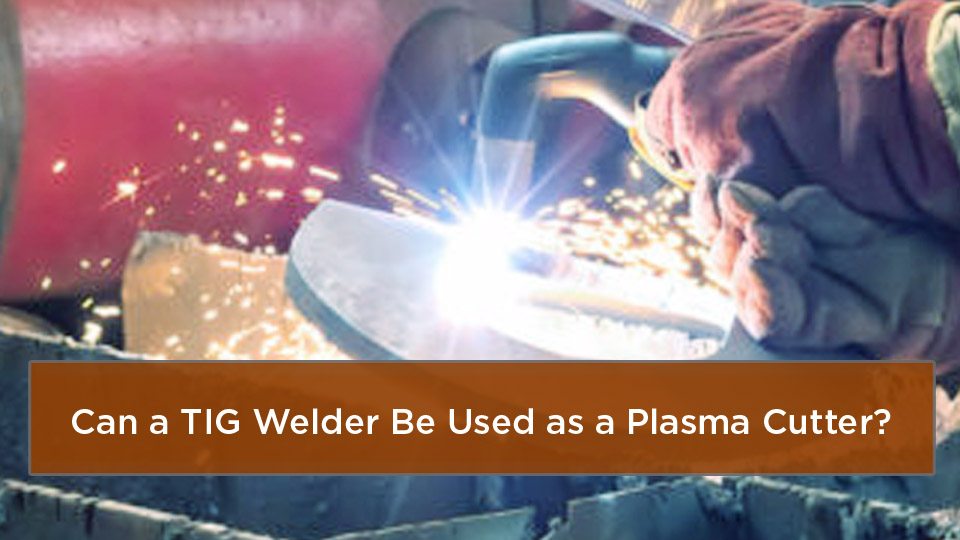
Image by americantorchtip
How Does TIG Welding Differ from Plasma Cutting?
You’re prepping a quarter-inch aluminum panel for a trailer rebuild. With TIG, you’re laying down precise beads, shielding the puddle with argon to keep things clean and strong. It’s all about control—fine-tuning your amperage, foot pedal in hand, building up layers without blowing through the metal.
Plasma cutting? That’s the opposite: a superheated jet of ionized gas slicing through like a hot knife through butter, leaving a kerf that’s quick to clean but demands high voltage to kick off the arc.
At its core, TIG (Tungsten Inert Gas) uses a non-consumable tungsten electrode to create an arc that melts your base metal, often with a filler rod added for strength. The inert gas—usually argon—protects the weld from atmospheric crud, ensuring integrity per AWS codes like D1.1 for structural steel.
Plasma, on the other hand, forces compressed air or another gas through a narrow nozzle, electrifies it into plasma (that’s the fourth state of matter, folks—hotter than the sun’s surface), and blasts it at 20,000 degrees Fahrenheit to vaporize metal. No filler needed; it’s pure severance.
Why the difference bites you in the shop? TIG machines output around 50-80 volts open circuit (OCV), perfect for stable welding arcs but too low to reliably ignite that plasma stream without mods. I’ve fried a couple of older Millers trying to force it—lesson learned: voltage mismatch leads to erratic starts or no start at all.
For hobbyists tweaking hot rods or students practicing on scrap, understanding this gap means fewer headaches and better material compatibility, whether you’re cutting mild steel, stainless, or even copper alloys.
Can You Convert Your TIG Welder into a Plasma Cutter?
I’ve spent rainy weekends in my driveway pondering this exact conversion, especially after lugging a Hypertherm and a Lincoln TIG to a remote job site. The dream? One box that welds thin-gauge exhaust and slices donor parts in the same breath.
Reality check: Straight conversions on standard TIGs aren’t plug-and-play. Most inverter-based TIGs, like my trusty Everlast PowerTIG 200DV, aren’t built for the high OCV plasma demands—think 200-300 volts to bridge the electrode-to-work gap.
That said, multi-process beasts from brands like Miller or Hobart blur the lines. Their Spectrum series or combo units share a power source but add plasma-specific circuitry: a pilot arc starter, solenoid for air flow, and beefed-up transformers. I picked up a used Hobart AirForce 27i years back for light fab work, and it doubled as a stick/TIG/plasma rig without drama.
Cost? Around $800 new, versus $1,200 for separates. But if you’re eyeing a DIY hack on your existing AC/DC TIG, here’s the rub: You’ll need an external air compressor (at least 4 CFM at 90 PSI), a compatible plasma consumable kit, and possibly a voltage booster.
One time, I jury-rigged a solenoid valve from an old HVAC unit to switch air in—worked for 1/8-inch steel, but the arc fluttered like a bad tattoo gun.
Common mistake? Forgetting gas purity. Argon for TIG is dry and clean; shop air for plasma carries moisture and oil that gums up your torch. Fix: Install an inline dryer and filter—$50 at Northern Tool—and purge lines religiously.
For pros in high-volume shops, this conversion shines for cost efficiency on low-duty cycles, but students or DIYers? It builds troubleshooting skills without breaking the bank.
| Aspect | TIG Welding | Plasma Cutting |
|---|---|---|
| Primary Use | Joining metals with filler | Severing metal sheets/plates |
| Voltage (OCV) | 50-80V | 200-300V |
| Gas | Argon/Helium (inert) | Compressed air/nitrogen |
| Electrode | Tungsten (non-consumable) | Hafnium-embedded (consumable) |
| Heat Source | Arc + filler | Ionized plasma jet |
| Best For | Precision on thin alloys | Quick cuts up to 1″ thick |
| Shop Cost | $500-2,000 (basic unit) | $600-1,500 (entry-level) |
This table’s saved me hours debating gear with apprentices—glance and go.
What Happens When You Try Cutting with a TIG Torch?
Ever been midway through a bracket fab and realized your plasma’s offline? I have, and that’s when TIG torch cutting becomes your emergency MVP. It’s not true plasma—more like arc gouging on steroids—but it severs thin stock (under 1/16-inch) decently. The trick? Crank your amps high, max out gas flow, and drag that tungsten like you’re etching a signature.
How it works: Strike an arc with your TIG setup, no cup—just a bare electrode exposed. The intense heat melts the metal, and your gas shield blows the slag away.
On aluminum, it leaves a sooty edge needing cleanup; stainless? Expect dross that grinds off easy. I once cut a 12-gauge mild steel template for a toolbox this way—took 10 minutes longer than plasma but zero extra tools.
When to use it: Scrap cleanup, quick notches in tubing, or teaching newbies arc control without a $1,000 cutter. Why? Builds hand-eye coordination and saves on consumables.
Practical know-how: Preheat thicker bits to avoid warping, and always clamp a straightedge guide—freehand wobbles are a rookie trap.
Early in my fab days, I botched a chopper frame cut by skimping on amps—stuck arc, contaminated tungsten. Fix? Sharpen to a blunt point (not needle-sharp), recess it 1/8-inch from the collet, and hit 200 amps cold. Now, it’s my go-to for emergency bevels on joint prep, ensuring filler flows smooth per ASME Section IX.
Step-by-Step Guide to Using Your TIG Machine for Light Cutting
Let’s break it down, step by step, like I’m spotting you on your first pass. This setup’s pulled me out of jams on job sites from Seattle to San Diego, sticking to OSHA safety basics—no shortcuts.
Prep Your Workspace: Clear flammables, ground your workpiece solidly (clamp to table), and don your full kit—leathers, hood, gloves. Eyeball thickness: This works best under 1/8-inch; thicker needs plasma or oxy.
Machine Setup: Dial in 200-250 amps on your TIG (foot control for burst starts). Set post-flow to 10 seconds, pre-flow off.
Tungsten: 1/8-inch 2% lanthanated, ground blunt. No gas lens—keep it simple with a #5 cup removed for exposure.
Gas and Air Tweaks: Pure argon at 30-40 CFM (max your regulator). If modding for air plasma, hook a 5-gallon compressor (60 PSI min) via quick-connect—test for leaks with soapy water.
Torch Assembly: Strip the cup, extend tungsten 1/4-inch beyond nozzle. Work clamp on clean metal; torch lead short as possible to minimize resistance.
Strike and Cut: High-frequency start if equipped—avoids contact contamination. Drag at 45 degrees, 1-2 inches per second. Let the arc do the work; feather amps down for pierce starts on edges.
Cleanup and Inspect: Dross? Wire brush hot, then grind. Check for undercut—file smooth for weld prep. Log your settings; tweak next time for cleaner kerfs.
Pro tip from the trenches: If arc wanders, your ground’s loose—hunt it like a bad weld bead. This method’s cut my downtime by half on hobby builds, but remember, it’s a hack, not a hero.
Pros and Cons of Multi-Process TIG and Plasma Machines
In my shop, space is premium—racks of angle iron, carts of flux cores, you name it. That’s why combo units tempt me. Take the YesWelder CT-2050: TIG, stick, and plasma in one 40-pound package, with onboard compressor for portability.
Pros? Versatility for fabrication hobbyists—one machine for welding bike frames and trimming panels. Duty cycle holds at 60% for 200-amp cuts, and US plugs mean no voltage headaches.
But cons creep in. Switching modes? A 2-minute purge to clear argon residue, or risk porosity in your next bead. Voltage spikes from plasma can stress TIG circuits—I saw a buddy’s Everlast glitch after heavy use, costing $200 in repairs.
For professionals chasing AWS certification, dedicated rigs ensure consistency; combos shine for students or weekend warriors juggling budgets.
| Feature | Dedicated TIG | Dedicated Plasma | Multi-Process Combo |
|---|---|---|---|
| Portability | High (lightweight) | Medium (needs air) | High (all-in-one) |
| Cut Quality | N/A | Excellent (clean edges) | Good (light duty) |
| Weld Precision | Top-tier | N/A | Solid (with mode switch) |
| Upfront Cost | $800 | $700 | $1,000 |
| Maintenance | Low | Consumables heavy | Moderate (cross-contam) |
| Best User | Pros/Students | Fab Shops | DIY Hobbyists |
Weigh this against your workflow—I’ve gone combo for van life repairs, but stuck dedicated for code-compliant structural work.
Safety First: Risks and Precautions When Mixing TIG and Plasma
High voltage in plasma means shock potential amps up; one miswired mod zapped me across the shop floor. Key rule: Lockout/tagout before tweaks, and use GFCI outlets per NEC 625 for inverters.
Gas hazards? Air plasma introduces oxidizers that embrittle TIG welds if lines cross. Mistake I made once: Forgot to isolate—next aluminum run pitted like Swiss cheese.
Fix: Dedicated valves, color-coded hoses (blue for argon, black for air). Ventilation’s non-negotiable; plasma fumes carry hex chrome on stainless—hook a shop vac inline.
For joint prep, always bevel edges post-cut to 30 degrees for full pen beads. And eye protection: Plasma’s UV is brutal—ANSI Z87.1 hoods or bust. Instructing trainees, I drill this: Treat every arc like it’ll bite back. It keeps you welding, not healing.
Best Machine Settings for TIG-Style Cutting on Different Metals
Settings are king—wrong ones, and you’re grinding forever. For mild steel (1018 stock), 220 amps, 35 CFM argon, drag speed 18 IPM. Yields a 1/32-inch kerf, minimal HAZ for subsequent fillets.
Aluminum? Bump to 250 amps—oxide layer fights back. I use helium-argon mix (75/25) for deeper pen, but pure argon’s fine for cuts. Stainless 304: 200 amps max, or chromium flash-backs; nitrogen swirl helps dross pop off.
Tungsten choice: Lanthanated for longevity, but thoriated if you’re old-school (just grind outside). Prep work: Degrease with acetone, clamp flat—warped stock leads to uneven arcs. One shop hack: Preheat to 200°F on thicker plates for crack-free results, aligning with API 1104 for pipelines.
When Should You Invest in a Dedicated Plasma Cutter Instead?
Look, I’ve romanticized the all-in-one dream, but after torching through 1/2-inch plate on a bridge repair, I caved for a Hypertherm Powermax 45. Why? Speed—plasma chews 3/8-inch at 20 IPM versus TIG’s crawl. Cleanliness too: No tungsten embeds, straight to welding without hours of filing.
For industry workers under tight schedules or codes like ASME B31.3, dedicated wins for reliability. Hobbyists fabricating gates? If cuts exceed 10 hours weekly, upgrade—your back will thank you. Cost efficiency flips at scale: Plasma’s $0.10 per linear foot versus TIG’s time sink.
In my experience, start with TIG hacks for learning curves, then scale up. It’s like upgrading from a beater truck to a dually—both haul, but one hauls smarter.
Real-World Applications: From Garage Builds to Shop Repairs
Flashback to last summer: Restoring a ’72 Chevy truck bed. Needed to notch crossmembers—my TIG gouged clean bevels for plug welds, no plasma on hand. Saved a rental fee, and the joints held per DOT specs.
Or take a student’s first fab class: Using TIG for sheet metal profiles taught arc stability before plasma intro. Pros in oilfield repair? Air plasma on pipe ends ensures O-ring seals without burrs.
These tricks align with US practices—think Milwaukee tools for compressors, Lincoln fillers for compatibility. Whether hobby exhaust bends or pro tank heads, blending processes boosts efficiency without skimping safety.
Troubleshooting Common TIG Cutting Mistakes
Ever had a cut that veers like a drunk driver? Usually ground lift—shorten leads, clean clamps. Porosity in follow-up welds? Gas contamination; swap bottles post-cut.
Overheating torch? Duty cycle ignored—pulse if your machine allows, or cool between passes. I once melted a collet on 300-amp aluminum; now, I monitor with a $10 IR thermometer. Fixes like these turn frustration into finesse.
Choosing the Right Filler and Joint Prep for Post-Cut Welds
After slicing, prep’s everything. For carbon steel cuts, V-groove at 60 degrees, ER70S-6 rod at 1/8-inch dia. Stainless? ER308L, back-purge with argon to dodge sensitization.
Compatibility: Match base to filler—mismatched alloys crack under load. Tip: Tack with low heat, build with stringers. In my shop, this routine’s prevented leaks on pressure vessels, echoing MIL-STD-1595.
Conclusion
We’ve covered a lot of ground—from hacky TIG cuts to combo machine realities. Key takeaways? A TIG welder can moonlight as a plasma cutter for light duties, saving space and sanity in your USA shop, but lean on dedicated gear for heavy lifts to protect weld integrity and your hide.
You’re now armed with settings, steps, and smarts to tackle that next project confidently—whether it’s a DIY trailer hitch or pro pipeline patch.
Grab your torch, test on scrap, and own the shop. Always log your runs in a beat-up notebook—patterns emerge, and it’ll make you the go-to guy on the crew.
FAQs
Can I Use Argon Gas for Plasma Cutting with My TIG Setup?
Sure, for thin stuff it works as a shield, but air’s better for true plasma—cheaper and cuts deeper. Just purge lines to avoid mixing contaminants.
What’s the Thickest Metal I Can Cut with a TIG Welder Hack?
Up to 1/8-inch reliably on mild steel; beyond that, expect slow, drossy results. For thicker, rent a plasma or grind it out.
Are Multi-Process TIG/Plasma Machines Worth It for Beginners?
Absolutely for hobbyists—versatile and forgiving. But if budget’s tight, start with a basic TIG and add plasma later to build skills step-by-step.
How Do I Avoid Damaging My TIG Machine During Cutting Attempts?
Keep OCV under 100V, use external air controls, and never exceed 60% duty. Test mods on junk first—better safe than shopping for a new inverter.
Does TIG Cutting Work on Aluminum Like It Does on Steel?
It does, but crank amps higher and use a helium mix for penetration. Edges oxidize fast, so grind immediately for clean welds.