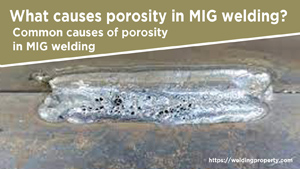
I was welding a trailer bracket one evening when I noticed something was off. The bead looked decent, but it felt like I was just melting the surface instead of really tying the metals together. Sure enough, a quick bend test proved it—my penetration was weak, and that bracket wouldn’t survive a hard bump on the road.
That moment taught me that getting good penetration in MIG welding isn’t optional; it’s the difference between a weld you trust and a weld that fails when you need it most.
Over time, through trial, error, and plenty of tweaking knobs I didn’t fully understand at first, I learned how to make the arc dig deep without blowing holes or burning myself into a corner. When you dial it in right, you can feel the weld biting in—the puddle flows better, the sound changes, and the joint just locks.
If you’ve been struggling with shallow welds, inconsistent fusion, or beads that sit on top like frosting, don’t worry—I’ve been there. Let me show you the adjustments, habits, and small technique changes that finally made my penetration consistent and rock solid.
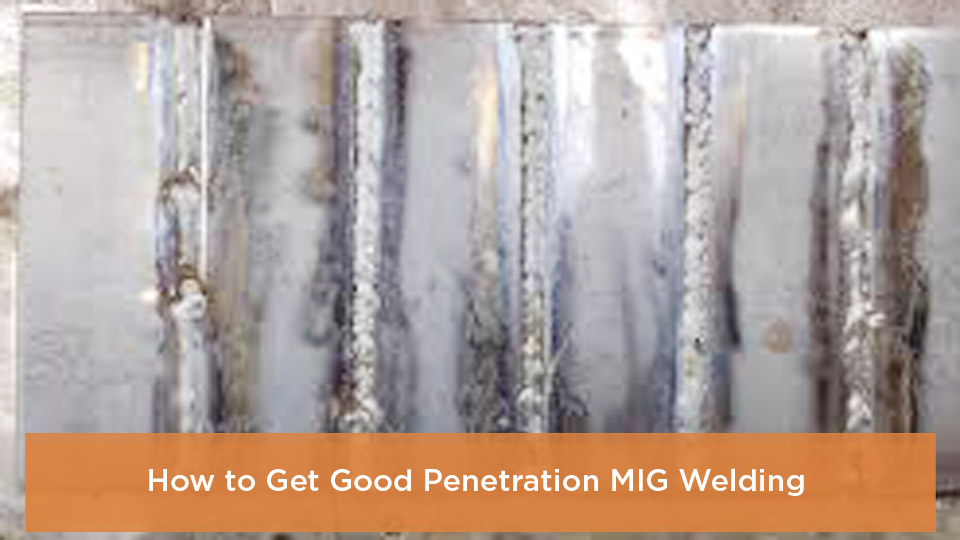
Image by reddit
Understanding MIG Penetration Before You Even Strike an Arc
Most people think penetration comes from turning the knob to 11. That’s how you make Swiss cheese, not strong welds.
Real penetration comes from heat input, arc length, travel speed, and shielding gas working together. The wire is just the delivery system. A 0.035 ER70S-6 wire can give you beautiful root fusion on ½-inch plate or sit on top of 10-gauge like a rope—same wire, same bottle of gas, totally different settings and technique.
I keep a simple rule burned into my brain: Heat melts, voltage pushes, amperage digs, and travel speed controls the whole party.
Material Thickness Changes Everything
Welding 1/8-inch exhaust tubing is a completely different animal than 1-inch structural beam. Here’s what actually works in the real world:
- 18–14 gauge (0.048–0.075 in): Short-circuit transfer, lower voltage (16–19 V), fast travel. You’re trying to stay just hot enough to fuse without blowing through.
- 10 gauge–¼ inch (0.135–0.250 in): This is the sweet spot for short-circuit or globular. 19–22 V, 140–220 amps depending on wire diameter.
- ⅜ inch and thicker: Switch to spray transfer if your machine can do it (23–28+ V). That’s when you get the deep finger-type penetration everybody posts pictures of.
I still see guys trying to weld ½-inch plate with 0.030 wire on short-circuit because “that’s what came with the machine.” You’ll fight cold lap all day.
Wire Selection That Actually Affects Penetration
Stop buying whatever’s on sale at the big-box store if you want consistent results.
- 0.030 wire: Great for thin stuff and short-circuit. Less penetration, easier to control burn-through.
- 0.035 wire: My daily driver for 90% of structural and repair work. Perfect balance of deposition and dig.
- 0.045 wire: When I’m welding heavy equipment or need to fill big gaps fast. Requires more amps and usually spray transfer.
Filler metal matters too. ER70S-6 is deoxidized for dirty or rusty metal and penetrates better than ER70S-3 on mill scale. I keep both in the shop, but 90% of the time the -6 is on the spool.
Voltage and Wire Speed: The Real Penetration Knobs
Here’s the part nobody explains right. Voltage controls arc length and puddle fluidity. Higher voltage = longer arc = wider, flatter bead with slightly less penetration. Lower voltage = tighter arc = narrower, more convex bead with deeper penetration (until you go too low and start stubbing).
Wire speed (amperage) is what actually melts metal. More wire speed = more amps = more heat = deeper penetration. The trick is finding the combination where the arc sounds like steady bacon frying, not angry bees or a machine gun.
Quick cheat sheet I keep taped inside every welder door:
| Thickness | Wire | Voltage | Wire Speed (ipm) | Approx Amps | Transfer Mode |
|---|---|---|---|---|---|
| 1/8″ | .035 | 18–20 | 180–250 | 120–160 | Short-circuit |
| 1/4″ | .035 | 21–23 | 300–400 | 180–220 | Globular/Spray |
| 3/8″ | .045 | 25–27 | 280–350 | 240–300 | Spray |
| 1/2″ | .045 | 27–29 | 350–450 | 300–380 | Spray |
Your machine will be different—use this as a starting point and fine-tune by ear and bead profile.
Travel Angle and Technique That Force Deep Fusion
Push or drag? Everyone has an opinion. I drag (backhand) 5–15 degrees on anything I need maximum penetration for. The arc forces itself down into the joint like a pressure washer. Push (forehand) 5–15 degrees gives wider, flatter beads with slightly less penetration—perfect for sheet metal or when cosmetics matter more than strength.
Travel speed is the silent killer. Too slow and you burn through. Too fast and you’re just painting. I teach new guys to travel just fast enough that the puddle stays about one wire diameter behind the arc. You’ll hear the pitch change when you’re in the zone.
Joint Preparation – Where Most Penetration Problems Start
Bevel your edges on anything over 3/16 inch. A 30–37.5-degree bevel with a 1/16–3/32 landing and 1/16 gap is the gold standard for full-penetration single-V grooves.
Clean metal is non-negotiable. Mill scale laughs at your arc. I hit every joint with a 40-grit flap disc until it’s shiny, then wipe with acetone. Five extra minutes of prep saves an hour of grinding cold lap later.
Fit-up gaps kill penetration too. If your root opening is bigger than 1/16 inch on butt joints, bridge tack or use a root pass with 0.030 wire before you run the hot passes.
Shielding Gas Choices That Make or Break Penetration
75/25 (75% argon, 25% CO2) is the workhorse for most structural work in the US. It gives good penetration with a stable arc. 100% CO2 digs the deepest but spatters like crazy and the bead looks rough. I only use it outdoors on heavy equipment when I need every bit of penetration and don’t care about grinding.
Tri-mix (helium/argon/CO2) is beautiful for stainless and thick aluminum, but expensive and overkill for mild steel. Stick with 75/25 unless you have a specific reason not to.
Common Penetration Mistakes I Still See Every Week
Cold lap from traveling too fast – Slow down 10–20% and watch the toes wet in.
Burn-through from too much heat – Drop voltage 1 volt or increase travel speed.
Porosity from poor gas coverage – Check for drafts, keep your nozzle clean, and don’t let the bottle run low.
Lack of fusion in the root – Open the root gap slightly or switch to a smaller wire for the root pass.
Undercut from too much voltage – Lower voltage 0.5–1 volt at a time until the edges fill smooth.
Settings for Specific Real-World Jobs
Repairing a cracked trailer frame (3/8–1/2 inch plate)
- 0.045 ER70S-6
- 26–28 volts
- 350–400 ipm wire speed
- 75/25 gas at 35 CFH
- Drag angle 10 degrees
- Two passes minimum, hot and fast
Welding 11-gauge square tubing for a roll cage
- 0.035 ER70S-6
- 20–21 volts
- 320 ipm
- Short-circuit transfer
- Slight push angle for better wash-in at toes
Patch panels on a truck bed (16–18 gauge)
- 0.030 wire
- 17–18 volts
- 200–220 ipm
- Push angle, fast travel, stitch weld to control heat
Practice Drills That Turned My Helpers into Real Welders
Pad drill: Lay 6-inch beads on ¼-inch plate. Start at my recommended settings and adjust voltage up/down 1 volt until you can clearly see the difference in penetration when you break the plate in the vise.
T-joint drill: Weld ⅜-inch plate standing on edge to flat plate. Grind one side flush and check root fusion. This shows immediately if you’re penetrating the root.
Butt joint destruction test: Weld two 4×4 coupons of ¼-inch plate, then beat them apart with a sledge. You want the weld to stay intact while the plate tears beside it. Nothing builds confidence faster.
Why Good Penetration Actually Matters in the Real World
I’ve seen trailers lose wheels because a shop laid pretty beads with no fusion. I’ve seen pressure vessels rejected and sent back for rework costing tens of thousands because X-ray showed lack of penetration. And I’ve seen my own paycheck get bigger because the foreman knows my welds pass ultrasonic every time.
Strong penetration means safer equipment, fewer comebacks, and the ability to sleep at night knowing your work isn’t going to hurt somebody.
Final Thoughts
If you take nothing else away, remember this: Penetration isn’t about maxing out the knobs. It’s about clean metal, proper joint prep, balanced heat input, and technique that keeps the puddle where it belongs.
Start with the settings I gave you, listen to the arc, watch the puddle, and adjust one thing at a time. In two weeks you’ll be stacking dimes that actually hold instead of just looking good on Instagram.
Pro tip that took me years to learn: When everything else is perfect and you’re still fighting cold lap in the corners, switch to a slight weave (tiny crescent motion) instead of stringers. It keeps heat in the toes longer and forces fusion exactly where inspectors love to fail people.
Now go burn some wire and send me a picture when you break your first coupon and see that weld still holding strong.
Frequently Asked Questions
How do I know if I’m getting good penetration without cutting the weld open?
Look for slight undercut or etch lines at the toes, a bead width about 3–4 times the wire diameter, and a smooth transition from bead to base metal. If you can clearly see the edge of the plate through the weld toe, you’re not fused.
Can I get good penetration with a 110V MIG welder?
Yes, but only up to about 3/16 inch with proper prep and short-circuit technique. Beyond that you need 220V and spray transfer for real dig.
Why does my MIG weld look good on top but peel right off?
Classic cold lap—either too fast travel speed, too long arc length (high voltage), or dirty metal. Clean brighter, lower voltage 1–2 volts, and slow down.
Is dragging or pushing better for penetration?
Dragging (10–15 degrees backhand) almost always gives deeper penetration. Pushing gives better wetting and cosmetics but less dig.
Do I need 100% argon for better penetration?
No. For mild steel, 100% argon gives almost no penetration—it’s for aluminum. Stick with 75/25 or straight CO2 for maximum dig on steel.