
Sometimes you can’t fire up the TIG or MIG without risking distortion, burn-through, or dealing with materials that don’t weld cleanly. That’s where JB Weld epoxy steps in as a real problem-solver.
Knowing how to mix JB Weld Epoxy properly turns it from a tube of goop into a dependable cold-weld alternative that holds up in real fabrication and repair work.
I’ll walk you through the process the way I’d show a new guy in the shop—straight talk, no shortcuts, and the details that separate a repair that lasts from one that fails on the first bump.
Whether you’re a hobbyist fixing farm equipment, a student learning the trade, or a pro handling emergency fixes, these insights come from actual use on steel, aluminum, cast iron, and more.
Why Welders Reach for JB Weld in the First Place
JB Weld isn’t a replacement for proper fusion welding. It shines when heat would cause more problems than it solves. Think thin sheet metal that warps easily, cast iron that cracks from thermal shock, or repairs in tight spots where a torch just won’t fit safely.
The original formula is a steel-reinforced two-part epoxy that bonds metal to metal (and a wide range of other materials) with impressive shear strength when prepped right. It handles temperatures up to around 500°F once fully cured, resists many chemicals, and can be machined, drilled, or tapped after curing.
In practice, I’ve used it to seal cracked transmission cases, rebuild stripped threads on engine blocks, and patch exhaust components where welding would destroy nearby gaskets or electronics.
It’s not structural for high-load, high-vibration critical parts like suspension components under constant stress, but for static or low-load repairs, it often outlasts expectations.
Understanding the Different JB Weld Products
Not all JB Weld is the same. The classic twin-tube Original is the go-to for most metal repairs. SteelStik is the putty version you knead like dough—great for vertical or overhead fixes because it won’t sag.
ClearWeld gives an invisible bond for cosmetic or non-ferrous work. There are also high-temp, water-weld, and plastic-specific formulas.
When to choose which:
- Original Twin Tube: General metal bonding, filling gaps up to about 1/8 inch.
- SteelStik: Quick emergency plugs or builds where you need it to stay put immediately.
- High-Temp variants: Exhaust or engine bay repairs that see heat.
Always match the product to the job. Using the wrong one is a common beginner mistake that leads to premature failure.
Surface Preparation: The Real Secret to Success
I’ve seen plenty of guys blame the epoxy when the real culprit was dirty or smooth metal. JB Weld needs mechanical tooth and a contaminant-free surface.
Start by cleaning aggressively. Remove rust, paint, grease, and oil with a wire brush, grinder, or sandpaper. For oil-soaked parts like engine blocks, I often heat the area gently with a torch to drive out contaminants, then wipe with acetone or a dedicated degreaser.
Roughen the surface with 80-120 grit sandpaper or a flap disc—aim for a profile that gives the epoxy something to grab.
On cast iron or aluminum, scuff thoroughly and consider a light etch if the surface is particularly smooth. For repairs involving two pieces, apply to both mating surfaces for maximum bond area. Clamp or brace the parts securely while curing—don’t rely on the epoxy alone for alignment under load.
Common mistake: Rushing prep because you’re in a hurry. I’ve redone more repairs than I’d like because of leftover grinding dust or fingerprints.
How to Mix JB Weld Epoxy Step by Step
Mixing seems simple, but doing it right makes all the difference in strength and working time.
Step 1: Gather your tools. Disposable mixing surface (old plastic lid, cardboard, or scrap metal), stirring stick (popsicle stick, scrap wire, or wooden dowel), gloves, and acetone for cleanup. Work in a well-ventilated area at room temperature—ideally 60-80°F. Cold slows curing; heat speeds it up too much and can weaken the bond.
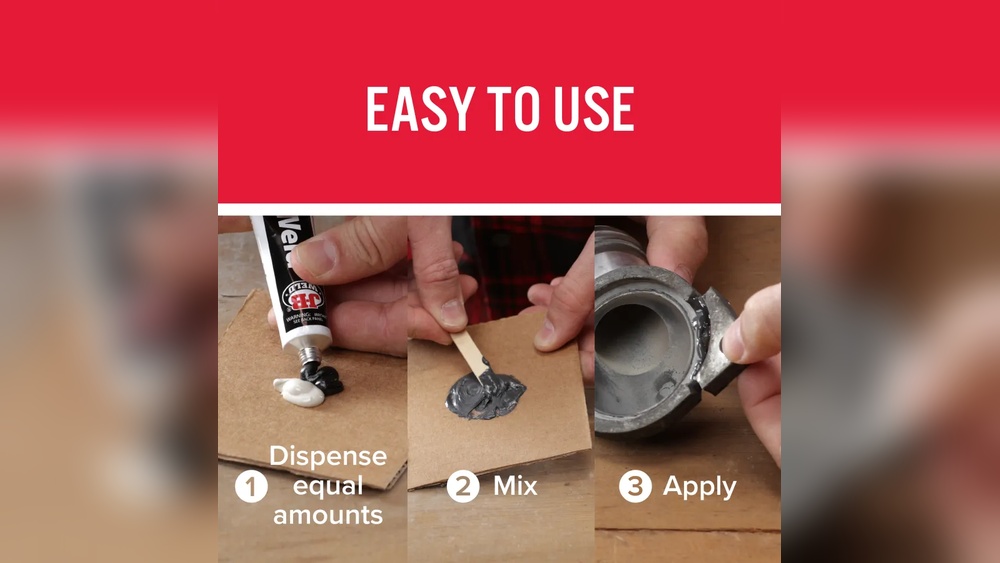
Step 2: Dispense equal parts. For twin tubes, squeeze equal lengths from each tube. Eyeballing works once you’re experienced, but for critical jobs, use a scale or measure by volume. The ratio must stay 1:1—too much hardener or resin throws off the chemistry.
Step 3: Mix thoroughly. Combine on your disposable surface and stir for at least 2-3 full minutes. You’re looking for a uniform color with no streaks. The original goes from black and white (or gray and white) to a consistent steel gray. Incomplete mixing leaves weak spots that fail under stress.
Step 4: Work quickly but deliberately. Pot life is around 20-45 minutes depending on temperature and product. SteelStik sets faster—knead until color is uniform, usually a couple minutes.
Pro tip from the shop floor: Mix only what you need for the current repair. Leftover mixed epoxy is waste, and trying to save it leads to poor results on the next use.
Application Techniques That Actually Work
Apply in thin, even layers when possible. For gap filling, build up gradually, allowing partial sets between layers if needed. On vertical surfaces, SteelStik excels because it holds shape.
For pipe repairs or leaks, I press the mixed epoxy into the area like caulk, then smooth with a gloved finger or tool dipped in acetone for a clean finish. On larger breaks, reinforce with fiberglass cloth or wire mesh embedded in the epoxy for extra tensile strength.
Clamp or tape the repair securely. Vibration or movement during the initial set ruins the bond. Let it set for the recommended time—usually 4-6 hours to handle, 15-24 hours for full cure—before putting stress on it.
In real jobs, I’ve used it to rebuild missing chunks on machinery guards or fill porosity in castings before machining. The key is patience during cure time. Rushing this step is another frequent pro mistake that comes back to bite.
Curing, Finishing, and Machining the Repair
Once cured, JB Weld machines like mild steel in many cases. You can drill, tap, file, or sand it. For a clean look, wet sand with progressively finer grits and polish if needed.
Heat accelerates curing but don’t exceed recommendations. In cold shop conditions, a heat lamp or warm enclosure helps without cooking the epoxy.
Temperature resistance and chemical compatibility vary by formula. Original handles most automotive fluids well but isn’t perfect for long-term immersion in gasoline—test for your specific use.
Common Mistakes and How to Avoid Them
- Poor surface prep: Leads to delamination. Always clean and roughen.
- Wrong ratio or incomplete mixing: Weak, gummy, or brittle results.
- Applying too thick in one go: Trapped air or uneven cure.
- Disturbing during cure: Breaks the bond before it forms.
- Using on high-vibration or high-heat critical parts: Know the limits—it’s adhesive, not fusion.
- Ignoring temperature: Cold shop or hot sun changes working and cure times dramatically.
Beginners often treat it like super glue. Pros respect the chemistry and prep.
JB Weld vs. Actual Welding: When to Choose Each
Welding gives metallurgical fusion and full strength matching the base material. JB Weld offers convenience, no heat-affected zone, and works in places where welding isn’t feasible.
Pros of JB Weld:
- No special equipment or power needed.
- Works on dissimilar materials.
- Minimal distortion.
- Good for temporary or permanent non-structural fixes.
- Easy to use in field repairs.
Cons:
- Lower strength than a good weld, especially in tension or peel.
- Not suitable for high cyclic loading.
- Cure time delays return to service.
- Can fail under extreme heat or certain chemicals.
Use JB Weld to complement welding. Fix a crack with epoxy to get the machine running, then schedule a proper weld later if needed. Or combine both—weld where possible and epoxy for sealing or filling.
Material Compatibility and Shop Examples
JB Weld bonds well to steel, aluminum, brass, copper, cast iron, wood, ceramics, and many plastics. Roughening and cleaning are crucial on non-ferrous metals.
Real-world examples I’ve handled:
- Patching a cracked aluminum transmission housing on a forklift.
- Rebuilding a stripped bolt hole in a cast iron engine block (drill oversize, fill, redrill and tap).
- Sealing a leaky radiator neck where brazing risked melting nearby fins.
- Repairing a broken bracket on heavy equipment in the field with no welder available.
In each case, proper mixing and prep made the difference between a weekend fix and a lasting repair.
Safety Considerations Every Welder Should Know
Wear gloves— this stuff sticks to skin and is messy. Work in ventilation; epoxies can irritate. Keep away from eyes and follow label warnings. Have acetone or dedicated cleaner ready for immediate cleanup before it sets.
Store tubes upright with caps tight to prevent drying. Don’t use expired product—cure times and strength suffer.
Comparison Table: JB Weld Products for Welders
| Product | Best For | Working Time | Full Cure | Key Strength | Limitations |
|---|---|---|---|---|---|
| Original Twin Tube | General metal bonding | 20-45 min | 15-24 hrs | High tensile, machinable | Sags on vertical if thick |
| SteelStik | Vertical/overhead plugs | 5-10 min | 1 hr | Stays in place, fast | Less flow for thin layers |
| ClearWeld | Cosmetic or plastic/metal | Similar | Similar | Invisible bond | Lower strength for heavy use |
| High-Temp | Exhaust/engine bay | Varies | Varies | Heat resistance | May need specific prep |
This table helps pick the right one fast when time is short.
Advanced Tips from Years on the Floor
For maximum strength, bevel edges slightly for more surface area. On high-stress repairs, add mechanical fasteners alongside the epoxy—screws or rivets that carry primary load while epoxy seals and stabilizes.
When mixing larger batches, keep it cool and work in smaller portions to extend pot life. For ultra-smooth finishes, apply a final thin skim coat after the first layer sets.
Test your repair with light load before full service. Tap it with a hammer or apply pressure gradually to check for hollow sounds indicating voids.
Putting It All Together in Your Next Repair
Mixing JB Weld correctly is straightforward once you build the habit of thorough prep and proper ratio. Treat it as another tool in your box—not a miracle fix, but a reliable one for the right situations.
You’ve got the steps, the warnings, and the real-shop context now. Next time a repair has you reaching for the tubes instead of the stinger, you’ll know exactly how to get a strong, lasting result.
Always keep a couple tubes of Original and SteelStik in your truck or toolbox. The job that can’t wait for a full weld setup has saved more downtime than I can count—and knowing how to mix JB Weld Epoxy right means those emergency fixes actually hold up until you can do it properly.
FAQ
How long does JB Weld take to fully cure for heavy use?
Allow a minimum of 15-24 hours at room temperature for full cure before subjecting the repair to significant loads or vibration. In cooler conditions, give it extra time. Rushing this is the fastest way to see a repair fail.
Can I use JB Weld on aluminum or cast iron?
Yes, with proper surface prep. Clean thoroughly, roughen well, and apply to both surfaces. It bonds effectively but won’t match the strength of a TIG weld on aluminum. Great for non-structural patches or sealing.
What’s the best way to clean up mixed JB Weld before it sets?
Acetone or a dedicated epoxy cleaner works best while it’s still workable. Wipe tools and surfaces immediately. Once cured, it’s tough to remove—mechanical means like scraping or grinding are usually needed.
Is JB Weld stronger than welding for repairs?
No. A properly executed weld provides superior fusion and strength. JB Weld excels as an alternative when welding isn’t practical or as a supplement for filling and sealing.
How do I fix a leak with JB Weld on a pressurized system?
Clean and roughen the area extensively. Apply generously, build up if needed, and allow full cure before pressurizing. For best results on pipes, combine with a mechanical clamp or wrap for reinforcement during initial service. Test carefully.


