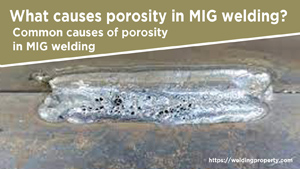
Running a MIG bead that just sits on top of the joint instead of biting in is one of those problems that shows up fast—especially on thicker steel. The arc looks fine, the bead looks decent, but once you grind it back or test it, you realize it never fused deep enough.
That’s exactly why learning How to Get More Penetration in MIG Welding matters if you want welds that actually hold under load.
In real shop work, penetration isn’t just about turning up the machine. It’s a mix of voltage, wire speed, travel angle, and even how clean your material is. I’ve seen plenty of welders crank the settings too high and end up with more spatter and distortion instead of better fusion.
Getting this right makes a big difference in strength, durability, and overall weld quality. In this guide, I’ll break down the practical adjustments and techniques that help you drive the arc deeper—without ruining your bead or your workpiece.
Image by weldingweb
What Is Weld Penetration and Why Does It Matter in MIG?
Weld penetration refers to how deeply the molten weld pool fuses into the base metal. In a fillet weld, you want the fusion line to reach well beyond the surface into the root. In butt joints, full penetration means the weld metal ties both sides completely, often visible as a bead on the backside.
In MIG welding, penetration directly affects strength. A shallow bead might pass a quick visual check but fail under bend tests or vibration.
I’ve seen T-joints on 1/4-inch mild steel crack along the root because the settings were too cold or travel speed too fast. Proper penetration also minimizes defects like lack of fusion, which is a common rejection in code work or load-bearing fab.
Why focus on MIG specifically? It’s the go-to process for hobbyists and many pros because of its speed and ease. But unlike stick (SMAW) or flux-cored arc welding (FCAW), standard MIG with solid wire and shielding gas can run “colder” and produce less natural penetration if you don’t dial it in. The good news is you have direct control through amperage, voltage, technique, and prep.
Key Factors That Control Penetration in MIG Welding
Several variables interact to determine how much your arc melts into the base metal. The biggest driver is heat input, but it’s not as simple as “turn everything up.”
Amperage (Controlled Primarily by Wire Feed Speed)
Amperage is the single most influential factor for penetration. Higher amps mean more energy concentrated at the arc, melting deeper into the workpiece.
In MIG, you don’t set amps directly on most machines—you adjust wire feed speed (WFS), which determines how much wire melts per minute and thus the current draw.
For example, on mild steel with .035-inch wire, bumping WFS from 200 to 280 inches per minute (IPM) can add noticeable penetration without changing voltage much. But you must balance it. Too high WFS without enough voltage causes stubbing or a ropey bead with poor tie-in.
Voltage
Voltage controls arc length and bead shape more than raw penetration. Higher voltage lengthens the arc, flattens the bead, and improves wetting at the toes. Lower voltage shortens the arc for a more focused, “stiffer” puddle that can help in certain joints.
Many beginners chase penetration by cranking voltage alone. That often widens the bead and reduces effective depth because the energy spreads out. The sweet spot is a crisp “frying bacon” sound—stable arc without excessive spatter or a harsh crackle.
Travel Speed
This one trips up a lot of people. Moving too fast leaves the arc little time to transfer heat, resulting in a narrow, convex bead with shallow penetration. Too slow piles up heat, widens the bead excessively, and can cause burn-through or distortion while the excess molten metal actually insulates the root.
Aim for a travel speed where the arc stays at the leading edge of the puddle. On 1/8-inch material, that’s often around 10-15 inches per minute in short-circuit transfer. Test on scrap and check the backside for consistent heat discoloration.
Electrode Stick-Out (Contact Tip to Work Distance)
Keep stick-out to about 3/8 to 1/2 inch for most short-circuit MIG on steel. Longer stick-out reduces amperage and penetration because resistance in the wire preheats it before the arc. Shorter stick-out concentrates energy but can lead to spatter or tip clogging.
Gun Angle and Technique (Push vs Pull)
A 0-10° drag angle (pulling the gun) generally gives better penetration than a push. Pushing directs shielding gas forward and can shallow the puddle on some joints. Pulling lets the arc dig more directly into the joint.
For fillets, a slight push or perpendicular angle works well for appearance, but switch to a drag when you need root fusion on thicker material or poor fit-up.
Shielding Gas
Gas mix affects arc characteristics and penetration. 75% argon / 25% CO2 (C25) is the shop standard for mild steel—good balance of arc stability and penetration. Straight CO2 gives deeper penetration and is cheaper but increases spatter and can make the arc harsher. For even more “dig,” some old-timers run higher CO2 mixes on thick plate.
Avoid straight argon on steel—it won’t penetrate well and creates an unstable arc.
Choosing the Right Wire Diameter and Type for Better Penetration
Wire size matters more than many realize. Smaller diameters like .023 or .030 concentrate the arc into a smaller area, giving better penetration at lower overall heat input. Larger .035 or .045 wires handle thicker material and higher deposition but can feel “colder” on thin stuff unless you crank settings.
For most hobby and light fab work on mild steel up to 1/4 inch, .030-inch ER70S-6 is versatile. It gives solid penetration without burning through easily. On thicker sections or when you need high deposition, step up to .035.
Always match wire to material. ER70S-6 works great for mild steel with some rust tolerance. For stainless, use ER308L or similar with appropriate gas. Aluminum needs 100% argon and often .035 wire for better feed and heat.
Common mistake: Using .023 wire on 3/16-inch plate thinking it’s “easier.” You’ll fight for penetration and likely end up with cold laps.
Recommended MIG Settings for Improved Penetration
Settings are starting points—always test on scrap matching your job. These assume short-circuit transfer on mild steel with C25 gas and .030 or .035 wire. Amperage is approximate since it varies by machine.
For 1/8-inch (3mm) mild steel:
- Wire: .030″
- Voltage: 17-19 V
- Wire speed: 180-250 IPM (roughly 80-140 amps)
- Travel speed: 10-15 IPM
- Gas flow: 20-25 CFH
For 1/4-inch (6mm) mild steel fillet or butt:
- Wire: .035″
- Voltage: 19-22 V
- Wire speed: 250-350 IPM (140-200+ amps)
- Travel speed: 8-12 IPM
- Consider a slight root gap or bevel for full penetration
On many home/shop machines like a 140-180 amp unit, you may hit limits on thick material. That’s when preheat (200-300°F on heavy sections) or switching to flux-cored wire helps.
Pro tip: Use your machine’s chart as a baseline, then adjust. Increase wire speed first for more heat/penetration, then tweak voltage for arc stability. Listen to the arc and look at the puddle.
Here’s a simple comparison table for common thicknesses (mild steel, C25 gas, short-circuit):
| Material Thickness | Wire Size | Voltage Range | Wire Speed (IPM) | Expected Amps | Notes for Penetration |
|---|---|---|---|---|---|
| 1/16 – 1/8″ | .023 – .030″ | 15-18 V | 100-200 | 40-120 | Keep travel steady; small wire helps focus arc |
| 3/16″ | .030″ | 18-20 V | 200-280 | 100-160 | Drag angle helps root fusion |
| 1/4″+ | .035″ | 19-23 V | 250-400 | 140-220 | Bevel joint, possible multi-pass or preheat |
Adjust for position—vertical or overhead needs lower settings to control the puddle.
Joint Preparation Techniques That Boost Penetration
Clean metal is non-negotiable. Mill scale, rust, oil, or paint kills penetration by creating barriers or contaminating the puddle. Grind or wire-brush joints thoroughly, then wipe with acetone or a dedicated welder’s cleaner.
For thicker material or full-penetration butt joints, bevel the edges to a 30-35° angle leaving a small root face. A 1/16-inch root gap can help the arc reach the backside without excessive heat.
On T-joints or laps with poor fit-up, a small gap or chamfer lets the puddle flow better. I’ve fixed many “impossible” repairs by simply taking 10 minutes to prep properly instead of fighting cold settings.
Avoid welding over heavy rust or galvanized coatings without thorough removal—zinc fumes are toxic, and they ruin fusion.
Step-by-Step Guide to Dialing In Penetration on a Test Piece
- Clean your test coupon thoroughly—grind both sides if checking backside penetration.
- Set machine to recommended baseline for thickness and wire.
- Strike an arc on scrap and listen: crisp sizzle, not popping or humming.
- Run a bead, noting puddle behavior and travel speed.
- Stop and inspect: Cut or bend the piece to check fusion. Look for a smooth fusion line without undercut or cold laps.
- Adjust: If shallow, increase wire speed 10-20 IPM or slow travel slightly. If spattery or convex, raise voltage 0.5-1V.
- Repeat until you see consistent root penetration without burn-through.
- Note your final settings in a shop notebook—saves time on future jobs.
On outside corner joints, sometimes slightly lower wire speed lets you slow travel for better tie-in without piling up.
Common Mistakes That Kill Penetration (And How to Fix Them)
Beginners often run voltage too high and wire speed too low, creating a long, floppy arc with heat spread too wide. Pros sometimes push too aggressively on dirty metal or rush travel speed on production pieces.
Other frequent issues:
- Excessive stick-out (beyond 3/4 inch) robbing amperage.
- Wrong gas—straight argon on steel or low flow causing porosity and weak fusion.
- Traveling too fast to “avoid burn-through,” resulting in no real penetration.
- Ignoring polarity (always DCEP for MIG).
- Not accounting for material thickness variation or heat sink effects on large plates.
Fix by slowing down, cleaning better, and balancing WFS with voltage. If your welds look good on top but fail inspection, cut a macro etch or bend test to confirm.
Material-Specific Tips for Penetration
Mild Steel: Most forgiving. C25 gas, ER70S-6 wire. Preheat heavy sections over 1/2 inch to 250°F to reduce cracking risk while allowing higher settings.
Stainless Steel: Lower heat to avoid warping and carbide precipitation. Use tri-mix gas (90% He / 7.5% Ar / 2.5% CO2) for better penetration and less oxidation. Settings often 10-15% lower amps than mild steel.
Aluminum: Requires 100% argon and higher wire speeds due to higher thermal conductivity. .035 wire helps. Clean oxide layer immediately before welding. Push technique often preferred for cleaning action, though it can reduce penetration slightly—balance with settings.
When to Consider Alternatives to Standard MIG for Deep Penetration
Sometimes MIG isn’t the best tool. Flux-cored self-shielded wire often penetrates deeper on thicker or dirty material and works outdoors without gas. It’s great for repair work on farm equipment or structural steel.
For critical full-penetration work, many shops switch to TIG for precision or stick for heavy plate. But for speed and versatility in the 1/8 to 3/8-inch range, dialed-in MIG with solid wire still wins.
Safety Considerations When Pushing for More Penetration
Higher settings mean more heat, spatter, and UV exposure. Always use proper PPE: helmet with good shade (11-13), leather gloves, jacket, and boots. Ensure good ventilation—fumes from zinc or painted metal are hazardous.
Watch for arc blow on DC machines near magnetic fixtures. Keep your work area dry and grounded properly.
Real-World Application Examples
In trailer fabrication, I run .035 wire at 20-22V and 300+ IPM on 3/16-inch frame rails with a drag angle for strong fillet roots that hold under road vibration.
For auto body repair on thinner sheet, I drop to .023 or .030 wire, lower settings, and a slight push to minimize distortion while still achieving enough penetration for strength.
On repair jobs with unknown material thickness or rust, I start conservative, grind a test area, and build up if needed with multiple passes.
Taking Your MIG Penetration Skills to the Next Level
You’ve got the fundamentals now: balance wire speed for heat, voltage for arc control, clean prep, proper technique, and test everything. The difference between weak surface beads and welds that pass bend tests comes down to these details practiced consistently.
Next time you’re in the shop, grab some scrap, set up a T-joint, and experiment with one variable at a time. You’ll quickly develop that intuitive feel for when the puddle is “digging” right.
One strong pro-level tip I’d give any welder: When in doubt on thick material or critical joints, slow your travel speed slightly and use a small root gap or bevel rather than just hammering amperage. It gives the arc time to work without overheating the surface, producing cleaner, stronger penetration with less distortion.
Keep welding, stay safe, and your joints will only get tougher.
FAQ
Why is my MIG weld not penetrating even with high settings?
Usually it’s a combination of dirty metal, too-fast travel speed, excessive stick-out, or imbalanced voltage/wire speed. Clean the joint thoroughly, shorten stick-out to 1/2 inch, slow down, and increase wire feed speed while adjusting voltage for a stable arc. Test on the backside.
Does pushing or pulling the gun give better penetration in MIG?
Pulling (drag) typically provides deeper penetration because the arc force pushes directly into the joint. Pushing can improve bead appearance and shielding but often shallows the puddle. Use drag for root passes on fillets or thick material.
How do I get more penetration on thick steel without burning through thinner sections?
Use .035 wire, higher wire speed for amperage, a slight root gap or bevel, and controlled travel speed. Preheat heavy pieces if possible. Multiple passes with good interpass cleaning beat one hot pass that distorts everything.
What shielding gas gives the best penetration in MIG welding mild steel?
Straight CO2 or high-CO2 mixes (like 100% or 75/25 Ar/CO2) dig deeper than high-argon blends. C25 is the best all-around compromise for most shops—decent penetration with less spatter than pure CO2.
Can wire diameter affect penetration in MIG?
Yes. Smaller wire (.023-.030″) focuses the arc for better penetration at lower heat input, ideal for thinner or precise work. Larger wire (.035-.045″) carries more current and deposition for thick material but may need higher settings to penetrate effectively.