Copper electrodes clamped tight, sheets aligned just right, and one quick pulse of current—that’s all it takes to make a solid spot weld. But getting that weld right isn’t luck. I’ve seen weak nuggets, burn-through, and electrode marks that ruined perfectly good panels simply because the settings were guessed instead of calculated.
Spot welding parameters calculations matter more than most beginners realize. Current, weld time, electrode force, and sheet thickness all work together.
If one is off, the weld strength suffers—and in structural or automotive work, that’s not something you can afford. I learned the hard way that “close enough” settings often lead to rework, wasted material, and inconsistent results.
Once I started understanding how to properly calculate and adjust these parameters, my weld quality became more consistent and predictable. Let me walk you through how these numbers actually work—so you can dial in your settings with confidence instead of trial and error.

Image by fractory
What Are the Key Spot Welding Parameters?
Spot welding is a resistance process. You squeeze two (or more) sheets between copper electrodes, pass a massive amount of current through the stack for a fraction of a second, and the heat generated at the interface melts a small “nugget” that fuses the pieces when it cools.
The main parameters you control are:
- Electrode force (pressure) — squeezes the sheets together, controls contact resistance, and forges the nugget as it solidifies.
- Weld current (amperage) — the big driver of heat.
- Weld time — measured in cycles (1/60th of a second in the US at 60 Hz).
- Electrode tip diameter and shape — determines current density and nugget size.
- Squeeze time and hold time — often overlooked but critical for consistency.
These aren’t independent. Change one and the others usually need adjustment. The goal is enough heat to form a nugget about 4–5 times the square root of the thinnest sheet thickness, without burning through, expelling metal, or creating weak cold welds.
The Fundamental Formula That Drives Everything
The heat generated follows a simple but powerful relationship: Q = I² × R × t
Where:
- Q is heat in joules (what actually melts the metal),
- I is current in amps,
- R is the total resistance in ohms (mostly at the sheet-to-sheet interface early on),
- t is time in seconds.
Because current is squared, small increases in amperage create big jumps in heat. That’s why you can go from a cold weld to expulsion with just a 10–15% change in settings.
Resistance drops as force increases and surfaces heat up, which is why force and current must be balanced. Time gives the heat a chance to soak in but also lets it spread, risking larger heat-affected zones and distortion.
In practice, I treat this formula as a mental model rather than something I calculate precisely every time. Charts and rules of thumb get me close, then I fine-tune on scrap.
How to Calculate Target Nugget Diameter
The nugget is the weld. Its diameter largely determines shear strength. A widely accepted guideline for mild steel is:
Minimum nugget diameter (mm) ≈ 4 × √t to 5 × √t
Where t is the thickness of the thinnest sheet in millimeters.
For two pieces of 1 mm (about 0.040″) mild steel: √1 = 1, so 4–5 mm nugget. For 1.5 mm (about 0.059″) material: roughly 4.9–6.1 mm.
This isn’t arbitrary. It comes from decades of testing that correlates nugget size to button pull strength in peel tests. In my shop, I aim for the higher end (closer to 5√t) on structural parts like brackets or chassis components and the lower end on cosmetic or lightly loaded panels.
To check in the real world, I do a peel test: weld a couple of coupons, grab one sheet with pliers, and tear it apart. A good weld leaves a clean button pulled out of one sheet with the nugget diameter visible. If it just separates with no button or a small one, the parameters are too low.
Step-by-Step Spot Welding Parameters Calculations for Mild Steel
Start with the material. Most common jobs in US shops involve low-carbon mild steel—hot-rolled, cold-rolled, or galvanized. Here’s how I approach it:
- Measure the thinnest sheet thickness accurately (use a micrometer, not a caliper guess).
- Calculate target nugget diameter using the 5√t rule.
- Choose electrode tip face diameter—usually 1–2 mm larger than your target nugget or from standard charts (6 mm common for up to 1.25 mm sheets).
- Use starting values from established charts or rules of thumb, then test.
A practical rule-of-thumb set I use for quick estimates (in inches for US folks):
- Electrode force (lbs) ≈ 6000 × (T1 + T2)
- Weld time (cycles) ≈ 100 × (T1 + T2)
- Weld current (amps) ≈ 100,000 × (T1 + T2) — reduce by about 20% if total thickness exceeds 0.080″
These are starting points only. Real charts are more reliable.
Here’s a practical table for common mild steel thicknesses (single sheet thickness, two equal sheets assumed):
| Thickness (inches) | Gauge | Tip Face Diameter | Electrode Force (lbs) | Weld Current (A) | Weld Time (cycles) |
|---|---|---|---|---|---|
| 0.010″ | 30 | 1/8″ | 200 | 4,000 | 2 |
| 0.021″ | 25 | 3/16″ | 300 | 6,500 | 4 |
| 0.031″ | 22 | 3/16″ | 400 | 8,000 | 5 |
| 0.040″ | 20 | 1/4″ | 500 | 8,800 | 6 |
| 0.050″ | 18 | 1/4″ | 650 | 9,600 | 8 |
| 0.062″ | 16 | 1/4″ | 800 | 10,600 | 10 |
| 0.078″ | 14 | 5/16″ | 1,100 | 11,800 | 13 |
| 0.094″ | 13 | 5/16″ | 1,300 | 13,000 | 15 |
| 0.109″ | 12 | 3/8″ | 1,600 | 14,200 | 18 |
| 0.125″ | 11 | 3/8″ | 1,800 | 15,600 | 20 |
These values come from proven industry charts for low-carbon steel and work well as baselines on typical US 60 Hz machines. For metric users, a similar pattern shows around 2–6 kN force and 8,500–12,000 A for 0.6–2 mm sheets, with times of 6–20 cycles.
In the shop, I set the machine to these, run three test welds on scrap of the exact same material and condition, peel them, and adjust. If the nugget is too small or the button pulls weak, I bump current by 5% or add 1–2 cycles. If there’s expulsion (spatter), I increase force first or reduce current/time.
Setting Squeeze, Weld, and Hold Times Properly
Squeeze time: Give the electrodes time to build full force before current flows—usually 20–60 cycles depending on your machine’s air system or pedal. Too short and you get arcing or inconsistent welds because resistance is high.
Weld time: Keep it as short as possible while achieving the nugget. Shorter times mean less heat spread, smaller indentation, and longer electrode life.
Hold time: 1–6 cycles typically. This lets the nugget solidify under pressure so it doesn’t crack or pull apart. Longer on galvanized or thicker material to control cooling.
I always err on the side of more squeeze and hold when starting a new job.
Adjusting Parameters for Other Common Materials
Galvanized steel
The zinc coating lowers resistance initially and can cause more expulsion. Start with the mild steel chart but increase force 10–20% and watch for zinc spitting. Sometimes a slightly longer squeeze helps.
Stainless steel
Higher electrical resistance means you often need less current than mild steel for the same thickness, but it conducts heat poorly so distortion can be an issue. Increase force 20–30%. Times are similar or slightly longer. Stainless also sticks to electrodes more easily—dress tips frequently.
Aluminum
This is a whole different animal. Aluminum has very low resistance and high thermal conductivity, so you need roughly 2–3 times the current of steel, much shorter weld times (often 2–5 cycles), and clean, oxide-free surfaces. Use different electrodes (Class 1 or special faced tips) to prevent sticking and pickup.
Force is often similar or a bit higher. If your machine can’t deliver 20–30 kA, you’re better off with mechanical fasteners or MIG for aluminum.
In my experience, aluminum spot welding is unforgiving on surface prep. I wire-brush or chemically clean right before welding and change tips often.
Electrode Selection, Dressing, and Maintenance
Use RWMA Class 2 copper electrodes for mild and galvanized steel. Dome or flat faces depending on whether you want less marking on one side. Tip diameter should match your chart—too small and you concentrate heat too much; too large and current density drops and you get weak welds.
Dress electrodes when they start to mushroom. A simple file or dedicated dresser keeps the face flat and the right diameter. I keep a gauge handy to check tip size every 50–100 welds on production runs.
Common Mistakes I’ve Made (and Seen Others Make)
The biggest rookie error is treating the machine settings as gospel. Charts are starting points—your material might have scale, oil, different alloy, or your electrodes might be worn. Always test.
Too much current or time: expulsion, holes, deep indentations, and short electrode life. Fix by increasing force first (which lowers resistance), then reducing current.
Too little: cold welds that look okay but pull apart easily. Fix by adding current in small increments.
Wrong force: Low force causes arcing and expulsion. High force can squash the nugget before it forms properly or require excessive current.
Ignoring surface condition: Rust, paint, or thick mill scale kills consistency. Clean to bright metal.
One painful lesson: I once spot-welded a batch of brackets using settings for clean cold-rolled on rusty hot-rolled stock. Half the welds failed peel tests. Lesson learned—match the material condition exactly when testing.
Machine-Specific Tips for US Shops
Most hobby and small-shop welders are AC transformer types with tap switches and percent current controls. Set the tap so you’re running 70–90% current for best control. Pedal machines give great feel once you’re experienced.
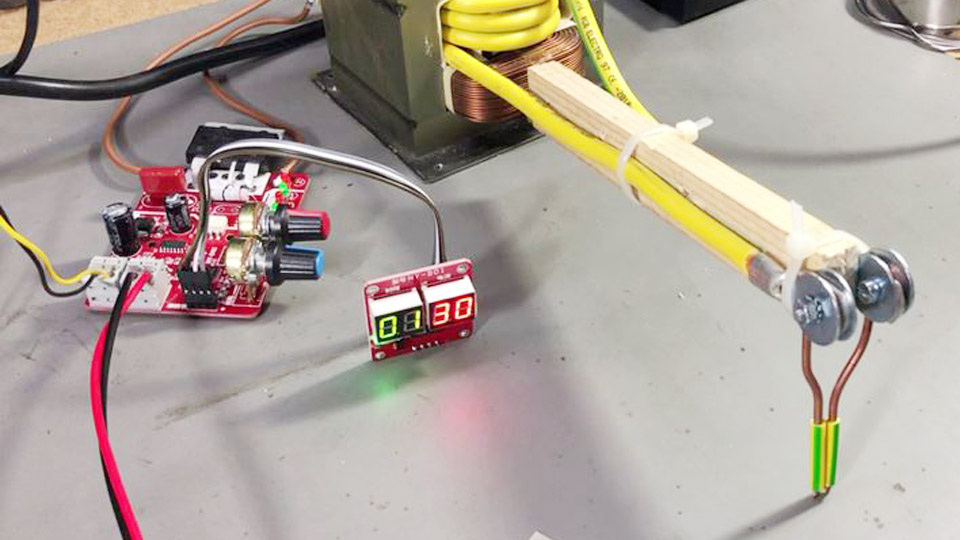
For DIY capacitor discharge or battery spot welders (popular for thin battery tabs or sheet), you’re dealing with energy settings (joules or pulse width) instead of cycles. The same principles apply—start low on energy, test peels, and increase gradually.
Pneumatic press-type machines give the most repeatable force. If yours has a force gauge, use it.
Safety When Experimenting with Parameters
High currents mean respect the machine. Keep hands clear during welds. Wear safety glasses—expulsion can happen. The heat is localized but electrodes get hot fast. Good ventilation is smart even though fumes are less than with arc processes.
When testing new parameters, use small coupons away from your main workpiece.
How to Test and Optimize Like a Professional
Never ship or install parts based on settings alone. My standard process:
- Weld 3–5 test coupons.
- Peel test for nugget size and button appearance.
- Visual check for indentation depth, expulsion, and surface marking.
- If structural, do a simple chisel or tensile test when possible.
- Log the settings that work for future jobs.
Once optimized, lock them in and train anyone else using the machine.
Putting It All Together in the Shop
Spot welding parameters calculations aren’t about memorizing formulas for every scenario. They’re about understanding the relationships between force, current, time, and material so you can make smart adjustments when things don’t go perfectly.
Start with proven charts, calculate your target nugget, set up on scrap, test destructively, and tweak. Do this consistently and your welds will be reliable, professional, and strong.
The real pro move? Treat every new material thickness or alloy as its own little project. Spend ten minutes on tests and save hours of rework later. That’s the difference between getting by and doing work you’re proud to put your name on.
Keep a dedicated box of scrap from every project. When you need to dial in parameters later or train someone new, those exact pieces are gold. A quick peel test on real material beats any chart every single time.
FAQ
What is the ideal nugget diameter for my spot welds?
Aim for 4–5 times the square root of the thinnest sheet thickness in mm. For 1 mm steel, that’s roughly 4–5 mm. Always verify with a peel test— a full button pull means you’re in the right zone.
How do I know if my weld time is too long or too short?
Too long and you’ll see excessive indentation, larger heat marks, or distortion. Too short and the nugget is small or missing. Start with chart values and adjust by 1–2 cycles while watching peel results.
Why am I getting expulsion (spatter) and how do I stop it?
Usually too much heat relative to force. Increase electrode force first to lower contact resistance, then reduce current or time slightly. Make sure surfaces are clean and electrodes are properly dressed.
Can I use the same parameters for stainless or aluminum as mild steel?
No. Stainless often needs higher force and adjusted current due to higher resistance. Aluminum requires much higher current, much shorter time, and meticulous surface prep plus different electrodes. Always develop separate schedules.
How often should I dress or change electrodes?
Dress when the face starts to mushroom or pickup appears—every 50–200 welds depending on material and settings. Replace when the tip diameter grows too large or the face becomes uneven. Consistent tip condition is key to repeatable parameters.