MIG welding sheet metal will test your patience faster than almost any other job in the shop. One moment you think you’ve got the settings dialed in, and the next you’re staring at a blown-out spot or a panel that’s warped like a potato chip. Sheet metal just doesn’t forgive heat the way thicker steel does—you’ve got to treat it with a lighter hand and a smarter approach.
I learned that the hard way on old car panels, HVAC ducts, and thin utility boxes. Once I stopped fighting the metal and started working with shorter bursts, cooler settings, and better fit-up, everything changed. The welds got cleaner, the distortion dropped, and I wasn’t chasing mistakes all afternoon.
If you’re struggling with burn-through, messy seams, or warped panels, you’re definitely not alone. Let me show you the techniques that actually keep sheet metal under control and produce clean, tight welds every time.

mig-welding.co.uk
Why Heat Input Is Everything in MIG Welding Sheet Metal
Heat is your friend and your worst enemy. Too much, and your sheet warps, burns through, or loses strength in the heat-affected zone (HAZ). Too little, and you get lack of fusion—weak welds that crack under load. In real shops, we measure heat input in joules per inch, but you don’t need a calculator. You need feel.
I learned this on a restoration job—had to weld a new quarter panel on a ’67 Camaro. The original metal was 20-gauge, and the replacement was slightly thinner. One pass at 18 volts, and the panel puckered like a prune. Dropped to 15.5 volts, slowed the wire to 180 IPM, and used a tight stitch pattern. Result? A bead so flat I barely had to grind.
Rule of thumb: For every 0.010″ of thickness, drop your voltage by about 0.5–1 volt and adjust wire speed down 20–30 IPM. Test on scrap identical to your project.
Mastering Short-Circuit Transfer for Ultra-Thin Sheet
Most MIG welders default to short-circuit transfer on low settings—and that’s perfect for sheet metal. It’s that crisp “bacon fry” sound, where the wire dips, shorts, and pinches off. But here’s the pro move: tune the inductance.
High inductance = smoother arc, less spatter, but slower response. Low inductance = snappy, aggressive, more spatter. For 22–24 gauge, I crank inductance up to soften the arc. On my Lincoln, that’s setting 7–8 out of 10. Miller? Same idea—look for “arc control” or “inductance” dial.
Anecdote: A student once asked why his welds looked “wormy.” Turned out his inductance was maxed on 16-gauge settings. Dropped it two clicks, and boom—smooth, stacked dimes.
Push vs Pull Technique: When to Break the Rules
I told you to push last time. That’s still 90% correct. Push gives better gas coverage, flatter beads, and less burn-through. But on vertical-up sheet metal—like patching a trailer wall—sometimes a slight pull (5–10°) gives better penetration without sagging.
When to pull:
- Vertical-up joints
- When filler needs to “climb” the joint
- Galvanized or coated steel (helps burn off zinc ahead of the puddle)
When to push:
- Flat or horizontal
- Appearance-critical welds
- Thin aluminum
Never drag straight back like stick welding. That’s a rookie move that traps gas and causes porosity.
Pulse MIG Settings for Sheet Metal: Beyond the Preset
If your machine has pulse (and it should for serious sheet work), don’t just hit the “thin metal” preset. Learn the three variables:
| Parameter | What It Does | Sheet Metal Setting |
|---|---|---|
| Peak Amps | Max current during pulse | 140–180 |
| Background Amps | Low current between pulses | 40–70 |
| Pulse Frequency (Hz) | How fast it cycles | 80–150 |
For 20-gauge mild steel, I run:
- Peak: 160 amps
- Background: 55 amps
- Frequency: 120 Hz
- Wire speed: 220 IPM
- Voltage: Auto (synergic)
Result? A bead that looks sprayed on—no undercut, no hump, minimal HAZ. I used this on a stainless brewery tank patch—passed dye penetrant test first try.
Backing Bars and Chill Blocks: Your Secret Weapons
Copper backing bars aren’t just for TIG. Clamp a 1/4″ copper strip behind your butt joint, and it acts like a heat sink. Lets you run 10–15% hotter without burn-through.
Pro setup:
- 1/8″ copper bar, 1″ wide
- Clamp with C-clamps or strong magnets
- Leave 0.010–0.015″ gap for root pass
For large panels, use aluminum chill blocks on both sides. I keep a set of 2x2x6″ blocks in the truck—saved a 4×8 sheet from warping during a roof patch in Arizona heat.
Welding Galvanized Sheet Without Poisoning Yourself
Galvanized sheet is everywhere—trailers, ductwork, farm equipment. But zinc fumes = metal fume fever. Bad news.
Safe workflow:
- Grind off zinc 1″ back from joint (both sides)
- Use silicon-bronze wire (ERCuSi-A) if possible—lower temp, less fume
- Weld in well-ventilated area or under exhaust hood
- Wear a P100 respirator, not just a dust mask
I once welded a galvanized trailer without grinding—felt like the flu for two days. Never again.
Bead Appearance: How to Get That “Stacked Dimes” Look with MIG
Yes, you can get TIG-like beads with MIG. Here’s how:
- Travel speed: 10–12 inches per minute
- Gun angle: 10° push, 90° work angle
- Pause technique: Dwell 0.3–0.5 seconds at each “dime,” then move
- Wire stick-out: 1/4″–3/8″ max
- Clean tip: Wipe with a file every 5 minutes
Practice on 16-gauge first. Once you nail it, drop to 20-gauge. I taught a high school welding class this—half the kids got it in one afternoon.
Vertical-Up MIG on Sheet: Yes, It’s Possible
Most guys avoid vertical sheet welds. Don’t.
Technique:
- Use .023 wire, 75/25 gas
- Voltage: 15–16V
- Wire speed: 180–200 IPM
- Slight pull angle
- “C” or “U” weave, 1/8″ wide max
- Keep puddle small—watch the “shelf”
I welded a 36″ vertical seam on a food cart this way—held 300 lbs of equipment, no cracks.
Troubleshooting Table: Sheet Metal MIG Issues
| Problem | Cause | Fix |
|---|---|---|
| Worm tracks | Inductance too high | Lower 1–2 clicks |
| Undercut | Travel too fast | Slow down, increase wire |
| Convex bead | Voltage too low | Increase 0.5–1V |
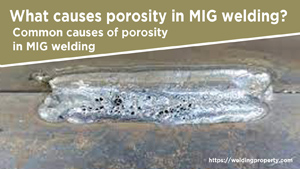
| Porosity | Drafts or dirty metal | Shield area, clean thoroughly |
| Cold lap | Lack of fusion | Increase heat, ensure tight fit |
Print this. Tape it in your booth.
Aluminum Sheet Metal: Special Rules
Aluminum sheet (3003, 5052, 6061) behaves differently:
- Wire: ER4043 (general) or ER5356 (stronger)
- Gas: 100% argon
- Tip: Use Teflon or nylon liner
- Prep: Stainless brush only, then acetone wipe
- Heat: Preheat to 200°F if over 1/8″
I welded a boat console from 1/8″ 5052—used spool gun, push technique, 100% argon. No cracks, even in saltwater.
Final Pro Tip: The “Scrap Test” Ritual
Before every critical weld:
- Cut a 2×6″ strip of your exact material
- Weld a bead
- Bend it 90° over a vise
- If it cracks, adjust heat down
- If no fusion, adjust heat up
Takes 2 minutes. Saves hours of rework.
Wrapping Up
You’re not just welding sheet metal anymore—you’re mastering it. Next time you fire up the MIG, you’ll hear the arc sing, feel the puddle dance, and lay down beads that make other welders stop and stare. Now go make something that lasts.
FAQs
How Do I Stop Sheet Metal from Warping When MIG Welding
Use stitch welding, copper backing, and chill blocks. Weld short segments (1/2″–1″), skip 2–3″, let cool, then fill in. Clamp panel flat to a steel table.
Can You MIG Weld 24-Gauge Sheet Metal
Yes, with .023 wire, 12–14 volts, 100–150 IPM, and short-circuit mode. Use push technique and copper backing to prevent burn-through.
What’s the Best Gas for MIG Welding Thin Stainless Sheet
Helium-argon-CO2 tri-mix (like 90/7.5/2.5). Gives stable arc, low spatter, and minimal oxidation on 22–16 gauge stainless.
How Do I Get Smooth Beads on Sheet Metal with MIG
Use consistent travel speed (10–12 IPM), 1/4″ stick-out, and pause 0.3 seconds per “dime.” Keep tip clean and inductance mid-high.
Is Pulse MIG Worth It for Sheet Metal
Absolutely. Reduces heat input by 30–50%, minimizes distortion, and improves bead appearance. Essential for 20-gauge and thinner.