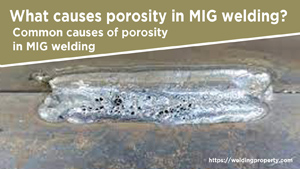
I was midway through welding a tricky steel corner the other day, and as I pulled the MIG gun along the joint, I noticed a shallow groove forming along the edge of the bead. That familiar sinking in of the metal—it’s frustrating, and it’s exactly what we call undercut.
If you’ve ever scratched your head wondering what causes undercut in MIG welding, you know it can weaken your weld, cause cracks, and turn a simple project into a costly headache.
Understanding why it happens isn’t just about avoiding ugly seams—it’s about making stronger, safer, and longer-lasting welds without wasting time or material.
In this article, I’ll discuss the real reasons undercut happens, the mistakes that trigger it, and the practical fixes I’ve used in my own shop. Here’s the technique that actually works.
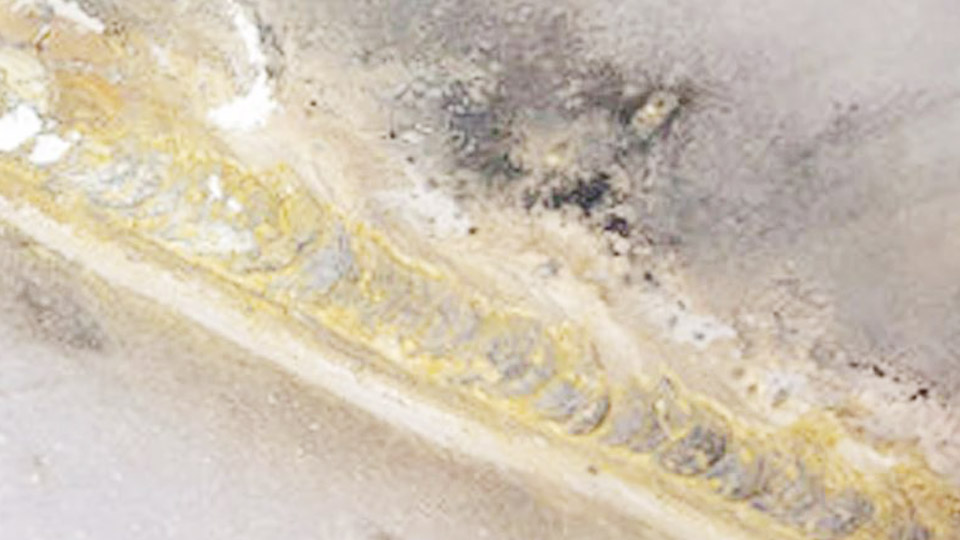
Image by primeweld
Understanding Undercut: What It Looks Like and Why It Matters
Undercut shows up as a narrow groove or depression right where the weld bead meets the base metal, often along the edges or toes of the joint. In MIG welding, it’s basically the base material melting away faster than your filler wire can replace it, leaving a dip that looks like someone scooped out a tiny channel.
I’ve inspected welds where it’s subtle—a faint line you catch with a fingernail—or glaring, deep enough to see from across the bench.
How does it form? During the MIG process, your arc creates a molten pool, and if things aren’t balanced, the heat eats into the parent metal without enough filler flowing in to fill the void.
This happens in seconds, solidifying before you notice. It’s common in fillet welds on T-joints or laps, but I’ve dealt with it on butt joints too, especially on thinner stock.
You’d use awareness of undercut anytime you’re aiming for structural integrity, like in automotive repairs or fabrication where loads are involved. It reduces the joint’s cross-section, creating stress risers that lead to fatigue cracks. On a pressure vessel or trailer hitch, that could mean disaster.
In my experience, ignoring it once led to a gate hinge failing on a ranch job—cost me a full day’s redo. Safety-wise, always check for it post-weld; a quick visual or dye penetrant test can save lives.
Practical tip: Run your finger along the toe after cooling. If it catches, measure with a weld gauge. Anything over 0.5mm deep on critical parts? Grind and refill. For hobby work, shallower ones might pass, but pros know better—fix it now or regret it later.
This visual of a typical undercut defect highlights the groove—see how it undercuts the base?
The Main Causes: Why Does Undercut Sneak Into Your MIG Welds?
From dialing in machines like my old Lincoln Power MIG to teaching apprentices, I’ve traced most undercut back to a handful of factors. Each one ties into how heat, speed, and technique interact in the arc.
Excessive Heat Input: When Your Settings Are Too Hot
Excessive heat is the top offender in MIG undercut. It happens when your voltage or amperage is cranked too high, melting the base metal aggressively while the filler lags behind. The molten pool widens, and edges erode before solidifying, leaving those grooves.
In practice, this kicks in on thinner materials or when you’re pushing for deeper penetration without adjusting. For instance, on 1/8-inch mild steel, running 20 volts instead of 18 can overheat the toes. Why use high heat? Sometimes for thicker plates needing full fusion, but misjudge it, and undercut follows.
Shop lesson: I once overheated a exhaust manifold repair, causing undercut that cracked under vibration. Beginners crank amps thinking more is better; pros know balance is key.
Tip: Start low and creep up, watching the puddle. If it spreads too wide with spatter, dial back voltage by 1-2 units.
Too Fast Travel Speed: Rushing Through the Joint
Traveling too quickly across the joint doesn’t give the filler time to flow into the melted areas, so the base solidifies with depressions at the edges. In MIG, the wire feeds continuously, but if you’re zipping along at 15 inches per minute on a lap joint that needs 10, undercut appears.
This is handy for long runs to avoid burn-through, but overdo it, and fusion suffers. On aluminum, where heat dissipates fast, slow down even more. Why bother with speed? Efficiency in production shops, but for DIY, consistency trumps haste.
From my bench: Training a student on fence repairs, his fast passes left undercut everywhere. We slowed to a steady weave, and it vanished. Tip: Practice on scrap—aim for a bead that’s uniform, not stringy. If toes look starved, pause slightly at edges.
Incorrect Torch Angle or Position: Pointing It Wrong
Your torch angle directs the arc’s heat. Too steep (over 15 degrees) focuses energy unevenly, melting one side more and causing undercut on the other. In push technique for MIG, a 10-15 degree forehand angle evens it out; pull (backhand) can deepen penetration but risks undercut if not careful.
Use this when welding verticals or overhead, where gravity pulls the pool. Why? Proper angle ensures filler ties in smoothly. Common mistake: Tilting toward the vertical plate in a T-joint, undercutting the flat one.
Anecdote: On a boat trailer frame, wrong angle undercut the legs—had to grind and reweld. Tip: Visualize the arc cone covering both toes equally. For fillets, bisect the 90-degree angle at 45 degrees.
Here’s a diagram showing push vs. pull angles—stick to push for flatter profiles to minimize undercut risk.
Wrong Voltage or Amperage Settings: Mismatched to Material
Voltage controls arc length and heat spread; too high, and the arc widens, eroding edges. Amperage, tied to wire speed, affects deposition rate—if low, filler can’t keep up with melting.
For 0.035-inch wire on 1/4-inch steel, aim for 18-20 volts and 150-200 amps. Why adjust? Materials vary—stainless needs lower heat to avoid distortion. Beginners ignore charts; pros tweak based on sound and spatter.
Real fix: On a shop cart build, high voltage undercut the corners. Dropped to 19 volts, perfect. Tip: Use machine dials or apps for starts, then fine-tune by bead appearance.
Inadequate Shielding Gas Flow or Type: Letting Contaminants In
Shielding gas protects the pool from air, but low flow (under 20 CFH) or wrong mix (e.g., pure CO2 on aluminum) lets oxygen in, disrupting flow and causing undercut. Argon/CO2 blends (75/25) work for steel, stabilizing the arc.
When to use? Always in gas MIG; flux-core skips it but can undercut if windy. Why? Gas ensures clean wetting.
Lesson learned: Outdoor job with gusts blew gas away, undercutting welds. Moved inside. Tip: Check flow at the nozzle—too high splashes pool; too low porouses it.
Poor Joint Preparation: Starting with Dirty or Misaligned Parts
Rust, paint, or oil on edges blocks fusion, forcing higher heat that undercuts clean areas. Misaligned joints create gaps where filler doesn’t bridge.
Prep matters for all jobs, especially repairs. Why? Clean surfaces allow even heat transfer. Common pro slip: Rushing prep on deadlines.
From experience: Undercut on oily auto parts until I degreased thoroughly. Tip: Grind to bright metal, chamfer edges for better flow.
Improper Wire Size or Type: Filler That Doesn’t Fit
Using 0.030-inch wire on thick plate lacks deposition, undercutting edges. Mismatched alloy (e.g., 4043 on steel) alters melting points.
Choose based on thickness—0.035 for general fab. Why? Matches heat needs. Hobbyists grab whatever; test first.
Anecdote: Wrong wire on aluminum bike frame undercut badly—switched, smooth. Tip: Consult filler charts; store wires dry.
Preventing Undercut: Practical Strategies from the Shop Floor
Stopping undercut starts before striking an arc. Here’s how I approach it on US machines like Miller or Hobart.
Step-by-Step Guide to Setting Up Your MIG Welder
- Select wire and gas: Match to base (ER70S-6 for steel, 75/25 gas).
- Clean joint: Wire brush or grind contaminants.
- Set parameters: For 1/8-inch steel, 17-19 volts, 120-150 amps, 0.035 wire at 200-250 IPM.
- Test on scrap: Run a bead, check for undercut.
- Adjust technique: 10-15 degree push, steady speed.
- Weld: Pause at toes if weaving.
- Inspect: Cool, gauge depth.
This workflow cut my defects by half on fab jobs.
Recommended Amperage Ranges and Wire Diameters
Here’s a table for common setups:
| Material Thickness | Wire Diameter | Voltage Range | Amperage Range | Gas Flow (CFH) | Travel Speed (IPM) |
|---|---|---|---|---|---|
| 1/16-inch Steel | 0.030-inch | 16-18 | 80-120 | 15-20 | 8-12 |
| 1/8-inch Steel | 0.035-inch | 17-19 | 120-160 | 20-25 | 10-15 |
| 1/4-inch Steel | 0.035-inch | 18-20 | 150-200 | 20-30 | 12-18 |
| 1/8-inch Aluminum | 0.035-inch | 19-21 | 130-170 | 25-35 (Argon) | 15-20 |
Use as baselines—tweak for your machine.
This chart mirrors what I use daily for consistent results.
Pros and Cons of Weaving vs. Stringer Beads
Weaving: Pros—covers wider joints, fills gaps; Cons—risks undercut if not pausing at edges.
Stringer: Pros—less undercut, faster; Cons—limited to narrow joints.
I prefer stringers for flat work, weaving for verticals with edge dwells.
Electrode Handling and Safety Notes
Store wire spools covered to avoid moisture—damp wire spatters, worsening undercut. Always wear PPE: helmet, gloves, respirator for fumes. Ventilate; MIG gas can displace oxygen.
Fixing Undercut: Turning a Bad Weld Good
Spot undercut? Don’t scrap it. Grind the groove lightly with a 4.5-inch angle grinder, avoiding thinning the base. Then overlay a new bead, focusing filler on the depression. For deep ones, multi-pass.
On a repair job, I filled undercut on a bracket this way—no issues after. Tip: Lower amps for fills to avoid more melting.
Lessons from the Shop: Real MIG Welding Stories
Remember that trailer? Undercut from fast speed on corners. Slowed, fixed with overlays—held up through rough trails. Another time, high voltage on thin sheet undercut holes; learned to pulse for control.
Beginners undercut from shaky hands; pros from complacency. Key: Practice varies by material—steel forgives more than stainless.
Wrapping Up with Confidence in Your MIG Game
It’s clear they’re avoidable with the right tweaks. I’ve covered the big causes like over-hot settings, rushed travels, wonky angles, and skimpy prep, plus how mismatched wires or gas play in.
Pair that with prevention steps—clean joints, dialed parameters, steady techniques—and fixes like grinding and filling, and you’re set to produce stronger, cleaner welds.
You’re now equipped to tackle MIG undercut head-on, whether it’s a quick DIY fix or a pro fab run. No more rework eating your day or compromising safety. Always listen to the arc— a smooth hiss means balance; crackles signal trouble. Adjust on the fly, and your beads will thank you.
FAQ’s
How Do I Know If My MIG Weld Has Undercut?
Look for grooves along the weld edges after cooling. Run a finger or gauge—if it catches over 0.5mm, it’s undercut. On critical jobs, use dye penetrant for hidden ones.
What’s the Best Torch Angle to Avoid Undercut in MIG?
Aim for 10-15 degrees push for most steel fillets. Center the arc on the joint; too steep melts one side unevenly. Practice on scrap to feel the sweet spot.
Can Wrong Shielding Gas Cause Undercut?
Yes, low flow or mismatched gas (like CO2 on aluminum) lets air contaminate the pool, disrupting flow and undercutting edges. Stick to 75/25 for steel, pure argon for alum, at 20-30 CFH.
How Does Material Thickness Affect Undercut Risk?
Thinner stock (under 1/8-inch) undercuts easier from excess heat. Use lower amps and faster speeds; thicker allows higher settings but watch travel to fill properly.
Is Undercut Fixable Without Grinding?
Sometimes—overlay a bead if shallow. But for deep grooves, grind first to ensure fusion. Always test the repair under load if structural.