I was working on a plastic housing that needed a clean, permanent bond without screws. Everything looked aligned perfectly — until the joint failed during testing. That’s when I had to seriously compare Ultrasonic Welding vs Heat Staking and figure out which process actually fit the job instead of just guessing.
On paper, both methods are used to join thermoplastics. But in real production conditions, they behave very differently. Ultrasonic welding is fast and precise, using vibration to create a strong molecular bond.
Heat staking, on the other hand, reshapes plastic studs to mechanically lock parts together. I’ve seen projects succeed beautifully with one method — and completely fall apart when the wrong one was chosen.
The choice affects strength, cycle time, tooling cost, appearance, and long-term durability. If you’re working on plastic assemblies, electronics housings, or automotive components, picking the right process can save rework, prevent field failures, and improve overall product quality.
Let’s break down how each method works, where it performs best, and the practical factors that help you decide which one truly makes sense for your application.

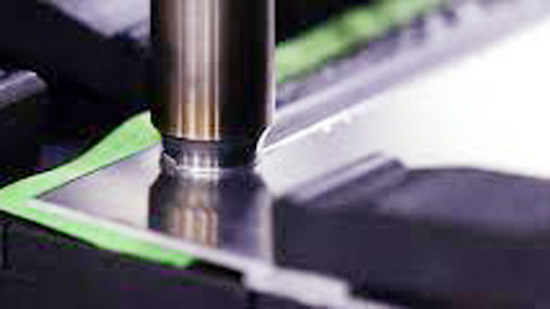
Image by idecomunicacion, reddit
What Exactly Is Ultrasonic Welding, and How Does It Work on the Shop Floor?
Ultrasonic welding takes two thermoplastic parts, presses them together, and blasts them with 20–40 kHz vibrations through a precisely tuned horn (sonotrode). The energy director—a small triangular ridge molded or machined into one part—concentrates the friction right at the joint line.
In under a second the interface melts, molecules interlock, and you get a weld that’s often 80–90 % as strong as the parent material.
No filler rod. No external heat source that can burn the surface. The whole thing stays cool to the touch except at that tiny weld zone. That’s why electronics shops love it for sealing battery cases and why medical guys use it for fluid-tight catheters.
In my shop we run Dukane and Branson systems—the workhorses you see in most American fabrication houses. Typical settings for 1/8-inch ABS: 20 kHz, 40–60 µm amplitude, 2–3 bar pressure, 0.4-second weld time, 0.8-second hold. Too much amplitude and you get flash squirting out like toothpaste. Too little and the joint just vibrates itself apart later.
The beauty is repeatability. Once the horn is tuned and the fixture holds the parts dead square, every weld looks identical. That’s huge when you’re quoting high-volume work or trying to pass ISO audits.
Heat Staking Explained: The Process That Lets You Secure Inserts Without the Vibration Headache
Heat staking is simpler on paper but trickier in practice. You heat a metal or plastic stake—usually a molded boss or a threaded insert—until the plastic reaches its glass transition temperature, then form it over with a cold or cooled punch. The plastic flows around knurls or undercuts and locks everything solid when it cools.
We use it constantly for trapping brass inserts in polycarbonate enclosures or forming retaining heads on nylon clips. The heated tool (direct contact, hot-air, or pulse) sits at 300–550 °F depending on the material. You apply light pressure—usually 20–80 lb—and hold for 2–5 seconds before cooling.
The real advantage shows up when parts sit on different planes or when you have eight different-size bosses on one housing. A single multi-tip heat-staking head can hit them all at once. Ultrasonic horns hate that geometry; you’d need multiple stations or expensive custom tooling.
Downside? The formed head is visible, and poor temperature control leaves you with stringy flash or weak, under-formed stakes. I’ve seen guys crank the heat to get faster cycles and end up with brittle stakes that snap under torque.
Ultrasonic Welding vs Heat Staking: A Side-by-Side Breakdown Every Fabricator Needs
Here’s the comparison I keep taped inside my toolbox. It’s based on hundreds of real runs, not theory.
| Aspect | Ultrasonic Welding | Heat Staking |
|---|---|---|
| Cycle time | 0.5–2 seconds total | 4–15 seconds (heating + cooling) |
| Best part size | Small to medium (under 12″ typical horn length) | Any size; multiple planes in one cycle |
| Material thickness | Thin walls (down to 0.02″) excel | Thicker walls and dissimilar materials shine |
| Joint strength | Molecular bond, 80–90% of base | Mechanical lock, 60–80% of base |
| Aesthetics | Nearly invisible weld line | Visible formed head (can be hidden with design) |
| Equipment cost (entry) | $8k–$25k for a decent bench unit | $3k–$12k for basic multi-tip machine |
| Energy use | Very low | Higher (heating elements) |
| Vibration/Noise | Noticeable (ear protection required) | Quiet |
| Insert capability | Possible but limited | Excellent—metal, ceramic, threaded inserts |
| High-volume sweet spot | 10,000+ parts/day | 500–5,000 parts/day |
I’ve watched ultrasonic win on dashboard speaker grilles (clean look, fast) and heat staking dominate on truck bumper sensor mounts (big metal inserts, multiple planes).
When to Pick Ultrasonic Welding Over Heat Staking (Real Shop Scenarios)
Choose ultrasonic when:
- You need hermetic seals (medical filters, battery packs).
- Surface appearance matters—consumer products, visible automotive trim.
- Production volume is high and you can amortize the horn design.
- Parts are thin or delicate and vibration-sensitive inserts would crack.
Last month we switched a run of ABS laptop hinge covers from heat staking to ultrasonic. Cycle time dropped from 12 seconds to 1.8 seconds, scrap fell from 8 % to under 1 %, and the customer stopped complaining about visible stake marks. Paid for the new horn in two weeks.
When Heat Staking Saves the Day – And When It Doesn’t
Go heat staking when:
- You’re installing metal threaded inserts into glass-filled nylon (ultrasonics crack the material).
- Stakes sit on multiple levels or different diameters.
- Budget is tight and you’re running low-to-medium volume.
- The part will see high torque loads (the mechanical lock beats a vibration weld here).
We once had a prototype run of 400 solar panel mounting brackets. Heat staking let us use one fixture to form six different-size bosses plus two brass inserts in a single 9-second cycle. Ultrasonic would have needed three separate stations and custom horns we couldn’t justify for a short run.
It falls apart on very thin walls (under 1 mm) or when you need zero visible deformation.
Shop-Tested Settings That Make or Break Your Joints
Ultrasonic (common USA plastics):
- ABS/PC: 20 kHz, 35–55 µm amplitude, 0.3–0.6 s weld, 1.5 bar
- Polypropylene: 35 kHz recommended (better transmission), 50–70 µm, 0.5–0.8 s
- Nylon 6/6 (glass-filled): lower amplitude 25–40 µm to avoid cracking
- Always start 10 % low on amplitude and ramp up—easier to add energy than remove flash.
Heat Staking:
- ABS: 375–425 °F tool temp, 40–60 lb force, 2–3 s heat, 3 s cool
- Polycarbonate: 450–500 °F, lighter 30 lb force (material flows easily)
- Nylon: 525–575 °F because of higher melt point
- Pulse staking (rapid on/off heat) cuts stringing on high-temp materials.
Pro tip: For both processes, record your exact settings, part lot number, and ambient shop temp in a log. When a batch fails six months later you’ll know exactly what changed.
Joint Prep and Design Tips That Prevent 90% of Failures
Ultrasonic needs an energy director—0.020–0.040″ high triangular ridge. If the molder skipped it, you can CNC one in, but it’s extra labor. Parts must be dry; nylon and PET will weld like wet newspaper if they’ve absorbed moisture.
Heat staking wants a boss with proper draft (1–2°) and wall thickness at least 50 % of the boss diameter. Chamfer the top of the boss so the forming tool centers itself. Pre-drill insert holes 0.002–0.004″ undersize for a press fit before heating.
Clean both processes hate mold release and fingerprints. I keep isopropyl wipes right at the station.
Material Compatibility Guide: What Plastics Play Nice With Each Process
Ultrasonic winners: ABS, PC, PMMA (acrylic), PS, SAN, PPO, PES. Same-material welds are strongest. Dissimilar works only if melt temps are within 50 °F and chemical compatibility is good (PP to PE is marginal).
Heat staking winners: Almost anything thermoplastic plus metal, ceramic, or even wood inserts. Glass-filled nylon, PBT, and high-temp PEI all stake beautifully.
Red flags: PTFE, acetal, and most elastomers don’t weld ultrasonically. Heat staking can handle them but needs specialized low-temp tools.
Safety Gear and Shop Practices That Keep You Productive and Injury-Free
Ultrasonic machines are loud—ear muffs or plugs every time. The horn gets warm from friction, not hot, but fingers still get pinched in fixtures. I use two-hand anti-tie-down controls on every press.
Heat staking means hot tools at 500 °F. Keep a dedicated quench pot of water nearby for dropped punches and always use thermal gloves when changing tips. Ventilation matters—some plastics off-gas when overheated.
Both processes are cleaner than solvent bonding, but still sweep flash daily. One stray plastic chip under a fixture and your next 50 parts shift out of alignment.
Cost Reality Check for USA Shops: Equipment, Running, and Rework
Entry-level ultrasonic bench unit: $9,000–$15,000 plus $800–$2,500 per custom horn. Running cost is pennies per part once running.
Basic heat staker: $4,000–$8,000. Tips are cheap to replace. Multi-tip heads run $1,200–$3,000 but pay back fast on medium runs.
Rework is where the real money hides. A bad ultrasonic weld usually means scrap—the bond is too strong to separate cleanly. A poorly formed stake can sometimes be reheated and fixed. Factor that into your quoting.
Step-by-Step: Setting Up Your First Ultrasonic Weld
- Design or confirm energy director on CAD.
- 3D-print or machine a simple nest fixture that locates parts within 0.005″.
- Tune the horn (most suppliers do this free with purchase).
- Start with manufacturer baseline settings, drop amplitude 15 %, run three test parts.
- Pull-test or torque-test. Increase amplitude in 5 µm steps until you hit target strength without flash.
- Lock the recipe in the welder’s memory and train the operator on “horn down, hands clear.”
Step-by-Step: Running a Clean Heat Stake Cycle
- Set tool temperature 50 °F above the plastic’s melt point.
- Insert or align the boss.
- Lower the head, apply light pressure, start heat timer.
- At end of heat cycle, switch to cool air or water-cooled punch for 2–3 seconds.
- Retract and inspect—stake head should be round, flat, and fully formed without strings.
- Adjust temp or time in 10 °F or 0.5-second increments.
Common Mistakes That Still Catch Pros (And the Fixes)
Mistake 1: Running ultrasonic on moist nylon. Parts weld then crack in service. Fix: dry in oven at 175 °F for 4 hours.
Mistake 2: Overheating stakes on glass-filled material. Glass floats to surface and weakens the lock. Fix: lower temp 25 °F and extend heat time slightly.
Mistake 3: Using one universal horn for every part size. Amplitude drops at the edges and you get weak spots. Fix: custom horn or multiple stations.
Mistake 4: Ignoring draft angle on stakes. Forming tool sticks and tears the plastic. Fix: 1° minimum draft and light mold release on the tool.
Final Talk
I’ve made every one of these. The difference between a weekend warrior and a shop that wins repeat business is writing them down and never repeating them.
You now know exactly when ultrasonic welding versus heat staking makes sense, what settings actually work on real USA machines, and how to avoid the scrap that kills margins.
Next time a plastic assembly job lands on your bench, you won’t be guessing—you’ll be choosing the process that finishes faster, stronger, and cleaner.
Prototype both methods on the first five parts. Spend the extra 20 minutes. The data you collect will save you hours of rework and thousands in scrap down the road. That’s how the best shops stay ahead.
FAQs
Can I use ultrasonic welding to install metal threaded inserts the way I do with heat staking?
Not reliably on most materials. Ultrasonic insertion works on softer plastics and small inserts, but glass-filled or high-melt materials crack under the vibration. Heat staking is the safer, stronger choice for metal inserts.
What’s the cheapest way for a hobbyist or small shop to get started with either process?
Start with heat staking. A $3,500 pneumatic unit with interchangeable tips will handle 80 % of jobs. Ultrasonic entry is double the price once you add custom horns. Build experience with heat first, then add ultrasonic when volume justifies it.
How do I tell if my plastic parts are too thick for ultrasonic welding?
If wall thickness exceeds 6 mm or the weld path is longer than your horn can reach evenly, switch to heat staking. Rule of thumb: if you can’t get consistent amplitude across the entire joint, heat staking wins.
Does heat staking leave parts weaker than ultrasonic welds?
Not if designed correctly. A well-formed stake can exceed the pull-out strength of the base plastic. Ultrasonic gives better shear strength in thin joints, but heat staking excels in tension and torque.
Can I switch from one process to the other on the same part design?
Sometimes, but rarely without redesign. Ultrasonic needs an energy director; heat staking needs a taller boss. Changing mid-project usually means new tooling or molded parts. Plan the joining method before the mold is cut.