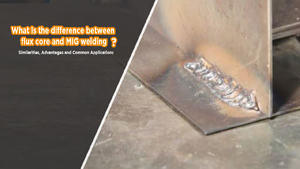
Welding body panels with flux core can be a tricky process, but once you get the hang of it, you can achieve strong, reliable welds without the need for shielding gas. If you’re restoring an old car, repairing rust damage, or fabricating custom panels, flux core welding can be a great solution. It works well in outdoor environments, penetrates well on thicker metals, and provides decent strength.

Image by yeswelder
However, it also comes with some challenges, such as excess spatter and potential burn-through on thin metal.
If you’re new to welding body panels with flux core or want to improve your technique, I’ll walk you through everything you need to know. From selecting the right wire and settings to making clean, precise welds, I’ll share practical tips based on real experience.
Choosing the Right Flux Core Wire for Welding Body Panels
One of the most important things in flux core welding is selecting the right wire. Since body panels are usually made from thin sheet metal, using the wrong wire can cause burn-through, excessive heat, or weak welds.
The two main types of flux core wire are E71T-11 and E71T-GS. Here’s a quick comparison of both:
| Wire Type | Characteristics | Best For |
|---|---|---|
| E71T-11 | Can be used in all positions, produces strong welds but with more spatter | Thicker body panels, stronger welds |
| E71T-GS | Self-shielded, produces less spatter but weaker welds | Thin body panels, reducing burn-through |
For welding body panels, E71T-GS is generally the better choice because it runs smoother and produces less heat. If you’re working with slightly thicker panels, E71T-11 may work well too, but be prepared to deal with more cleanup due to spatter.
Setting Up Your Welder for Flux Core Body Panel Welding
Welding thin metal requires precise settings to avoid burning through or warping the panel. Here’s how to set up your welder properly:
- Wire Size: 0.030-inch or 0.035-inch flux core wire (0.030 is better for thinner panels)
- Polarity: DCEN (Direct Current Electrode Negative) for flux core welding
- Voltage & Amperage: Keep the voltage and amperage low to prevent overheating the panel
- Wire Feed Speed: Start with a medium speed and adjust based on penetration and bead appearance
- Shielding Gas: None needed (flux core is self-shielded)
Every welder is different, so it’s always a good idea to practice on scrap sheet metal before working on the actual panel.
Preparing the Metal for Welding
Good preparation makes welding much easier and improves the quality of your welds. Here’s what you need to do before starting:
- Clean the Surface: Remove paint, rust, and grease using a wire brush, grinder, or sandpaper
- Fit Up the Panels: Make sure the panels fit tightly together with minimal gaps
- Use Clamps or Magnets: Secure the panels to prevent movement during welding
- Tack Weld First: Place small tack welds every inch or two to hold the panel in place before making full welds
Welding Techniques for Flux Core Body Panel Welding
Flux core welding can be more challenging on thin metal compared to MIG welding with gas, but with the right technique, you can achieve good results.
Short Stitch Welds
Instead of trying to lay down long beads, use short stitch welds. This reduces heat buildup and prevents warping. A good approach is to make a 1-second weld, then move to another section before coming back.
Backstep Welding
This method involves welding in short sections while moving in the opposite direction. For example, instead of welding from left to right in one pass, weld a small section, then go back and weld the next section slightly overlapping the previous weld. This minimizes distortion and helps control heat.
Skip Welding
Instead of welding in a straight line, move around and weld small sections in different places. This spreads the heat out evenly and prevents excessive warping.
Pushing vs Pulling the Torch
With flux core welding, pulling (dragging) the torch usually works best. Keep the tip at a slight angle (around 10-15 degrees) and move smoothly. Pulling the torch helps control penetration and reduces spatter.
Avoiding Common Problems
When welding body panels with flux core, you might run into some common issues. Here’s how to avoid them:
- Burn-Through: Lower your amperage and use shorter welds. If necessary, use a copper backing plate behind the panel to absorb excess heat.
- Excessive Spatter: Check your wire speed, hold a steady angle, and keep a consistent travel speed.
- Weak Welds: Make sure your panels fit tightly and that you’re getting good penetration without burning through.
- Warping: Use stitch welding, backstepping, and skip welding to keep heat levels under control.
Grinding and Finishing the Welds
Once you’ve completed welding, the next step is making the welds smooth and ready for paint. Here’s the best way to finish your welds:
- Grind Down the Welds – Use a flap disc or grinding wheel to smooth out the weld beads. Avoid overheating the metal while grinding.
- Fill Small Gaps – If there are pinholes or gaps, go back and lightly tack weld to fill them in.
- Sand the Surface – Use fine sandpaper to blend the weld area into the panel.
- Apply Body Filler (If Needed) – If you’re going for a seamless look, apply a thin layer of body filler and sand it smooth.
- Prime and Paint – Once everything is smooth, apply primer and paint to protect the metal.
Why Choose Flux Core for Body Panel Welding?
While MIG welding with gas is often the preferred method for body panels, flux core welding has its advantages. Here’s why it can be a good choice:
- Works Well Outdoors: No need to worry about wind blowing away shielding gas.
- Stronger Penetration: Flux core welding provides deeper penetration, which can be useful on thicker panels.
- More Affordable: You don’t need a gas tank, making it a budget-friendly option.
- Portable Setup: Flux core welders are easy to transport and set up anywhere.
Conclusion
Welding body panels with flux core takes patience and the right technique, but it’s definitely possible to achieve great results. By choosing the right wire, setting up your welder correctly, and using proper welding techniques like short stitch welding, backstepping, and skip welding, you can create strong and clean welds on thin metal.
The key to success is practice. Spend time working on scrap sheet metal to fine-tune your settings and technique before working on your actual project. With time and experience, you’ll be able to weld body panels with confidence and get professional-quality results.
Frequently Asked Questions
Can you weld body panels with flux core wire?
Yes, you can, but you need to use the right settings and technique to prevent burn-through and excessive spatter.
What is the best flux core wire for body panels?
E71T-GS is the best choice for thinner body panels because it runs smoothly and produces less heat.
How do you prevent warping when welding body panels?
Use short stitch welds, skip welding, and keep heat levels under control by allowing the panel to cool between welds.
Should I push or pull the torch when welding with flux core?
Pulling (dragging) the torch works best for flux core welding, as it helps control penetration and reduces spatter.
How do you clean up flux core welds on body panels?
Use a flap disc or grinding wheel to smooth the welds, then sand the area before priming and painting.
With the right preparation and practice, flux core welding can be a reliable method for welding body panels. Keep experimenting with settings and techniques until you find what works best for your specific project.