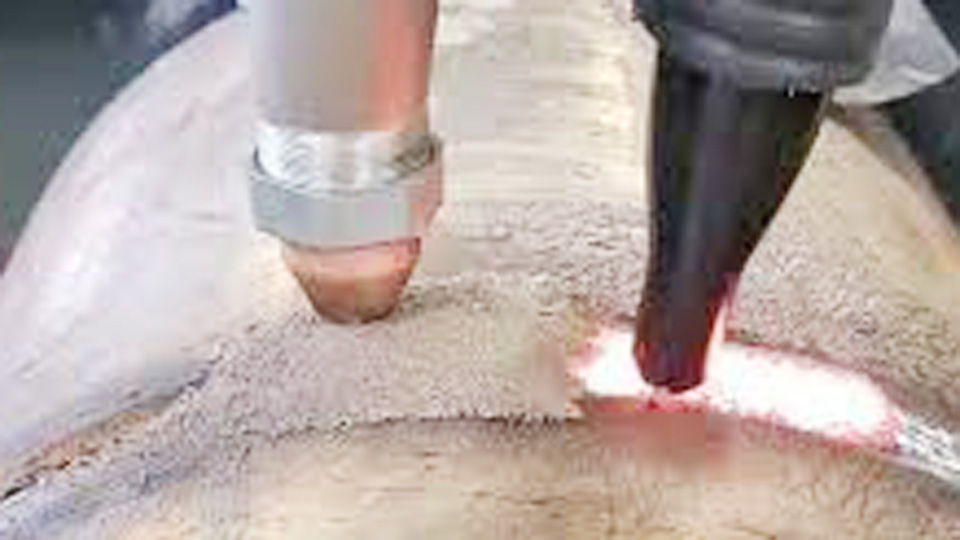
I was running a long seam on a thick steel plate when the molten weld pool kept reacting unpredictably. That’s when I realized how critical flux in submerged arc welding really is.
Unlike other welding methods, this process buries the arc under a blanket of flux, which shields the weld, controls the molten metal, and even affects penetration and bead shape. Skip the right flux—or use it wrong—and your welds can end up porous, weak, or full of defects.
Understanding flux isn’t just a technical detail—it’s key to producing clean, strong, and consistent welds while saving time and rework. In this article, I’ll break down what flux does, the types to choose from, and practical tips to get it right every time.

Image by reddit.com/r/EngineeringPorn
What Role Does Flux Play in Shielding the Weld Pool?
Flux in arc welding, especially in processes like SMAW (shielded metal arc welding), acts as a protective barrier. At its core, flux is a chemical compound coated on the electrode or added separately in some processes.
When you strike the arc, it melts and creates a gas shield that keeps oxygen, nitrogen, and other atmospheric nasties away from the molten metal. Without it, your weld would oxidize instantly, leading to brittle, porous results that fail under stress.
How it works is pretty straightforward once you’ve seen it in action. As the electrode burns, the flux decomposes, releasing gases like carbon dioxide and sometimes adding slag—a glassy layer that floats on top of the weld pool.
This slag cools slower than the metal, protecting it from rapid oxidation while it solidifies. In my shop, I’ve used this to my advantage on outdoor jobs where wind could blow away shielding gas from a MIG setup—flux makes SMAW more forgiving in those real-world conditions.
You’ll want to use flux-heavy electrodes when welding in dirty or rusty environments, like repairing heavy equipment on a construction site. Why? Because certain fluxes include deoxidizers that clean up impurities in the base metal.
For instance, on mild steel with mill scale, a rutile-based flux (like in E6013 rods) helps penetrate without excessive prep work. But if you’re on clean stainless, you might opt for a basic flux to minimize hydrogen pickup and avoid cracking.
From experience, one practical tip is to store your electrodes properly—keep them in a dry oven at around 250°F to prevent moisture absorption, which can ruin the flux’s effectiveness and cause hydrogen-induced cracks.
I’ve learned this the hard way after a batch of damp rods led to underbead cracking on a pressure vessel repair. Always check for flux damage before starting; if it’s flaking off, toss the rod and grab a fresh one.
How Does Flux Stabilize the Arc and Improve Weld Quality?
Stabilizing the arc is one of flux’s key jobs, and it does this by ionizing the air gap between the electrode and workpiece, making the electrical flow smoother. Without stable arc characteristics, you’d deal with erratic burning, which means uneven penetration and a bead that’s all over the place.
Flux adds elements like potassium or sodium compounds that lower the ionization potential, so the arc starts easier and holds steady even at lower amperages.
In practice, this translates to better control on thin materials. Take a 1/8-inch mild steel plate: With a flux-coated rod like E7018, the arc stays smooth, reducing burn-through risks.
The flux also influences droplet transfer—smaller, more frequent droplets for a finer bead. I’ve used this on vertical welds where gravity wants to pull everything down; the right flux keeps things tidy.
Choose this when you’re dealing with positional welding or varying joint gaps. For overhead work on structural beams, a low-hydrogen flux helps prevent sagging and undercutting.
Because unstable arcs lead to distortion from uneven heat input, warping your workpiece and requiring extra straightening time—which costs money in a busy shop.
A shop-floor tip: Match your amperage to the flux type. For cellulose-based fluxes (like E6010), run hotter—say 90-140 amps on a 1/8-inch rod—to burn through rust effectively. But dial it back to 70-120 amps for rutile types to avoid excessive spatter. I always test on scrap first; it saves headaches.
Common mistake? Cranking the amps too high, which volatilizes the flux prematurely and leaves your weld exposed. Fix it by dropping 10-20 amps and shortening your arc length to about 1/8 inch.
When Do You Need Different Types of Flux for Specific Materials?
Not all fluxes are created equal, and picking the right one depends on your base metal and job requirements. For carbon steels, acidic fluxes like those in E6010 rods excel at deep penetration on dirty surfaces—think pipeline welding where prep time is limited. They produce more slag but clean up oxides well.
How they work varies: Basic fluxes (E7018) are alkaline and absorb less moisture, ideal for high-strength steels to prevent cracking. They form a tougher slag that’s easier to chip off, leaving a smooth bead. Rutile fluxes (E6013) balance ease of use with good appearance, making them go-tos for general fabrication.
Use acidic fluxes when speed matters, like on farm repairs where you’re welding rusty angle iron. For critical jobs like bridge components, switch to basic for low-hydrogen properties—essential to avoid delayed cracking in thick sections.
In my experience, material compatibility is crucial. On aluminum, you wouldn’t use standard flux-coated rods; instead, consider flux-cored wires for FCAW if adapting arc processes. But for steels, ensure the flux alloys match—some add manganese or silicon to deoxidize and strengthen the weld metal.
Practical advice: Always check AWS classifications. An E7018 rod’s flux is designed for AC/DC, low-hydrogen applications, so pair it with clean joints prepped by grinding.
Mistake I see often: Using a high-cellulose rod on clean metal, which causes unnecessary spatter. Fix by switching rods and preheating if needed—150°F for thicker plates to reduce thermal shock.
Here’s a quick comparison table of common flux types:
| Flux Type | Best For | Penetration | Slag Removal | Hydrogen Control |
|---|---|---|---|---|
| Cellulose (E6010) | Dirty/rusty steel, root passes | Deep | Moderate | Poor |
| Rutile (E6013) | General mild steel, all positions | Medium | Easy | Fair |
| Basic (E7018) | High-strength steel, critical welds | Good | Easy | Excellent |
| Iron Powder (E7024) | Flat/horizontal, high deposition | Shallow | Self-peeling | Good |
This table has saved me time when training new guys—pick based on the job, not habit.
Why Does Flux Affect Penetration and Bead Appearance?
Flux directly impacts how deep your weld penetrates and what the final bead looks like. By controlling the arc force and slag viscosity, it can dig deeper or spread wider. For example, high-dig fluxes like cellulose create a forceful arc that blasts through contaminants, giving excellent root penetration on pipe joints.
The mechanism involves the flux’s composition altering the arc plasma. More volatile components increase arc pressure, pushing the weld pool deeper. This is why E6010 is a staple for root passes in multi-pass welds—it ensures fusion without gaps.
Apply this when building up thick sections or on grooves where full penetration is non-negotiable, like in pressure piping. Why? Incomplete penetration leads to stress concentrations and failures under load—I’ve seen it on trailer hitches that snapped mid-haul.
Shop tip: Adjust electrode angle. Drag at 15-20 degrees for deeper penetration with penetrating fluxes; push for wider beads on filling passes. Amperage matters too— for a 5/32-inch E7018, aim for 120-180 amps on DC positive for balanced penetration without undercutting.
Beginners often overdo it, leading to excessive penetration and burn-through on thin stock. Pros might skimp on flux integrity, using damaged rods that flake and cause inclusions. To fix a porous bead from bad flux, grind it out, re-prep the joint with a 30-degree bevel, and reweld with fresh rods at lower amps.
How Can You Troubleshoot Flux-Related Issues in the Shop?
Flux problems show up as spatter, porosity, or slag inclusions, and troubleshooting starts with basics. If your arc is unstable, check for contaminated flux—moisture or oil can cause it. Porosity often means the flux isn’t shielding properly, maybe from too long an arc or wind interference.
It works by isolating causes: Test electrode dryness, machine settings, and technique. In SMAW, flux should melt uniformly; uneven burning points to wrong polarity or amps.
Tackle this anytime a weld looks off—don’t ignore it, as it compounds into bigger defects. Why fix now? Rework eats profits; a quick check prevents that.
From my shop: Once, on a batch of E6013 rods, high humidity caused cracking. Solution? Baked them at 300°F for an hour.
Tip: Use a rod oven daily. For amperage, start mid-range—say 100 amps on 3/32-inch rods—and adjust by 10-amp increments while watching the puddle.
Step-by-step guide for fixing slag inclusions:
- Inspect the weld: Look for trapped slag lines.
- Grind out the defect: Use a 4-inch angle grinder to remove to sound metal.
- Clean the area: Wire brush and solvent wipe.
- Select matching rod: Ensure flux type suits the base.
- Reweld: Short arc, proper weave to float slag out.
- Chip and inspect: Verify no remnants.
This has bailed me out on countless repairs.
What Safety Considerations Come with Using Flux in Arc Welding?
Flux generates fumes and slag, so safety is non-negotiable. The decomposition releases gases that can be hazardous—think hexavalent chromium from stainless fluxes, which demands ventilation.
How it ties in: Flux shields the weld but exposes you to risks if mishandled. Always wear a respirator rated for welding fumes, especially indoors.
Prioritize this on every job—OSHA regs in the US mandate it for good reason. Why? Long-term exposure leads to respiratory issues; I’ve known welders sidelined by it.
Practical measures: Use exhaust fans or fume extractors on your US-made machines like Lincoln or Miller welders. For slag, wear gloves and eye protection—hot chips fly when chipping.
Mistake: Skipping PPE on quick jobs. Fix by making it routine. Also, handle rods carefully; some fluxes contain fluorides that irritate skin.
Pros and Cons of Flux in Different Arc Welding Processes
While SMAW relies on electrode flux, other processes like FCAW use flux-cored wires. Pros of flux: Self-shielding, no need for external gas, portable for field work. Cons: More slag cleanup, slower deposition rates than gas-shielded methods.
In TIG, flux is rare, but pastes exist for specific alloys. Compare to GMAW, where no flux means cleaner welds but weather sensitivity.
Use fluxed processes for outdoor repairs—I’ve favored FCAW on windy sites for its wind resistance up to 35 mph.
Table of pros/cons for flux in SMAW vs. FCAW:
| Process | Pros | Cons |
|---|---|---|
| SMAW (Stick) | Versatile, low cost, good for dirty metal | Heavy slag, position-limited |
| FCAW (Flux-Cored) | High deposition, deep penetration | Fume-heavy, wire feed issues |
This helps decide for jobs like auto body vs. structural steel.
How to Select Electrode Diameters and Amperage for Optimal Flux Performance
Electrode size affects flux delivery—thicker rods carry more flux for bigger welds. Common diameters: 3/32-inch for light work, 1/8-inch for general, 5/32-inch for heavy.
Amperage ranges: For 1/8-inch E6013, 75-125 amps; E7018, 90-160 amps. Too low, flux doesn’t activate fully; too high, it burns off.
Choose based on thickness—1/8-inch rod for 1/4-inch plate. Why? Balances heat input to minimize distortion.
Tip: On US machines, use DC for most fluxes; AC for rutile if DC flickers. Anecdote: On a forklift repair, wrong diameter caused shallow welds—switched to 5/32-inch at 140 amps, problem solved.
Joint prep: Bevel edges 60 degrees for full penetration, clean to bare metal.
Filler compatibility: Match rod to base—E7018 for A36 steel.
Wrapping Up
Mastering flux’s functions has transformed how I approach every weld, from quick fixes to complex fabrications. You’ve got the guide to spot issues early, pick the right setups, and avoid costly mistakes that plague even seasoned welders.
With this knowledge, you’ll produce cleaner, stronger joints that hold up in real use, saving you time and frustration in the shop.
Always weave slightly on filling passes to ensure the flux’s slag floats impurities out—it’s a small move that prevents inclusions and boosts weld integrity every time.
FAQs
Can You Weld Without Flux in Arc Processes?
Absolutely, but only in gas-shielded methods like MIG or TIG—flux is essential for self-shielded arc welding to protect from atmosphere. If skipping flux in SMAW, expect oxidation and weak welds; stick to fluxed rods for reliability.
What’s the Best Flux for Welding Rusty Metal?
Go with cellulose-based like E6010—its aggressive dig burns through rust without much prep. Run at 90-140 amps on 1/8-inch rods, but grind heavy scale first to minimize spatter.
How Do You Know If Your Flux Is Bad?
Signs include erratic arc, excessive smoke, or porous beads. Test by baking rods; if it persists, discard the batch. Moisture is the usual culprit—store in a rod oven.
Why Does My Weld Have Too Much Slag From Flux?
Often from long arc length or low amps—shorten to 1/8 inch and bump amps 10-20. Also, chip between passes; trapped slag weakens the joint.
Is Flux the Same in All Welding Rods?
No, it varies by type—cellulose for penetration, basic for low-hydrogen. Check AWS codes; mismatch leads to cracks or poor fusion.