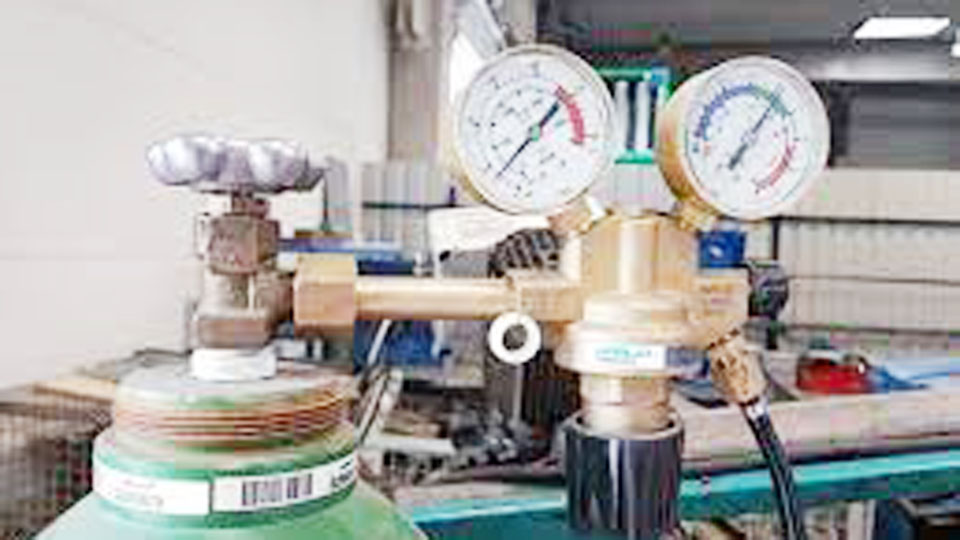
Running a clean weld can feel great—until the argon suddenly runs out and the arc turns unstable in seconds. I’ve had beads go from smooth to messy fast, with spatter popping and color changing right in front of me. That moment forced me to learn how to calculate argon gas consumption for welding the practical way, using real numbers instead of guessing at the flowmeter.
After years of MIG and TIG welding in workshops and on job sites, I’ve learned that shielding gas control directly affects weld strength, appearance, and cost. Too little argon leads to contamination and weak welds, while too much quietly drains your cylinder and your budget. I’ve made both mistakes—and paid for them.
If you’ve ever wondered why a tank empties faster than expected or how to plan gas usage before starting a job, this is for you. I’ll break it down using simple, real-world steps that actually work, so you can set your flow right and weld with confidence from start to finish.
Image by kingsofwelding
Understanding Argon Gas in Welding
Argon is an inert gas, meaning it doesn’t react with other elements easily, which makes it perfect for shielding your weld pool from the air around us. In welding, it creates a stable atmosphere that prevents oxidation and other defects that could compromise the strength of your joint.
I’ve used it on everything from aluminum bike frames to stainless steel exhaust systems, and it always delivers that clean, professional finish.
Why bother with argon over other gases? It’s all about compatibility and performance. For non-ferrous metals like aluminum or titanium, argon is non-negotiable because it provides excellent arc stability and minimal spatter.
In my experience, mixing it with a bit of CO2 for steel work can save money, but pure argon shines in TIG setups where precision is key. Think about those aerospace parts or food-grade piping – argon’s purity ensures no contamination, aligning with US welding codes like AWS D1.1 for structural steel.
But here’s where it gets practical: argon consumption isn’t a one-size-fits-all deal. It depends on your setup, the job at hand, and even the weather in your shop. High humidity? You might need a tad more flow to keep moisture out.
I’ve learned this the hard way on humid summer days in Texas, where skimping on gas led to porous welds that had to be ground out and redone.
Common Welding Processes That Use Argon
Argon plays a starring role in several processes, each with its own gas hunger. Take TIG welding, or GTAW as it’s formally known – that’s where I cut my teeth. In TIG, argon flows continuously to shield the tungsten electrode and the weld pool, typically at 10-20 cubic feet per hour (CFH). It’s ideal for thin materials or detailed work, like custom motorcycle parts, because of the control it offers.
Then there’s MIG welding, or GMAW, which often uses argon mixtures like 75/25 argon/CO2 for mild steel. Pure argon here is great for aluminum, pushing flow rates up to 25-35 CFH depending on the gun nozzle.
I’ve switched between the two on fabrication jobs, and the difference in gas use is noticeable – MIG guzzles more because of the higher speeds and continuous wire feed.
Don’t forget about pulsed MIG or even some flux-cored applications where argon enhances penetration. For hobbyists, starting with TIG might seem gas-efficient, but pros in auto shops often lean on MIG for volume work. Whichever you choose, matching the process to your material is crucial for minimizing waste and maximizing weld quality.
Why Argon Matters for Weld Integrity and Cost Efficiency
From a hands-on standpoint, argon’s role in weld integrity can’t be overstated. Without enough gas, you get inclusions or cracks that fail inspections – think about bridge repairs or pressure vessels where ASME codes demand perfection. I’ve inspected welds that looked fine on the surface but hid gas pockets from inadequate shielding, leading to expensive fixes.
On the cost side, calculating consumption helps you budget better. A standard 125 cubic foot cylinder might last 6-10 hours at 15 CFH, but push it to 25 CFH and you’re down to 5 hours. In my shop, I track this to avoid rush orders on tanks, which add premiums.
For DIYers, this means stretching your hobby budget further, maybe affording that extra spool of wire instead of another gas refill.
Safety ties in too – proper gas flow prevents flashback or buildup of fumes. Always use regulators rated for argon, like those from Victor or Harris, to maintain consistent pressure. I’ve seen rookies ignore this and end up with erratic arcs that scorch materials or worse, cause burns.
Factors Affecting Argon Gas Consumption
No two welding jobs are identical, so argon use varies wildly based on several factors. I’ve tinkered with setups over years, and tweaking these can slash your consumption by 20-30% without sacrificing quality. Let’s break it down so you can spot where your gas might be leaking away – literally or figuratively.
First off, the welding environment plays a big role. Drafty shops? Wind from an open door can disperse your shielding gas faster than you think, forcing higher flow rates. I once welded outdoors on a breezy day and doubled my CFH just to maintain coverage – lesson learned: use wind screens or move inside when possible.
Material thickness and type influence it too. Thicker plates require longer weld times, thus more gas, while aluminum’s high thermal conductivity might need sustained flow to prevent overheating. Steel is more forgiving, but stainless demands pure argon to avoid discoloration.
Welding Process Type and Its Impact
As I mentioned earlier, TIG versus MIG makes a huge difference. In TIG, gas flow is steady but lower volume overall because you’re welding slower and more deliberately. A typical setup might use 12-18 CFH for a 1/8-inch aluminum plate.
MIG, on the other hand, is a gas hog due to faster travel speeds and the need for broader coverage around the wire. For 16-gauge steel, you’re looking at 20-30 CFH. I’ve compared the two on similar jobs: a TIG exhaust manifold took half the gas of a MIG version, but MIG finished quicker.
Choose based on your timeline and material – for pros in US fabrication shops, MIG’s efficiency often wins despite higher gas use.
Pulsed processes can optimize this, pulsing the current to reduce heat input and gas needs. If your machine supports it, like a Miller Dynasty or Lincoln Power MIG, experiment with settings to find that sweet spot.
Nozzle Size and Gas Flow Rate Settings
Your nozzle is the gatekeeper for gas delivery. A smaller nozzle, say 1/2-inch diameter, concentrates flow better for precision work, using less argon overall. Larger ones, up to 3/4-inch, spread it out for bigger beads but increase consumption.
Flow rate, measured in CFH, is adjustable on your regulator. Start low – I recommend 10-15 CFH for TIG indoors – and bump up if you see oxidation.
Use a flowmeter ball to verify; those cheap gauges can drift. In my experience, setting it too high wastes gas through turbulence, while too low invites defects. For MIG aluminum, 25 CFH is a safe bet on a standard #6 cup.
Joint design affects this too. Butt joints might need less gas than fillets, where the angle exposes more area. Prep your edges clean – burrs or gaps force extra flow to fill voids.
Welding Speed, Duration, and Environmental Factors
Speed is key: weld too slow, and you’re lingering with gas flowing unnecessarily. I train newbies to practice bead runs at consistent paces – aim for 6-8 inches per minute on thin stock to balance quality and efficiency.
Duration ties into project scale. A quick tack weld sips gas, but a long seam on a trailer frame chugs through it. Factor in pre-flow and post-flow times; 5-10 seconds each ensures purge but adds up over multiple starts.
Environmentally, temperature and humidity matter. Cold shops make gas denser, potentially reducing effective coverage, so adjust up slightly. High altitudes? Gas expands, so lower CFH might suffice. In Colorado jobs I’ve done, I dialed back 10% from sea-level settings.
How to Calculate Argon Gas Consumption Step by Step
Let’s get to the meat of it – calculating your argon needs so you don’t run dry. I’ve refined this over countless projects, and it’s straightforward once you break it down. Grab a notepad, your regulator readings, and let’s walk through it like we’re prepping for a big fab job.
Step one: Determine your average gas flow rate. Check your machine’s settings or use a flowmeter. For example, if you’re TIG welding at 15 CFH, that’s your baseline.
Step two: Estimate welding time. This includes actual arc time plus pre- and post-flow. Say a project takes 2 hours of welding, with 10 seconds pre-flow and 5 post-flow per start – if you start 20 times, that’s extra minutes of gas flow.
Step three: Multiply flow rate by time. 15 CFH x 2 hours = 30 cubic feet. But convert hours to minutes if needed – CFH is per hour, so for precision, calculate in fractions.
Step four: Account for inefficiencies. Add 10-20% for leaks, drafts, or overages. In my shop, I always pad by 15% after a leaky hose cost me a deadline once.
Step five: Check cylinder size. A common S-size tank holds 125 cubic feet at 2,200 PSI. Divide tank capacity by consumption rate to get runtime – 125 / 15 CFH = about 8 hours.
For mixtures, adjust for argon’s percentage. In 75/25, it’s 75% argon, so calculate accordingly if tracking pure cost.
Using Formulas for Precise Calculations
The basic formula is: Consumption (cubic feet) = Flow Rate (CFH) x Time (hours).
For more accuracy, include duty cycle. If your machine runs at 60% duty, effective time is less. Formula: Actual Consumption = CFH x (Arc Time in minutes / 60) + (Non-Arc Gas Flow).
I’ve used this on large jobs: for a 4-hour session with 50% arc time at 20 CFH, it’s 20 x 2 = 40 cubic feet, plus any idle flow.
Convert to liters if needed for international specs – 1 cubic foot = 28.3 liters. US welders stick to CFH, but it’s handy for global material datasheets.
Practical Examples for Different Welding Scenarios
Take a DIY aluminum repair: TIG at 12 CFH for 30 minutes. Calculation: 12 x 0.5 = 6 cubic feet. A small 40-cubic-foot tank lasts multiple sessions.
For pro MIG on steel frames: 25 CFH for 3 hours. 75 cubic feet – half a standard tank. I did a truck bed once and underestimated, swapping mid-job; now I calculate double for safety.
In a shop with multiple welders, scale up: team of three at average 18 CFH each for 8 hours = 432 cubic feet. Bulk tanks make sense here for cost savings.
Tools and Calculators for Accurate Measurements
You don’t have to do math in your head – tools make it easy. A good flowmeter, like the Victor FM series, gives real-time CFH readings. Install one inline for spot checks.
Online calculators abound, but I prefer apps like WeldCalc or even spreadsheet templates. Input process, material, and time; it spits out estimates. I’ve customized Excel sheets with my shop’s variables for quick quotes.
For precision, gas totalizers attach to your line and tally usage over sessions. Pricey at $200+, but they pay off in busy fabs by highlighting waste.
Compare regulators: a basic one might fluctuate, while digital models hold steady. Invest in quality – my Harris regulator has saved me gas through consistent delivery.
Comparison of Gas Consumption Across Processes
Here’s a quick table to visualize differences:
| Process | Typical Flow Rate (CFH) | Average Consumption per Hour (Cubic Feet) | Best For |
|---|---|---|---|
| TIG (Pure Argon) | 10-20 | 10-20 | Precision on non-ferrous metals |
| MIG (Argon Mix) | 20-35 | 20-35 | High-speed steel work |
| Pulsed MIG | 15-25 | 15-25 | Reduced heat input on thin stock |
Pros of lower flow: Cost savings, longer tank life. Cons: Risk of poor shielding if too low.
For TIG pros: Excellent control, minimal spatter. Cons: Slower, higher skill needed.
MIG pros: Faster, easier for beginners. Cons: Higher gas use, more cleanup.
Tips to Optimize Argon Gas Usage
Optimization is where experience shines. Start with leak checks – soapy water on fittings reveals bubbles. I do this weekly; a tiny leak once drained half a tank overnight.
Use gas savers like lens kits for TIG, which focus flow and cut use by 40%. Worth the $50 investment for frequent users.
Adjust for material: Aluminum needs more initial purge, so pre-flow longer but flow lower during weld.
In drafts, use trailing shields – add-on cups that extend coverage without extra CFH.
Batch jobs: Weld multiple pieces in one session to minimize start/stops and their gas bursts.
Store tanks upright, chained, in cool spots to prevent pressure issues. Follow OSHA guidelines for safety.
Common Mistakes and How to Fix Them
Biggest blunder: Setting flow too high out of fear. Fix: Test on scrap – start at 10 CFH and increase until welds are clean.
Ignoring post-flow: Cuts shield too soon, causing craters. Set to 5-10 seconds based on heat.
Poor hose maintenance: Kinks restrict flow, forcing higher settings. Inspect and replace annually.
Overlooking machine calibration: Amps affect heat, indirectly gas needs. Calibrate per manual.
Rookie error: Welding in wind without screens. Solution: Portable barriers or indoor relocation.
I’ve fixed all these in my time – now my gas bills are predictable, and welds consistent.
Advanced Considerations for Professional Welders
For you pros, dive deeper into variables like electrode extension in MIG – longer stickout reduces effective shielding, needing more gas.
Pulse settings: Lower average current means less melt, potentially lower flow. Experiment on test plates.
In codes like AWS, document consumption for traceability in critical welds, like nuclear or aero.
Bulk systems: Switch to manifolds for high-volume shops, cutting per-cubic-foot costs.
Hybrid gases: Argon/helium mixes for deeper penetration but higher consumption – calculate trade-offs.
In my fab work, these tweaks have boosted efficiency, letting me take on more jobs without gas worries.
Integrating Argon Calculations into Shop Management
Track usage logs: Note project, CFH, time, and actual used. Spot patterns over time.
Budgeting: Estimate annual needs based on calculations – say 5,000 cubic feet for a small shop.
Training: Teach trainees this early; it builds cost awareness.
Supplier deals: Buy in bulk once you know consumption, negotiating better rates.
Sustainability: Optimize to reduce waste – good for the planet and your wallet.
Conclusion
Wrapping this up
You’ve now got the tools and guide to calculate argon gas consumption for welding, from basic formulas to optimization tips. Whether you’re a hobbyist fixing up old tools or a full-time fabricator, this knowledge prepares you to tackle projects with confidence, ensuring strong welds without breaking the bank on gas refills. Remember, it’s all about balance – enough flow for protection, but not a drop more.
FAQ
What is the average argon flow rate for TIG welding?
For TIG welding, I typically set the flow rate between 10-20 CFH, depending on the material and conditions. Start at the lower end for indoor work on steel, and bump it up for aluminum or drafty spots to ensure full shielding without waste.
How long does a 125 cubic foot argon tank last?
A 125 cubic foot tank at 15 CFH lasts about 8 hours of continuous welding. Factor in your actual flow and duty cycle – in my experience, it stretches to 10-12 hours on lighter jobs with efficient settings.
Can I use the same argon calculation for MIG and TIG?
Not exactly – MIG often requires higher flow rates like 20-35 CFH due to faster speeds, so calculations will show more consumption. Adjust the formula based on process specifics, and always test on scrap to fine-tune.
What happens if I run out of argon mid-weld?
Running out mid-weld can cause immediate porosity or oxidation, weakening the joint. Stop, purge the line with fresh gas when refilling, and grind out the affected area before restarting to maintain integrity.
How do I convert CFH to liters per minute for argon?
To convert, divide CFH by 2.119 to get liters per minute – so 15 CFH is about 7.08 LPM. Handy for international equipment, but stick to CFH for US-standard regulators to avoid confusion.