
When it comes to cleaning up welds or prepping metal surfaces, few shop debates get hotter than needle scaler vs wire wheel. Every welder knows the struggle — you’re finishing a MIG bead, knocking off slag from a stick weld, or prepping stainless for a TIG pass, and you’ve got to decide which tool gets the job done best.
The needle scaler hits hard, blasting away rust, spatter, and mill scale from thicker metals, while the wire wheel gives a smoother, polished surface ideal for lighter cleanup and final joint prep. Choosing the wrong one can mess with weld penetration, arc control, and even structural integrity.
That’s why understanding how each tool really performs in the shop makes all the difference. Keep reading — this guide breaks down when to use a needle scaler, when to stick with a wire wheel, and how to get the best weld quality every time.
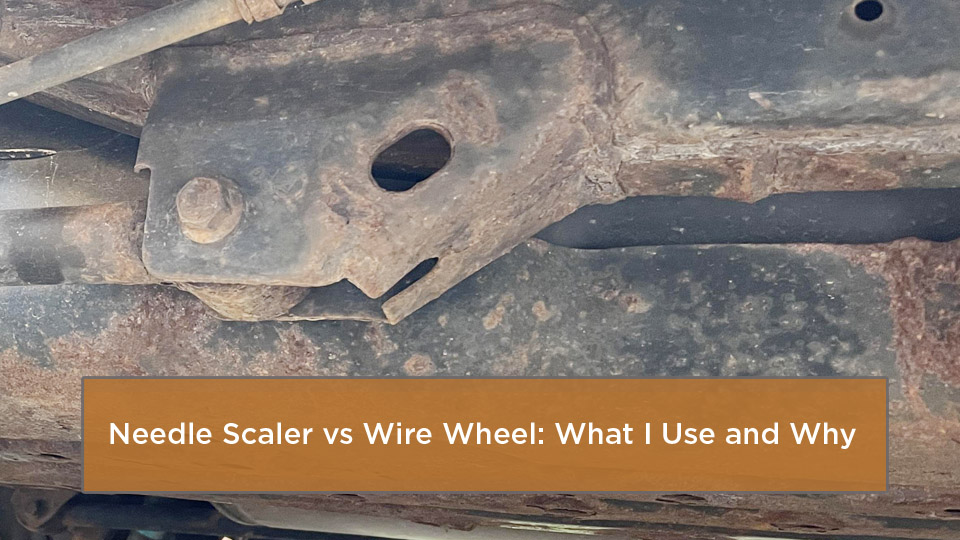
Image by reddit
What Is a Needle Scaler and How Does It Work
A pneumatic tool that looks a bit like a mini jackhammer with a bunch of thin needles at the end. That’s your needle scaler. It runs on compressed air, and when you pull the trigger, those needles piston back and forth at high speed – we’re talking thousands of blows per minute.
Each needle impacts the surface independently, chipping away at rust, paint, weld slag, or mill scale without digging too deep into the base metal if you handle it right.
I’ve used them on everything from heavy steel beams to automotive frames. The key is the air pressure – I usually set mine around 90 PSI for most jobs, but dial it back to 60-70 PSI on thinner materials to avoid dents.
It works by hammering loose the flaky stuff, creating a textured surface that’s great for paint adhesion or pre-weld cleaning. Think of it as knocking the big chunks off so you can get to the good metal underneath.
But here’s the real talk: it’s not a finish tool. After scaling, you’ll often follow up with something finer. In my shop, I keep spare needle sets handy because they wear down over time, especially on tough jobs.
When to Use a Needle Scaler for Rust Removal and Weld Prep
If you’re dealing with heavy corrosion – the kind where rust has built up in layers like old paint on a barn door – that’s prime needle scaler territory. I’ve pulled it out for prepping structural steel before MIG welding, where any leftover scale could cause spatter or weak joints. It’s killer for getting into crevices, around rivets, or inside box sections where other tools can’t reach.
For example, on a recent trailer repair, the frame had years of road salt buildup. The needle scaler popped off the thick flakes in minutes, leaving a pitted but clean surface ready for welding patches. Use it when time is money, like on job sites where you need to strip large areas fast without creating a dust storm.
Why choose it over alternatives? It minimizes heat buildup compared to grinding, which can warp thin metal. Just remember, for code-compliant work like ASME standards in the US, you need to ensure the surface meets cleanliness specs – often SSPC-SP 6 or better for commercial blast cleaning equivalents.
Common Mistakes with Needle Scalers and How to Fix Them
I’ve seen – and made – plenty of slip-ups with these. One big one is holding it perpendicular to the surface on thin stock. That’ll dent it faster than you can say “body filler.” Instead, angle it at about 45 degrees and let the needles do the work with light pressure. If you’re getting too much vibration or uneven scaling, check your air line for moisture – a water trap is essential to keep it running smooth.
Another mistake: skipping PPE. The noise is deafening, so ear plugs are non-negotiable. Debris falls straight down, but it can still fly if you’re aggressive. I once had a needle break off and ping across the shop – lesson learned, always wear safety glasses.
To fix uneven results, make overlapping passes and adjust pressure based on the material. For carbon steel, higher PSI; for aluminum, go easy to avoid gouging.
What Is a Wire Wheel and How It Fits into Your Toolkit
Switching gears, a wire wheel is basically a brush made of twisted or crimped steel wires attached to a hub that mounts on your angle grinder or drill. It spins at high RPMs – up to 10,000 or more – scrubbing away surface contaminants like light rust, paint, or weld spatter. There are cup brushes for flat areas and wheel types for edges.
In my experience, it’s a go-to for quick cleanups after welding, like brushing off slag from stick welds. I prefer knotted wire for aggressive action on mill scale, but crimped for finer finishes. Mount it securely, and always check the RPM rating to match your grinder – mismatched speeds can lead to wires flying everywhere.
It works by abrading the surface, almost like aggressive sanding, but with more bite. Great for prepping joints before TIG welding, where you need a smooth, contaminant-free area.
When Wire Wheels Shine in Surface Preparation
For lighter jobs, like removing surface rust on new steel or cleaning up after flux-core welding, wire wheels are efficient and cost-effective. I’ve used them on fabrication tables to knock off mill scale before laying beads – it creates a nice profile for better arc starts.
Think automotive panels or sheet metal work where you don’t want to remove too much material. On a hobby project like building a workbench, it quickly preps the legs for welding cross braces. Use it when dust isn’t a big issue, or pair with a shop vac. In US shops, it’s common for AWS D1.1 structural welding prep, where light cleaning suffices for non-critical joints.
Avoiding Pitfalls with Wire Wheels on the Job
Biggest blunder? Running it too fast or pressing too hard, which causes wires to break and embed in your skin or clothes. I had one lodge in my jeans once – not fun. Fix: Use medium pressure and let the speed do the work. Start at lower RPMs if your grinder has variable speed.
Another issue: Burnishing instead of removing. If it’s just shining the rust, switch to a coarser knot style or combine with a scaler first. Safety wise, leather gloves and a face shield are musts – those wires can whip back if the wheel catches an edge.
Key Differences Between Needle Scalers and Wire Wheels
Needle scalers are impact-based, perfect for heavy, flaky buildup, while wire wheels are abrasive for lighter, uniform cleaning. Scalers get into nooks; wheels cover broad areas fast.
In terms of power source, scalers need an air compressor, adding to setup but reducing electrical hazards in wet shops. Wire wheels plug into your grinder – portable but dustier.
For weld prep, scalers excel on rusty stock for stronger penetration, but wheels are better for post-weld cleanup without marking the bead.
Here’s a quick comparison table:
| Aspect | Needle Scaler | Wire Wheel |
|---|---|---|
| Best For | Heavy rust, scale, paint in layers | Light rust, slag, surface polishing |
| Surface Impact | Textured, pitted finish | Smoother, abraded finish |
| Accessibility | Great for crevices and uneven surfaces | Best on flat or open areas |
| Dust/Debris | Falls down, less airborne | Throws dust and wires |
| Cost | Tool around $50-100, plus compressor | Attachments $10-20, uses existing grinder |
| Noise/Safety | Very loud, vibration; needs ear protection | High speed risks; eye and skin protection |
This table has saved me time when deciding on tools for apprentices.
Pros and Cons of Using a Needle Scaler in Welding
Pros: Fast bulk removal, minimal heat to avoid warping, versatile for tight spots. I’ve saved hours on frame repairs.
Cons: Noisy as heck, requires air setup, can dent thin metal if mishandled. Not ideal for finish work alone.
In pro settings, it’s a time-saver for pipeline prep or heavy fab, but hobbyists might find the compressor investment steep.
Pros and Cons of Wire Wheels for Clean Welds
Pros: Affordable, quick for light tasks, easy to swap on grinders. Great for students learning basic prep.
Cons: Safety hazards from flying wires, creates mess, less effective on thick buildup. I’ve switched to scalers for heavy jobs to avoid frustration.
For industry workers, it’s a staple for quick touch-ups, but pair it with better ventilation.
Step-by-Step Guide to Using a Needle Scaler Safely
First, gear up: Safety glasses, ear protection, gloves, and a dust mask if needed.
Step 1: Connect to your compressor – ensure it’s at least 5 CFM at 90 PSI.
Step 2: Inspect needles for wear; replace if bent.
Step 3: Test on scrap metal to dial in pressure.
Step 4: Hold at 45 degrees, trigger on, and make slow passes over the area.
Step 5: Overlap strokes for even coverage.
Step 6: Clean up debris and inspect for remaining contaminants.
Step 7: Follow with wire brushing if needed for smoothness.
I always do a post-check with a wire brush to ensure no loose bits for welding.
How to Use a Wire Wheel Effectively for Joint Prep
Start with PPE: Face shield, gloves, long sleeves.
Step 1: Mount the wheel securely on your 4.5-inch grinder.
Step 2: Check RPM compatibility – don’t exceed ratings.
Step 3: Power on and approach the surface at a slight angle.
Step 4: Use light pressure in circular motions.
Step 5: Work in sections to avoid overheating.
Step 6: Vacuum dust frequently.
Step 7: Inspect and re-weld prep as necessary.
For filler compatibility, clean surfaces ensure better flow with rods like ER70S-6 in MIG.
Real-World Applications and Tips from the Shop
In fabrication, I’ve used needle scalers on bridge repairs where rust compromised integrity – prepping for SMAW with E7018 rods. For hobbyists, it’s great for custom motorcycle frames before TIG with ER70S-2.
Tip: On galvanized steel, use either to remove zinc first – prevents toxic fumes.
For students, start with wire wheels on practice plates to learn control.
Common tip: Combine them – scale first, wheel second for best results.
On job sites, consider portability; battery grinders for wheels, portable compressors for scalers.
In US codes, clean to bare metal for critical welds – these tools help comply.
Once on a pipeline job, a wire wheel failed on thick scale, but the scaler saved the day, letting us weld without delays.
Safety Considerations for Both Tools in the Workshop
Safety first, always. Both can cause injury if mishandled.
For scalers: Vibration can lead to hand fatigue – take breaks. Noise levels hit 100 dB, so muffs are key.
For wheels: Kickback is real; secure workpieces. Flying wires? Apron helps.
General: Ventilate for dust, especially with silica risks. In welding, add respirator for fumes post-prep.
I keep a first-aid kit stocked – better safe than sorry.
Machine Settings and Prep Work Suggestions
For needle scalers: 80-100 PSI, 4,000-5,000 BPM for steel. Prep joints by beveling after scaling for better penetration.
Wire wheels: 8,000-12,000 RPM. For filler, match to process – low-hydrogen rods need ultra-clean surfaces.
Tip: Rust converter after cleaning for storage pieces.
In MIG, clean prep reduces spatter; settings like 18-20 volts, 300 IPM wire speed work well on prepped metal.
Choosing Between Needle Scaler and Wire Wheel Based on Your Project
Assess rust level: Heavy? Scaler. Light? Wheel.
Material thickness: Thick steel for scaler; sheet for wheel.
Shop setup: Air available? Scaler. Grinder only? Wheel.
Budget: Wheels cheaper entry.
For pros, both in toolkit; DIYers, start with wheel.
Conclusion
The needle scaler vs wire wheel choice boils down to your specific needs – heavy hitting for the scaler, finesse for the wheel. You’ve now got the insights to pick the right tool, ensuring cleaner preps, stronger welds, and safer work.
Whether it’s avoiding porosity in your beads or saving time on the job, you’re better equipped to tackle projects with confidence. Go ahead, grab that tool, and lay down some perfect welds. Always prime cleaned metal right away to beat flash rust – it’ll save you headaches later.
FAQ
Can I use a needle scaler on thin sheet metal?
Not recommended without care. It can dent or warp thin gauges. Stick to low pressure and angle it shallowly, or opt for a wire wheel instead for safer results on panels.
What’s better for removing weld slag: needle scaler or wire wheel?
Wire wheel usually wins for slag cleanup without marking the weld. Needle scalers remove it but can pit the surface – use them for stubborn spots only.
Do I need a compressor for a wire wheel?
No, wire wheels mount on electric angle grinders. Needle scalers require air, so factor that in if your shop isn’t set up.
How do I maintain these tools for longer life?
For scalers, lubricate daily and replace worn needles. For wire wheels, clean off debris after use and store dry to prevent rusting wires.
Is there a safer alternative to these for rust removal?
Sandblasting is thorough but messier. For DIY, consider flap discs as a middle ground – they combine abrasion with less flying debris.


