Running a TIG bead without controlling heat feels like driving downhill with no brakes. I’ve watched puddles get away from me in seconds—edges melting back, filler piling up, and thin material warping before I could react.
That’s exactly why understanding what is the foot pedal for on a TIG welder changes everything when you’re working with precision.
The foot pedal isn’t just an on-off switch. It controls amperage in real time, letting you increase heat to start the puddle, ease off as the metal heats up, and fine-tune penetration as you move along the joint.
That level of control is what makes TIG ideal for stainless, aluminum, and thin-gauge work where appearance and strength both matter.
I’ll break down how the pedal actually adjusts current, when to feather it, and the small coordination tricks that help you avoid burn-through and inconsistent beads—so you can weld smoother, cleaner, and with far more confidence.
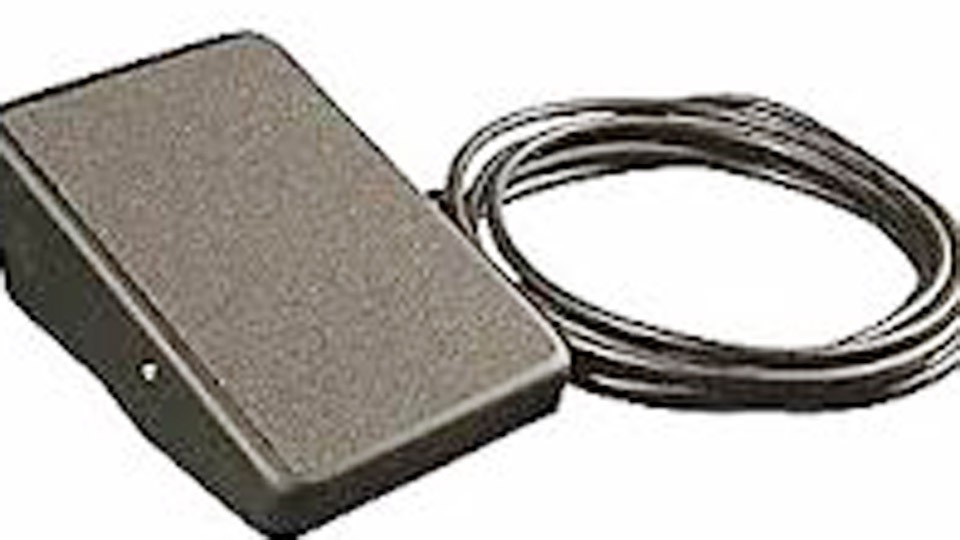
Image by grainger
Basics of TIG Welding and Why Control Matters
TIG welding, or Gas Tungsten Arc Welding (GTAW) as it’s formally known, stands out for its precision. Unlike stick welding where you’re stuck with a fixed amperage once you strike the arc, TIG lets you fine-tune as you go. That’s where the foot pedal comes in—it’s essentially a remote control for your machine’s output, connected via a cable to the welder’s power source.
How it works is straightforward: Press down on the pedal, and you ramp up the amperage, increasing the heat and arc intensity. Ease off, and it dials back. Most pedals have a variable resistor or potentiometer inside that signals the welder to adjust current in real time.
On machines like the Miller Syncrowave or Lincoln Precision TIG series—common in US shops—this setup allows for seamless transitions from starting a puddle to filling a joint.
You’d use it whenever you’re dealing with materials that demand variable heat, like aluminum or stainless steel. Why? Because fixed amperage can warp thin gauges or fail to penetrate thicker ones.
In my experience, on a repair job for a boat trailer, I used the pedal to start low on the aluminum frame to avoid blow-through, then cranked it up for deeper fusion. Without it, I’d have distorted the whole assembly, leading to alignment issues and extra labor.
Practical tip: Always test your pedal’s response before a big job. Hook it up, set your machine to a mid-range amperage, say 100 amps for 1/8-inch mild steel, and practice pulsing.
If it feels sticky or unresponsive, clean the contacts or replace the cable—I’ve lost count of how many times a faulty pedal turned a quick weld into a headache.
How the Foot Pedal Helps with Amperage Control in Different Materials
Amperage is the lifeblood of any weld, and in TIG, the foot pedal puts you in the driver’s seat. For mild steel, you might run 70-120 amps on 1/16-inch tungsten with a 1/16-inch filler rod, but aluminum calls for 100-200 amps on the same setup due to its heat dissipation.
It works by letting you modulate the current based on the puddle’s behavior. Watch the molten pool—if it’s spreading too wide, back off the pedal to cool things down. This prevents undercutting or excessive penetration that weakens the joint.
Use it on heat-sensitive jobs, like welding exhaust systems or thin sheet metal. Why bother? Constant high amps cause distortion, which means more hammering and straightening later.
I once welded a custom manifold for a race car; by feathering the pedal, I kept the stainless from warping, saving the client a bundle on machining corrections.
Shop-floor tip: Pair your pedal technique with proper joint prep. Bevel edges on thicker materials (over 1/8 inch) at 30-45 degrees for better filler flow. And always match your filler rod diameter to the job—1/16 inch for precision work, 3/32 for heavier builds.
A mismatch here, like using too thick a rod on low amps, leads to incomplete fusion. Fix it by increasing amps gradually via the pedal while dipping the rod more frequently.
Common mistake: Beginners mash the pedal like a gas pedal in a car, spiking amps and burning holes. Pros do it too when rushed—I’ve done it on deadline jobs. The fix? Practice on scrap with a timer, aiming for smooth ramps from 50% to full output over 5 seconds.
Setting Up Your TIG Welder with the Foot Pedal for Optimal Performance
Before you even strike an arc, setup is key. The foot pedal plugs into the remote control port on your TIG machine—check your manual for the right connector, as some like the Everlast PowerTIG use a 7-pin while others are 14-pin.
Once connected, calibrate it. Most welders have a max amperage setting on the panel; the pedal then scales from 0 to that value. For a 200-amp machine, set panel to 150 amps, and the pedal gives you 0-150 range.
Do this for every new project. Why? It matches your control to the material’s needs, reducing rod burn-off and gas waste. On copper alloys, which conduct heat fast, start with lower max settings to avoid overheating.
Practical advice: Position the pedal comfortably under your dominant foot, maybe with a non-slip mat in oily shops. I’ve slipped mid-weld and spiked amps, ruining a bead—lesson learned, always secure it.
Step-by-step guide for setup:
- Power off your welder and connect the pedal cable securely.
- Turn on the machine and select TIG mode, AC for aluminum or DC for steel.
- Set gas flow to 15-20 CFH argon, and choose tungsten type—2% thoriated for DC, pure for AC.
- Adjust panel amperage based on material thickness: 80-100 amps for 16-gauge sheet, 150+ for 1/4-inch plate.
- Test the pedal dry—press and release, watching the amp meter for smooth response.
- Strike a test arc on scrap, feathering the pedal to form a consistent puddle.
If your welds show porosity from poor control, clean your tungsten tip to a sharp point for better arc stability, and slow your pedal movements.
Common Mistakes with the Foot Pedal and How to Avoid Them
Even seasoned welders trip up here. One big one is ignoring pedal sensitivity—some machines respond quicker than others, leading to erratic heat.
It happens because the pedal’s potentiometer can wear out, causing jumps in amperage. You’ll see it in uneven beads or sudden burn-through.
Avoid it by regular maintenance: Open the pedal housing yearly, blow out dust, and lubricate moving parts lightly.
Another mistake: Over-relying on the pedal without monitoring visuals. Why does it matter? You end up with inconsistent penetration, especially on fillet joints where heat builds up.
From my shop days, I remember a trainee who kept full-pedaling on thin tubing, warping it beyond repair. We fixed it by teaching him to pulse: Press for 2 seconds, release for 1, building the weld in layers.
Tip for pros: On long runs, like pipeline sections, use the pedal to taper amps at the end, preventing craters. Start at 100 amps, drop to 50 for the final inch.
Beginners often forget safety—pedals can get tangled in cords, tripping you mid-weld. Route cables neatly, and wear steel-toe boots to protect against drops.
When to Use the Foot Pedal Versus Panel Controls
Not every TIG job needs the pedal. For straightforward, flat-position welds on uniform thickness, panel controls suffice—set it and forget it.
But switch to the pedal for variable thickness or positions, like overhead welding where gravity affects the puddle.
Why choose one over the other? Pedal gives dynamic control, reducing distortion on heat-sensitive alloys. Panel is simpler for batch work, like welding brackets.
In a fab shop, I’d use panel for repetitive steel parts but pedal for custom aluminum frames. Pros: Pedal improves quality on intricate jobs. Cons: It requires more focus, tiring on long shifts.
Comparison table:
| Control Method | Best For | Pros | Cons |
|---|---|---|---|
| Foot Pedal | Variable heat needs, thin materials | Precise adjustments, less distortion | Requires practice, potential fatigue |
| Panel Controls | Uniform welds, high volume | Simple setup, consistent output | No on-the-fly changes, risk of overheat |
Real anecdote: On a repair for a food-grade stainless tank, panel controls burned the edge; switching to pedal let me feather heat, saving the piece from scrap.
Electrode and Filler Rod Choices Tied to Pedal Use
Tungsten electrode diameter ties directly to your amperage range, which the pedal manages. For 1/16-inch tungsten, stick to 50-150 amps; 3/32-inch handles up to 250.
How it works: Thinner electrodes melt at high amps, so use the pedal to stay in range. Filler rods match—ER70S-6 for steel, 4043 for aluminum.
Use specific combos for jobs: On auto body repairs, 1/16-inch tungsten with 1/16 filler, pedaling 60-100 amps for minimal heat input.
Why? Mismatched sizes cause rod sticking or poor flow. I’ve fixed many by grinding the tungsten balled end for AC and sharpening for DC.
Tip: Store rods in sealed tubes to prevent contamination—oxide on fillers leads to porous welds, no matter your pedal skill.
Safety Considerations When Using the Foot Pedal
Safety isn’t optional. The pedal lets you control amps, but spiking them can cause eye-damaging arcs or hot spatter.
Always wear a helmet with shade 9-13 lens, gloves, and flame-resistant clothing. In confined spaces, ensure ventilation to avoid argon buildup.
Common issue: Pedal cables fraying, shorting out—inspect weekly.
From experience, I once had a pedal short mid-weld, jumping amps to max and flashing the arc. Burned my glove, but could’ve been worse. Fix: Replace worn cables immediately.
Step-by-step safe practice:
- Clear your workspace of flammables.
- Ground the workpiece properly to prevent shocks.
- Start with low pedal pressure, building as needed.
- Use anti-fatigue mats to stay steady.
Advanced Techniques: Pulsing and Heat Management with the Pedal
Once basics are down, try pulsing—rhythmic pedal presses for controlled heat.
It works by alternating high/low amps, say 150 peak and 50 background, reducing overall input while maintaining penetration.
Use on titanium or exotics where heat control is critical. Why? Minimizes grain growth, strengthening the weld.
Shop tip: On bike frames, pulse at 1-2 Hz via pedal for stack-of-dimes appearance, impressive and strong.
Mistake: Too fast pulsing tires you out—start slow.
Pros: Better puddle control, less filler used. Cons: Steeper learning curve.
Integrating the Foot Pedal into Your Workflow for Efficiency
In a busy shop, the pedal speeds things up by eliminating stops to adjust the panel.
For multi-pass welds, like on pressure vessels, pedal through layers, increasing amps per pass.
Why integrate? Cuts time, reduces errors. I’ve shaved hours off jobs by mastering this.
Tip: Combine with auto-darkening helmets for seamless viewing.
Remember that time I welded a sculpture for an art install? Pedal let me vary heat on curved surfaces, turning a tricky job into a standout piece.
Wrapping Up
The foot pedal on a TIG welder isn’t just about technique—it’s about respecting the metal and the process. You’ve now got the idea to dial in perfect amps, choose the right electrodes, and avoid those frustrating mistakes that eat into your time and materials.
Whether you’re patching a fence in your backyard or fabricating precision parts for a client, this knowledge means stronger, cleaner welds that hold up under real-world stress.
Always preheat your base metal on thicker sections before pedaling in— it evens out heat distribution and prevents cracks, something I learned the hard way on a cold winter job.
FAQs
Can I Use a TIG Welder Without the Foot Pedal?
Absolutely, but you’ll miss out on fine control. Stick to panel settings for simple jobs, like straight beads on thick steel. For anything variable, hook up the pedal—it’s like driving manual versus automatic; more work, but better results. Test on scrap first to feel the difference.
What Amperage Range Should I Set for Aluminum TIG Welding?
Aim for 100-250 amps depending on thickness—start low at 100 for 1/8-inch sheets to avoid melt-through. Use the pedal to ramp up as the material heats. Match with 3/32-inch pure tungsten and 4043 filler. Watch for oxide cleaning; if the puddle looks dirty, increase AC balance.
Why Does My Weld Distort When Using the Foot Pedal?
Usually from uneven heat input—you’re pedaling too aggressively. Smooth it out by practicing gradual presses, and tack weld frequently to hold shape. On thin stuff, pulse the pedal to let cools between peaks. Joint prep helps too; bevel properly for even filler distribution.
How Do I Choose the Right Tungsten Diameter for My Pedal Setup?
Go by amp range: 1/16-inch for under 150 amps, 3/32 for 150-250. Thicker tungsten handles more heat without melting, giving stable pedal control. Sharpen to a point for DC steel; ball the end for AC aluminum. Swap if it contaminates—dipping in the puddle is a common culprit.
What Safety Gear Do I Need Specifically for TIG with a Foot Pedal?
Beyond basics, get a pedal with a guard to prevent accidental presses. Full-face helmet, leather gloves, and a respirator for fumes. Secure cables to avoid trips, and use ground clamps rated for your amps. In my shop, we always double-check ventilation—argon displaces oxygen fast.