
First time I had to prep a rusted steel beam for welding — I was torn between breaking out my trusty needle scaler or setting up a sandblaster. As someone who’s spent countless hours on MIG vs TIG projects, stainless welding, and dealing with everything from thin sheet metal to thick structural plates, I quickly realized that metal prep isn’t just about looking clean — it directly affects arc control, filler rod penetration, and the overall strength of the joint.
Needle scalers can be perfect for spot cleaning weld seams and stubborn rust in tight corners, while sandblasting excels at large-area prep and achieving uniform surface profiles.
But choosing the wrong method can lead to wasted time, poor weld fusion, or even safety headaches. In this guide, I’m going to break down when to grab a needle scaler versus firing up a sandblaster, sharing real-world tips that save time, protect your welds, and make your shop life easier.
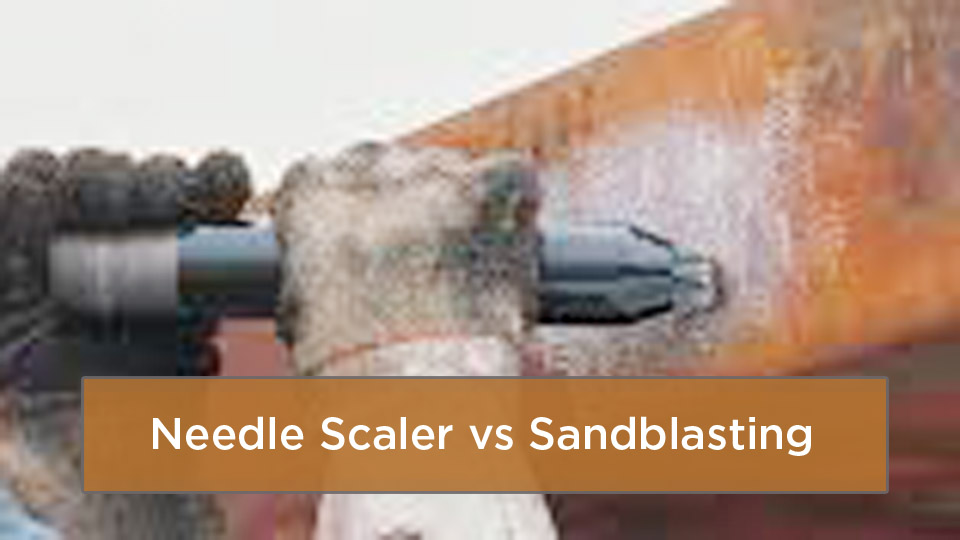
Image by intlairtool
What Is a Needle Scaler and How Does It Work?
You’re in your workshop, and you’ve got a piece of steel covered in flaky rust from sitting outside too long. A needle scaler is basically a pneumatic or electric tool that looks like a beefed-up chisel gun. It uses a bundle of thin, hardened steel needles—usually 19 or so in a standard model—that hammer away at the surface at thousands of strokes per minute.
The air pressure or electric motor drives a piston that pushes those needles forward and back, chipping off contaminants without blasting media everywhere.
I remember the first time I fired one up on an old truck frame. It was like unleashing a swarm of tiny jackhammers—the needles conform to the metal’s shape, getting into nooks and crannies that a grinder might miss. For welding prep, it’s gold for knocking off loose scale or slag after a pass with your MIG or stick welder.
You hold it at about a 45-degree angle, apply light pressure, and sweep it over the area in short bursts. Start with lower air pressure, around 90 PSI, and adjust up if needed to avoid denting thinner stock.
Why use it? It’s quick for spot jobs and doesn’t require a massive setup. In real-world scenarios, like prepping joints on structural beams, it ensures clean metal for better arc starts and filler adhesion.
But watch out for common mistakes: Holding it perpendicular can warp sheet metal, so always angle it. And don’t skip degreasing first—oil residue will just get hammered in deeper, ruining your prep.
What Is Sandblasting and How Does It Tackle Surface Contaminants?
Let’s shift gears to sandblasting, or abrasive blasting as it’s often called in pro circles. This method shoots a stream of abrasive media—like silica sand, glass beads, or walnut shells—through a nozzle at high velocity, propelled by compressed air. The impact strips away rust, paint, and scale, leaving a profiled surface that’s perfect for coatings or welding.
In my experience on job sites, sandblasting shines for large-scale prep, like cleaning entire I-beams before welding assemblies.
You hook up your compressor—aim for at least 100 CFM for decent flow—and direct the blast in overlapping passes, keeping the nozzle 6-12 inches from the surface. For welding, it’s unbeatable at removing deep-seated rust that could cause inclusions in your bead.
But here’s a tip from the trenches: Always match your media to the job. Use finer grit like 80-100 mesh for delicate prep on aluminum to avoid over-etching, which can weaken the material.
A common pitfall? Not wearing full PPE—respirator, safety hood, safety gloves—because that dust is no joke and can lead to silicosis if you’re not careful. I’ve seen guys rush it without proper containment, turning the shop into a dust storm that contaminates everything nearby.
Differences Between Needle Scaling and Sandblasting
When you’re deciding between these two, it boils down to how they attack the surface. A needle scaler physically hammers away at contaminants, adapting to curves and edges without media. Sandblasting, on the other hand, abrades evenly with projectiles, getting into pores for a thorough clean.
From a practical standpoint, needle scalers are less messy—no abrasive to sweep up afterward—which is a lifesaver in a small garage. But sandblasting provides a superior profile for paint or weld adhesion, etching the metal for better grip.
Air consumption is another biggie: Scalers sip air at 4-8 CFM, while blasters guzzle 10-20 CFM or more, demanding a beefier compressor.
In welding terms, think about material compatibility. For thick steel plates, either works, but on thinner gauges like 16-gauge sheet, scaling is gentler to avoid distortion. Cost-wise, a basic needle scaler might run you $50-200, versus $100+ for a blaster setup, plus ongoing media costs.
Pros and Cons of Using a Needle Scaler in Welding Prep
Let’s get real about the upsides and downsides, based on what I’ve seen in the field.
Pros first: It’s portable and quick to deploy—no hauling out tarps or media. Those needles self-adjust to contours, making it ideal for irregular joints like lap welds on frames. Safety-wise, less dust means easier breathing, though noise is a factor—always use ear protection.
For DIYers or students, it’s forgiving; you can practice on scrap without wasting supplies. Plus, it’s versatile—use it post-weld to peen beads and reduce stress cracks.
On the flip side, it might not dig out pitted rust as well, leaving micro-contaminants that affect weld quality. It’s louder than a blaster, vibrating your hands after prolonged use, and needles wear out, needing replacement every few hours of heavy work.
I’ve made the mistake of overusing it on deeply rusted stock, only to find porosity in my welds later—fix it by following up with a wire brush.
Overall, for hobbyists or quick jobs, it’s a winner, but pros might pair it with other methods for critical applications.
Pros and Cons of Sandblasting for Surface Preparation
Sandblasting has its own set of strengths that make it a go-to in many shops.
The big pros: It delivers a uniform, clean surface down to white metal, essential for high-integrity welds like those on pressure vessels. It handles large areas fast, and with the right media, it’s safe for various metals without warping. In terms of efficiency, it removes everything—rust, old welds, even light mill scale—prepping for processes like TIG where purity is key.
But cons abound: The mess is legendary; abrasive gets everywhere, requiring containment and cleanup that eats time. Health risks from dust inhalation are serious, so NIOSH-approved respirators are non-negotiable.
Compressor demands are high, and if yours is undersized, you’ll get inconsistent blasts leading to uneven prep. I’ve botched a job by using wet media—always dry it first to avoid clogs and flash rust.
For industry workers, it’s cost-effective at scale, but DIYers might find the setup overwhelming.
| Aspect | Needle Scaler | Sandblasting |
|---|---|---|
| Mess Level | Low – No media, just chips | High – Abrasive dust everywhere |
| Air Consumption | 4-8 CFM | 10-20+ CFM |
| Surface Profile | Moderate etch, good for basic adhesion | Deep profile, excellent for coatings/welds |
| Best For | Irregular surfaces, spot work | Large, flat areas, thorough cleaning |
| Noise/Vibration | High noise, moderate vibration | Moderate noise, low vibration |
| Cost (Initial + Ongoing) | $50-200 + needle replacements | $100+ + media refills |
| Safety Concerns | Flying chips, noise | Dust inhalation, abrasive rebound |
When to Choose Needle Scaling Over Sandblasting
If your project’s got tight spots or you’re working indoors without a blast cabinet, go with the needle scaler. It’s my pick for pre-weld prep on fabricated parts like brackets or repairs on equipment where you can’t afford media intrusion—think open gearboxes or engine blocks nearby.
For example, on a recent hobby project restoring an old gate, I used my pneumatic scaler to strip rust from the hinges. It took minutes per section, and I followed with a quick degrease before MIG welding reinforcements. Why not blast? The gate was too ornate, and blasting would’ve pitted the decorative elements.
Tips: Set your compressor to 90-110 PSI for steel; lower for aluminum. Common error? Skipping safety glasses—those chips fly fast. Use it for slag removal after flux-core welding too; it knocks off spatter without grinding dust.
When Sandblasting Is the Better Option for Welding
For big jobs or when you need absolute cleanliness, sandblasting rules. It’s essential for structural welding where codes demand SSPC-SP standards, like removing all visible rust for bridge repairs.
I once prepped a trailer frame for powder coating after welding—sandblasting got it to near-white metal, ensuring no corrosion under the finish.
Step-by-step: Mask sensitive areas, blast in sections starting from the top, then rinse and apply rust inhibitor immediately to prevent flash rust.
Pro tip: For stainless steel welds, use glass beads to avoid contamination. Mistake to avoid: Blasting wet metal—it causes rust streaks. Always dry thoroughly first.
Step-by-Step Guide to Using a Needle Scaler for Metal Prep
Let’s walk through this like I’m showing you in the shop.
- Gear up: Respirator, gloves, ear plugs, safety glasses. Secure the workpiece.
- Degrease: Wipe down with solvent to remove oils—acetone works great.
- Set up: Attach to compressor at 90 PSI. Test on scrap.
- Scale: Hold at 45 degrees, sweep in 6-8 inch passes, 2-3 times per area.
- Inspect: Check for remaining scale; repeat if needed.
- Clean: Blow off chips, degrease again.
- Weld ready: Proceed to joint prep, like beveling edges for better penetration.
I’ve found starting low pressure prevents over-aggression on mild steel.
Step-by-Step Guide to Sandblasting Before Welding
Similar setup, but more involved.
- PPE: Full suit, respirator, safety hood—don’t skimp.
- Prep area: Contain with tarps or cabinet.
- Load media: Dry abrasive in hopper.
- Blast: 6-12 inches away, overlapping strokes at 100 PSI.
- Rinse: Water wash to remove residue.
- Inhibit: Apply phosphoric acid for rust protection.
- Dry and weld: Ensure surface is dry before striking an arc.
Tip: For MIG on carbon steel, aim for a 36-80 grit profile.
Common Mistakes in Surface Prep and How to Fix Them
One biggie: Ignoring material type. Scaling aluminum too hard warps it—fix by using finer needles or lower pressure.
Another: Not feathering edges after removal, leading to visible lines under paint. Smooth with a flap disc.
For blasting, over-blasting thins metal—monitor dwell time.
Personal story: I once blasted a pipe without masking threads; media jammed them up. Now, I always tape off.
Safety Considerations for Both Methods
Safety first—I’ve seen too many close calls. For scaling, watch for needle breakage; replace worn ones. Blasting demands ventilation to avoid dust buildup.
Always use ANSI-rated gear, and for welding post-prep, ensure no residual contaminants cause fumes.
Tools and Equipment Recommendations for USA Welders
Grab a reliable pneumatic scaler like Ingersoll Rand for durability. For blasting, Harbor Freight’s portable unit is budget-friendly for hobbyists.
Compressors: 60-gallon vertical for scaling; 80+ for blasting.
Real-World Applications in Welding Projects
For DIY: Scale rust off lawnmower frames before welding patches.
Hobbyists: Blast ATV chassis for custom fabs.
Pros: Scale slag on pipeline welds; blast tanks for inspections.
Students: Practice scaling on scrap to learn clean joints.
Integrating These Tools with Welding Processes
Pair scaling with stick welding for quick slag removal. Blasting preps for TIG on alloys.
Settings: For MIG after scaling, use 18-22 volts on 1/8″ steel.
Conclusion
Whether you go with a needle scaler for its precision and low mess or sandblasting for thorough cleaning, you’re now equipped to make smarter choices that boost weld strength, safety, and efficiency. I’ve learned through trial and error that the right prep turns average work into pro-level results—saving time and avoiding costly re-dos.
So grab your tools with confidence; remember, always degrease twice if in doubt. Test on scrap every time—it’ll save your project.
FAQs
Can I use a needle scaler on thin sheet metal without damaging it?
Absolutely, but angle it at 45 degrees and use lower pressure around 70-80 PSI to avoid warping. It’s great for auto body prep before welding patches, just follow with a light sand for smoothness.
Is sandblasting safe for aluminum welding projects?
Yes, if you use soft media like glass beads or soda to prevent embedding abrasives that could contaminate welds. Always rinse thoroughly afterward to remove any residue.
How do I prevent flash rust after sandblasting?
Apply a rust inhibitor like phosphoric acid immediately after blasting and drying the surface. Work in sections on humid days to minimize exposure time.
What’s the best way to clean up after needle scaling?
Use compressed air to blow away chips, then vacuum or sweep. It’s far less hassle than blasting media, making it ideal for indoor shops.
Do I need a special compressor for these tools?
For scaling, a small 20-gallon unit suffices, but blasting needs at least 60 gallons with 10+ CFM for consistent performance. Check your tool’s specs to match.


