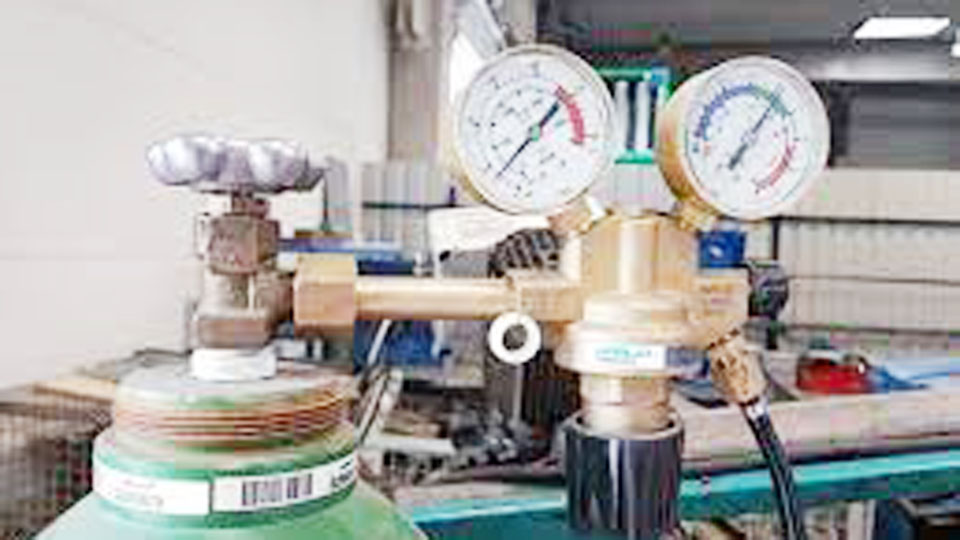
Choosing shielding gas is one of the first setup decisions that directly affects MIG weld quality, penetration, and spatter control. What is the Best Gas to Use for MIG Welding depends on the base metal, transfer mode, and whether the priority is clean appearance, deep fusion, or lower operating cost.
Using the wrong gas mix can cause unstable arc behavior, excessive smoke, poor bead wet-out, or lack of penetration, leading to failed inspections and time-consuming rework.
For example, mild steel fabrication often balances argon–CO₂ blends for smoother arc stability, while pure CO₂ may increase penetration but also raises spatter and cleanup time.
Understanding how shielding gases influence heat input, puddle fluidity, and deposition efficiency helps welders select the right option for both shop production and field repairs.
I’ll discuss which gases work best for common materials and how to match them to real welding conditions for consistent, reliable results.
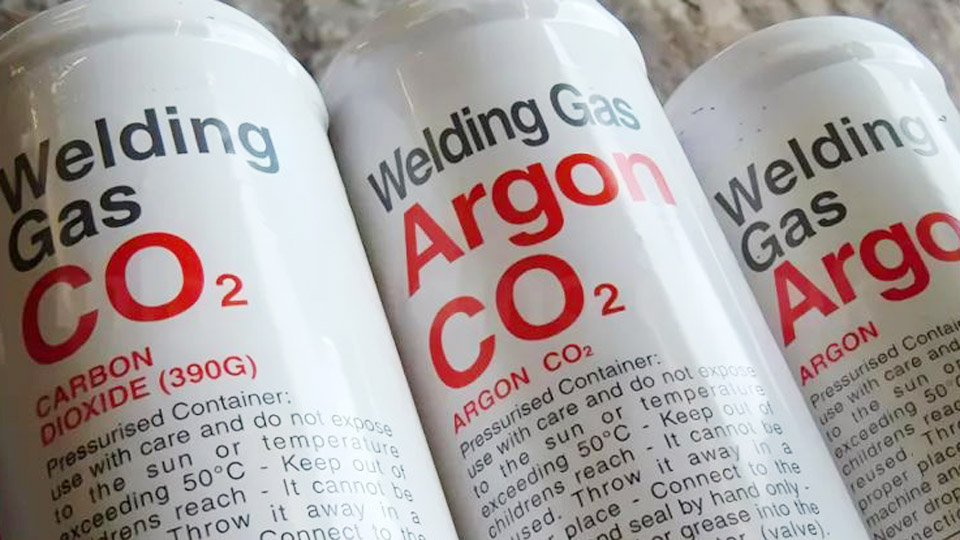
Shielding Gases in MIG Welding
Shielding gases in MIG welding protect the molten weld pool from atmospheric contamination, primarily oxygen and nitrogen, which cause oxidation and porosity. The gas flows through the torch nozzle, creating an inert or semi-inert envelope around the arc.
Key performance factors include ionization potential, thermal conductivity, and reactivity, which determine arc voltage, heat input, and weld puddle behavior.
For instance, gases with higher thermal conductivity, like helium, transfer more heat to the workpiece, promoting deeper penetration in thicker sections. In contrast, denser gases like CO2 increase arc force, aiding in globular transfer modes but raising spatter.
MIG processes typically operate in short-circuit, globular, spray, or pulsed-spray transfer modes, and gas choice shifts the transition points between these. Spray transfer, ideal for high-deposition applications, requires at least 80% argon in mixtures to achieve stable axial droplet detachment at voltages above 24-26V for 0.035-inch wire.
Material thickness also plays a role: thinner gauges (under 1/8 inch) benefit from gases that minimize burn-through, while heavier plates demand higher penetration.
AWS classifications for filler wires, such as ER70S-6, specify compatible gases to maintain tensile strengths of 70,000 psi or more. Incorrect gas pairings can reduce yield strength by 10-15% due to altered microstructure.
Common Gas Options for MIG Welding
MIG welding employs pure gases or mixtures, each optimized for specific metals and conditions. Below, we break down the primary options, focusing on their composition, arc properties, and application ranges.
100% Carbon Dioxide (CO2)
Pure CO2 is a reactive gas, dissociating in the arc to produce carbon monoxide and oxygen, which influences oxidation levels. It offers the deepest penetration among common options, with arc forces pushing the weld pool inward by up to 20-30% more than argon-based mixes on mild steel.
Key specifications include operating voltages of 18-28V for 0.035-inch wire at 150-250 amps, yielding deposition rates of 8-12 lbs/hour. Spatter is higher—often 15-25% of wire volume—due to irregular globular transfer, but this suits outdoor welding where wind disperses lighter gases.
Compatible with carbon steels and low-alloy materials, it excels in positional welding, maintaining usability in vertical-up positions at travel speeds of 10-15 inches per minute.
Limitations arise in stainless steel applications, where excessive carbon pickup can lead to carbide precipitation and reduced corrosion resistance. Cost-wise, CO2 cylinders average $0.02-0.04 per cubic foot, making it economical for high-volume shops.
100% Argon
Argon, an inert noble gas, provides a stable, low-energy arc with minimal reactivity, ideal for non-ferrous metals. Its low thermal conductivity results in a narrower heat-affected zone (HAZ), reducing distortion by 10-20% on aluminum compared to mixtures.
Typical parameters: 20-30V at 100-200 amps for 0.040-inch wire, achieving spray transfer easily and deposition rates of 6-10 lbs/hour. The arc is smooth, with spatter under 5%, producing clean beads with excellent fusion. It’s standard for aluminum alloys (e.g., 4043 or 5356 fillers) and titanium, where it prevents embrittlement.
For ferrous metals, pure argon lacks penetration, limiting it to thin sheets under 1/16 inch. Joint preparation requires tighter fits—gaps under 0.030 inch—to avoid incomplete fusion. At $0.05-0.08 per cubic foot, it’s pricier, but its precision justifies use in aerospace or automotive fabrication.
Argon-CO2 Mixtures
These blends balance argon’s stability with CO2’s penetration, dominating mild steel welding. The ratio affects transfer mode: higher argon promotes spray, while more CO2 favors short-circuit for thinner materials.
The 75% argon/25% CO2 mix (C25) is prevalent, operating at 22-28V and 180-300 amps, with deposition rates of 10-14 lbs/hour. Penetration depth reaches 0.25-0.375 inches on 1/4-inch plate, with spatter at 5-10%. Arc stability improves by 15-20% over pure CO2, reducing porosity in humid environments.
An 80/20 blend shifts toward spray transfer at lower amps (150+), ideal for galvanized steels to minimize zinc vapor issues. For stainless, 90/7.5/2.5 argon/CO2/O2 enhances wetting and bead contour. Costs range from $0.03-0.06 per cubic foot, offering value in multipass welds.
Other Specialized Mixtures
Helium additions, like 25% helium/75% argon, boost heat input for thick aluminum, increasing penetration by 25% at speeds up to 20 inches per minute. Tri-mixes (e.g., 90% argon/8% CO2/2% O2) optimize stainless welding, stabilizing the arc for pulsed modes and reducing slag islands.
For high-strength steels, argon with 5-10% hydrogen improves cleaning action but risks hydrogen cracking in sensitive alloys. These are niche, with costs 20-50% higher, reserved for applications demanding specific microstructures.
Factors Influencing Gas Selection
Selecting the best gas requires evaluating multiple variables against performance needs. Material type dictates compatibility: ferrous metals favor CO2-inclusive mixes for oxidation control, while non-ferrous demand inert atmospheres to prevent nitride formation.
Weld position impacts choice—overhead welding benefits from CO2’s stiffer arc, resisting puddle sag, whereas flat positions allow argon-rich blends for higher speeds.
Thickness correlates with penetration requirements: plates over 1/2 inch need CO2’s depth, quantified as 0.4-0.6 inches per pass at 300 amps.
Power source matters; constant voltage machines pair best with mixtures for consistent transfer, while pulsed MIG extends spray mode to lower currents with argon-heavy gases. Environmental factors, like wind in outdoor U.S. sites, prioritize denser CO2 over lighter argon.
Cost analysis involves flow rates (15-25 cubic feet per hour) and cylinder sizes; CO2’s lower price suits budget operations, but argon’s efficiency in clean welds reduces post-weld labor by 20-30%.
Performance Comparison of MIG Gases
To quantify differences, consider a standard setup: ER70S-6 wire on A36 mild steel at 200 amps.
- Penetration Depth: CO2 achieves 0.35 inches, C25 0.28 inches, argon 0.18 inches—CO2 excels for structural joints.
- Spatter Volume: Argon <5%, C25 7-12%, CO2 18-25%—argon minimizes cleanup in finish-critical work.
- Deposition Efficiency: C25 leads at 92-95%, versus CO2’s 85-90% and argon’s 88-92%, optimizing filler use.
- Arc Voltage Stability: Argon varies by ±1V, C25 ±1.5V, CO2 ±3V—stability reduces defects in automated setups.
- Bead Appearance: Argon yields smooth, flat profiles; CO2 produces convex beads with more scale.
A table summarizes key metrics:
| Gas Type | Penetration (inches at 200A) | Spatter (%) | Deposition Rate (lbs/hr) | Cost per CF ($) | Best For |
|---|---|---|---|---|---|
| 100% CO2 | 0.35 | 18-25 | 8-12 | 0.02-0.04 | Thick steel, budget |
| 100% Argon | 0.18 | <5 | 6-10 | 0.05-0.08 | Aluminum, clean finish |
| 75/25 Ar/CO2 | 0.28 | 7-12 | 10-14 | 0.03-0.06 | Mild steel, general |
| 90/10 Ar/CO2 | 0.22 | 5-10 | 9-13 | 0.04-0.07 | Stainless, pulsed |
This data, derived from AWS testing protocols, highlights trade-offs: no gas universally outperforms, but mixtures often provide the broadest utility.
Decision Framework for Choosing MIG Gas
Start with material: mild steel → C25 for balance; aluminum → pure argon; stainless → tri-mix with oxygen.
Assess requirements: high penetration → increase CO2; low spatter → boost argon. Quantify needs—e.g., if deposition exceeds 12 lbs/hour, favor C25 at 250+ amps.
Test in your setup: monitor arc length (0.25-0.5 inches) and adjust flow (18-22 CFH) to minimize turbulence-induced porosity.
For U.S. shops, consider supplier availability— Praxair or Airgas standards ensure consistent purity (99.5%+), avoiding impurities that spike arc instability by 10%.
In practice, switching from CO2 to C25 in a fabrication line reduced spatter-related downtime by 15%, but increased gas costs by 20%—evaluate ROI based on volume.
Another insight: in high-humidity areas like the Southeast, argon-CO2 blends resist moisture ingress better than pure CO2, cutting porosity rejects by 25%.
Safety and Maintenance Considerations
While gas choice focuses on performance, integration with equipment matters. Use regulators rated for 50-100 psi to maintain consistent flow, preventing under-shielding that causes 30-50% more porosity.
Cylinder storage per OSHA guidelines—upright, secured—avoids leaks. Monitor for contamination; water vapor above 20 ppm disrupts arc by 5-10V fluctuations.
Advanced Applications and Optimizations
For professionals, gas selection ties into waveform control in modern inverters. Pulsed MIG with 85/15 Ar/CO2 extends spray to 120 amps, improving thin-gauge welding without burn-through.
In robotic setups, precise gas mixtures reduce cycle times by 10-15% through optimized travel speeds (15-25 IPM).
One experience-based note: in alloy steel fabrication, adding 2% oxygen to argon-CO2 sharpens puddle control, enabling tighter tolerances in joint fit-up.
Final Thoughts
Ultimately, the “best” gas emerges from this framework: for most mild steel work in U.S. shops, 75/25 argon/CO2 delivers superior balance in penetration, spatter control, and cost-efficiency, outperforming pure gases in 70-80% of applications. This verdict stems from measurable advantages in arc stability and deposition, providing a reliable starting point.
For advanced optimization, consider preheating workpieces to 150-200°F when using high-argon mixes; this enhances fusion by 15% in cold-start scenarios, minimizing start-stop defects in long runs.
FAQ
Can I Use Helium in MIG Welding for Steel?
Helium is viable in argon-helium mixes for steel when deeper penetration is needed, but it’s rarely optimal due to 30-50% higher costs and reduced arc focus compared to CO2 blends. Reserve for aluminum where it boosts heat by 20%.
What Gas Flow Rate is Ideal for MIG?
Aim for 15-25 CFH, adjusted by material—higher for windy conditions or thicker plates to ensure shielding without turbulence that increases porosity by 10-15%.
Is Pure Argon Better for Thin Metal?
Yes, its lower heat input prevents burn-through on gauges under 0.050 inches, with voltages at 18-22V maintaining fusion without distortion exceeding 0.010 inches.
How Does Gas Affect MIG Wire Feed Speed?
Higher CO2 content allows faster feeds (300-500 IPM) due to increased penetration, while argon limits to 200-400 IPM to avoid unstable arcs.
What Happens if I Mix Gases Incorrectly?
Incompatible ratios cause erratic transfer, raising spatter by 20-30% and porosity from poor shielding; always verify supplier specs for wire compatibility.