Standing over a stainless steel joint that looked perfect on paper, the weld told a different story. The bead came out rough and sugary, the arc felt unstable, and sparks behaved in ways that didn’t make sense. No matter how carefully the settings were adjusted, the results stayed the same.
That’s when it became clear the real issue was the shielding gas, not the technique. Choosing the Best Gas for MIG Welding Stainless Steel isn’t a minor setup choice—it directly affects strength, appearance, and corrosion resistance.
This lesson came from real shop work and plenty of burned wire, not theory. The wrong gas leads to porosity, wasted time, and costly rework, while the right one produces smooth beads and reliable penetration you can trust on a job site.
If stainless MIG welding has ever left you frustrated with discoloration or weak joints, you’re not alone. Here’s the approach that actually works—let me walk you through it step by step.
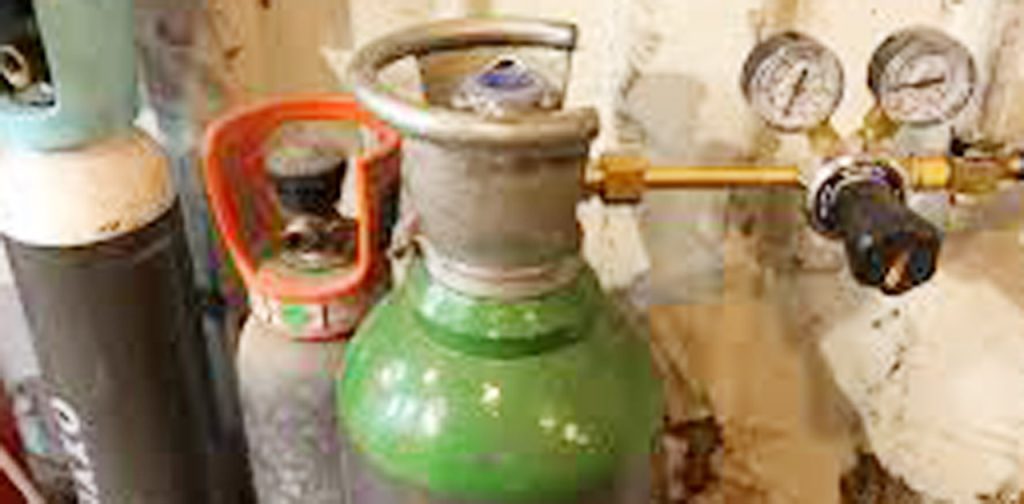
Image by weldersanonymous
Why the Right Shielding Gas Makes or Breaks Your Stainless Welds
Think about it—stainless steel isn’t like mild steel. It’s got chromium and nickel that make it tough against rust, but that also means it’s picky about heat input and oxidation during welding.
The shielding gas in MIG (Metal Inert Gas) welding does more than just protect the molten pool from air; it influences arc characteristics, weld puddle fluidity, and how the filler wire behaves. Get it wrong, and you’ll deal with excessive spatter, poor fusion, or even cracking from too much heat distortion.
In my experience, the gas choice affects everything from startup costs to long-term durability. For instance, on a recent project building custom railings for a restaurant, using the optimal gas mix saved me hours in cleanup and ensured the welds held up to daily wear without pitting.
It’s practical stuff: better gas means less rod—er, wire—burn-off, consistent amperage draw (or rather, stable voltage and feed rates), and fewer safety headaches like arc blow or fume buildup. If you’re a DIY welder tinkering in your garage or a pro handling high-volume fab work, understanding this keeps your projects efficient and your wallet happier.
From a material compatibility standpoint, stainless grades like 304 or 316 demand gases that minimize carbon pickup to preserve their anti-corrosion properties. I’ve seen beginners overlook this and end up with welds that rust in months. The key is balancing inert protection with active gases for better wetting and penetration without overdoing it.
Understanding the Basics of MIG Gases for Stainless Steel
Before we get into specifics, let’s clarify what we’re dealing with. MIG welding uses a continuous wire electrode fed through a gun, shielded by gas from a cylinder. For stainless, the gas must prevent oxidation while promoting a smooth arc. Common options fall into inert (like argon) and active (like CO2 or oxygen) categories, often mixed for optimal performance.
How it works: The gas flows out the nozzle at 20-30 cubic feet per hour (CFH), creating a blanket over the weld zone. Argon stabilizes the arc, helium boosts heat for deeper penetration, and small amounts of CO2 or O2 improve bead shape by making the puddle more fluid. When to use what? It depends on thickness, position, and transfer mode—short circuit for thin stuff, spray for thicker.
In the shop, I always start by checking my wire type—usually ER308L or ER316L for austenitic stainless—and match the gas to avoid mismatches that cause cracking or weak joints.
What Is the Most Common Gas Mix for Everyday Stainless MIG Work?
Hands down, a 98% argon and 2% CO2 blend—often called C2—is my go-to for most jobs. It’s affordable, widely available, and strikes a great balance for thin to medium-thickness stainless.
What it is: This binary mix uses argon’s inert properties for arc stability and a touch of CO2 to enhance wetting, helping the weld bead spread nicely without undercutting.
How it works: The low CO2 content minimizes carbon addition, preserving stainless’s corrosion resistance, while providing enough activity for a crisp arc. In action, you’ll notice less spatter than higher CO2 mixes and a smoother bead profile.
When and why: Use it for sheet metal up to about 1/8 inch, like exhaust systems or decorative panels. It’s ideal for short circuit transfer in vertical or overhead positions where control is key. Why? It reduces distortion on thin material—I’ve welded countless brackets without warping them into pretzels.
Practical tips: Set your gas flow to 25 CFH to avoid turbulence. Pair it with 0.030-inch wire for general work; crank voltage to 18-22 volts and wire speed to 250-350 inches per minute (IPM), depending on your machine. On US brands like Lincoln or Miller, this translates to about 140-180 amps. Always clean your joint with acetone to remove oils—skip this, and you’ll get porosity every time.
One lesson from the shop: I once rushed a repair on a stainless sink and forgot to dial back the CO2 percentage. The bead looked oxidized and brittle. Fix? Grind it out, switch to proper C2, and reweld with slower travel speed for better fusion.
Here’s an example of a clean MIG weld on stainless using an argon-CO2 mix—notice the smooth, even bead with minimal discoloration.
When Should You Switch to a Tri-Mix Gas for Better Penetration?
For thicker stainless or when you need deeper fusion without cranking up the heat too much, tri-mix gases shine. This is 90% helium, 7.5% argon, and 2.5% CO2— a staple in pro shops.
What it is: A ternary blend where helium increases heat input (it’s lighter and conducts better), argon stabilizes, and CO2 aids fluidity.
How it works: Helium widens the arc cone for broader coverage and deeper penetration, reducing the heat-affected zone (HAZ) and minimizing distortion. The mix ensures no undercutting and excellent mechanical properties.
When and why: Opt for it on material over 3/16 inch, like structural frames or pressure vessels. It’s perfect for multi-pass welds where corrosion resistance is non-negotiable, as it doesn’t add carbon like higher CO2 mixes. In my fab work for marine parts, this gas has prevented cracking in high-stress areas.
Practical tips: Flow rate at 25-35 CFH, since helium escapes faster. Use 0.035-inch wire, voltage 22-26 volts, wire speed 300-400 IPM (around 180-220 amps). Prep joints with a 30-degree bevel for better access. If your machine supports pulsed MIG, this gas excels there for less spatter.
Common mistake: Using tri-mix on thin sheets—it can blow through if you’re not careful. I learned this fixing a truck frame; too much heat warped the plate. Solution: Drop voltage and use push technique for control.
Another variant I’ve tried is 90% argon, 8% CO2, 2% oxygen for spray transfer on sluggish alloys like 316. It improves puddle flow but watch for oxidation.
Check out this tri-mix weld on thicker stainless—the penetration is evident in the stacked dimes appearance.
Are Oxygen-Added Gases Worth It for Spray Transfer on Stainless?
Yes, especially for high-production runs. Blends like 99% argon/1% oxygen or 98% argon/2% oxygen are designed for spray arc modes.
What it is: Argon base with oxygen to oxidize the arc, making the puddle more controllable.
How it works: Oxygen stabilizes the spray transfer, producing fine droplets for a fluid weld pool and good coalescence. It minimizes spatter and undercutting on clean material.
When and why: For all thicknesses in spray mode, like on flat positions for fast deposition. Use it when bead contour matters, such as in architectural stainless. It beats pure argon by improving wetting without helium’s cost.
Practical tips: Gas flow 20-25 CFH. Wire diameter 0.035-0.045 inch, voltage 24-28 volts, speed 350-450 IPM (200-250 amps). Ensure your welder has enough power—Miller’s Millermatic series handles this well. Joint prep: Chamfer edges and use anti-spatter spray.
Shop anecdote: On a batch of stainless enclosures, switching to 2% oxygen cut my welding time by 20% with flatter beads. But if the material’s dirty, it can cause porosity—always degrease first.
How Does Material Thickness Influence Your Gas Choice?
Thickness is king here. For gauge material under 14 gauge, stick with argon-rich mixes like C2 to avoid burn-through. How? Low heat input keeps distortion low.
On medium stock, 1/8 to 1/4 inch, tri-mix or oxygen blends provide the penetration without excessive amps.
For heavy plate over 1/4 inch, helium-heavy tri-mix is best for single-pass deep fusion. Why? It heats deeper, reducing passes and rework.
Tip: Test on scrap—adjust gas and settings until the bead penetrates 100% without backside oxidation.
Gas Recommendations by Thickness
| Thickness | Recommended Gas | Why It Works | Typical Settings |
|---|---|---|---|
| Under 1/8″ | 98% Ar / 2% CO2 | Low heat, minimal warp | 18-22V, 250-350 IPM |
| 1/8-3/16″ | 90% He / 7.5% Ar / 2.5% CO2 | Balanced penetration | 22-26V, 300-400 IPM |
| Over 3/16″ | 98% Ar / 2% O2 | Fluid puddle for spray | 24-28V, 350-450 IPM |
Setting Up Your MIG Machine: Voltage, Wire Feed, and Amperage Insights
MIG doesn’t directly set amperage like stick welding; it’s derived from voltage and wire speed. But effective ranges are crucial.
For stainless, start with voltage 2-4 volts higher than mild steel due to higher resistance. Wire feed speed controls amps—faster means hotter.
Practical setup: On a Lincoln Power MIG, for 0.030 wire and C2 gas, set 20V and 300 IPM for about 150 amps on 1/8 inch.
Safety note: Always use fume extraction—stainless fumes contain hexavalent chromium, nasty stuff.
Joint prep: Bevel for thicker joints, fit-up tight to 1/16 inch gap. Use back-purging with argon for root passes on pipes.
Step-by-Step Guide to MIG Welding Stainless with the Best Gas
- Prep your material: Clean with stainless brush and solvent. Bevel if needed.
- Choose gas: C2 for general, tri-mix for thick.
- Set machine: Voltage per thickness, wire speed for desired amps, polarity DCEP.
- Gas flow: 25 CFH, check for leaks.
- Tack weld: Short bursts to hold position.
- Weld: Push angle 10-15 degrees, travel speed 10-15 IPM. Watch puddle.
- Inspect: Look for full penetration, no cracks. Brush slag.
- Post-weld: Passivate if for food service.
I’ve used this on countless jobs—saves time and frustration.
Pros and Cons of Top Gas Mixtures for Stainless MIG
Let’s break it down honestly.
98% Ar / 2% CO2:
Pros: Cheap, stable arc, low spatter, good for thin.
Cons: Limited penetration on thick, potential carbon pickup.
90% He / 7.5% Ar / 2.5% CO2:
Pros: Deep fusion, minimal distortion, preserves corrosion.
Cons: Expensive, harder to source.
98% Ar / 2% O2:
Pros: Excellent bead contour, fast deposition.
Cons: Risk of oxidation if not clean.
Pure Argon:
Pros: Cleanest welds on ultra-thin.
Cons: Poor penetration, unstable on thicker.
In shop tests, tri-mix edges out for quality, but C2 wins for budget.
This image shows a typical stainless weld—compare to your own results.
Common Pitfalls in Gas Selection and Quick Fixes
Beginners often use mild steel gas (C25) on stainless—leads to sooty, porous welds. Fix: Switch to low-CO2 mix.
Pros forget flow rates: Too low invites oxidation; too high causes turbulence. Check with a gauge.
Another: Ignoring wire compatibility. Use low-carbon wire like 308LSi for better flow.
I’ve burned through material by not adjusting for helium’s heat—dial back 10% on settings.
Matching Filler Wire to Gas for Optimal Compatibility
Filler wire matters. For 304 SS, ER308L with C2 gas works great. For 316, ER316L with tri-mix.
Diameter: 0.023″ for thin, 0.045″ for heavy. Smaller wires need lower amps to avoid burn-back.
Tip: Silicon-added wires (Si) improve wetting with active gases.
Safety Considerations You Can’t Skip in the Shop
Stainless MIG produces ozone and chromium fumes—use respirators and exhaust fans. Gloves, long sleeves to prevent UV burns.
Gas cylinders: Secure them, use regulators rated for mix.
I’ve seen arc eye from skipping helmets—don’t.
Real-World Applications: From DIY Repairs to Pro Fab Jobs
In DIY, C2 gas fixes exhausts perfectly. For pros, tri-mix on tanks ensures code compliance.
One job: Welded SS brewery lines with oxygen mix—flawless, no leaks.
Cost Breakdown: Is Premium Gas Worth the Extra Bucks?
C2: $50-70 per cylinder. Tri-mix: $100+. For occasional use, C2 suffices; volume work, tri-mix pays in time saved.
Troubleshooting Bad Welds Caused by Gas Issues
Porosity? Increase flow or clean material.
Cracking? Reduce heat with better gas.
Sooty bead? Lower CO2.
Grind and reweld with adjusted settings.
I’ve fixed many by simply swapping gases.
Wrapping Up
Picking the best gas for MIG welding stainless steel isn’t about following a chart blindly—it’s about matching it to your specific job, machine, and skill level. You’ve now got the tools to avoid those costly do-overs, whether you’re a hobbyist patching a grill or a student learning the ropes.
With the right mix, your welds will be stronger, cleaner, and more reliable, saving you time in the shop. Always run a test bead on scrap before the real deal—it’ll reveal any gas or setting mismatches before they bite you.
Can I Use Pure Argon for MIG Welding Stainless Steel?
Pure argon works for very thin sheets in short circuit mode, but it lacks penetration for anything thicker. You’ll get a stable arc and clean finish, but expect shallow fusion. Stick to it for decorative work; otherwise, add 2% CO2 for better results. In my shop, I reserve it for TIG, not MIG.
What Gas Flow Rate Should I Use to Avoid Porosity in Stainless Welds?
Aim for 20-30 CFH—too low and air contaminates the pool; too high and it creates turbulence pulling in oxygen. For windy outdoors, bump to 35 CFH with a nozzle shield. Test by welding a coupon; if pores appear, adjust up 5 CFH and retry.
Is Tri-Mix Gas Necessary for Thick Stainless Plates?
For plates over 1/4 inch, yes—it provides the heat for deep penetration without multiple passes. On 1/2 inch 316, I’ve achieved full fusion in one go. If budget’s tight, try 8% CO2 argon, but expect more cleanup. Always match with 0.035″ wire and 24V+.
How Do I Know If My Gas Mix Is Causing Distortion on Thin Stainless?
If your sheet warps like a potato chip, the gas might be too hot—helium mixes amplify heat. Switch to C2 for lower input, slow your travel, and use stitch welding. I’ve straightened many by clamping and tacking first.
What’s the Best Wire Diameter for MIG Stainless with Standard Gases?
For most, 0.030″ balances feedability and deposition. Thinner 0.023″ for gauge metal to prevent burn-through; 0.035″ for heavier with tri-mix. Pair with voltage 20-25V, and feed 300 IPM for solid arcs without stubbing.