Nothing gets frustrating faster than laying down a MIG weld that looks decent at first, only to spot porosity and contamination running through the bead. In many cases, the problem isn’t the machine or the wire—it’s the shielding gas setup.
That’s why learning how to set argon gas on MIG welder properly can make such a big difference in weld quality, arc stability, and overall performance.
A small mistake with gas flow, regulator settings, or hose connections can leave your weld exposed to air without you even realizing it.
I’ve seen beginners crank the gas too high thinking it would improve coverage, only to create turbulence that actually made the weld worse. On the other hand, too little flow can quickly lead to weak, dirty welds that need grinding and rework.
Getting the argon setup right doesn’t have to be complicated once you understand the basics. I’ll walk through the practical steps that help you set the correct gas flow, avoid common mistakes, and get cleaner, more consistent MIG welds in real workshop conditions.
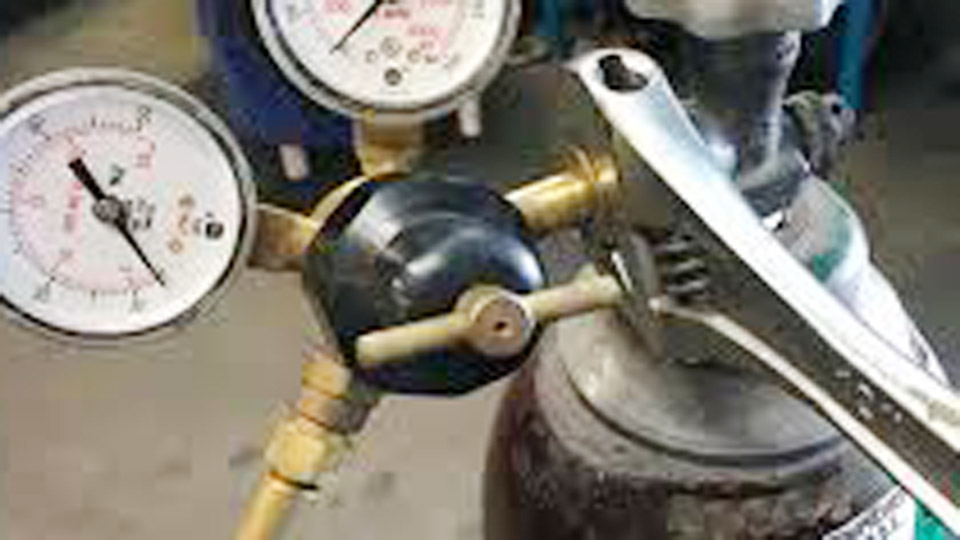
Image by hotrod
Why Argon Matters in MIG Welding
Argon is an inert gas that creates a stable arc and excellent coverage. For mild steel, we usually run a mix like 75% argon/25% CO2 (C25) because pure argon doesn’t provide enough penetration or wetting on ferrous metals. Pure argon shines on aluminum, delivering clean spray transfer and a nice bead profile.
In a typical USA shop using machines like Millermatic, Lincoln Power MIG, or Hobart models, argon-based mixes reduce spatter compared to straight CO2, improve arc stability, and give better control on thinner materials.
This matters for hobbyists building projects at home or pros doing repairs where appearance and strength both count.
Understanding Your Gas Setup: Regulator, Flowmeter, and Cylinder Basics
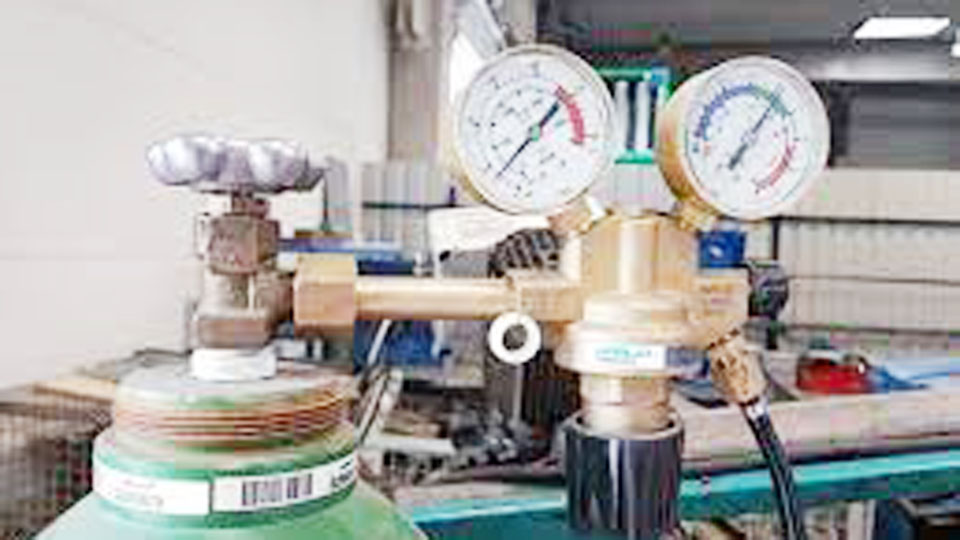
Before touching the dial, know your equipment. Most MIG setups use a combination regulator/flowmeter. The high-pressure gauge shows cylinder contents (often 2000+ PSI when full). The flowmeter reads in cubic feet per hour (CFH) — this is what you adjust for welding.
What it is: The regulator reduces tank pressure to a usable level while the flowmeter controls delivery rate.
How it works: Gas flows from the cylinder through the regulator, down the hose, and out the MIG gun nozzle to shield the weld.
When to use pure argon or mixes: Pure argon for aluminum MIG. C25 or similar argon/CO2 for mild steel. Tri-mixes for stainless.
Practical tip: Always secure the cylinder upright with a chain. Crack the valve briefly before attaching the regulator to blow out dust or moisture—point it away safely.
Step-by-Step: How to Set Argon Gas on Your MIG Welder
Here’s the exact process I walk every trainee through:
- Install the regulator — Hand-tighten the nut onto the cylinder valve, then snug with a wrench. Connect the hose to the welder inlet.
- Open the cylinder valve slowly — Stand to the side. Full open once pressure stabilizes.
- Set initial flow — With the gun trigger pulled (or gas test button if available), turn the flowmeter knob until you hit your target CFH. Many start at 20-25 CFH for indoor mild steel.
- Check for leaks — Use soapy water on connections. Bubbles mean trouble.
- Test weld — Run a bead on scrap. Listen for a smooth hiss, not a roar. Watch the puddle.
Adjust for conditions: Drafty shops or open garage doors need slightly higher flow, but rarely over 35-40 CFH.
Recommended Gas Flow Rates by Material and Conditions
Gas needs vary with nozzle size, wire diameter, material thickness, and environment.
For standard 1/2″ to 5/8″ nozzles:
- Mild Steel (C25 mix): 15-25 CFH indoors. Start at 20 CFH.
- Aluminum (100% Argon): 25-35+ CFH. Aluminum needs more coverage due to its sensitivity.
- Stainless (98/2 or tri-mix): 20-30 CFH.
In windy conditions, you might bump 5-10 CFH higher or use screens/wind blocks. Over 40-50 CFH often causes turbulence and draws air in—wasting gas and hurting quality.
Comparison Table: Gas Flow Settings
| Material | Gas Type | Wire Size | Indoor CFH | Drafty CFH | Notes |
|---|---|---|---|---|---|
| Mild Steel | 75/25 Ar/CO2 | 0.030″ | 15-25 | 25-30 | Good penetration, low spatter |
| Mild Steel | 75/25 Ar/CO2 | 0.035″ | 20-30 | 25-35 | Common shop setup |
| Aluminum | 100% Argon | 0.030-0.047″ | 25-35 | 30-45 | Spray transfer best |
| Stainless | 98% Ar/2% CO2 | 0.035″ | 20-28 | 25-35 | Clean appearance |
These are shop-tested starting points. Your machine manual and wire manufacturer specs are the final word.
Common Mistakes with MIG Gas Settings (And How to Fix Them)
Beginners often crank the gas way up thinking “more is better.” This creates turbulence inside the nozzle, pulling in oxygen and causing porosity that looks like Swiss cheese. Pros sometimes forget to turn it on at all after swapping cylinders—I’ve done it myself on busy days.
Other frequent issues:
- Leaking hoses or loose fittings — Wastes gas and contaminates welds.
- Wrong gas for the job — Pure argon on steel gives poor penetration and convex beads that don’t wet out.
- Not testing on scrap — Settings that work on 1/8″ plate fail on 1/4″ or thin sheet.
- Dirty nozzle or spatter buildup — Restricts flow and causes defects.
Fix by always doing a gas test (trigger pull without arc) and inspecting your setup before welding.
Joint Preparation and Material Compatibility
Gas settings work best with clean metal. Grind or wire-brush mill scale, rust, paint, and oil. For aluminum, use a dedicated stainless brush and wipe with acetone.
Match your wire to the base metal and gas. ER70S-6 wire with C25 mix handles mild steel beautifully. For aluminum, 4043 or 5356 filler with pure argon.
Amperage and voltage synergy: Higher flow rates pair with spray transfer settings on thicker material. Short-circuit mode on thin stuff runs lower flows comfortably.
Safety Considerations Every Welder Must Know
Argon displaces oxygen, so ventilate confined spaces. Use proper PPE: helmet, gloves, jacket, and boots. Secure cylinders to prevent tipping— a falling full tank can become dangerous.
Check hoses regularly for cracks. Never weld near flammables with gas flowing.
Troubleshooting Gas-Related Weld Problems
- Porosity: Increase flow slightly or check for leaks/wind. Clean metal better.
- Excessive spatter: Flow might be too high (turbulence) or too low. Also check voltage/wire speed.
- Unstable arc: Could be inconsistent gas flow from empty tank or restriction.
- Black/sooty welds: Often low gas or wrong mix.
I keep a flowmeter tester handy for verification on job sites.
Advanced Tips for Shop Efficiency and Better Results
Use surge tanks or longer hoses if needed, but keep runs reasonable to maintain pressure. For aluminum MIG, pure argon and push technique (forehand) give the best cleaning action.
On multi-process machines, remember argon works great for TIG too—same bottle can serve dual purposes with the right regulator.
Track gas usage. A full cylinder at 20 CFH lasts longer than you think, but drafts eat it fast. Position your work to minimize wind interference.
When to Choose Alternatives to Pure Argon
Pure argon isn’t ideal for all MIG. C25 remains the workhorse for mild steel in American shops for its balance of cost, arc stability, and bead appearance. Helium mixes add heat for thicker aluminum but cost more.
Experiment on scrap. What works in a climate-controlled shop differs from a windy fabrication yard in the Midwest or humid Southeast.
Real-World Example: Repairing a truck frame with 0.035″ wire and C25. Set at 22 CFH indoors gave perfect penetration with minimal cleanup. Same setup outdoors needed wind blocks and 28 CFH to avoid oxidation.
Taking Your MIG Welding to the Next Level
Once you nail gas settings, focus on gun angle (10-15° push or pull depending on material), consistent travel speed, and proper stick-out (3/8″ to 1/2″ typical).
These fundamentals compound. Good gas coverage lets you run optimal electrical settings without fighting defects.
After years of welding everything from custom fab to field repairs, the biggest lesson is consistency. A well-set argon or argon-mix system on your MIG welder removes variables so you can focus on technique and the job at hand.
The pro tip I’d give any welder—new or experienced—is this: Treat gas flow as a dynamic setting, not a set-it-and-forget-it number. Check it every session, adjust for conditions, and always test on similar scrap. That habit alone will save you more headaches and gas bottles than any fancy machine feature.
FAQ
What is the best gas flow rate for MIG welding with argon mix?
For most mild steel work with a 75/25 mix, 20-25 CFH indoors is ideal. Aluminum with pure argon often needs 25-35 CFH. Always test and adjust for your nozzle size and environment.
Can I use pure argon for MIG welding steel?
It works technically but gives poor results—convex beads, low penetration, and lack of wetting. Stick with argon/CO2 mixes for steel.
How do I know if my gas flow is too high or too low?
Too low: porosity and oxidation. Too high: turbulence, wasted gas, and similar defects. Listen for smooth flow and inspect bead appearance on test pieces.
Why is my MIG weld porous even with gas on?
Common causes include leaks, dirty metal, wind, wrong flow rate, or a clogged nozzle. Check connections with soapy water and clean thoroughly.
Does gas setting change with different wire sizes?
Slightly. Thicker wire and higher amperage may benefit from the higher end of the range for better coverage of the larger puddle.