If you’ve ever tried running a MIG bead across aluminum and steel, you’ve probably seen it go wrong fast — erratic arc, contaminated puddle, and a joint that looks welded but has zero strength. I’ve dealt with that exact situation in the shop, tweaking settings and wire feed, only to watch the weld crack once it cooled.
That frustration led me to really understand Can You MIG Weld Aluminum to Steel and why this combo causes so many problems.
This question matters because a bad mixed-metal weld isn’t just ugly — it can fail without warning, corrode quickly, and cost you time and material. On real jobs, guessing your way through it is risky and expensive. Knowing the right approach protects both the work and the welder.
I’ve learned through hands-on testing what works, what doesn’t, and what to use instead. Stick with me, and I’ll break it down in a practical, step-by-step way you can actually apply in the shop.
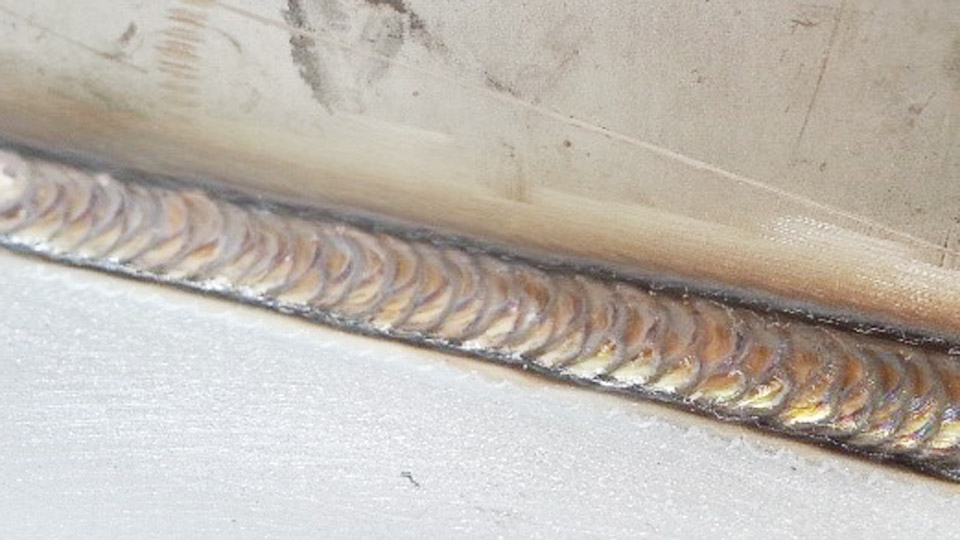
Image by alumasteeltigrod
Why Direct MIG Welding Aluminum to Steel Usually Ends in Disaster
Aluminum melts at around 1,200°F, while steel doesn’t budge until closer to 2,500°F. Fire up your MIG welder—say, a Lincoln Electric Power MIG 210 or a Miller Multimatic 220, common in US shops—and try to bridge that gap. The aluminum turns to pudding before the steel even gets hot enough to fuse properly.
What happens next? You form these nasty intermetallic compounds, like iron-aluminum phases that are as brittle as glass. I’ve laid down what looked like a decent bead, only to tap it with a hammer and watch it shatter like cheap pottery.
In my early days apprenticing in a Detroit-area fab shop, I tried this on a prototype exhaust manifold adapter. Seemed simple: MIG the aluminum flange to the steel pipe with some ER4043 aluminum wire. Big mistake. The joint held for about a day before cracking under vibration testing.
Lesson learned—the thermal expansion rates are wildly different too. Aluminum expands nearly twice as much as steel when heated, leading to warping and residual stresses that pull the weld apart as it cools. Add in oxidation issues (aluminum loves to form that stubborn oxide layer), and you’ve got a recipe for porosity and weak bonds.
But it’s not just theory; this shows up in real jobs. Think automotive repairs where you’re patching an aluminum body panel to a steel frame, or fabricating hybrid structures for boats or trailers. Ignoring this leads to safety risks—imagine a trailer hitch failing on the highway—or costly rework.
Pros avoid it by planning ahead, but if you’re a DIYer or student, this is where understanding the “why” saves you from trial-and-error headaches.
Understanding the MIG Process for Aluminum and Steel Separately
Before we dive into joining them, let’s break down MIG welding each metal on its own. This’ll highlight why combining them throws a wrench in the works and give you shop-tested settings to reference.
First, MIG welding aluminum. It’s all about speed and cleanliness. Aluminum conducts heat like a champ, so you need higher amperage to maintain a stable arc without burning through thin stock. I typically run my MIG on DC electrode positive (DCEP) with pure argon shielding gas—anything with CO2 will contaminate the weld.
For a 1/8-inch aluminum plate, I’d set my machine to 140-160 amps, wire speed around 300-350 inches per minute, using 0.035-inch ER4043 or ER5356 wire.
Joint prep is key: bevel the edges at 30 degrees, scrub off that oxide with a stainless steel brush, and wipe with acetone. Push technique works best to avoid digging in.
Now, switch to steel. MIG on mild steel is more forgiving. Use a 75/25 argon/CO2 mix for better penetration and less spatter. For the same 1/8-inch thickness, 120-140 amps does the trick, with wire speed at 250-300 IPM on 0.030-inch ER70S-6 wire.
Pull technique here, and you can get away with less pristine prep—rust remover and a grinder suffice. The arc is hotter and more focused, which is great for steel but overkill for aluminum.
See the mismatch? Aluminum needs a gentle, wide arc to prevent overheating, while steel demands punch. Trying to MIG them directly means compromising on settings, gas, and wire, leading to incomplete fusion or excessive heat distortion. I’ve coached trainees through this: start by practicing each metal solo to build feel, then tackle hybrids.
The Role of Filler Metals in Dissimilar Welding Attempts
Filler wire choice is make-or-break here. For straight aluminum MIG, ER4043 is my go-to for its silicon content that improves fluidity and crack resistance. ER5356 packs more magnesium for strength in marine apps. But for steel? ER70S-6 all the way, with its deoxidizers handling mill scale.
If you’re stubborn about trying a direct MIG weld (don’t be), some folks experiment with specialty wires like aluminum-bronze alloys. I’ve tested them in the shop— they can lay a bead, but the bond is superficial at best.
The intermetallics still form, and under load, it’s failure city. Cost-wise, these exotic wires run $20-30 per pound versus $5 for standard, so it’s not worth the gamble unless you’re prototyping.
Instead, think compatibility. In hybrid setups, match the filler to the base metal on each side. That’s where methods like bimetallic inserts shine—we’ll get to those soon.
Alternative Ways to Join Aluminum and Steel Without Direct Welding
So direct MIG isn’t viable. But you’ve got options that work in real shops. I’ve used these on everything from aerospace brackets to custom truck beds, and they hold up.
Mechanical fastening is the simplest. Bolts, rivets, or self-tapping screws with isolation washers prevent galvanic corrosion—aluminum and steel create a battery in moist environments, eating away at the aluminum. For a trailer frame, I’d drill matching holes, use stainless fasteners, and seal with silicone. Pros: No heat distortion, easy disassembly. Cons: Adds weight and potential leak points.
Adhesive bonding is another winner for non-structural joins. Epoxy resins like 3M’s Scotch-Weld hold strong—I’ve glued aluminum panels to steel chassis and seen them survive off-road abuse.
Surface prep is crucial: sand to 80-grit, clean, apply, clamp for 24 hours. It’s cost-effective for hobbyists, but test for your environment—heat can weaken bonds.
For welded solutions, brazing or inserts are your best bets. Let’s dig deeper.
How Bimetallic Transition Inserts Make MIG Welding Possible
This is the gold standard for structural aluminum-to-steel joins. A bimetallic insert is basically a sandwich: one side aluminum, the other steel, explosion-bonded or roll-clad together. Brands like NobelClad supply them, and they’re not cheap—expect $50-200 per piece depending on size—but they save headaches.
Here’s how it works in the shop: Cut the insert to fit your joint, say a T-joint for a workbench frame. MIG weld the aluminum side to your aluminum part using standard alu settings (150 amps, argon, ER4043 wire).
Then flip to the steel side: 130 amps, 75/25 gas, ER70S-6 wire. The insert handles the dissimilar fusion internally, minimizing intermetallics.
Step-by-step guide I’ve refined over jobs:
- Measure and cut materials—aluminum 6061 alloy pairs well with mild steel.
- Bevel edges on both the insert and base metals for full penetration.
- Clean everything: wire brush aluminum, grind steel.
- Tack weld the insert in place to avoid shifting.
- Run your beads—short, overlapping passes to control heat.
- Inspect: Use dye penetrant for cracks; a good joint should ring like a bell when tapped.
Why use it? In fabrication, it cuts weight while keeping strength—think electric vehicle frames. Common mistake: Skipping pre-heat on thicker stock leads to cracks. Pro tip: For high-vibe apps, add a fillet bead for extra meat.
Pros and cons table:
| Aspect | Pros | Cons |
|---|---|---|
| Strength | Excellent fusion, holds under load | Brittle if not done right |
| Cost | Long-term savings on repairs | Upfront insert expense |
| Ease | MIG-friendly once set up | Requires precise fit-up |
| Durability | Resists corrosion with coatings | Potential galvanic issues without isolation |
Brazing Aluminum to Steel: When MIG Isn’t Enough
Brazing is my fallback for thinner gauges or when I need lower heat. It uses a filler that melts below the base metals’ points—around 800-1,000°F for aluminum-silicon alloys like HTS-2000.
How it works: Heat the joint with a torch (oxy-acetylene or propane), flow the braze rod into the gap. No melting the bases, so no intermetallics. I’ve brazed aluminum heat exchangers to steel mounts this way—solid for HVAC repairs.
When to use: Non-load-bearing parts, like decorative trim or exhaust components. Why? It’s quicker than inserts for small jobs and forgiving on prep.
Practical tips: Flux is essential to break oxides—use a non-corrosive one for aluminum. Amperage isn’t a factor here since it’s torch-based, but control heat to avoid warping aluminum.
Mistake alert: Overheating turns aluminum to mush; practice on scrap.
For MIG users, silicon-bronze wire with TIG can mimic brazing, but it’s advanced—stick to dedicated brazing for starters.
Coating Methods to Enable Better Bonding
Another trick: Coat the steel with aluminum or silver before welding. Dip the steel in molten aluminum or spray it on—creates a compatible layer.
In practice, I’ve seen this in lab settings more than shops, but for DIY, aluminum spray from a can (like Alumiweld) works okay for patches. Weld over it with aluminum MIG settings. It’s not as strong as inserts, but beats nothing for quick fixes.
Cons: Coating adhesion can fail over time. Use for low-stress apps only.
Step-by-Step Guide to Prepping Joints for Aluminum-Steel Projects
Prep is 80% of success. Here’s my shop routine:
- Select materials: 5052 aluminum for bendability, A36 steel for affordability.
- Cut to size with a bandsaw—avoid torches on aluminum to prevent oxidation.
- Bevel: 45 degrees on steel, 30 on aluminum for better flow.
- Clean: Dedicate brushes to each metal to avoid contamination.
- Fit-up: Use clamps; gaps over 1/16-inch invite porosity.
- Test settings on scrap: Dial in amps (120-180 range depending on thickness).
- Weld in sections: Alternate sides to minimize distortion.
Safety note: Aluminum fumes are no joke—use a respirator and ventilation.
Common Mistakes and How to Fix Bad Welds
Beginners often crank amps too high, melting aluminum away. Fix: Grind out, re-prep, lower to 130 amps.
Pros forget galvanic corrosion—paint the joint post-weld.
Bad weld signs: Cracks, porosity. Salvage by grinding flush, re-brazing if possible.
Story time: On a boat repair, I rushed prep—oxide caused pinholes. Ground it all out, re-did with fresh wire. Now it’s seaworthy.
Safety Considerations for Dissimilar Metal Welding
Always prioritize this. Mixed metals mean mixed hazards: Aluminum dust is flammable, steel sparks fly farther.
Gear up: Leather gloves, auto-dark helmet (shade 10-12 for MIG), respirator for fumes.
Shop setup: Fire extinguisher handy, no flammables near.
In US shops, follow OSHA—ventilate to under 5 mg/m³ for aluminum.
Real-World Applications and Shop Anecdotes
In automotive, hybrid frames save fuel—I’ve welded aluminum roofs to steel bodies using inserts for prototypes.
For hobbyists: Custom bike racks—braze aluminum tubes to steel bases.
Anecdote: Trainee tried direct MIG on a toolbox; bead popped off. We laughed, then taught inserts—now he’s lead fab.
The Last Word
The right method turns a headache into a solid build. You’re now armed with the know-how to choose wisely, avoiding pitfalls that cost time and money. Always preheat your insert to 200°F—it evens heat distribution and cuts cracks by half.
FAQ
What happens if I try to MIG weld aluminum directly to steel without any special prep?
You’ll get a weak, brittle joint that cracks easily due to intermetallic compounds. It might look okay at first, but under stress or vibration, it’ll fail. Instead, use an insert or braze for reliability.
What’s the best filler wire for joining aluminum and steel indirectly?
For the aluminum side, ER4043 for general use; on steel, ER70S-6. With brazing, go for aluminum-silicon rods. Match to the base for best compatibility.
How do I prevent distortion when working with aluminum and steel?
Control heat input—use short beads, alternate sides, and clamp securely. Preheat steel slightly if thicknesses differ. Test on scrap to find your sweet spot.
Is there a cost-effective way for DIYers to join these metals without buying expensive inserts?
Yes, try mechanical fastening with bolts and washers or structural adhesives. For small welds, brazing kits under $50 work well—practice first.
What machine settings should I use for MIG welding aluminum parts near steel?
For aluminum: 140-180 amps, pure argon, push technique. Keep steel separate and weld in stages to avoid overheating the joint area.