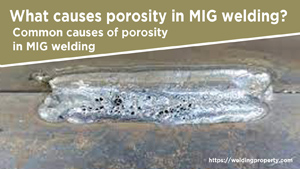
You’re halfway through a weld, everything looks set, and then the arc starts acting strange—excessive spatter, a rough bead, and that dull, dirty-looking finish that just doesn’t feel right.
It’s a situation that catches a lot of people off guard, especially when they don’t realize what’s going on behind the scenes. That’s exactly why understanding What Happens If You MIG Weld Without Gas is so important.
In the shop, shielding gas isn’t optional—it protects the weld pool from contamination in the air. Without it, you’re dealing with porosity, weak joints, and welds that can fail under stress. I’ve seen beginners blame their machine settings, wire, or technique, when the real issue was simply running MIG without proper gas coverage.
This matters more than most people think. A weld might look “okay” at first glance, but without gas, its strength and durability are compromised.
I’ll break down exactly what goes wrong, how to recognize the signs early, and what you can do to fix it before it costs you time, material, or a failed project.

Image by nexair
Why Shielding Gas Matters in MIG Welding
In standard MIG (GMAW — Gas Metal Arc Welding), you feed solid wire through a gun while a shielding gas — usually a mix like 75% argon/25% CO2 or straight CO2 — flows from the nozzle. That gas blanket keeps oxygen and nitrogen away from the super-hot weld pool as it forms and cools.
Without that barrier, the molten metal reacts with air. Oxygen causes oxidation; nitrogen forms nitrides. Both create gas pockets that get trapped as the metal solidifies, leading to porosity. The arc becomes unstable, spatter increases dramatically, and the weld bead often forms with a crusty, uneven appearance instead of the smooth, stacked-dime look you want.
I’ve run test coupons side by side. With proper gas at 15-25 CFH (cubic feet per hour), the bead is clean, penetration is consistent, and the joint passes a simple hammer test. Without gas on solid wire, the same settings produce a porous mess that cracks easily.
This isn’t just cosmetic — weak welds fail under vibration, impact, or stress, which matters on anything from automotive repairs to structural fab.
Cost plays a role too. Gas adds expense and logistics (refills, regulators, hoses), but skipping it entirely with the wrong wire compromises quality. In windy outdoor conditions common on US job sites or backyards, even good gas setups struggle if drafts blow the shield away. That’s where flux-cored options shine, but only if you set them up right.
What Actually Happens When You Run Solid Wire Without Gas
If you load standard ER70S-6 or similar solid mild steel wire and pull the trigger with no gas, the results are predictable and ugly.
The arc starts, but without protection, the wire melts and the puddle immediately picks up contaminants. You’ll notice:
- Heavy spatter — tiny molten balls sticking to your workpiece and gun.
- A loud, crackling arc instead of the steady hiss.
- A bead that looks “frosty” or has a dark oxide layer.
- Visible pores or pinholes on the surface, often with subsurface voids you only see after grinding or X-ray.
In practice, these welds have poor mechanical properties. Tensile strength drops, ductility suffers, and fatigue life shortens. On thin material like 1/8″ sheet, you might get burn-through or lack of fusion. On thicker stock, penetration looks okay but the root is full of inclusions.
One common beginner mistake: forgetting to turn on the gas after a cylinder swap. The first few inches might look decent as residual gas purges, then it goes to hell. Pros check flow every time — I keep a habit of verifying the gauge and listening for the hiss before striking an arc.
Safety note: While the weld might “hold” for non-critical jobs, don’t trust it for anything load-bearing. I’ve cut apart failed test pieces where porosity turned the weld into Swiss cheese. Always grind out suspect areas and reweld properly.
The Right Way to MIG Weld Without External Gas: Self-Shielded Flux-Cored Wire
You can run a MIG machine without a gas bottle by switching to self-shielded flux-cored arc welding (FCAW-S). The wire isn’t truly “gasless” — the flux inside the tubular wire generates shielding gases and forms a slag layer when it burns.
This process works because the flux contains ingredients that decompose under heat, releasing CO2 and other gases right at the arc. A slag blanket also protects the cooling weld. It’s the same principle as SMAW (stick) electrodes but in continuous wire form, perfect for semi-auto guns.
When to use it:
- Outdoor or windy conditions where gas would blow away.
- Portable setups — no tank to haul.
- Budget or beginner machines, especially 110V units popular in US garages.
- Thicker materials or rough, rusty, or painted surfaces where prep time is limited.
- Quick field repairs on farm equipment, trailers, or heavy fab.
When to avoid it:
- Thin materials (under 1/8″) — flux core runs hotter and penetrates deeper, risking burn-through.
- Applications needing cosmetic, paint-ready beads with minimal cleanup.
- Indoor shop work where fumes and spatter are concerns.
- Critical structural or pressure vessel work requiring code compliance (many specs prefer gas-shielded processes).
Flux-cored wire typically requires reversing polarity on most machines — electrode negative (DCEN) for self-shielded, versus electrode positive (DCEP) for solid wire with gas. Check your welder manual and the wire spec; wrong polarity causes unstable arc, excessive spatter, and more porosity.
Step-by-Step: Setting Up and Running Flux-Cored Wire Without Gas
Here’s how I set up a typical US machine like a Miller or Lincoln 110/220V unit for flux core.
Change the wire: Load self-shielded flux-cored wire — common sizes .030″ or .035″ for general fab. Brands like Hobart, Lincoln, or Forney work well. Avoid cheap no-name spools that jam.
Set polarity: Switch to DCEN (straight polarity). Many machines have a polarity switch or require swapping leads inside.
Drive rolls and tension: Use knurled (grooved) drive rolls designed for flux core — they grip the softer tubular wire without crushing it. Set tension just enough to feed smoothly without slipping or deforming the wire.
Gun setup: You can remove the gas nozzle entirely or push it back so the contact tip sticks out more (longer stick-out, often 3/4″ to 1″). This helps with slag and visibility. Clean the tip frequently — spatter builds fast.
Machine settings: Flux core runs hotter. Start with manufacturer charts, but general guidance for mild steel:
- .030″ wire on 1/8″ material: Around 18-22 volts, wire speed 200-300 ipm (adjust to get ~100-150 amps).
- .035″ wire on 1/4″ plate: 20-26 volts, higher wire speed for 180-250 amps.
Test on scrap. Listen for a steady crackle; adjust voltage for arc length and wire speed for amperage/heat.
Technique: Drag the gun (pull) instead of pushing — this keeps the slag behind the puddle. Maintain a 10-15° travel angle. Keep consistent stick-out. Travel speed slower than solid wire MIG because of deeper penetration.
Joint prep: Clean rust, mill scale, paint, and oil as best you can, but flux core tolerates dirtier metal better than solid wire. Bevel thick joints for better penetration. Tack welds solidly.
After welding, let it cool, then chip or brush off the slag. The bead underneath is often convex with good fusion, but expect more spatter cleanup than gas MIG.
Common Mistakes Beginners and Pros Make with “Gasless” MIG
Even experienced welders slip up. Here are the big ones I’ve fixed in the shop:
Wrong polarity: Running DCEP with self-shielded wire causes the flux to burn inefficiently, massive spatter, and porosity. Always double-check.
Too much voltage: Creates a hot, unstable arc with undercut and excessive slag. Start lower and increase until the arc sounds right.
Incorrect drive roll tension or wrong rolls: Flattened wire, bird-nesting, or erratic feeding. Use knurled rolls and light tension.
Too short or too long stick-out: Short causes burn-back into the tip; long loses arc stability and shielding effectiveness.
Welding too fast or too slow: Fast travel leaves lack of fusion; slow causes excessive heat, distortion, or burn-through on thin stuff.
Ignoring wind: Even self-shielded needs some protection in strong gusts — porosity still happens if the self-generated shield disrupts.
Poor storage: Flux-cored wire absorbs moisture. Keep spools sealed and dry; rusty or damp wire guarantees problems.
On thin auto body panels, many new welders try flux core and blow holes because it penetrates too aggressively. Switch to solid wire + gas for that work.
Solid Wire with Gas vs. Self-Shielded Flux Core: Practical Comparison
Here’s a real-world breakdown based on shop use:
Solid Wire MIG (with gas):
- Pros: Cleaner welds, less spatter, excellent bead appearance, lower fumes, better for thin materials, easier out-of-position control with proper technique.
- Cons: Requires gas setup and refills, sensitive to wind/drafts, needs cleaner base metal, less portable.
- Best for: Indoor fab, automotive, precision work, code jobs. Typical settings: DCEP, 15-25 CFH gas flow, push technique.
Self-Shielded Flux Core (no external gas):
- Pros: Portable, wind-tolerant, deeper penetration on thicker material, works on dirtier steel, no gas cost/logistics.
- Cons: More spatter and smoke, slag to remove, rougher appearance, higher fumes (use good ventilation), hotter arc can distort thin metal, not ideal for all positions without practice.
- Best for: Outdoor repairs, heavy construction, farm/ranch work, quick jobs where appearance is secondary.
In my experience, gas-shielded MIG wins for shop quality and finish work. Flux core excels for speed and convenience on structural or repair jobs. Many pros run both — a dual-shield setup or quick wire swap.
For amperage ranges on common mild steel (using .035″ wire as example):
- 1/8″ (0.125″): 90-150 amps
- 3/16″ (0.187″): 140-200 amps
- 1/4″ (0.250″): 180-250+ amps
Always match wire diameter to your machine’s capability and material thickness. Thinner .023″ or .030″ for lighter work; .045″ for heavy plate.
Material Compatibility and Joint Preparation Tips
Flux-cored wires are mainly for mild steel and some low-alloy. Don’t use standard self-shielded on stainless or aluminum — those need specialized wires and often gas. For galvanized material, expect more smoke and porosity risk; grind the coating off the joint area first.
Joint prep remains important:
- Remove rust, scale, and contaminants within 1″ of the weld.
- Use a grinder or wire wheel — don’t rely on the flux to “burn through” heavy mill scale.
- For butt joints thicker than 1/4″, bevel edges to 30-35° with a root face.
- Fit-up gaps: Keep tight; flux core handles slight gaps better but excessive gaps cause burn-through or weak roots.
On repair jobs like fixing a cracked trailer hitch, I grind a V-groove, tack securely, then run multiple passes with flux core for good fill and strength.
Safety Considerations When Welding Without Gas
Fumes are heavier with flux core — the self-shielded process produces more smoke than gas MIG. Always weld in a well-ventilated area or use exhaust fans. Wear proper PPE: helmet with good lens (shade 10-12 typical), gloves, jacket, and respirator if indoors for long sessions.
Hot slag pops more, so leather is your friend. Watch for fire hazards — flux core spatter travels farther. Check cylinders and regulators carefully even if not using gas that day.
For students or hobbyists: Practice on scrap first. Run beads on plate, then T-joints and laps. Bend or break test pieces to see what good fusion looks like versus porous junk.
Pros and Cons Summary Table
Solid Wire MIG with Gas
- Cleaner, smoother beads
- Less post-weld cleanup
- Better for thin metals
- Lower spatter
- Requires gas equipment and wind protection
Flux-Cored Without External Gas
- Highly portable
- Excellent outdoors/windy conditions
- Deeper penetration on thick material
- Tolerates contaminated surfaces better
- More spatter, slag, and fumes; hotter arc
Choose based on the job, not just convenience. Many US fabricators keep both wires on hand for flexibility.
Practical Takeaways from Years on the Bench
Running MIG without gas using solid wire almost always leads to compromised welds full of porosity and weakness. Switching to self-shielded flux-cored wire lets you produce reliable beads without a tank, but it demands different settings, polarity, technique, and cleanup.
You’ve got the knowledge now to diagnose issues fast — check polarity and wire type first when things look off. Test settings on scrap matching your material thickness. Prep your joints properly, maintain consistent technique, and ventilate well.
The strongest pro-level tip I give every trainee: Never skip the test coupon. Weld a short bead or simple joint on identical material and scrap, then break it or grind it open. Your eyes and a hammer will tell you more about weld quality than any machine gauge. That habit separates hobby welds from professional ones that last.
Master these basics and you’ll handle everything from quick garage fixes to solid outdoor fab with confidence. The process rewards attention to detail — get the fundamentals right, and both gas and gasless setups will serve you well for years.
FAQs
Can I use regular solid MIG wire without any gas at all?
No, not effectively. Solid wire without shielding gas will produce heavily oxidized, porous welds that lack strength and ductility. It might hold light parts temporarily, but it fails under stress. Always use flux-cored wire for true gasless operation.
How do I fix porosity when running flux-cored wire?
Check polarity (should be DCEN), reduce voltage if too high, ensure proper stick-out (3/4″-1″), clean the base metal, and verify wire is dry. Strong wind can still disrupt the shield — add a simple wind block. Test and adjust settings on scrap.
Is flux-cored welding stronger than regular MIG?
Not inherently. Both produce strong welds when done correctly. Gas-shielded MIG often gives cleaner, more consistent mechanical properties with less inclusions. Flux core excels in penetration on thicker or dirty material but requires good slag removal and technique for best results.
What voltage and wire speed should I start with for flux core on 1/4″ steel?
For .035″ self-shielded wire, try 22-25 volts and wire speed delivering roughly 180-220 amps. Exact numbers vary by machine and wire brand — consult the chart on your spool or welder. Fine-tune until you get a steady arc with good penetration and manageable spatter. Always test first.
Do I need to change anything on my MIG gun for flux core?
Yes — use knurled drive rolls, possibly a larger contact tip, and consider removing or adjusting the gas nozzle. Increase stick-out slightly compared to solid wire. Clean spatter from the tip often to prevent feeding issues.