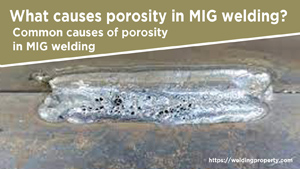
Running a bead that looks perfect at first glance—only to flip the workpiece and find porosity, uneven penetration, or a messy, spattered joint—is a mistake almost every MIG welder runs into at some point. It’s usually not one big error either, but a mix of small habits that quietly ruin the weld.
That’s why understanding How Not to Weld: Most Common MIG Welding Mistakes is just as important as learning the right technique.
In real shop conditions, MIG welding feels easy until variables start stacking up—wrong wire speed, poor travel angle, dirty base metal, or shielding gas issues.
I’ve seen solid-looking welds fail under load simply because one of these basics was slightly off. The frustrating part is that these mistakes often go unnoticed until the job is already done.
That’s why this topic matters for anyone trying to improve their welding. Avoiding these common errors doesn’t just make your welds cleaner—it makes them stronger, more consistent, and far more reliable in real-world use.
I’ll break down the most common MIG welding mistakes and how to fix them so your next bead actually holds up the way it should.

Image by millerwelds
Why MIG Mistakes Happen More Often Than You Think
MIG (Gas Metal Arc Welding) seems straightforward: pull the trigger and go. But it demands balance between voltage, wire feed speed, travel speed, gun angle, and material prep.
US welders using machines like Millermatic, Lincoln Power MIG, or Hobart models often dial in settings by ear and eye, but without understanding the “why,” small drifts create big problems.
Common issues stem from dirty metal, rushed setups, or chasing the “perfect” bead without considering penetration and fusion. Pros make mistakes too—especially when switching materials or working in windy shops. Let’s break down the biggest ones I’ve seen and fixed in real shops.
Mistake 1: Skipping Proper Material Preparation
Dirty base metal tops the list of MIG welding mistakes. Rust, mill scale, oil, paint, or moisture contaminates the weld pool, causing porosity, lack of fusion, and weak bonds.
What happens: The shielding gas can’t fully protect the molten metal. Contaminants create gas pockets or prevent filler from fusing to the base.
Why it matters: On mild steel projects common in US fab shops—truck frames, gates, or brackets—this leads to welds that look okay on top but fail under load or during bend tests.
How to do it right: Grind or wire-brush to bright metal. For heavier mill scale, use a flap disc. Wipe with acetone or a dedicated degreaser. On aluminum, use stainless brushes reserved only for aluminum to avoid cross-contamination. For repairs on old equipment, remove all paint and rust well beyond the weld zone.
Practical tip: Prep twice as much area as you think you need. A quick pass with a grinder before tacking saves post-weld grinding. In humid shops, wipe metal right before welding—moisture sneaks in fast.
Mistake 2: Incorrect Voltage and Wire Feed Speed Settings
Voltage controls arc length and bead shape. Wire feed speed (WFS) primarily sets amperage and deposition rate. Mismatch them and you get everything from spatter bombs to cold, lumpy welds.
Too low voltage: Short arc, lots of spatter, wire stubbing into the puddle, poor penetration.
Too high voltage: Long arc, undercut, burn-through on thinner stock, excessive spatter.
Wrong WFS: Too high causes burn-through and convex beads; too low gives shallow penetration and narrow beads.
Real-world settings guidance (mild steel, ER70S-6 wire, C25 gas):
- .030″ wire (most versatile for hobby/pro): 40-145 amps range. For 1/8″ material, start around 18-20V and 200-300 ipm WFS.
- .035″ wire: Better for thicker material. 50-180+ amps. Higher deposition but needs more heat control.
Step-by-step to dial it in:
- Set WFS based on material thickness (roughly 1 amp per .001″ thickness as a starting point).
- Strike an arc and listen—crisp sizzle, not crackle or hiss.
- Adjust voltage for smooth arc. If wire pushes the gun away, increase voltage or decrease WFS slightly.
- Test on scrap. Look for flat to slightly convex bead with good tie-in at toes.
Pro insight: On synergic machines popular in US shops, start with the recommended program then fine-tune. For manual machines, many welders set voltage first for desired arc, then match WFS.
Mistake 3: Wrong Contact Tip to Work Distance (Stickout)
Stickout is the distance from contact tip to workpiece. Ideal is usually 3/8″ to 3/4″ for .030-.035″ wire.
Too long: Voltage drops at the arc, amperage decreases, poor penetration, unstable arc, more spatter.
Too short: Overheating consumables, burn-back into tip, excessive heat.
Practical fix: Maintain consistent 1/2″ stickout for most work. Use a gun with good visibility. On out-of-position welds, shorter stickout helps control the puddle. Check and trim liners properly—protruding too far or recessed too much causes feeding issues.
Mistake 4: Poor Shielding Gas Flow and Coverage
Shielding gas (typically 75% Argon/25% CO2 for steel) protects the weld. Wrong flow or leaks invite porosity.
Too low flow: Atmospheric contamination, porosity (small holes or worm tracks).
Too high flow: Turbulence pulls in air, also porosity. Plus wasted gas.
Typical settings: 20-35 CFH depending on nozzle size, joint, and draft. In windy outdoor US shop conditions, use higher flow or wind screens.
Checks to make:
- Inspect hoses and connections for leaks (soapy water test).
- Keep nozzle clean—spatter buildup restricts flow.
- Use correct nozzle size and contact tip recess.
- For aluminum, 100% Argon and slightly higher flow.
Tip from the shop floor: If you see porosity, check gas first, then cleanliness. Drafts from fans or open doors ruin many otherwise good welds.
Mistake 5: Incorrect Travel Speed and Gun Technique
Travel speed affects heat input as much as settings.
Too fast: Narrow bead, lack of penetration, poor fusion, ropey appearance.
Too slow: Wide bead, excessive heat, burn-through, distortion, undercut.
Gun angles: Push at 10-15° for better gas coverage and cleaner welds on steel. Drag for some applications but push is generally preferred for MIG.
Whipping or circling: Beginners often weave too much. Steady push with slight oscillation works better for most fillet and butt welds.
Real example: Welding 1/8″ sheet for a trailer repair—too slow and you burn holes. Increase speed and drop voltage slightly for control. On thicker plate, slower speed builds good penetration without multiple passes.
Mistake 6: Bad Ground Connections and Machine Setup
A weak ground causes erratic arc, spatter, and premature consumable wear.
Best practice: Clamp ground as close as possible to weld zone on clean metal. Use heavy cable and check for damage. On large fabrications, move the ground clamp as you progress.
Other setup issues:
- Proper polarity (DCEP for solid wire).
- Correct drive roll tension and size for wire diameter.
- Liner cut to exact length—too short causes bird-nesting.
- Fresh wire, properly stored.
Mistake 7: Ignoring Joint Fit-Up and Design
Poor fit-up amplifies every other mistake. Gaps cause burn-through; misalignment leads to lack of fusion.
Tips:
- Tack frequently with good fit.
- Use clamps and fixtures.
- For thin metal, back with copper or aluminum chill bars.
- Bevel thick plates for better penetration.
Common Weld Defects and Quick Fixes
Porosity: Clean metal, check gas, reduce speed if needed.
Lack of Fusion: Increase heat (higher WFS/voltage), slower travel, better angle, clean surfaces.
Burn-Through: Lower settings, faster travel, smaller wire, or pulse if available.
Spatter: Optimize voltage/WFS balance, correct stickout, clean metal.
Undercut: Lower voltage or travel speed, adjust angle.
Comparison Table: Good vs. Bad MIG Weld Characteristics
| Aspect | Good Weld | Problem Weld (Common Causes) |
|---|---|---|
| Bead Appearance | Flat/slightly convex, even ripples | Convex (cold), concave (hot), ropey |
| Penetration | Good tie-in, no excessive melt-thru | Shallow or burn-through |
| Spatter | Minimal | Heavy (mismatch voltage/WFS) |
| Sound | Steady crackle/sizzle | Popping, hissing |
| Strength Test | Passes bend/break | Cracks, porosity |
Material-Specific Advice
Mild Steel: Most forgiving. C25 gas, ER70S-6 wire excellent for dirty or rusty repair work.
Stainless: Tri-mix gas, lower heat to control distortion, dedicated brushes.
Aluminum: 100% Argon, push angle, clean thoroughly, higher travel speed. Use .030″ or .035″ wire; avoid contamination.
Safety Considerations Every Welder Must Respect
Proper PPE: Auto-darkening helmet (shade 10-13), leather gloves, jacket, steel toes. Ventilation critical—MIG fumes are no joke. Fire watch on repairs. Ground your workpiece properly to avoid shocks.
Step-by-Step Guide: Setting Up for a Reliable MIG Fillet Weld on 1/8″ Mild Steel
- Prep surfaces to bright metal.
- Set machine: .030″ wire, ~19V, WFS for ~120-140 amps.
- Gas at 25 CFH.
- Tack pieces with good fit.
- Weld with 10-15° push angle, 1/2″ stickout, steady travel.
- Inspect: Uniform bead, no defects.
- Adjust one variable at a time on test coupons.
Advanced Tips Pros Use
- Run stringer beads more often than wide weaves.
- For vertical-up, slightly lower settings and use a slight weave.
- Monitor consumables—change tip and nozzle regularly.
- Keep a settings log for repeat jobs.
- Practice on scrap matching your real material thickness and joint type.
I’ve fixed countless projects by simply slowing down, cleaning better, and balancing voltage with wire speed. The welders who improve fastest treat every job as practice—they test settings, inspect critically, and learn from each bead.
Final Thoughts
You’re now better equipped to spot these MIG welding mistakes before they ruin your project. Next time you fire up the machine, focus on one area at a time: prep, settings, technique. Consistent, thoughtful welding beats chasing “pretty” beads every time.
One pro-level tip: The best welders I know spend more time preparing and thinking than actually welding. A clean joint with dialed-in settings almost welds itself. Master the fundamentals, and the fancy stuff becomes easy.
FAQ: Real MIG Welding Problems Answered
Why does my MIG weld have so much spatter?
Usually mismatched voltage and wire speed—voltage slightly too low for the WFS. Increase voltage a bit, shorten stickout, and ensure clean metal. Check drive rolls aren’t slipping.
How do I prevent burn-through on thin metal?
Use smaller wire (.023″ or .030″), lower voltage and WFS, faster travel speed, and back the joint with a heat sink if possible. Pulse settings help tremendously if your machine has them.
What causes porosity in my welds?
Top causes: dirty metal, poor gas coverage (leaks, low flow, drafts), or moisture. Clean thoroughly and verify gas flow at the nozzle.
My arc sounds erratic and the wire stubs—fix?
Voltage too low or stickout too long. Increase voltage slightly and maintain shorter, consistent stickout. Also check for feeding issues like kinked liner or wrong drive roll tension.
Should I push or pull the gun in MIG welding?
Push (forehand) for better penetration, flatter beads, and cleaner welds on steel. It directs gas coverage ahead of the puddle. Pull (backhand) can work but usually gives more buildup and less cleaning action.